David McVicar — 导演 (24)
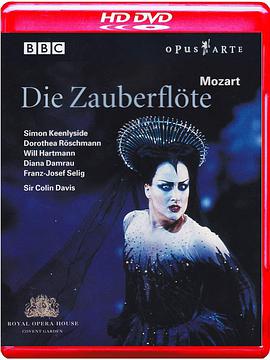
魔笛 (2003) [电影] 豆瓣 TMDB
The magic flute
9.7 (17 个评分) 导演: David McVicar / Colin Davis 演员: Franz-Josef Selig / Diana Damrau
其它标题: The magic flute / Die Zauberflöte
埃及王子塔米诺(西蒙·基赛德 Simon Keenlyside 饰)在临危受难之际得到了夜女王的拯救,夜女王将自己的女儿帕米纳(Dorothea Röschmann 饰)的肖像拿给塔米诺看,美丽的帕米纳一下子就俘虏了王子的心。夜女王告诉王子,帕米纳被一位名叫萨拉斯特罗的 男子给掳走了,如果王子能够将自己的女儿平安的带回来,就把帕米纳许配给他为妻,塔米诺欣然应允。
实际上,萨拉斯特罗并非夜女王所说的那样十恶不赦,夜女王的丈夫在死前将女儿托付给他,交由他来管教,这一举动招致了夜女王的不满,于是设下了如此的计谋。在拯救帕米纳的途中,聪慧的塔米诺渐渐识破了夜女王的阴谋。
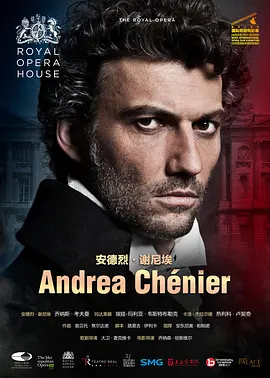
乔尔达诺:歌剧《安德烈·谢尼埃》 (2015) [电影] 豆瓣
Andrea Chénier: Live from the Royal Opera House
导演: David McVicar 演员: Jonas Kaufmann / Eva-Maria Westbroek
其它标题: Andrea Chénier: Live from the Royal Opera House / 英国皇家歌剧院现场录像
《安德烈˙谢尼埃》是意大利作曲家翁贝托˙焦尔达诺于1896年创作的一部浪漫主义歌剧。它以18世纪后半叶的巴黎为舞台,讲述了著名诗人和政治家安德烈˙谢尼埃的生平事迹。
安德烈˙谢尼埃与伯爵夫人的女儿玛达莱娜相互爱慕,投身革命的仆人杰拉尔德亦暗恋玛达莱娜。革命爆发之后,玛达莱娜和谢尼埃处境艰难,并且遭密探监视。杰拉尔德为引出玛达莱娜逮捕了谢尼埃,玛达莱娜却表示愿为救出谢尼埃与杰拉尔德成婚。杰拉尔德被她崇高的爱感动,意图协助她救出谢尼埃,却失败而终,谢尼埃被宣判为死刑。玛达莱娜为与爱人一同赴死,买通看守顶替被判处死刑的女囚。在高昂的音乐中,两人被送上了断头台。
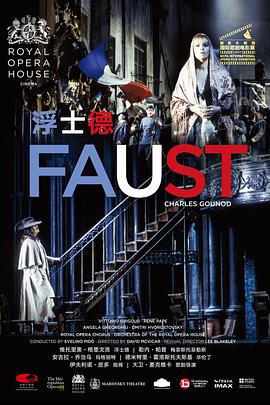
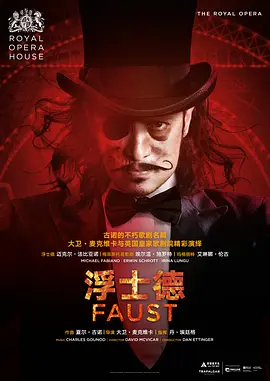
浮士德 (2011) [电影] 豆瓣
Gounod's Faust
导演: David McVicar 演员: 维托里奥·格里高洛 / 勒内·帕佩
其它标题: Gounod's Faust
Granted, the plot's not up to much. Cursed by her brother, the virginal Marguerite is left pregnant, miserable, mad and seemingly beyond redemption by the ageing Faust who's made a devilish pact to exchange his soul for youth. All's well that ends well though, because by close of play Marguerite has been borne up to heaven by a chorus of angels. But when has an implausible story ever been a problem for an opera? Because what matters about Gounod's 'Faust' (and what has kept it in the repertoire for over 150 years) is a succession of showstoppers, including solo numbers (the famous Jewel Song among them), ensembles and choruses. What 'Faust' needs is a stellar cast, which is what we get in this revival of David McVicar's Royal Opera House production broadcast live from Covent Garden. It's led by Angela Gheorghiu as Marguerite who's joined by a trio of fetching men. The young Italian tenor Vittorio Grigolo plays the vile seducer of the title role, the charismatic bass René Pape is the diabolical Méphistophélès who makes Faust an offer he can't refuse, and smouldering Russian baritone Dmitri Hvorostovsky is Valentin, the brother Marguerite could live without.
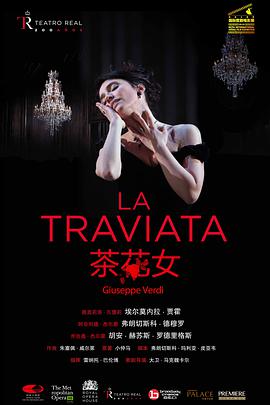
茶花女 (2015) [电影] 豆瓣
La Traviata
导演: David McVicar 演员: Renato Palumbo / Ermonela Jaho
其它标题: La Traviata
故事发生于19世纪40年代,阿尔方斯妮(埃尔莫利拉·亚霍 Ermonela Jaho 饰)本是出生在穷乡僻壤的贫穷女孩,注定会过上默默无闻了此一生的生活。然而,上帝却将她指引向了繁华的大都市巴黎。在那里,阿尔方斯妮见识到了上流社会的奢靡生活。随着时间的推移,阿尔方斯妮凭借着自己的美貌和智慧渐渐打入了社交圈,最终成为了人人仰慕的交际花,那些对她垂涎三尺的男人们称她为茶花女。
一次偶然中,阿尔方斯妮邂逅了名为小仲马的作家,两人坠入了爱河。然而,当小仲马得知了阿尔方斯妮的真实身份后,愤怒的觉得后者欺骗了自己,于是选择了离开。
卡门 2002年格林德伯恩歌剧节版 [演出] 豆瓣
所属 演出: 卡门
语言: 法语 french 剧团: London Philharmonic Orchestra 伦敦爱乐乐团 ; The Glyndebourne Chorus 格林德伯恩合唱团 ; Stoke Brunswick School Children's Choir 剧院: Glyndebourne 格林德伯恩 导演: David McVicar
其它标题: 2002年格林德伯恩歌剧节版 编剧: Henri Meilhac / Ludovic Halévy 作曲: Georges Bizet 演员: Anne Sofie von Otter / Marcus Haddock
Place: Seville, Spain, and surrounding hills
Time: Around 1820
Act 1
A square, in Seville. On the right, a door to the tobacco factory. At the back, a bridge. On the left, a guardhouse.
A group of soldiers relaxes in the square, waiting for the changing of the guard and commenting on the passers-by ("Sur la place, chacun passe"). Micaëla appears, seeking José. Moralès tells her that "José is not yet on duty" and invites her to wait with them. She declines, saying she will return later. José arrives with the new guard, who is greeted and imitated by a crowd of urchins ("Avec la garde montante").
As the factory bell rings, the cigarette girls emerge and exchange banter with young men in the crowd ("La cloche a sonné"). Carmen enters and sings her provocative habanera on the untameable nature of love ("L'amour est un oiseau rebelle"). The men plead with her to choose a lover, and after some teasing she throws a flower to Don José, who thus far has been ignoring her but is now annoyed by her insolence.
As the women go back to the factory, Micaëla returns and gives José a letter and a kiss from his mother ("Parle-moi de ma mère!"). He reads that his mother wants him to return home and marry Micaëla, who retreats in shy embarrassment on learning this. Just as José declares that he is ready to heed his mother's wishes, the women stream from the factory in great agitation. Zuniga, the officer of the guard, learns that Carmen has attacked a woman with a knife. When challenged, Carmen answers with mocking defiance ("Tra la la... Coupe-moi, brûle-moi"); Zuniga orders José to tie her hands while he prepares the prison warrant. Left alone with José, Carmen beguiles him with a seguidilla, in which she sings of a night of dancing and passion with her lover—whoever that may be—in Lillas Pastia's tavern. Confused yet mesmerised, José agrees to free her hands; as she is led away she pushes her escort to the ground and runs off laughing. José is arrested for dereliction of duty.
Act 2
Lillas Pastia's Inn
Two months have passed. Carmen and her friends Frasquita and Mercédès are entertaining Zuniga and other officers ("Les tringles des sistres tintaient") in Pastia's inn. Carmen is delighted to learn of José's release from two months' detention. Outside, a chorus and procession announces the arrival of the toreador Escamillo ("Vivat, vivat le Toréro"). Invited inside, he introduces himself with the "Toreador Song" ("Votre toast, je peux vous le rendre") and sets his sights on Carmen, who brushes him aside. Lillas Pastia hustles the crowds and the soldiers away.
When only Carmen, Frasquita and Mercédès remain, smugglers Dancaïre and Remendado arrive and reveal their plans to dispose of some recently acquired contraband ("Nous avons en tête une affaire"). Frasquita and Mercédès are keen to help them, but Carmen refuses, since she wishes to wait for José. After the smugglers leave, José arrives. Carmen treats him to a private exotic dance ("Je vais danser en votre honneur ... La la la"), but her song is joined by a distant bugle call from the barracks. When José says he must return to duty, she mocks him, and he answers by showing her the flower that she threw to him in the square ("La fleur que tu m'avais jetée"). Unconvinced, Carmen demands he show his love by leaving with her. José refuses to desert, but as he prepares to depart, Zuniga enters looking for Carmen. He and José fight, and are separated by the returning smugglers, who restrain Zuniga. Having attacked a superior officer, José now has no choice but to join Carmen and the smugglers ("Suis-nous à travers la campagne").
Act 3
A wild spot in the mountains
Carmen and José enter with the smugglers and their booty ("Écoute, écoute, compagnons"); Carmen has now become bored with José and tells him scornfully that he should go back to his mother. Frasquita and Mercédès amuse themselves by reading their fortunes from the cards; Carmen joins them and finds that the cards are foretelling her death, and José's. The women depart to suborn the customs officers who are watching the locality. José is placed on guard duty.
Micaëla enters with a guide, seeking José and determined to rescue him from Carmen ("Je dis que rien ne m'épouvante"). On hearing a gunshot she hides in fear; it is José, who has fired at an intruder who proves to be Escamillo. José's pleasure at meeting the bullfighter turns to anger when Escamillo declares his infatuation with Carmen. The pair fight ("Je suis Escamillo, toréro de Grenade"), but are interrupted by the returning smugglers and girls ("Holà, holà José"). As Escamillo leaves he invites everyone to his next bullfight in Seville. Micaëla is discovered; at first, José will not leave with her despite Carmen's mockery, but he agrees to go when told that his mother is dying. As he departs, vowing he will return, Escamillo is heard in the distance, singing the toreador's song.
Act 4
A square in Seville. At the back, the walls of an ancient amphitheatre
Zuniga, Frasquita and Mercédès are among the crowd awaiting the arrival of the bullfighters ("Les voici ! Voici la quadrille!"). Escamillo enters with Carmen, and they express their mutual love ("Si tu m'aimes, Carmen"). As Escamillo goes into the arena, Frasquita and Mercedes warn Carmen that José is nearby, but Carmen is unafraid and willing to speak to him. Alone, she is confronted by the desperate José ("C'est toi ! C'est moi !"). While he pleads vainly for her to return to him, cheers are heard from the arena. As José makes his last entreaty, Carmen contemptuously throws down the ring he gave her and attempts to enter the arena. He then stabs her, and as Escamillo is acclaimed by the crowds, Carmen dies. José kneels and sings "Ah! Carmen! ma Carmen adorée!"; as the crowd exits the arena, José confesses to killing the woman he loved.
魔笛 2003年英国皇家歌剧团版 [演出] 豆瓣
所属 演出: 魔笛
语言: 德语 german 剧团: Orchestra of the Royal Opera House 英国皇家歌剧院管弦乐团 ; Royal Opera Chorus 英国皇家歌剧团合唱团 剧院: Royal Opera House, Covent Garden 考文特花园皇家歌剧院 导演: David McVicar
其它标题: 2003年英国皇家歌剧团版 编剧: Emanuel Schikaneder 作曲: Wolfgang Amadeus Mozart 演员: Will Hartmann / Dorothea Röschmann
The opera begins with the overture, which Mozart composed last.
Act 1
Scene 1: A rough, rocky landscape
Tamino, a handsome prince lost in a distant land, is pursued by a serpent and asks the gods to save him (aria: "Zu Hilfe! Zu Hilfe!" segued into trio: "Stirb, Ungeheuer, durch uns're Macht!"). He faints, and three ladies, attendants of the Queen of the Night, appear and kill the serpent. They find the unconscious prince extremely attractive, and each of them tries to convince the other two to leave. After arguing, they reluctantly decide to leave together.
Tamino wakes up, and is surprised to find himself still alive. Papageno enters dressed as a bird. He describes his life as a bird-catcher, complaining he has no wife or girlfriend (aria: "Der Vogelfänger bin ich ja"). Tamino introduces himself to Papageno, thinking Papageno killed the serpent. Papageno happily takes the credit – claiming he strangled it with his bare hands. The three ladies suddenly reappear and instead of giving Papageno wine, cake and figs, they give him water, a stone and place a padlock over his mouth as a warning not to lie. They give Tamino a portrait of the Queen of the Night's daughter Pamina, with whom Tamino falls instantly in love (aria: "Dies Bildnis ist bezaubernd schön" / This image is enchantingly beautiful).
The ladies return and tell Tamino that Pamina has been captured by Sarastro, whom they describe as a powerful, evil demon. Tamino vows to rescue Pamina. The Queen of the Night appears and promises Tamino that Pamina will be his if he rescues her from Sarastro (Recitative and aria: "O zittre nicht, mein lieber Sohn" / Oh, tremble not, my dear son!). The Queen leaves and the ladies remove the padlock from Papageno's mouth with a warning not to lie any more. They give Tamino a magic flute which has the power to change sorrow into joy. They tell Papageno to go with Tamino, and give him (Papageno) magic bells for protection. The ladies introduce three child-spirits, who will guide Tamino and Papageno to Sarastro's temple. Together Tamino and Papageno set forth (Quintet: "Hm! Hm! Hm! Hm!").
Scene 2: A room in Sarastro's palace
Pamina is dragged in by Sarastro's slaves, apparently having tried to escape. Monostatos, a blackamoor and chief of the slaves, orders the slaves to chain her and leave him alone with her. Papageno, sent ahead by Tamino to help find Pamina, enters (Trio: "Du feines Täubchen, nur herein!"). Monostatos and Papageno are each terrified by the other's strange appearance and both flee. Papageno returns and announces to Pamina that her mother has sent Tamino to save her. Pamina rejoices to hear that Tamino is in love with her. She offers sympathy and hope to Papageno, who longs for a wife. Together they reflect on the joys and sacred duties of marital love (duet: "Bei Männern welche Liebe fühlen").
Finale. Scene 3: A grove in front of a temple
The three child-spirits lead Tamino to Sarastro's temple, promising that if he remains patient, wise and steadfast, he will succeed in rescuing Pamina (Quartet: "Zum Ziele führt dich diese Bahn"). Tamino approaches the left-hand entrance and is denied access by voices from within. The same happens when he goes to the entrance on the right. But from the entrance in the middle, an old priest appears and lets Tamino in. (The old priest is referred to as "The Speaker" in the libretto, but his role is a singing role.) He tells Tamino that Sarastro is benevolent, not evil, and that he should not trust the Queen of the Night. He promises that Tamino's confusion will be lifted when Tamino approaches the temple in a spirit of friendship. Tamino plays his magic flute. Animals appear and dance, enraptured, to his music. Tamino hears Papageno's pipes sounding offstage, and hurries off to find him (aria: "Wie stark ist nicht dein Zauberton").
Papageno and Pamina enter, searching for Tamino (trio: "Schnelle Füße, rascher Mut"). They are recaptured by Monostatos and his slaves. Papageno plays his magic bells, and Monostatos and his slaves begin to dance, and exit the stage, still dancing, mesmerised by the beauty of the music (chorus: "Das klinget so herrlich"). Papageno and Pamina hear the sound of Sarastro's retinue approaching. Papageno is frightened and asks Pamina what they should say. She answers that they must tell the truth. Sarastro enters, with a crowd of followers. (chorus: "Es lebe Sarastro!")
Pamina falls at Sarastro's feet and confesses that she tried to escape because Monostatos had forced his attentions on her. Sarastro receives her kindly and assures her that he wishes only for her happiness. But he refuses to return her to her mother, whom he describes as a proud, headstrong woman, and a bad influence on those around her. Pamina, he says, must be guided by a man.
Monostatos brings in Tamino. The two lovers see one another for the first time and embrace, causing indignation among Sarastro's followers. Monostatos tells Sarastro that he caught Papageno and Pamina trying to escape, and demands a reward. Sarastro, however, punishes Monostatos for his lustful behaviour toward Pamina, and sends him away. He announces that Tamino must undergo trials of wisdom in order to become worthy as Pamina's husband. The priests declare that virtue and righteousness will sanctify life and make mortals like gods ("Wenn Tugend und Gerechtigkeit").
Act 2
Scene 1: A grove of palms
The council of priests of Isis and Osiris, headed by Sarastro, enters to the sound of a solemn march. Sarastro tells the priests that Tamino is ready to undergo the ordeals that will lead to enlightenment. He invokes the gods Isis and Osiris, asking them to protect Tamino and Pamina (Aria and chorus: "O Isis und Osiris").
Scene 2: The courtyard of the Temple of Ordeal
Tamino and Papageno are led in by two priests for the first trial. The two priests advise Tamino and Papageno of the dangers ahead of them, warn them of women's wiles and swear them to silence (Duet: "Bewahret euch von Weibertücken"). The three ladies appear and try to frighten Tamino and Papageno into speaking. (Quintet: "Wie, wie, wie") Papageno cannot resist answering the ladies, but Tamino remains aloof, angrily instructing Papageno not to listen to the ladies' threats and to keep quiet. Seeing that Tamino will not speak to them, the ladies withdraw in confusion.
Scene 3: A garden
Pamina is asleep. Monostatos approaches and gazes upon her with rapture. (Aria: "Alles fühlt der Liebe Freuden") He is about to kiss the sleeping Pamina, when the Queen of the Night appears. Monostatos hides. In response to the Queen's questioning, Pamina explains that Tamino is joining Sarastro's brotherhood and she is thinking of accompanying him too. The Queen is not pleased. She explains that her husband was the previous owner of the temple and on his deathbed, gave the ownership to Sarastro instead of her, rendering the Queen powerless (this is in the original libretto, but is usually omitted from modern productions, to shorten the scene with Pamina and her mother). She gives Pamina a dagger, ordering her to kill Sarastro with it and threatening to disown her if she does not. (Aria: "Der Hölle Rache kocht in meinem Herzen"). She leaves. Monostatos returns and tries to force Pamina's love by threatening to reveal the Queen's plot, but Sarastro enters and drives him off. Pamina begs Sarastro to forgive her mother and he reassures her that revenge and cruelty have no place in his domain (Aria: "In diesen heil'gen Hallen").
Scene 4: A hall in the Temple of Ordeal
Tamino and Papageno are led in by priests, who remind them that they must remain silent. Papageno complains of thirst. An old woman enters and offers Papageno a cup of water. He drinks and teasingly asks whether she has a boyfriend. She replies that she does and that his name is Papageno. She disappears as Papageno asks for her name, and the three child-spirits bring in food, the magic flute, and the bells, sent from Sarastro (Trio: "Seid uns zum zweiten Mal willkommen"). Tamino begins to play the flute, which summons Pamina. She tries to speak with him, but Tamino, bound by his vow of silence, cannot answer her, and Pamina begins to believe that he no longer loves her. (Aria: "Ach, ich fühl's, es ist verschwunden") She leaves in despair.
Scene 5: The pyramids
The priests celebrate Tamino's successes so far, and pray that he will succeed and become worthy of their order (Chorus: "O Isis und Osiris"). Pamina is brought in and Sarastro instructs Pamina and Tamino to bid each other farewell before the greater trials ahead, alarming them by describing it as their "final farewell". (Trio: Sarastro, Pamina, Tamino – "Soll ich dich, Teurer, nicht mehr sehn?" Note: In order to preserve the continuity of Pamina's suicidal feelings, this trio is sometimes performed earlier in act 2, preceding or immediately following Sarastro's aria "O Isis und Osiris".[f][30]) They exit and Papageno enters. The priests grant his request for a glass of wine and he expresses his desire for a wife. (Aria: "Ein Mädchen oder Weibchen"). The elderly woman reappears and warns him that unless he immediately promises to marry her, he will be imprisoned forever. When Papageno promises to love her faithfully (muttering that he will only do this until something better comes along), she is transformed into the young and pretty Papagena. Papageno rushes to embrace her, but the priests drive him back, telling him that he is not yet worthy of her.
Finale. Scene 6: A garden
The three child-spirits hail the dawn. They observe Pamina, who is contemplating suicide because she believes Tamino has abandoned her. The child-spirits restrain her and reassure her of Tamino's love. (Quartet: "Bald prangt, den Morgen zu verkünden").
Scene change without interrupting the music, to Scene 7: Outside the Temple of Ordeal
Two men in armor lead in Tamino. They recite one of the formal creeds of Isis and Osiris, promising enlightenment to those who successfully overcome the fear of death ("Der, welcher wandert diese Strasse voll Beschwerden"). This recitation takes the musical form of a Baroque chorale prelude, to a tune inspired by Martin Luther's hymn "Ach Gott, vom Himmel sieh darein" (Oh God, look down from heaven).[g][32] Tamino declares that he is ready to be tested. Pamina calls to him from offstage. The men in armour assure him that the trial by silence is over and he is free to speak with her. Pamina enters and declares her intention to undergo the remaining trials with him. She hands him the magic flute to help them through the trials ("Tamino mein, o welch ein Glück!"). Protected by the music of the magic flute, they pass unscathed through chambers of fire and water. Offstage, the priests hail their triumph and invite the couple to enter the temple.
Scene change without interrupting the music, to Scene 8: A garden with a tree
Papageno despairs at having lost Papagena and decides to hang himself (Aria/Quartet: "Papagena! Papagena! Papagena! Weibchen, Täubchen, meine Schöne") The three child-spirits appear and stop him. They advise him to play his magic bells to summon Papagena. She appears and, united, the happy couple stutter in astonishment and make bird-like courting sounds at each other. They plan their future and dream of the many children they will have together (Duet: "Pa... pa... pa...").
Scene change without interrupting the music, to Scene 9: A rocky landscape outside the temple; night
The traitorous Monostatos appears with the Queen of the Night and her three ladies. They plot to destroy the temple ("Nur stille, stille") and the Queen confirms that she has promised her daughter Pamina to Monostatos. But before the conspirators can enter the temple, they are magically cast out into eternal night.
Scene change without interrupting the music, to Scene 10: The Temple of the Sun
Sarastro announces the sun's triumph over the night, and hails the dawn of a new era of wisdom and brotherhood. Animals appear again and dance in the sun.
游吟诗人 2015年大都会歌剧团版 [演出] 豆瓣
所属 演出: 游吟诗人
语言: 意大利语 italian 剧团: Metropolitan Opera Orchestra 大都会歌剧团管弦乐团 ; Metropolitan Opera Chorus 大都会歌剧团合唱团 剧院: Metropolitan Opera House 大都会歌剧院 导演: David McVicar / Paula Williams
其它标题: 2015年大都会歌剧团版 编剧: Salvadore Cammarano / Leone Emanuele Bardare 作曲: Giuseppe Verdi 演员: Lee Yonghoon / Anna Netrebko
Place: Biscay and Aragon (Spain)
Time: Fifteenth century.
Act 1: The Duel
Scene 1: The guard room in the castle of Luna (The Palace of Aljafería, Zaragoza, Spain)
Ferrando, the captain of the guards, orders his men to keep watch while Count di Luna wanders restlessly beneath the windows of Leonora, lady-in-waiting to the Princess. Di Luna loves Leonora and is jealous of his successful rival, a troubadour whose identity he does not know. In order to keep the guards awake, Ferrando narrates the history of the count (Racconto: Di due figli vivea padre beato / "The good Count di Luna lived happily, the father of two sons"): many years ago, a gypsy was wrongfully accused of having bewitched the youngest of the di Luna children; the child had fallen sick, and for this the gypsy had been burnt alive as a witch, her protests of innocence ignored. Dying, she had commanded her daughter Azucena to avenge her, which she did by abducting the baby. Although the burnt bones of a child were found in the ashes of the pyre, the father refused to believe his son's death. Dying, the father commanded his firstborn, the new Count di Luna, to seek Azucena.
Scene 2: Garden in the palace of the princess
Leonora confesses her love for the Troubadour to her confidante, Ines (Cavatina:Tacea la notte placida / "The peaceful night lay silent"... Di tale amor / "A love that words can scarcely describe"), in which she tells how she fell in love with a mystery knight, victor at a tournament: lost track of him when a civil war broke out: then encountered him again, in disguise as a wandering troubadour who sang beneath her window. When they have gone, Count di Luna enters, intending to pay court to Leonora himself, but hears the voice of his rival, in the distance: (Deserto sulla terra / "Alone upon this earth"). Leonora in the darkness briefly mistakes the count for her lover, until the Troubadour himself enters the garden, and she rushes to his arms. The Count challenges his rival to reveal his true identity, which he does: Manrico, a knight now outlawed and under death sentence for his allegiance to a rival prince. Manrico in turn challenges him to call the guards, but the Count regards this encounter as a personal rather than political matter, and challenges Manrico instead to a duel over their common love. Leonora tries to intervene, but cannot stop them from fighting (Trio: Di geloso amor sprezzato / "The fire of jealous love" ).
Act 2: The Gypsy Woman
Scene 1: The gypsies' camp
The gypsies sing the Anvil Chorus: Vedi le fosche notturne / "See! The endless sky casts off her sombre nightly garb...". Azucena, the daughter of the Gypsy burnt by the count, is still haunted by her duty to avenge her mother (Canzone: Stride la vampa / "The flames are roaring!"). The Gypsies break camp while Azucena confesses to Manrico that after stealing the di Luna baby she had intended to burn the count's little son along with her mother, but overwhelmed by the screams and the gruesome scene of her mother's execution, she became confused and threw her own child into the flames instead (Racconto: Condotta ell'era in ceppi / "They dragged her in bonds").
Manrico realises that he is not the son of Azucena, but loves her as if she were indeed his mother, as she has always been faithful and loving to him - and, indeed, saved his life only recently, discovering him left for dead on a battlefield after being caught in ambush. Manrico tells Azucena that he defeated di Luna in their earlier duel, but was held back from killing him by a mysterious power (Duet: Mal reggendo / "He was helpless under my savage attack"): and Azucena reproaches him for having stayed his hand then, especially since it was the Count's forces that defeated him in the subsequent battle of Pelilla. A messenger arrives and reports that Manrico's allies have taken Castle Castellor, which Manrico is ordered to hold in the name of his prince: and also that Leonora, who believes Manrico dead, is about to enter a convent and take the veil that night. Although Azucena tries to prevent him from leaving in his weak state (Ferma! Son io che parlo a te! / "I must talk to you"), Manrico rushes away to prevent her from carrying out this intent.
Scene 2: In front of the convent
Di Luna and his attendants intend to abduct Leonora and the Count sings of his love for her (Aria: Il balen del suo sorriso / "The light of her smile" ... Per me ora fatale / "Fatal hour of my life"). Leonora and the nuns appear in procession, but Manrico prevents di Luna from carrying out his plans and takes Leonora away with him, although once again leaving the Count behind unharmed, as the soldiers on both sides back down from bloodshed, the Count being held back by his own men.
Act 3: The Son of the Gypsy Woman
Scene 1: Di Luna's camp
Di Luna and his army are attacking the fortress Castellor where Manrico has taken refuge with Leonora (Chorus: Or co' dadi ma fra poco / "Now we play at dice"). Ferrando drags in Azucena, who has been captured wandering near the camp. When she hears di Luna’s name, Azucena’s reactions arouse suspicion and Ferrando recognizes her as the supposed murderer of the count’s brother. Azucena cries out to her son Manrico to rescue her and the count realizes that he has the means to flush his enemy out of the fortress. He orders his men to build a pyre and burn Azucena before the walls.
Scene 2: A chamber in the castle
Inside the castle, Manrico and Leonora are preparing to be married. She is frightened; the battle with di Luna is imminent and Manrico’s forces are outnumbered. He assures her of his love (Aria: Ah sì, ben mio, coll'essere / "Ah, yes, my love, in being yours"), even in the face of death. When news of Azucena’s capture reaches him, he summons his men and desperately prepares to attack (Cabaletta: Di quella pira l'orrendo foco / "The horrid flames of that pyre"). Leonora faints.
Act 4: The Punishment
Scene 1: Before the dungeon keep
Manrico has failed to free Azucena and has been imprisoned himself. Leonora attempts to free him (Aria: D'amor sull'ali rosee / "On the rosy wings of love"; Chorus & Duet: Miserere / "Lord, thy mercy on this soul") by begging di Luna for mercy and offers herself in place of her lover. She promises to give herself to the count, but secretly swallows poison from her ring in order to die before di Luna can possess her (Duet: Mira, d'acerbe lagrime / "See the bitter tears I shed").
Scene 2: In the dungeon
Manrico and Azucena are awaiting their execution. Manrico attempts to soothe Azucena, whose mind wanders to happier days in the mountains (Duet: Ai nostri monti ritorneremo / "Again to our mountains we shall return"). At last the gypsy slumbers. Leonora comes to Manrico and tells him that he is saved, begging him to escape. When he discovers she cannot accompany him, he refuses to leave his prison. He believes Leonora has betrayed him until he realizes that she has taken poison to remain true to him. As she dies in agony in Manrico's arms she confesses that she prefers to die with him than to marry another (Trio: Prima che d'altri vivere / "Rather than live as another's"). The count has heard Leonora's last words and orders Manrico's execution. Azucena awakes and tries to stop di Luna. Once Manrico is dead, she cries: Egli era tuo fratello! Sei vendicata, o madre. / "He was your brother ... You are avenged, oh mother!"
特里斯坦与伊索尔德 [演出] 豆瓣
Tristan und Isolde
类型: Opera 编剧: Richard Wagner
其它标题: Tristan und Isolde 导演: Richard Wagner / Willy Decker 演员: Ludwig Schnorr von Carolsfeld / Malvina Schnorr von Carolsfeld / Ludwig Zottmayr / Anna Deinet / Anton Mitterwurzer
Act 1
Isolde, promised to King Marke in marriage, and her handmaid, Brangäne, are quartered aboard Tristan's ship being transported to the king's lands in Cornwall. The opera opens with the voice of a young sailor singing of a "wild Irish maid", ("Westwärts schweift der Blick") which Isolde construes to be a mocking reference to herself. In a furious outburst, she wishes the seas to rise up and sink the ship, killing herself and all on board ("Erwache mir wieder, kühne Gewalt"). Her scorn and rage are directed particularly at Tristan, the knight responsible for taking her to Marke, and Isolde sends Brangäne to command Tristan to appear before her ("Befehlen liess' dem Eigenholde"). Tristan, however, refuses Brangäne's request, claiming that his place is at the helm. His henchman, Kurwenal, answers more brusquely, saying that Isolde is in no position to command Tristan and reminds Brangäne that Isolde's previous fiancé, Morold, was killed by Tristan ("Herr Morold zog zu Meere her").
Brangäne returns to Isolde to relate these events, and Isolde, in what is termed the "narrative and curse", sadly tells her of how, following the death of Morold, she happened upon a stranger who called himself Tantris. Tantris was found mortally wounded in a barge ("von einem Kahn, der klein und arm") and Isolde used her healing powers to restore him to health. She discovered during Tantris' recovery, however, that he was actually Tristan, the murderer of her fiancé. Isolde attempted to kill the man with his own sword as he lay helpless before her. However, Tristan looked not at the sword that would kill him or the hand that wielded the sword, but into her eyes ("Er sah' mir in die Augen"). His action pierced her heart and she was unable to slay him. Tristan was allowed to leave with the promise never to come back, but he later returned with the intention of marrying Isolde to his uncle, King Marke. Isolde, furious at Tristan's betrayal, insists that he drink atonement to her, and from her medicine chest produces a vial to make the drink. Brangäne is shocked to see that it is a lethal poison.
Kurwenal appears in the women's quarters ("Auf auf! Ihr Frauen!") and announces that the voyage is coming to an end. Isolde warns Kurwenal that she will not appear before the King if Tristan does not come before her as she had previously ordered and drink atonement to her. When Tristan arrives, Isolde reproaches him about his conduct and tells him that he owes her his life and how his actions have undermined her honour, since she blessed Morold's weapons before battle and therefore she swore revenge. Tristan first offers his sword but Isolde refuses; they must drink atonement. Brangäne brings in the potion that will seal their pardon; Tristan knows that it may kill him, since he knows Isolde's magic powers ("Wohl kenn' ich Irland's Königin"). The journey almost at its end, Tristan drinks and Isolde takes half the potion for herself. The potion seems to work but it does not bring death but relentless love ("Tristan!" "Isolde!"). Kurwenal, who announces the imminent arrival on board of King Marke, interrupts their rapture. Isolde asks Brangäne which potion she prepared and Brangäne replies, as the sailors hail the arrival of King Marke, that it was not poison, but rather a love potion.
Act 2
King Marke leads a hunting party out into the night, leaving Isolde and Brangäne alone in the castle, who both stand beside a burning brazier. Isolde, listening to the hunting horns, believes several times that the hunting party is far enough away to warrant the extinguishing of the brazier – the prearranged signal for Tristan to join her ("Nicht Hörnerschall tönt so hold"). Brangäne warns Isolde that Melot, one of King Marke's knights, has seen the amorous looks exchanged between Tristan and Isolde and suspects their passion ("Ein Einz'ger war's, ich achtet' es wohl"). Isolde, however, believes Melot to be Tristan's most loyal friend, and, in a frenzy of desire, extinguishes the flames. Brangäne retires to the ramparts to keep watch as Tristan arrives.
The lovers, at last alone and freed from the constraints of courtly life, declare their passion for each other. Tristan decries the realm of daylight which is false, unreal, and keeps them apart. It is only in night, he claims, that they can truly be together and only in the long night of death can they be eternally united ("O sink' hernieder, Nacht der Liebe"). During their long tryst, Brangäne calls a warning several times that the night is ending ("Einsam wachend in der Nacht"), but her cries fall upon deaf ears. The day breaks in on the lovers as Melot leads King Marke and his men to find Tristan and Isolde in each other's arms. Marke is heartbroken, not only because of his nephew's betrayal but also because Melot chose to betray his friend Tristan to Marke and because of Isolde's betrayal as well ("Mir – dies? Dies, Tristan – mir?").
When questioned, Tristan says he cannot answer to the King the reason of his betrayal since he would not understand. He turns to Isolde, who agrees to follow him again into the realm of night. Tristan announces that Melot has fallen in love with Isolde too. Melot and Tristan fight, but, at the crucial moment, Tristan throws his sword aside and allows Melot to severely wound him.
Act 3
Kurwenal has brought Tristan home to his castle at Kareol in Brittany. A shepherd pipes a mournful tune and asks if Tristan is awake. Kurwenal replies that only Isolde's arrival can save Tristan, and the shepherd offers to keep watch and claims that he will pipe a joyful tune to mark the arrival of any ship. Tristan awakes ("Die alte Weise – was weckt sie mich?") and laments his fate – to be, once again, in the false realm of daylight, once more driven by unceasing unquenchable yearning ("Wo ich erwacht' weilt ich nicht"). Tristan's sorrow ends when Kurwenal tells him that Isolde is on her way. Tristan, overjoyed, asks if her ship is in sight, but only a sorrowful tune from the shepherd's pipe is heard.
Tristan relapses and recalls that the shepherd's mournful tune is the same as was played when he was told of the deaths of his father and mother ("Muss ich dich so versteh'n, du alte, ernst Weise"). He rails once again against his desires and against the fateful love potion ("verflucht sei, furchtbarer Trank!") until, exhausted, he collapses in delirium. After his collapse, the shepherd is heard piping the arrival of Isolde's ship, and, as Kurwenal rushes to meet her, Tristan tears the bandages from his wounds in his excitement ("Hahei! Mein Blut, lustig nun fliesse!"). As Isolde arrives at his side, Tristan dies with her name on his lips.
Isolde collapses beside her deceased lover just as the appearance of another ship is announced. Kurwenal spies Melot, Marke and Brangäne arriving ("Tod und Hölle! Alles zur Hand!"). He believes they have come to kill Tristan and, in an attempt to avenge him, furiously attacks Melot. Marke tries to stop the fight to no avail. Both Melot and Kurwenal are killed in the fight. Marke and Brangäne finally reach Tristan and Isolde. Marke, grieving over the body of his "truest friend" ("Tot denn alles!"), explains that Brangäne revealed the secret of the love potion and that he had come not to part the lovers, but to unite them ("Warum Isolde, warum mir das?"). Isolde appears to wake at this and in a final aria describing her vision of Tristan risen again (the "Liebestod", "love death"), dies ("Mild und leise wie er lächelt").
特里斯坦与伊索尔德 2015年维也纳国家歌剧院版 [演出] 豆瓣
所属 演出: 特里斯坦与伊索尔德
语言: german 德语 剧团: Orchester der Wiener Staatsoper 维也纳国家歌剧院管弦乐团 ; Chor der Wiener Staatsoper 维也纳国家歌剧院合唱团 剧院: Wiener Staatsoper 维也纳国家歌剧院 导演: David McVicar
其它标题: 2015年维也纳国家歌剧院版 编剧: Richard Wagner 作曲: Richard Wagner 演员: Peter Seiffert / Iréne Theorin
Act 1
Isolde, promised to King Marke in marriage, and her handmaid, Brangäne, are quartered aboard Tristan's ship being transported to the king's lands in Cornwall. The opera opens with the voice of a young sailor singing of a "wild Irish maid", ("Westwärts schweift der Blick") which Isolde construes to be a mocking reference to herself. In a furious outburst, she wishes the seas to rise up and sink the ship, killing herself and all on board ("Erwache mir wieder, kühne Gewalt"). Her scorn and rage are directed particularly at Tristan, the knight responsible for taking her to Marke, and Isolde sends Brangäne to command Tristan to appear before her ("Befehlen liess' dem Eigenholde"). Tristan, however, refuses Brangäne's request, claiming that his place is at the helm. His henchman, Kurwenal, answers more brusquely, saying that Isolde is in no position to command Tristan and reminds Brangäne that Isolde's previous fiancé, Morold, was killed by Tristan ("Herr Morold zog zu Meere her").
Brangäne returns to Isolde to relate these events, and Isolde, in what is termed the "narrative and curse", sadly tells her of how, following the death of Morold, she happened upon a stranger who called himself Tantris. Tantris was found mortally wounded in a barge ("von einem Kahn, der klein und arm") and Isolde used her healing powers to restore him to health. She discovered during Tantris' recovery, however, that he was actually Tristan, the murderer of her fiancé. Isolde attempted to kill the man with his own sword as he lay helpless before her. However, Tristan looked not at the sword that would kill him or the hand that wielded the sword, but into her eyes ("Er sah' mir in die Augen"). His action pierced her heart and she was unable to slay him. Tristan was allowed to leave with the promise never to come back, but he later returned with the intention of marrying Isolde to his uncle, King Marke. Isolde, furious at Tristan's betrayal, insists that he drink atonement to her, and from her medicine chest produces a vial to make the drink. Brangäne is shocked to see that it is a lethal poison.
Kurwenal appears in the women's quarters ("Auf auf! Ihr Frauen!") and announces that the voyage is coming to an end. Isolde warns Kurwenal that she will not appear before the King if Tristan does not come before her as she had previously ordered and drink atonement to her. When Tristan arrives, Isolde reproaches him about his conduct and tells him that he owes her his life and how his actions have undermined her honour, since she blessed Morold's weapons before battle and therefore she swore revenge. Tristan first offers his sword but Isolde refuses; they must drink atonement. Brangäne brings in the potion that will seal their pardon; Tristan knows that it may kill him, since he knows Isolde's magic powers ("Wohl kenn' ich Irland's Königin"). The journey almost at its end, Tristan drinks and Isolde takes half the potion for herself. The potion seems to work but it does not bring death but relentless love ("Tristan!" "Isolde!"). Kurwenal, who announces the imminent arrival on board of King Marke, interrupts their rapture. Isolde asks Brangäne which potion she prepared and Brangäne replies, as the sailors hail the arrival of King Marke, that it was not poison, but rather a love potion.
Act 2
King Marke leads a hunting party out into the night, leaving Isolde and Brangäne alone in the castle, who both stand beside a burning brazier. Isolde, listening to the hunting horns, believes several times that the hunting party is far enough away to warrant the extinguishing of the brazier – the prearranged signal for Tristan to join her ("Nicht Hörnerschall tönt so hold"). Brangäne warns Isolde that Melot, one of King Marke's knights, has seen the amorous looks exchanged between Tristan and Isolde and suspects their passion ("Ein Einz'ger war's, ich achtet' es wohl"). Isolde, however, believes Melot to be Tristan's most loyal friend, and, in a frenzy of desire, extinguishes the flames. Brangäne retires to the ramparts to keep watch as Tristan arrives.
The lovers, at last alone and freed from the constraints of courtly life, declare their passion for each other. Tristan decries the realm of daylight which is false, unreal, and keeps them apart. It is only in night, he claims, that they can truly be together and only in the long night of death can they be eternally united ("O sink' hernieder, Nacht der Liebe"). During their long tryst, Brangäne calls a warning several times that the night is ending ("Einsam wachend in der Nacht"), but her cries fall upon deaf ears. The day breaks in on the lovers as Melot leads King Marke and his men to find Tristan and Isolde in each other's arms. Marke is heartbroken, not only because of his nephew's betrayal but also because Melot chose to betray his friend Tristan to Marke and because of Isolde's betrayal as well ("Mir – dies? Dies, Tristan – mir?").
When questioned, Tristan says he cannot answer to the King the reason of his betrayal since he would not understand. He turns to Isolde, who agrees to follow him again into the realm of night. Tristan announces that Melot has fallen in love with Isolde too. Melot and Tristan fight, but, at the crucial moment, Tristan throws his sword aside and allows Melot to severely wound him.
Act 3
Kurwenal has brought Tristan home to his castle at Kareol in Brittany. A shepherd pipes a mournful tune and asks if Tristan is awake. Kurwenal replies that only Isolde's arrival can save Tristan, and the shepherd offers to keep watch and claims that he will pipe a joyful tune to mark the arrival of any ship. Tristan awakes ("Die alte Weise – was weckt sie mich?") and laments his fate – to be, once again, in the false realm of daylight, once more driven by unceasing unquenchable yearning ("Wo ich erwacht' weilt ich nicht"). Tristan's sorrow ends when Kurwenal tells him that Isolde is on her way. Tristan, overjoyed, asks if her ship is in sight, but only a sorrowful tune from the shepherd's pipe is heard.
Tristan relapses and recalls that the shepherd's mournful tune is the same as was played when he was told of the deaths of his father and mother ("Muss ich dich so versteh'n, du alte, ernst Weise"). He rails once again against his desires and against the fateful love potion ("verflucht sei, furchtbarer Trank!") until, exhausted, he collapses in delirium. After his collapse, the shepherd is heard piping the arrival of Isolde's ship, and, as Kurwenal rushes to meet her, Tristan tears the bandages from his wounds in his excitement ("Hahei! Mein Blut, lustig nun fliesse!"). As Isolde arrives at his side, Tristan dies with her name on his lips.
Isolde collapses beside her deceased lover just as the appearance of another ship is announced. Kurwenal spies Melot, Marke and Brangäne arriving ("Tod und Hölle! Alles zur Hand!"). He believes they have come to kill Tristan and, in an attempt to avenge him, furiously attacks Melot. Marke tries to stop the fight to no avail. Both Melot and Kurwenal are killed in the fight. Marke and Brangäne finally reach Tristan and Isolde. Marke, grieving over the body of his "truest friend" ("Tot denn alles!"), explains that Brangäne revealed the secret of the love potion and that he had come not to part the lovers, but to unite them ("Warum Isolde, warum mir das?"). Isolde appears to wake at this and in a final aria describing her vision of Tristan risen again (the "Liebestod", "love death"), dies ("Mild und leise wie er lächelt").
弄臣 [演出] 豆瓣
Rigoletto
6.6 (5 个评分) 类型: Opera 编剧: Francesco Maria Piave
其它标题: Rigoletto 导演: 未知 / John Dexter 演员: Felice Varesi / Teresa Brambilla / Raffaele Mirate / Paolo Damini / Annetta Casaloni
Place: Mantua
Time: the sixteenth century
Act 1
Scene 1: Mantua. A magnificent hall in the ducal palace. Doors at the back open into other rooms, splendidly lit up. A crowd of lords and ladies in grand costumes are seen walking about in the rear rooms; page boys come and go. The festivities are at their height. Music is heard from offstage. The Duke and Borsa enter from a door in the back.
At a ball in his palace, the Duke sings of a life of pleasure with as many women as possible, and mentions that he particularly enjoys cuckolding his courtiers: "Questa o quella" ("This woman or that"). He mentions to Borsa that he has seen an unknown beauty in church and desires to possess her, but he also wishes to seduce the Countess of Ceprano. Rigoletto, the Duke's hunchbacked court jester, mocks the husbands of the ladies to whom the Duke is paying attention, including the Count Ceprano, and advises the Duke to get rid of him by prison or death. The Duke laughs indulgently, but Ceprano is not amused. Marullo, one of the guests at the ball, informs the courtiers that Rigoletto has a "lover", which astonishes them. (Marullo is not aware that the "lover" is actually Rigoletto's daughter.) The courtiers, at Ceprano's suggestion, resolve to take vengeance on Rigoletto for making fun of them. The festivities are interrupted by the arrival of the elderly Count Monterone, whose daughter the Duke had seduced. Rigoletto provokes him further by making fun of his helplessness to avenge his daughter's honor. Monterone confronts the Duke, and is immediately arrested by the Duke's guards. Before being led off to prison, Monterone curses both the Duke for the attack on his daughter and Rigoletto for having mocked his righteous anger. The curse terrifies Rigoletto, who believes the popular superstition that an old man's curse has real power.
Scene 2: The end of a dead-end street. On the left, a house of discreet appearance with one small courtyard surrounded by walls. In the yard there is one tall tree and a marble seat; in the wall, a door that leads to the street; above the wall, a terrace supported by arches. The second floor door opens on to the said terrace, which can also be reached by a staircase in front. To the right of the street is the very high wall of the garden and a side of the Ceprano palace. It is night.
Preoccupied with the old man's curse, Rigoletto approaches the house where he is concealing his daughter from the world and is accosted by the hit-man Sparafucile, who walks up to him and offers his services. Rigoletto declines for the moment, but leaves open the possibility of hiring Sparafucile later, should the need arise. Sparafucile wanders off, after repeating his own name a few times. Rigoletto contemplates the similarities between the two of them: "Pari siamo!" ("We are alike!"); Sparafucile kills men with his sword, and Rigoletto uses "a tongue of malice" to stab his victims. Rigoletto opens a door in the wall and embraces his daughter Gilda. They greet each other warmly: "Figlia!" "Mio padre!" ("Daughter!" "My father!"). Rigoletto has been concealing his daughter from the Duke and the rest of the city, and she does not know her father's occupation. Since he has forbidden her to appear in public, she has been nowhere except to church and does not even know her own father's name.
When Rigoletto has gone, the Duke appears and overhears Gilda confess to her nurse Giovanna that she feels guilty for not having told her father about a young man she had met at the church. She says that she fell in love with him, but that she would love him even more if he were a student and poor. As she declares her love, the Duke enters, overjoyed. Gilda, alarmed, calls for Giovanna, unaware that the Duke had sent her away. Pretending to be a student, the Duke convinces Gilda of his love: "È il sol dell'anima" ("Love is the sunshine of the soul"). When she asks for his name, he hesitantly calls himself Gualtier Maldè. Hearing sounds and fearing that her father has returned, Gilda sends the Duke away after they quickly trade vows of love: "Addio, addio" ("Farewell, farewell"). Alone, Gilda meditates on her love for the Duke, whom she believes is a student: "Gualtier Maldè!... Caro nome che il mio cor" ("Dearest name").
Later, Rigoletto returns: "Riedo!... perché?" ("I've returned!... why?"), while the hostile courtiers outside the walled garden (believing Gilda to be the jester's mistress, unaware she is his daughter) get ready to abduct the helpless girl. They tell Rigoletto that they are actually abducting the Countess Ceprano. He sees that they are masked and asks for a mask for himself; while they are tying the mask onto his face, they also blindfold him. Blindfolded and deceived, he holds the ladder steady while they climb up to Gilda's room: Chorus: "Zitti, zitti" ("Softly, softly"). With her father's unknowing assistance Gilda is carried away by the courtiers. Left alone, Rigoletto removes his mask and blindfold, and realizes that it was in fact Gilda who was carried away. He collapses in despair, remembering the old man's curse.
Act 2
A room in the ducal palace. There are doors on both sides as well as a larger one at the far end by the sides of which hang full length portraits of the Duke and his wife. There is one high-backed chair at a table covered with velvet and other furnishings.
The Duke is concerned that Gilda has disappeared: "Ella mi fu rapita!" ("She was stolen from me!") and "Parmi veder le lagrime" ("I seem to see tears"). The courtiers then enter and inform him that they have captured Rigoletto's mistress: Chorus: "Scorrendo uniti" ("We went together at nightfall"). By their description, he recognizes it to be Gilda and rushes off to the room where she is held: "Possente amor mi chiama" ("Mighty love beckons me"). Rigoletto enters singing and feigning nonchalance, but also looking anxiously for any trace of Gilda, whom he fears may have fallen into the hands of the Duke. The courtiers pretend not to notice his anxiety, but quietly laugh at him with each other. A page boy arrives with a message from the Duke's wife - the Duchess wishes to speak to her husband - but the courtiers reply suggestively that the Duke cannot be disturbed at the moment. Rigoletto realizes this must mean that Gilda is with the Duke. To the courtiers' surprise, he reveals that Gilda is his daughter. He first demands, then tearfully pleads with the courtiers to return her to him: "Cortigiani, vil razza dannata" ("Accursed race of courtiers"). Rigoletto attempts to run into the room in which Gilda is being held, but the courtiers block his way. After a time, Gilda enters, and Rigoletto orders the courtiers to leave him alone with her. The courtiers leave the room, believing Rigoletto has gone mad. Gilda describes to her father what has happened to her in the palace: "Tutte le feste al tempio" ("On all the holy days") and he attempts to console her. Monterone is led across the room on the way to prison and pauses in front of the portrait of the Duke to regret that his curse on the libertine has had no effect. As the guards lead Monterone away, Rigoletto mutters that the old man is mistaken; he, Rigoletto, the dishonored buffoon, shall make thunder and lightning rain from heaven onto the offender's head. He repeats this vow as Gilda pleads for mercy for her lover the Duke: Duet:"Sì! Vendetta, tremenda vendetta!" ("Yes! Revenge, terrible revenge!").
Act 3
The right bank of the river Mincio. On the left is a two-story house, half ruined. Through a large arch on the ground floor a rustic tavern can be seen as well as a rough stone staircase that leads to an attic room with a small bed which is in full view as there are no shutters. In the wall downstairs that faces the street is a door that opens to the inside. The wall is so full of holes and cracks that everything that happens inside is easily seen from the exterior. At the back of the stage are deserted areas by the river which flows behind a parapet that has half collapsed into ruins. Beyond the river is Mantua. It is night. Gilda and Rigoletto, both uneasy, are standing in the road; Sparafucile is seated at a table in the tavern.
A portion of Sparafucile's house is seen, with two rooms open to the view of the audience. Rigoletto and Gilda arrive outside. The Duke's voice can be heard from inside, singing "La donna è mobile" ("Woman is fickle"). Sparafucile's sister, Maddalena, has lured him to the house. Rigoletto and Gilda listen from outside as the Duke flirts with Maddalena. Gilda laments that the Duke is unfaithful; Rigoletto assures her that he is arranging revenge: "Bella figlia dell’amore" ("Beautiful daughter of love").
Rigoletto orders Gilda to put on a man's clothes to prepare to leave for Verona and tells her that he plans to follow later. After she leaves, he completes his bargain with the assassin, who is ready to murder his guest for 20 scudi. Rigoletto then withdraws.
With falling darkness, a thunderstorm approaches and the Duke decides to spend the rest of the night in the house. Sparafucile directs him to the upstairs sleeping quarters, resolving to kill him in his sleep.
Gilda, who still loves the Duke despite knowing him to be unfaithful, returns dressed as a man and stands outside the house. Maddalena, who is smitten with the Duke, begs Sparafucile to spare his life: "È amabile invero cotal giovinotto/ Ah, più non ragiono!...". Sparafucile reluctantly promises her that if by midnight another victim can be found, he will kill the other instead of the Duke. Gilda, overhearing this exchange, resolves to sacrifice herself for the Duke, and enters the house: "Trio: Se pria ch’abbia il mezzo la notte toccato". Sparafucile stabs her and she collapses, mortally wounded.
At midnight, when Rigoletto arrives with money, he receives a corpse wrapped in a sack, and rejoices in his triumph. Weighting it with stones, he is about to cast the sack into the river when he hears the voice of the Duke, sleepily singing a reprise of his "La donna è mobile" aria. Bewildered, Rigoletto opens the sack and, to his despair, discovers his dying daughter. For a moment, she revives and declares she is glad to die for her beloved: "V'ho ingannato" ("Father, I deceived you"). She dies in his arms. Rigoletto cries out in horror: "La maledizione!" ("The curse!")
费加罗的婚礼 2019年英国皇家歌剧团版 [演出] 豆瓣
所属 演出: 费加罗的婚礼
语言: italian 意大利语 剧团: Orchestra of the Royal Opera House 英国皇家歌剧院管弦乐团 ; Royal Opera Chorus 英国皇家歌剧团合唱团 剧院: Royal Opera House, Covent Garden 考文特花园皇家歌剧院 导演: David McVicar / Thomas Guthrie
其它标题: 2019年英国皇家歌剧团版 编剧: Lorenzo Da Ponte 作曲: Wolfgang Amadeus Mozart 演员: Christian Gerhaher / Joélle Harvey
The Marriage of Figaro continues the plot of The Barber of Seville several years later, and recounts a single "day of madness" (la folle journée) in the palace of Count Almaviva near Seville, Spain. Rosina is now the Countess; Dr. Bartolo is seeking revenge against Figaro for thwarting his plans to marry Rosina himself; and Count Almaviva has degenerated from the romantic youth of Barber into a scheming, bullying, skirt-chasing baritone. Having gratefully given Figaro a job as head of his servant-staff, he is now persistently trying to exercise his droit du seigneur – his right to bed a servant girl on her wedding night – with Figaro's bride-to-be, Susanna, who is the Countess's maid. He keeps finding excuses to delay the civil part of the wedding of his two servants, which is arranged for this very day. Figaro, Susanna, and the Countess conspire to embarrass the Count and expose his scheming. He retaliates by trying to compel Figaro legally to marry a woman old enough to be his mother, but it turns out at the last minute that she really is his mother. Through Figaro's and Susanna's clever manipulations, the Count's love for his Countess is finally restored.
Place: Count Almaviva's estate, Aguas-Frescas, three leagues outside Seville, Spain.
Overture
The overture is in the key of D major; the tempo marking is presto; i.e. very fast. The work is well known and often played independently as a concert piece.
Act 1
A partly furnished room, with a chair in the centre.
Figaro happily measures the space where the bridal bed will fit while Susanna tries on her wedding bonnet in front of a mirror (in the present day, a more traditional French floral wreath or a modern veil are often substituted, often in combination with a bonnet, so as to accommodate what Susanna happily describes as her wedding cappellino). (Duet: "Cinque, dieci, venti" – "Five, ten, twenty"). Figaro is quite pleased with their new room; Susanna far less so (Duettino: "Se a caso madama la notte ti chiama" – "If the Countess should call you during the night"). She is bothered by its proximity to the Count's chambers: it seems he has been making advances toward her and plans on exercising his droit du seigneur, the purported feudal right of a lord to bed a servant girl on her wedding night before her husband can sleep with her. The Count had the right abolished when he married Rosina, but he now wants to reinstate it. The Countess rings for Susanna and she rushes off to answer. Figaro, confident in his own resourcefulness, resolves to outwit the Count (Cavatina: "Se vuol ballare signor contino" – "If you want to dance, sir count").
Figaro departs, and Dr. Bartolo arrives with Marcellina, his old housekeeper. Figaro had previously borrowed a large sum of money from her, and, in lieu of collateral, had promised to marry her if unable to repay at the appointed time; she now intends to enforce that promise by suing him. Bartolo, seeking revenge against Figaro for having facilitated the union of the Count and Rosina (in The Barber of Seville), agrees to represent Marcellina pro bono, and assures her, in comical lawyer-speak, that he can win the case for her (aria: "La vendetta" – "Vengeance").
Bartolo departs, Susanna returns, and Marcellina and Susanna exchange very politely delivered sarcastic insults (duet: "Via resti servita, madama brillante" – "After you, brilliant madam"). Susanna triumphs in the exchange by congratulating her rival on her impressive age. The older woman departs in a fury.
Cherubino then arrives and, after describing his emerging infatuation with all women, particularly with his "beautiful godmother" the Countess (aria: "Non so più cosa son" – "I don't know anymore what I am"), asks for Susanna's aid with the Count. It seems the Count is angry with Cherubino's amorous ways, having discovered him with the gardener's daughter, Barbarina, and plans to punish him. Cherubino wants Susanna to ask the Countess to intercede on his behalf. When the Count appears, Cherubino hides behind a chair, not wanting to be seen alone with Susanna. The Count uses the opportunity of finding Susanna alone to step up his demands for favours from her, including financial inducements to sell herself to him. As Basilio, the music teacher, arrives, the Count, not wanting to be caught alone with Susanna, hides behind the chair. Cherubino leaves that hiding place just in time, and jumps onto the chair while Susanna scrambles to cover him with a dress.
When Basilio starts to gossip about Cherubino's obvious attraction to the Countess, the Count angrily leaps from his hiding place (terzetto: "Cosa sento!" – "What do I hear!"). He disparages the "absent" page's incessant flirting and describes how he caught him with Barbarina under the kitchen table. As he lifts the dress from the chair to illustrate how he lifted the tablecloth to expose Cherubino, he finds ... the self same Cherubino! The count is furious, but is reminded that the page overheard the Count's advances on Susanna, something that the Count wants to keep from the Countess. The young man is ultimately saved from punishment by the entrance of the peasants of the Count's estate, a preemptive attempt by Figaro to commit the Count to a formal gesture symbolizing his promise that Susanna would enter into the marriage unsullied. The Count evades Figaro's plan by postponing the gesture. The Count says that he forgives Cherubino, but he dispatches him to his own regiment in Seville for army duty, effective immediately. Figaro gives Cherubino mocking advice about his new, harsh, military life from which all luxury, and especially women, will be totally excluded (aria: "Non più andrai" – "No more gallivanting").
Act 2
A handsome room with an alcove, a dressing room on the left, a door in the background (leading to the servants' quarters) and a window at the side.
The Countess laments her husband's infidelity (aria: "Porgi, amor, qualche ristoro" – "Grant, love, some comfort"). Susanna comes in to prepare the Countess for the day. She responds to the Countess's questions by telling her that the Count is not trying to seduce her; he is merely offering her a monetary contract in return for her affection. Figaro enters and explains his plan to distract the Count with anonymous letters warning him of adulterers. He has already sent one to the Count (via Basilio) that indicates that the Countess has a rendezvous of her own that evening. They hope that the Count will be too busy looking for imaginary adulterers to interfere with Figaro and Susanna's wedding. Figaro additionally advises the Countess to keep Cherubino around. She should dress him up as a girl and lure the Count into an illicit rendezvous where he can be caught red-handed. Figaro leaves.
Cherubino arrives, sent in by Figaro and eager to co-operate. Susanna urges him to sing the song he wrote for the Countess (aria: "Voi che sapete che cosa è amor" – "You ladies who know what love is, is it what I'm suffering from?"). After the song, the Countess, seeing Cherubino's military commission, notices that the Count was in such a hurry that he forgot to seal it with his signet ring (which would be necessary to make it an official document).
Susanna and the Countess then begin with their plan. Susanna takes off Cherubino's cloak, and she begins to comb his hair and teach him to behave and walk like a woman (aria of Susanna: "Venite, inginocchiatevi" – "Come, kneel down before me"). Then she leaves the room through a door at the back to get the dress for Cherubino, taking his cloak with her.
While the Countess and Cherubino are waiting for Susanna to come back, they suddenly hear the Count arriving. Cherubino hides in the closet. The Count demands to be allowed into the room and the Countess reluctantly unlocks the door. The Count enters and hears a noise from the closet. He tries to open it, but it is locked. The Countess tells him it is only Susanna, trying on her wedding dress. At this moment, Susanna re-enters unobserved, quickly realizes what's going on, and hides behind a couch (Trio: "Susanna, or via, sortite" – "Susanna, come out!"). The Count shouts for her to identify herself by her voice, but the Countess orders her to be silent. Furious and suspicious, the Count leaves, with the Countess, in search of tools to force the closet door open. As they leave, he locks all the bedroom doors to prevent the intruder from escaping. Cherubino and Susanna emerge from their hiding places, and Cherubino escapes by jumping through the window into the garden. Susanna then takes Cherubino's former place in the closet, vowing to make the Count look foolish (duet: "Aprite, presto, aprite" – "Open the door, quickly!").
The Count and Countess return. The Countess, thinking herself trapped, desperately admits that Cherubino is hidden in the closet. The enraged Count draws his sword, promising to kill Cherubino on the spot, but when the door is opened, they both find to their astonishment only Susanna (Finale: "Esci omai, garzon malnato" – "Come out of there, you ill-born boy!"). The Count demands an explanation; the Countess tells him it is a practical joke, to test his trust in her. Shamed by his jealousy, the Count begs for forgiveness. When the Count presses about the anonymous letter, Susanna and the Countess reveal that the letter was written by Figaro, and then delivered by Basilio. Figaro then arrives and tries to start the wedding festivities, but the Count berates him with questions about the anonymous note. Just as the Count is starting to run out of questions, Antonio the gardener arrives, complaining that a man has jumped out of the window and damaged his carnations while running away. Antonio adds that he tentatively identified the running man as Cherubino, but Figaro claims it was he himself who jumped out of the window, and pretends to have injured his foot while landing. Figaro, Susanna, and the Countess attempt to discredit Antonio as a chronic drunkard whose constant inebriation makes him unreliable and prone to fantasy, but Antonio brings forward a paper which, he says, was dropped by the escaping man. The Count orders Figaro to prove he was the jumper by identifying the paper (which is, in fact, Cherubino's appointment to the army). Figaro is at a loss, but Susanna and the Countess manage to signal the correct answers, and Figaro triumphantly identifies the document. His victory is, however, short-lived: Marcellina, Bartolo, and Basilio enter, bringing charges against Figaro and demanding that he honor his contract to marry Marcellina, since he cannot repay her loan. The Count happily postpones the wedding in order to investigate the charge.
Act 3
A rich hall, with two thrones, prepared for the wedding ceremony.
The Count mulls over the confusing situation. At the urging of the Countess, Susanna enters and gives a false promise to meet the Count later that night in the garden (duet: "Crudel! perchè finora" – "Cruel girl, why did you make me wait so long"). As Susanna leaves, the Count overhears her telling Figaro that he has already won the case. Realizing that he is being tricked (recitative and aria: "Hai già vinta la causa! ... Vedrò, mentr'io sospiro" – "You've already won the case!" ... "Shall I, while sighing, see"), he resolves to punish Figaro by forcing him to marry Marcellina.
Figaro's hearing follows, and the Count's judgment is that Figaro must marry Marcellina. Figaro argues that he cannot get married without his parents' permission, and that he does not know who his parents are, because he was stolen from them when he was a baby. The ensuing discussion reveals that Figaro is Rafaello, the long-lost illegitimate son of Bartolo and Marcellina. A touching scene of reconciliation occurs. During the celebrations, Susanna enters with a payment to release Figaro from his debt to Marcellina. Seeing Figaro and Marcellina in celebration together, Susanna mistakenly believes that Figaro now prefers Marcellina to her. She has a tantrum and slaps Figaro's face. Marcellina explains, and Susanna, realizing her mistake, joins the celebration. Bartolo, overcome with emotion, agrees to marry Marcellina that evening in a double wedding (sextet: "Riconosci in questo amplesso" – "Recognize in this embrace").
All leave, before Barbarina, Antonio's daughter, invites Cherubino back to her house so they can disguise him as a girl. The Countess, alone, ponders the loss of her happiness (aria: "Dove sono i bei momenti" – "Where are they, the beautiful moments"). Meanwhile, Antonio informs the Count that Cherubino is not in Seville, but in fact at his house. Susanna enters and updates her mistress regarding the plan to trap the Count. The Countess dictates a love letter for Susanna to send to the Count, which suggests that he meet her (Susanna) that night, "under the pines". The letter instructs the Count to return the pin which fastens the letter (duet: "Sull'aria...che soave zeffiretto" – "On the breeze... What a gentle little zephyr").
A chorus of young peasants, among them Cherubino disguised as a girl, arrives to serenade the Countess. The Count arrives with Antonio and, discovering the page, is enraged. His anger is quickly dispelled by Barbarina, who publicly recalls that he had once offered to give her anything she wants in exchange for certain favors, and asks for Cherubino's hand in marriage. Thoroughly embarrassed, the Count allows Cherubino to stay.
The act closes with the double wedding, during the course of which Susanna delivers her letter to the Count (Finale: "Ecco la marcia" – "Here is the procession"). Figaro watches the Count prick his finger on the pin, and laughs, unaware that the love-note is an invitation for the Count to tryst with Figaro's own bride Susanna. As the curtain drops, the two newlywed couples rejoice.
Act 4
The garden, with two pavilions. Night.
Following the directions in the letter, the Count has sent the pin back to Susanna, giving it to Barbarina. However, Barbarina has lost it (aria: "L'ho perduta, me meschina" – "I have lost it, poor me"). Figaro and Marcellina see Barbarina, and Figaro asks her what she is doing. When he hears the pin is Susanna's, he is overcome with jealousy, especially as he recognises the pin to be the one that fastened the letter to the Count. Thinking that Susanna is meeting the Count behind his back, Figaro complains to his mother, and swears to be avenged on the Count and Susanna, and on all unfaithful wives. Marcellina urges caution, but Figaro will not listen. Figaro rushes off, and Marcellina resolves to inform Susanna of Figaro's intentions. Marcellina sings an aria lamenting that male and female wild beasts get along with each other, but rational humans can't (aria: "Il capro e la capretta" – "The billy-goat and the she-goat"). (This aria and Basilio's ensuing aria are usually omitted from performances due to their relative unimportance, both musically and dramatically; however, some recordings include them.)
Motivated by jealousy, Figaro tells Bartolo and Basilio to come to his aid when he gives the signal. Basilio comments on Figaro's foolishness and claims he was once as frivolous as Figaro was. He tells a tale of how he was given common sense by "Donna Flemma" ("Dame Prudence") and learned the importance of not crossing powerful people. (aria: "In quegli anni" – "In those years"). They exit, leaving Figaro alone. Figaro muses bitterly on the inconstancy of women (recitative and aria: "Tutto è disposto ... Aprite un po' quegli occhi" – "Everything is ready ... Open those eyes a little"). Susanna and the Countess arrive, each dressed in the other's clothes. Marcellina is with them, having informed Susanna of Figaro's suspicions and plans. After they discuss the plan, Marcellina and the Countess leave, and Susanna teases Figaro by singing a love song to her beloved within Figaro's hearing (aria: "Deh vieni, non tardar" – "Oh come, don't delay"). Figaro is hiding behind a bush and, thinking the song is for the Count, becomes increasingly jealous.
The Countess arrives in Susanna's dress. Cherubino shows up and starts teasing "Susanna" (really the Countess), endangering the plan. (Finale: "Pian pianin le andrò più presso" - "Softly, softly I'll approach her") The Count gets rid of him by striking out in the dark. His punch actually ends up hitting Figaro, but the point is made and Cherubino runs off.
The Count now begins making earnest love to "Susanna" (really the Countess), and gives her a jeweled ring. They go offstage together, where the Countess dodges him, hiding in the dark. Onstage, meanwhile, the real Susanna enters, wearing the Countess' clothes. Figaro mistakes her for the real Countess, and starts to tell her of the Count's intentions, but he suddenly recognizes his bride in disguise. He plays along with the joke by pretending to be in love with "my lady", and inviting her to make love right then and there. Susanna, fooled, loses her temper and slaps him many times. Figaro finally lets on that he has recognized Susanna's voice, and they make peace, resolving to conclude the comedy together ("Pace, pace, mio dolce tesoro" - "Peace, peace, my sweet treasure").
The Count, unable to find "Susanna", enters frustrated. Figaro gets his attention by loudly declaring his love for "the Countess" (really Susanna). The enraged Count calls for his people and for weapons: his servant is seducing his wife. (Ultima scena: "Gente, gente, all'armi, all'armi" – "Gentlemen, to arms!") Bartolo, Basilio and Antonio enter with torches as, one by one, the Count drags out Cherubino, Barbarina, Marcellina and the "Countess" from behind the pavilion.
All beg him to forgive Figaro and the "Countess", but he loudly refuses, repeating "no" at the top of his voice, until finally the real Countess re-enters and reveals her true identity. The Count, seeing the ring he had given her, realizes that the supposed Susanna he was trying to seduce was actually his wife. Ashamed and remorseful, he kneels and pleads for forgiveness himself ("Contessa perdono!" – "Countess, forgive me!"). The Countess, more kind than he ("Più docile io sono" – "I am more mild"), forgives her husband and all are contented.
费加罗的婚礼 2006年英国皇家歌剧团版 [演出] 豆瓣
所属 演出: 费加罗的婚礼
语言: 意大利语 italian 剧团: Orchestra of the Royal Opera House 英国皇家歌剧院管弦乐团 ; Royal Opera Chorus 英国皇家歌剧团合唱团 剧院: Royal Opera House, Covent Garden 考文特花园皇家歌剧院 导演: David McVicar
其它标题: 2006年英国皇家歌剧团版 编剧: Lorenzo Da Ponte 作曲: Wolfgang Amadeus Mozart 演员: Erwin Schrott / Miah Persson
The Marriage of Figaro continues the plot of The Barber of Seville several years later, and recounts a single "day of madness" (la folle journée) in the palace of Count Almaviva near Seville, Spain. Rosina is now the Countess; Dr. Bartolo is seeking revenge against Figaro for thwarting his plans to marry Rosina himself; and Count Almaviva has degenerated from the romantic youth of Barber into a scheming, bullying, skirt-chasing baritone. Having gratefully given Figaro a job as head of his servant-staff, he is now persistently trying to exercise his droit du seigneur – his right to bed a servant girl on her wedding night – with Figaro's bride-to-be, Susanna, who is the Countess's maid. He keeps finding excuses to delay the civil part of the wedding of his two servants, which is arranged for this very day. Figaro, Susanna, and the Countess conspire to embarrass the Count and expose his scheming. He retaliates by trying to compel Figaro legally to marry a woman old enough to be his mother, but it turns out at the last minute that she really is his mother. Through Figaro's and Susanna's clever manipulations, the Count's love for his Countess is finally restored.
Place: Count Almaviva's estate, Aguas-Frescas, three leagues outside Seville, Spain.
Overture
The overture is in the key of D major; the tempo marking is presto; i.e. very fast. The work is well known and often played independently as a concert piece.
Act 1
A partly furnished room, with a chair in the centre.
Figaro happily measures the space where the bridal bed will fit while Susanna tries on her wedding bonnet in front of a mirror (in the present day, a more traditional French floral wreath or a modern veil are often substituted, often in combination with a bonnet, so as to accommodate what Susanna happily describes as her wedding cappellino). (Duet: "Cinque, dieci, venti" – "Five, ten, twenty"). Figaro is quite pleased with their new room; Susanna far less so (Duettino: "Se a caso madama la notte ti chiama" – "If the Countess should call you during the night"). She is bothered by its proximity to the Count's chambers: it seems he has been making advances toward her and plans on exercising his droit du seigneur, the purported feudal right of a lord to bed a servant girl on her wedding night before her husband can sleep with her. The Count had the right abolished when he married Rosina, but he now wants to reinstate it. The Countess rings for Susanna and she rushes off to answer. Figaro, confident in his own resourcefulness, resolves to outwit the Count (Cavatina: "Se vuol ballare signor contino" – "If you want to dance, sir count").
Figaro departs, and Dr. Bartolo arrives with Marcellina, his old housekeeper. Figaro had previously borrowed a large sum of money from her, and, in lieu of collateral, had promised to marry her if unable to repay at the appointed time; she now intends to enforce that promise by suing him. Bartolo, seeking revenge against Figaro for having facilitated the union of the Count and Rosina (in The Barber of Seville), agrees to represent Marcellina pro bono, and assures her, in comical lawyer-speak, that he can win the case for her (aria: "La vendetta" – "Vengeance").
Bartolo departs, Susanna returns, and Marcellina and Susanna exchange very politely delivered sarcastic insults (duet: "Via resti servita, madama brillante" – "After you, brilliant madam"). Susanna triumphs in the exchange by congratulating her rival on her impressive age. The older woman departs in a fury.
Cherubino then arrives and, after describing his emerging infatuation with all women, particularly with his "beautiful godmother" the Countess (aria: "Non so più cosa son" – "I don't know anymore what I am"), asks for Susanna's aid with the Count. It seems the Count is angry with Cherubino's amorous ways, having discovered him with the gardener's daughter, Barbarina, and plans to punish him. Cherubino wants Susanna to ask the Countess to intercede on his behalf. When the Count appears, Cherubino hides behind a chair, not wanting to be seen alone with Susanna. The Count uses the opportunity of finding Susanna alone to step up his demands for favours from her, including financial inducements to sell herself to him. As Basilio, the music teacher, arrives, the Count, not wanting to be caught alone with Susanna, hides behind the chair. Cherubino leaves that hiding place just in time, and jumps onto the chair while Susanna scrambles to cover him with a dress.
When Basilio starts to gossip about Cherubino's obvious attraction to the Countess, the Count angrily leaps from his hiding place (terzetto: "Cosa sento!" – "What do I hear!"). He disparages the "absent" page's incessant flirting and describes how he caught him with Barbarina under the kitchen table. As he lifts the dress from the chair to illustrate how he lifted the tablecloth to expose Cherubino, he finds ... the self same Cherubino! The count is furious, but is reminded that the page overheard the Count's advances on Susanna, something that the Count wants to keep from the Countess. The young man is ultimately saved from punishment by the entrance of the peasants of the Count's estate, a preemptive attempt by Figaro to commit the Count to a formal gesture symbolizing his promise that Susanna would enter into the marriage unsullied. The Count evades Figaro's plan by postponing the gesture. The Count says that he forgives Cherubino, but he dispatches him to his own regiment in Seville for army duty, effective immediately. Figaro gives Cherubino mocking advice about his new, harsh, military life from which all luxury, and especially women, will be totally excluded (aria: "Non più andrai" – "No more gallivanting").
Act 2
A handsome room with an alcove, a dressing room on the left, a door in the background (leading to the servants' quarters) and a window at the side.
The Countess laments her husband's infidelity (aria: "Porgi, amor, qualche ristoro" – "Grant, love, some comfort"). Susanna comes in to prepare the Countess for the day. She responds to the Countess's questions by telling her that the Count is not trying to seduce her; he is merely offering her a monetary contract in return for her affection. Figaro enters and explains his plan to distract the Count with anonymous letters warning him of adulterers. He has already sent one to the Count (via Basilio) that indicates that the Countess has a rendezvous of her own that evening. They hope that the Count will be too busy looking for imaginary adulterers to interfere with Figaro and Susanna's wedding. Figaro additionally advises the Countess to keep Cherubino around. She should dress him up as a girl and lure the Count into an illicit rendezvous where he can be caught red-handed. Figaro leaves.
Cherubino arrives, sent in by Figaro and eager to co-operate. Susanna urges him to sing the song he wrote for the Countess (aria: "Voi che sapete che cosa è amor" – "You ladies who know what love is, is it what I'm suffering from?"). After the song, the Countess, seeing Cherubino's military commission, notices that the Count was in such a hurry that he forgot to seal it with his signet ring (which would be necessary to make it an official document).
Susanna and the Countess then begin with their plan. Susanna takes off Cherubino's cloak, and she begins to comb his hair and teach him to behave and walk like a woman (aria of Susanna: "Venite, inginocchiatevi" – "Come, kneel down before me"). Then she leaves the room through a door at the back to get the dress for Cherubino, taking his cloak with her.
While the Countess and Cherubino are waiting for Susanna to come back, they suddenly hear the Count arriving. Cherubino hides in the closet. The Count demands to be allowed into the room and the Countess reluctantly unlocks the door. The Count enters and hears a noise from the closet. He tries to open it, but it is locked. The Countess tells him it is only Susanna, trying on her wedding dress. At this moment, Susanna re-enters unobserved, quickly realizes what's going on, and hides behind a couch (Trio: "Susanna, or via, sortite" – "Susanna, come out!"). The Count shouts for her to identify herself by her voice, but the Countess orders her to be silent. Furious and suspicious, the Count leaves, with the Countess, in search of tools to force the closet door open. As they leave, he locks all the bedroom doors to prevent the intruder from escaping. Cherubino and Susanna emerge from their hiding places, and Cherubino escapes by jumping through the window into the garden. Susanna then takes Cherubino's former place in the closet, vowing to make the Count look foolish (duet: "Aprite, presto, aprite" – "Open the door, quickly!").
The Count and Countess return. The Countess, thinking herself trapped, desperately admits that Cherubino is hidden in the closet. The enraged Count draws his sword, promising to kill Cherubino on the spot, but when the door is opened, they both find to their astonishment only Susanna (Finale: "Esci omai, garzon malnato" – "Come out of there, you ill-born boy!"). The Count demands an explanation; the Countess tells him it is a practical joke, to test his trust in her. Shamed by his jealousy, the Count begs for forgiveness. When the Count presses about the anonymous letter, Susanna and the Countess reveal that the letter was written by Figaro, and then delivered by Basilio. Figaro then arrives and tries to start the wedding festivities, but the Count berates him with questions about the anonymous note. Just as the Count is starting to run out of questions, Antonio the gardener arrives, complaining that a man has jumped out of the window and damaged his carnations while running away. Antonio adds that he tentatively identified the running man as Cherubino, but Figaro claims it was he himself who jumped out of the window, and pretends to have injured his foot while landing. Figaro, Susanna, and the Countess attempt to discredit Antonio as a chronic drunkard whose constant inebriation makes him unreliable and prone to fantasy, but Antonio brings forward a paper which, he says, was dropped by the escaping man. The Count orders Figaro to prove he was the jumper by identifying the paper (which is, in fact, Cherubino's appointment to the army). Figaro is at a loss, but Susanna and the Countess manage to signal the correct answers, and Figaro triumphantly identifies the document. His victory is, however, short-lived: Marcellina, Bartolo, and Basilio enter, bringing charges against Figaro and demanding that he honor his contract to marry Marcellina, since he cannot repay her loan. The Count happily postpones the wedding in order to investigate the charge.
Act 3
A rich hall, with two thrones, prepared for the wedding ceremony.
The Count mulls over the confusing situation. At the urging of the Countess, Susanna enters and gives a false promise to meet the Count later that night in the garden (duet: "Crudel! perchè finora" – "Cruel girl, why did you make me wait so long"). As Susanna leaves, the Count overhears her telling Figaro that he has already won the case. Realizing that he is being tricked (recitative and aria: "Hai già vinta la causa! ... Vedrò, mentr'io sospiro" – "You've already won the case!" ... "Shall I, while sighing, see"), he resolves to punish Figaro by forcing him to marry Marcellina.
Figaro's hearing follows, and the Count's judgment is that Figaro must marry Marcellina. Figaro argues that he cannot get married without his parents' permission, and that he does not know who his parents are, because he was stolen from them when he was a baby. The ensuing discussion reveals that Figaro is Rafaello, the long-lost illegitimate son of Bartolo and Marcellina. A touching scene of reconciliation occurs. During the celebrations, Susanna enters with a payment to release Figaro from his debt to Marcellina. Seeing Figaro and Marcellina in celebration together, Susanna mistakenly believes that Figaro now prefers Marcellina to her. She has a tantrum and slaps Figaro's face. Marcellina explains, and Susanna, realizing her mistake, joins the celebration. Bartolo, overcome with emotion, agrees to marry Marcellina that evening in a double wedding (sextet: "Riconosci in questo amplesso" – "Recognize in this embrace").
All leave, before Barbarina, Antonio's daughter, invites Cherubino back to her house so they can disguise him as a girl. The Countess, alone, ponders the loss of her happiness (aria: "Dove sono i bei momenti" – "Where are they, the beautiful moments"). Meanwhile, Antonio informs the Count that Cherubino is not in Seville, but in fact at his house. Susanna enters and updates her mistress regarding the plan to trap the Count. The Countess dictates a love letter for Susanna to send to the Count, which suggests that he meet her (Susanna) that night, "under the pines". The letter instructs the Count to return the pin which fastens the letter (duet: "Sull'aria...che soave zeffiretto" – "On the breeze... What a gentle little zephyr").
A chorus of young peasants, among them Cherubino disguised as a girl, arrives to serenade the Countess. The Count arrives with Antonio and, discovering the page, is enraged. His anger is quickly dispelled by Barbarina, who publicly recalls that he had once offered to give her anything she wants in exchange for certain favors, and asks for Cherubino's hand in marriage. Thoroughly embarrassed, the Count allows Cherubino to stay.
The act closes with the double wedding, during the course of which Susanna delivers her letter to the Count (Finale: "Ecco la marcia" – "Here is the procession"). Figaro watches the Count prick his finger on the pin, and laughs, unaware that the love-note is an invitation for the Count to tryst with Figaro's own bride Susanna. As the curtain drops, the two newlywed couples rejoice.
Act 4
The garden, with two pavilions. Night.
Following the directions in the letter, the Count has sent the pin back to Susanna, giving it to Barbarina. However, Barbarina has lost it (aria: "L'ho perduta, me meschina" – "I have lost it, poor me"). Figaro and Marcellina see Barbarina, and Figaro asks her what she is doing. When he hears the pin is Susanna's, he is overcome with jealousy, especially as he recognises the pin to be the one that fastened the letter to the Count. Thinking that Susanna is meeting the Count behind his back, Figaro complains to his mother, and swears to be avenged on the Count and Susanna, and on all unfaithful wives. Marcellina urges caution, but Figaro will not listen. Figaro rushes off, and Marcellina resolves to inform Susanna of Figaro's intentions. Marcellina sings an aria lamenting that male and female wild beasts get along with each other, but rational humans can't (aria: "Il capro e la capretta" – "The billy-goat and the she-goat"). (This aria and Basilio's ensuing aria are usually omitted from performances due to their relative unimportance, both musically and dramatically; however, some recordings include them.)
Motivated by jealousy, Figaro tells Bartolo and Basilio to come to his aid when he gives the signal. Basilio comments on Figaro's foolishness and claims he was once as frivolous as Figaro was. He tells a tale of how he was given common sense by "Donna Flemma" ("Dame Prudence") and learned the importance of not crossing powerful people. (aria: "In quegli anni" – "In those years"). They exit, leaving Figaro alone. Figaro muses bitterly on the inconstancy of women (recitative and aria: "Tutto è disposto ... Aprite un po' quegli occhi" – "Everything is ready ... Open those eyes a little"). Susanna and the Countess arrive, each dressed in the other's clothes. Marcellina is with them, having informed Susanna of Figaro's suspicions and plans. After they discuss the plan, Marcellina and the Countess leave, and Susanna teases Figaro by singing a love song to her beloved within Figaro's hearing (aria: "Deh vieni, non tardar" – "Oh come, don't delay"). Figaro is hiding behind a bush and, thinking the song is for the Count, becomes increasingly jealous.
The Countess arrives in Susanna's dress. Cherubino shows up and starts teasing "Susanna" (really the Countess), endangering the plan. (Finale: "Pian pianin le andrò più presso" - "Softly, softly I'll approach her") The Count gets rid of him by striking out in the dark. His punch actually ends up hitting Figaro, but the point is made and Cherubino runs off.
The Count now begins making earnest love to "Susanna" (really the Countess), and gives her a jeweled ring. They go offstage together, where the Countess dodges him, hiding in the dark. Onstage, meanwhile, the real Susanna enters, wearing the Countess' clothes. Figaro mistakes her for the real Countess, and starts to tell her of the Count's intentions, but he suddenly recognizes his bride in disguise. He plays along with the joke by pretending to be in love with "my lady", and inviting her to make love right then and there. Susanna, fooled, loses her temper and slaps him many times. Figaro finally lets on that he has recognized Susanna's voice, and they make peace, resolving to conclude the comedy together ("Pace, pace, mio dolce tesoro" - "Peace, peace, my sweet treasure").
The Count, unable to find "Susanna", enters frustrated. Figaro gets his attention by loudly declaring his love for "the Countess" (really Susanna). The enraged Count calls for his people and for weapons: his servant is seducing his wife. (Ultima scena: "Gente, gente, all'armi, all'armi" – "Gentlemen, to arms!") Bartolo, Basilio and Antonio enter with torches as, one by one, the Count drags out Cherubino, Barbarina, Marcellina and the "Countess" from behind the pavilion.
All beg him to forgive Figaro and the "Countess", but he loudly refuses, repeating "no" at the top of his voice, until finally the real Countess re-enters and reveals her true identity. The Count, seeing the ring he had given her, realizes that the supposed Susanna he was trying to seduce was actually his wife. Ashamed and remorseful, he kneels and pleads for forgiveness himself ("Contessa perdono!" – "Countess, forgive me!"). The Countess, more kind than he ("Più docile io sono" – "I am more mild"), forgives her husband and all are contented.
费加罗的婚礼 2022年英国皇家歌剧团版 [演出] 豆瓣
所属 演出: 费加罗的婚礼
语言: italian 意大利语 剧团: Orchestra of the Royal Opera House 英国皇家歌剧院管弦乐团 ; Royal Opera Chorus 英国皇家歌剧团合唱团 剧院: Royal Opera House, Covent Garden 考文特花园皇家歌剧院 导演: David McVicar
其它标题: 2022年英国皇家歌剧团版 编剧: Lorenzo Da Ponte 作曲: Wolfgang Amadeus Mozart 演员: Riccardo Fassi / Giulia Semenzato
The Marriage of Figaro continues the plot of The Barber of Seville several years later, and recounts a single "day of madness" (la folle journée) in the palace of Count Almaviva near Seville, Spain. Rosina is now the Countess; Dr. Bartolo is seeking revenge against Figaro for thwarting his plans to marry Rosina himself; and Count Almaviva has degenerated from the romantic youth of Barber into a scheming, bullying, skirt-chasing baritone. Having gratefully given Figaro a job as head of his servant-staff, he is now persistently trying to exercise his droit du seigneur – his right to bed a servant girl on her wedding night – with Figaro's bride-to-be, Susanna, who is the Countess's maid. He keeps finding excuses to delay the civil part of the wedding of his two servants, which is arranged for this very day. Figaro, Susanna, and the Countess conspire to embarrass the Count and expose his scheming. He retaliates by trying to compel Figaro legally to marry a woman old enough to be his mother, but it turns out at the last minute that she really is his mother. Through Figaro's and Susanna's clever manipulations, the Count's love for his Countess is finally restored.
Place: Count Almaviva's estate, Aguas-Frescas, three leagues outside Seville, Spain.
Overture
The overture is in the key of D major; the tempo marking is presto; i.e. very fast. The work is well known and often played independently as a concert piece.
Act 1
A partly furnished room, with a chair in the centre.
Figaro happily measures the space where the bridal bed will fit while Susanna tries on her wedding bonnet in front of a mirror (in the present day, a more traditional French floral wreath or a modern veil are often substituted, often in combination with a bonnet, so as to accommodate what Susanna happily describes as her wedding cappellino). (Duet: "Cinque, dieci, venti" – "Five, ten, twenty"). Figaro is quite pleased with their new room; Susanna far less so (Duettino: "Se a caso madama la notte ti chiama" – "If the Countess should call you during the night"). She is bothered by its proximity to the Count's chambers: it seems he has been making advances toward her and plans on exercising his droit du seigneur, the purported feudal right of a lord to bed a servant girl on her wedding night before her husband can sleep with her. The Count had the right abolished when he married Rosina, but he now wants to reinstate it. The Countess rings for Susanna and she rushes off to answer. Figaro, confident in his own resourcefulness, resolves to outwit the Count (Cavatina: "Se vuol ballare signor contino" – "If you want to dance, sir count").
Figaro departs, and Dr. Bartolo arrives with Marcellina, his old housekeeper. Figaro had previously borrowed a large sum of money from her, and, in lieu of collateral, had promised to marry her if unable to repay at the appointed time; she now intends to enforce that promise by suing him. Bartolo, seeking revenge against Figaro for having facilitated the union of the Count and Rosina (in The Barber of Seville), agrees to represent Marcellina pro bono, and assures her, in comical lawyer-speak, that he can win the case for her (aria: "La vendetta" – "Vengeance").
Bartolo departs, Susanna returns, and Marcellina and Susanna exchange very politely delivered sarcastic insults (duet: "Via resti servita, madama brillante" – "After you, brilliant madam"). Susanna triumphs in the exchange by congratulating her rival on her impressive age. The older woman departs in a fury.
Cherubino then arrives and, after describing his emerging infatuation with all women, particularly with his "beautiful godmother" the Countess (aria: "Non so più cosa son" – "I don't know anymore what I am"), asks for Susanna's aid with the Count. It seems the Count is angry with Cherubino's amorous ways, having discovered him with the gardener's daughter, Barbarina, and plans to punish him. Cherubino wants Susanna to ask the Countess to intercede on his behalf. When the Count appears, Cherubino hides behind a chair, not wanting to be seen alone with Susanna. The Count uses the opportunity of finding Susanna alone to step up his demands for favours from her, including financial inducements to sell herself to him. As Basilio, the music teacher, arrives, the Count, not wanting to be caught alone with Susanna, hides behind the chair. Cherubino leaves that hiding place just in time, and jumps onto the chair while Susanna scrambles to cover him with a dress.
When Basilio starts to gossip about Cherubino's obvious attraction to the Countess, the Count angrily leaps from his hiding place (terzetto: "Cosa sento!" – "What do I hear!"). He disparages the "absent" page's incessant flirting and describes how he caught him with Barbarina under the kitchen table. As he lifts the dress from the chair to illustrate how he lifted the tablecloth to expose Cherubino, he finds ... the self same Cherubino! The count is furious, but is reminded that the page overheard the Count's advances on Susanna, something that the Count wants to keep from the Countess. The young man is ultimately saved from punishment by the entrance of the peasants of the Count's estate, a preemptive attempt by Figaro to commit the Count to a formal gesture symbolizing his promise that Susanna would enter into the marriage unsullied. The Count evades Figaro's plan by postponing the gesture. The Count says that he forgives Cherubino, but he dispatches him to his own regiment in Seville for army duty, effective immediately. Figaro gives Cherubino mocking advice about his new, harsh, military life from which all luxury, and especially women, will be totally excluded (aria: "Non più andrai" – "No more gallivanting").
Act 2
A handsome room with an alcove, a dressing room on the left, a door in the background (leading to the servants' quarters) and a window at the side.
The Countess laments her husband's infidelity (aria: "Porgi, amor, qualche ristoro" – "Grant, love, some comfort"). Susanna comes in to prepare the Countess for the day. She responds to the Countess's questions by telling her that the Count is not trying to seduce her; he is merely offering her a monetary contract in return for her affection. Figaro enters and explains his plan to distract the Count with anonymous letters warning him of adulterers. He has already sent one to the Count (via Basilio) that indicates that the Countess has a rendezvous of her own that evening. They hope that the Count will be too busy looking for imaginary adulterers to interfere with Figaro and Susanna's wedding. Figaro additionally advises the Countess to keep Cherubino around. She should dress him up as a girl and lure the Count into an illicit rendezvous where he can be caught red-handed. Figaro leaves.
Cherubino arrives, sent in by Figaro and eager to co-operate. Susanna urges him to sing the song he wrote for the Countess (aria: "Voi che sapete che cosa è amor" – "You ladies who know what love is, is it what I'm suffering from?"). After the song, the Countess, seeing Cherubino's military commission, notices that the Count was in such a hurry that he forgot to seal it with his signet ring (which would be necessary to make it an official document).
Susanna and the Countess then begin with their plan. Susanna takes off Cherubino's cloak, and she begins to comb his hair and teach him to behave and walk like a woman (aria of Susanna: "Venite, inginocchiatevi" – "Come, kneel down before me"). Then she leaves the room through a door at the back to get the dress for Cherubino, taking his cloak with her.
While the Countess and Cherubino are waiting for Susanna to come back, they suddenly hear the Count arriving. Cherubino hides in the closet. The Count demands to be allowed into the room and the Countess reluctantly unlocks the door. The Count enters and hears a noise from the closet. He tries to open it, but it is locked. The Countess tells him it is only Susanna, trying on her wedding dress. At this moment, Susanna re-enters unobserved, quickly realizes what's going on, and hides behind a couch (Trio: "Susanna, or via, sortite" – "Susanna, come out!"). The Count shouts for her to identify herself by her voice, but the Countess orders her to be silent. Furious and suspicious, the Count leaves, with the Countess, in search of tools to force the closet door open. As they leave, he locks all the bedroom doors to prevent the intruder from escaping. Cherubino and Susanna emerge from their hiding places, and Cherubino escapes by jumping through the window into the garden. Susanna then takes Cherubino's former place in the closet, vowing to make the Count look foolish (duet: "Aprite, presto, aprite" – "Open the door, quickly!").
The Count and Countess return. The Countess, thinking herself trapped, desperately admits that Cherubino is hidden in the closet. The enraged Count draws his sword, promising to kill Cherubino on the spot, but when the door is opened, they both find to their astonishment only Susanna (Finale: "Esci omai, garzon malnato" – "Come out of there, you ill-born boy!"). The Count demands an explanation; the Countess tells him it is a practical joke, to test his trust in her. Shamed by his jealousy, the Count begs for forgiveness. When the Count presses about the anonymous letter, Susanna and the Countess reveal that the letter was written by Figaro, and then delivered by Basilio. Figaro then arrives and tries to start the wedding festivities, but the Count berates him with questions about the anonymous note. Just as the Count is starting to run out of questions, Antonio the gardener arrives, complaining that a man has jumped out of the window and damaged his carnations while running away. Antonio adds that he tentatively identified the running man as Cherubino, but Figaro claims it was he himself who jumped out of the window, and pretends to have injured his foot while landing. Figaro, Susanna, and the Countess attempt to discredit Antonio as a chronic drunkard whose constant inebriation makes him unreliable and prone to fantasy, but Antonio brings forward a paper which, he says, was dropped by the escaping man. The Count orders Figaro to prove he was the jumper by identifying the paper (which is, in fact, Cherubino's appointment to the army). Figaro is at a loss, but Susanna and the Countess manage to signal the correct answers, and Figaro triumphantly identifies the document. His victory is, however, short-lived: Marcellina, Bartolo, and Basilio enter, bringing charges against Figaro and demanding that he honor his contract to marry Marcellina, since he cannot repay her loan. The Count happily postpones the wedding in order to investigate the charge.
Act 3
A rich hall, with two thrones, prepared for the wedding ceremony.
The Count mulls over the confusing situation. At the urging of the Countess, Susanna enters and gives a false promise to meet the Count later that night in the garden (duet: "Crudel! perchè finora" – "Cruel girl, why did you make me wait so long"). As Susanna leaves, the Count overhears her telling Figaro that he has already won the case. Realizing that he is being tricked (recitative and aria: "Hai già vinta la causa! ... Vedrò, mentr'io sospiro" – "You've already won the case!" ... "Shall I, while sighing, see"), he resolves to punish Figaro by forcing him to marry Marcellina.
Figaro's hearing follows, and the Count's judgment is that Figaro must marry Marcellina. Figaro argues that he cannot get married without his parents' permission, and that he does not know who his parents are, because he was stolen from them when he was a baby. The ensuing discussion reveals that Figaro is Rafaello, the long-lost illegitimate son of Bartolo and Marcellina. A touching scene of reconciliation occurs. During the celebrations, Susanna enters with a payment to release Figaro from his debt to Marcellina. Seeing Figaro and Marcellina in celebration together, Susanna mistakenly believes that Figaro now prefers Marcellina to her. She has a tantrum and slaps Figaro's face. Marcellina explains, and Susanna, realizing her mistake, joins the celebration. Bartolo, overcome with emotion, agrees to marry Marcellina that evening in a double wedding (sextet: "Riconosci in questo amplesso" – "Recognize in this embrace").
All leave, before Barbarina, Antonio's daughter, invites Cherubino back to her house so they can disguise him as a girl. The Countess, alone, ponders the loss of her happiness (aria: "Dove sono i bei momenti" – "Where are they, the beautiful moments"). Meanwhile, Antonio informs the Count that Cherubino is not in Seville, but in fact at his house. Susanna enters and updates her mistress regarding the plan to trap the Count. The Countess dictates a love letter for Susanna to send to the Count, which suggests that he meet her (Susanna) that night, "under the pines". The letter instructs the Count to return the pin which fastens the letter (duet: "Sull'aria...che soave zeffiretto" – "On the breeze... What a gentle little zephyr").
A chorus of young peasants, among them Cherubino disguised as a girl, arrives to serenade the Countess. The Count arrives with Antonio and, discovering the page, is enraged. His anger is quickly dispelled by Barbarina, who publicly recalls that he had once offered to give her anything she wants in exchange for certain favors, and asks for Cherubino's hand in marriage. Thoroughly embarrassed, the Count allows Cherubino to stay.
The act closes with the double wedding, during the course of which Susanna delivers her letter to the Count (Finale: "Ecco la marcia" – "Here is the procession"). Figaro watches the Count prick his finger on the pin, and laughs, unaware that the love-note is an invitation for the Count to tryst with Figaro's own bride Susanna. As the curtain drops, the two newlywed couples rejoice.
Act 4
The garden, with two pavilions. Night.
Following the directions in the letter, the Count has sent the pin back to Susanna, giving it to Barbarina. However, Barbarina has lost it (aria: "L'ho perduta, me meschina" – "I have lost it, poor me"). Figaro and Marcellina see Barbarina, and Figaro asks her what she is doing. When he hears the pin is Susanna's, he is overcome with jealousy, especially as he recognises the pin to be the one that fastened the letter to the Count. Thinking that Susanna is meeting the Count behind his back, Figaro complains to his mother, and swears to be avenged on the Count and Susanna, and on all unfaithful wives. Marcellina urges caution, but Figaro will not listen. Figaro rushes off, and Marcellina resolves to inform Susanna of Figaro's intentions. Marcellina sings an aria lamenting that male and female wild beasts get along with each other, but rational humans can't (aria: "Il capro e la capretta" – "The billy-goat and the she-goat"). (This aria and Basilio's ensuing aria are usually omitted from performances due to their relative unimportance, both musically and dramatically; however, some recordings include them.)
Motivated by jealousy, Figaro tells Bartolo and Basilio to come to his aid when he gives the signal. Basilio comments on Figaro's foolishness and claims he was once as frivolous as Figaro was. He tells a tale of how he was given common sense by "Donna Flemma" ("Dame Prudence") and learned the importance of not crossing powerful people. (aria: "In quegli anni" – "In those years"). They exit, leaving Figaro alone. Figaro muses bitterly on the inconstancy of women (recitative and aria: "Tutto è disposto ... Aprite un po' quegli occhi" – "Everything is ready ... Open those eyes a little"). Susanna and the Countess arrive, each dressed in the other's clothes. Marcellina is with them, having informed Susanna of Figaro's suspicions and plans. After they discuss the plan, Marcellina and the Countess leave, and Susanna teases Figaro by singing a love song to her beloved within Figaro's hearing (aria: "Deh vieni, non tardar" – "Oh come, don't delay"). Figaro is hiding behind a bush and, thinking the song is for the Count, becomes increasingly jealous.
The Countess arrives in Susanna's dress. Cherubino shows up and starts teasing "Susanna" (really the Countess), endangering the plan. (Finale: "Pian pianin le andrò più presso" - "Softly, softly I'll approach her") The Count gets rid of him by striking out in the dark. His punch actually ends up hitting Figaro, but the point is made and Cherubino runs off.
The Count now begins making earnest love to "Susanna" (really the Countess), and gives her a jeweled ring. They go offstage together, where the Countess dodges him, hiding in the dark. Onstage, meanwhile, the real Susanna enters, wearing the Countess' clothes. Figaro mistakes her for the real Countess, and starts to tell her of the Count's intentions, but he suddenly recognizes his bride in disguise. He plays along with the joke by pretending to be in love with "my lady", and inviting her to make love right then and there. Susanna, fooled, loses her temper and slaps him many times. Figaro finally lets on that he has recognized Susanna's voice, and they make peace, resolving to conclude the comedy together ("Pace, pace, mio dolce tesoro" - "Peace, peace, my sweet treasure").
The Count, unable to find "Susanna", enters frustrated. Figaro gets his attention by loudly declaring his love for "the Countess" (really Susanna). The enraged Count calls for his people and for weapons: his servant is seducing his wife. (Ultima scena: "Gente, gente, all'armi, all'armi" – "Gentlemen, to arms!") Bartolo, Basilio and Antonio enter with torches as, one by one, the Count drags out Cherubino, Barbarina, Marcellina and the "Countess" from behind the pavilion.
All beg him to forgive Figaro and the "Countess", but he loudly refuses, repeating "no" at the top of his voice, until finally the real Countess re-enters and reveals her true identity. The Count, seeing the ring he had given her, realizes that the supposed Susanna he was trying to seduce was actually his wife. Ashamed and remorseful, he kneels and pleads for forgiveness himself ("Contessa perdono!" – "Countess, forgive me!"). The Countess, more kind than he ("Più docile io sono" – "I am more mild"), forgives her husband and all are contented.
麦克白 2023年加拿大歌剧团版 [演出] 豆瓣
所属 演出: 麦克白
语言: italian 意大利语 剧团: Canadian Opera Company Orchestra 加拿大歌剧团管弦乐团 ; Canadian Opera Company Chorus 加拿大歌剧团合唱团 剧院: Four Seasons Centre for the Performing Arts 四季表演艺术中心 导演: David McVicar
其它标题: 2023年加拿大歌剧团版 编剧: Francesco Maria Piave / Andrea Maffei 作曲: Giuseppe Verdi 演员: Quinn Kelsey / Alexandrina Pendatchanska / Tracy Cantin
Place: Scotland
Time: 11th century
Act 1
Scene 1: A heath
Groups of witches gather in a wood beside a battlefield, exchanging stories of the "evils" they have done. The victorious generals Macbeth and Banco enter. The witches hail Macbeth as Thane of Glamis (a title he already holds by inheritance), Thane of Cawdor, and king "hereafter." Banco is greeted as "lesser than Macbeth, but greater", never a king himself, but the progenitor of a line of future kings. The witches vanish, and messengers from the king appear naming Macbeth Thane of Cawdor. Macbeth protests that the holder of that title is still alive, but the messengers reply that the former Thane has been executed as a traitor. Banco, mistrusting the witches, is horrified to find that they have spoken the truth. In a duet, Macbeth and Banco muse that the first of the witches' prophecies has been fulfilled. Macbeth ponders how close he is to the throne, and whether fate will crown him without his taking action, yet dreams of blood and treachery: while Banco ponders on whether the minions of Hell will sometimes reveal an honest truth in order to lead one to future damnation.
Scene 2: Macbeth's castle
Lady Macbeth reads a letter from her husband telling of the encounter with the witches. She is determined to propel Macbeth to the throne - by fair means or foul.
[Revised version, 1865: Vieni! t'affretta!/ "Come! Hurry!"]
Lady Macbeth is advised that King Duncan will stay in the castle that night; she is determined to see him killed (Or tutti, sorgete / "Arise now, all you ministers of hell"). When Macbeth returns she urges him to take the opportunity to kill the King. The King and the nobles arrive and Macbeth is emboldened to carry out the murder (Mi si affaccia un pugnal? / "Is this a dagger which I see before me?"), but afterwards is filled with horror. Disgusted at his cowardice, Lady Macbeth completes the crime, incriminating the sleeping guards by smearing them with Duncan's blood and planting on them Macbeth's dagger. Macduff arrives for an appointment with the King, while Banco stands guard, only for Macduff instead to discover the murder. He rouses the castle while Banco also bears witness to the fact of Duncan's murder. The chorus calls on God to avenge the killing (Schiudi, inferno, . . / "Open wide thy gaping maw, O Hell").
Act 2
Scene 1: A room in the castle
Macbeth is now king: Duncan's son Malcolm has fled the country, suspicion having conveniently fallen on him for his father's murder: but Macbeth is still disturbed by the prophecy that Banco, not he, will found a great royal line. To prevent this he tells his wife that he will have both Banco and his son murdered as they come to a banquet.
[1865 revised version: In her aria, La luce langue / "The light fades", Lady Macbeth exults in the powers of darkness]
Scene 2: Outside the castle
A gang of murderers lie in wait. Banco, sensing danger shares his misgivings with his son. (Come dal ciel precipita / "O, how the darkness falls from heaven"). The murderers attack and stab him to death, but his son escapes.
Scene 3: A dining hall in the castle
Macbeth receives the guests and Lady Macbeth sings a brindisi (Si colmi il calice / "Fill up the cup"). The assassination is reported to Macbeth, but when he returns to the table the ghost of Banco is sitting in his place. Macbeth raves at the ghost and the horrified guests believe he has gone mad. Lady Macbeth manages to calm the situation once - and even mocks it by calling for a toast to the absent Banco (whose death is not yet public knowledge), only for the ghost to appear a second time and terrify Macbeth into insanity again. Macduff resolves to leave the country, saying it is ruled by a cursed hand and only the wicked may remain: the other guests are terrified by Macbeth's talk of ghosts, phantoms and witches. The banquet ends abruptly with their hurried, frightened departure.
Act 3
The witches' cave
The witches gather around a cauldron in a dark cave. Macbeth enters and they conjure up three apparitions for him. The first advises him to beware of Macduff. The second tells him that he cannot be harmed by a man 'born of woman'. The third that he cannot be conquered till Birnam Wood marches against him. (Macbeth: O lieto augurio / "O, happy augury! No wood has ever moved by magic power")
Macbeth is then shown the ghost of Banco and his descendants, eight future Kings of Scotland, verifying the original prophecy. (Macbeth: Fuggi regal fantasima / "Begone, royal phantom that reminds me of Banco"). He collapses, but regains consciousness in the castle.
[Original 1847 version: The act ends with Macbeth recovering and resolving to assert his authority: Vada in fiamme, e in polve cada / "Macduff's lofty stronghold shall / Be set fire....".]
A herald announces the arrival of the Queen (Duet: Vi trovo alfin! / "I've found you at last"). Macbeth tells his wife about his encounter with the witches and they resolve to track down and kill Banco's son, as well as Macduff and his family (whom they do not yet know has already fled the country). (Duet: Ora di morte e di vendetta / "Hour of death and of vengeance").
Act 4
Scene 1: Near the border between England and Scotland
Scottish refugees stand near the English border (Chorus: Patria oppressa / "Down-trodden country"):
[Original 1847 version: While each version uses the same libretto, the music of this chorus is different. It begins with a less ominous, much shorter orchestral introduction and is sung straight through by the entire chorus.]
[1865 revised version: the music is divided into sections for the male and female members, then it unites them towards the end. The revised version is 2 minutes longer than the original.]
In the distance lies Birnam Wood. Macduff is determined to avenge the deaths of his wife and children at the hands of the tyrant (Ah, la paterna mano / "Ah, the paternal hand"). He is joined by Malcolm, the son of King Duncan, and the English army. Malcolm orders each soldier to cut a branch from a tree in Birnam Wood and carry it as they attack Macbeth's army. They are determined to liberate Scotland from tyranny (Chorus: La patria tradita / "Our country betrayed").
Scene 2: Macbeth's castle
A doctor and a servant observe the Queen as she walks in her sleep, wringing her hands and attempting to clean them of blood (Una macchia è qui tuttora! / "Yet here's a spot"). She raves about the deaths of both Duncan and Banco, and even about the deaths of Macduff's family, and that all the perfumes of Arabia would not clean the blood off her hands: all are things that the horrified witnesses would never dare to repeat to any living man.
Scene 3: The battlefield
Macbeth has learned that an army of Scottish rebels backed by England is advancing against him, but is reassured by remembering the words of the apparitions, that no man born of woman can harm him. However, in an aria (Pietà, rispetto, amore / "Compassion, honour, love") he contemplates the fact that he is already hated and feared: there will be no compassion, honour and love for him in his old age even if he wins this battle, nor kind words on a royal tomb, only curses and hatred. He receives the news of the Queen's death with indifference. Rallying his troops he learns that Birnam Wood has indeed come to his castle. Battle is joined.
[Original 1847 version's ending: Macduff pursues and fights Macbeth who falls. He tells Macbeth that he was not "born of woman" but "ripped" from his mother's womb. Fighting continues. Mortally wounded, Macbeth, in a final aria - Mal per me che m'affidai / "Trusting in the prophecies of Hell" - proclaims that trusting in these prophecies has caused his downfall. He dies on stage, while Macduff's men proclaim Malcolm to be the new King.]
Macduff pursues and fights Macbeth who falls wounded. He tells Macbeth that he was not "born of woman" but "untimely ripped" from his mother's womb. Macbeth responds in anguish (Cielo! / "Heaven") and the two continue fighting, then disappear from view. Macduff returns indicating to his men that he has killed Macbeth. He then turns to Malcolm, hailing him as King. The scene ends with a hymn to victory sung by bards, soldiers, and Scottish women (Salve, o re!/ "Hail, oh King!). Malcolm as King, and Macduff as hero, together swear to restore the realm to greatness.
弄臣 2017年英国皇家歌剧团版 [演出] 豆瓣
所属 演出: 弄臣
语言: 意大利语 剧团: Orchestra of the Royal Opera House 英国皇家歌剧院管弦乐团 ; Royal Opera Chorus 英国皇家歌剧团合唱团 剧院: Royal Opera House, Covent Garden 考文特花园皇家歌剧院 导演: David McVicar
其它标题: 2017年英国皇家歌剧团版 编剧: Francesco Maria Piave 作曲: Giuseppe Verdi 演员: Dimitri Platanias / Sofia Fomina
Place: Mantua
Time: the sixteenth century
Act 1
Scene 1: Mantua. A magnificent hall in the ducal palace. Doors at the back open into other rooms, splendidly lit up. A crowd of lords and ladies in grand costumes are seen walking about in the rear rooms; page boys come and go. The festivities are at their height. Music is heard from offstage. The Duke and Borsa enter from a door in the back.
At a ball in his palace, the Duke sings of a life of pleasure with as many women as possible, and mentions that he particularly enjoys cuckolding his courtiers: "Questa o quella" ("This woman or that"). He mentions to Borsa that he has seen an unknown beauty in church and desires to possess her, but he also wishes to seduce the Countess of Ceprano. Rigoletto, the Duke's hunchbacked court jester, mocks the husbands of the ladies to whom the Duke is paying attention, including the Count Ceprano, and advises the Duke to get rid of him by prison or death. The Duke laughs indulgently, but Ceprano is not amused. Marullo, one of the guests at the ball, informs the courtiers that Rigoletto has a "lover", which astonishes them. (Marullo is not aware that the "lover" is actually Rigoletto's daughter.) The courtiers, at Ceprano's suggestion, resolve to take vengeance on Rigoletto for making fun of them. The festivities are interrupted by the arrival of the elderly Count Monterone, whose daughter the Duke had seduced. Rigoletto provokes him further by making fun of his helplessness to avenge his daughter's honor. Monterone confronts the Duke, and is immediately arrested by the Duke's guards. Before being led off to prison, Monterone curses both the Duke for the attack on his daughter and Rigoletto for having mocked his righteous anger. The curse terrifies Rigoletto, who believes the popular superstition that an old man's curse has real power.
Scene 2: The end of a dead-end street. On the left, a house of discreet appearance with one small courtyard surrounded by walls. In the yard there is one tall tree and a marble seat; in the wall, a door that leads to the street; above the wall, a terrace supported by arches. The second floor door opens on to the said terrace, which can also be reached by a staircase in front. To the right of the street is the very high wall of the garden and a side of the Ceprano palace. It is night.
Preoccupied with the old man's curse, Rigoletto approaches the house where he is concealing his daughter from the world and is accosted by the hit-man Sparafucile, who walks up to him and offers his services. Rigoletto declines for the moment, but leaves open the possibility of hiring Sparafucile later, should the need arise. Sparafucile wanders off, after repeating his own name a few times. Rigoletto contemplates the similarities between the two of them: "Pari siamo!" ("We are alike!"); Sparafucile kills men with his sword, and Rigoletto uses "a tongue of malice" to stab his victims. Rigoletto opens a door in the wall and embraces his daughter Gilda. They greet each other warmly: "Figlia!" "Mio padre!" ("Daughter!" "My father!"). Rigoletto has been concealing his daughter from the Duke and the rest of the city, and she does not know her father's occupation. Since he has forbidden her to appear in public, she has been nowhere except to church and does not even know her own father's name.
When Rigoletto has gone, the Duke appears and overhears Gilda confess to her nurse Giovanna that she feels guilty for not having told her father about a young man she had met at the church. She says that she fell in love with him, but that she would love him even more if he were a student and poor. As she declares her love, the Duke enters, overjoyed. Gilda, alarmed, calls for Giovanna, unaware that the Duke had sent her away. Pretending to be a student, the Duke convinces Gilda of his love: "È il sol dell'anima" ("Love is the sunshine of the soul"). When she asks for his name, he hesitantly calls himself Gualtier Maldè. Hearing sounds and fearing that her father has returned, Gilda sends the Duke away after they quickly trade vows of love: "Addio, addio" ("Farewell, farewell"). Alone, Gilda meditates on her love for the Duke, whom she believes is a student: "Gualtier Maldè!... Caro nome che il mio cor" ("Dearest name").
Later, Rigoletto returns: "Riedo!... perché?" ("I've returned!... why?"), while the hostile courtiers outside the walled garden (believing Gilda to be the jester's mistress, unaware she is his daughter) get ready to abduct the helpless girl. They tell Rigoletto that they are actually abducting the Countess Ceprano. He sees that they are masked and asks for a mask for himself; while they are tying the mask onto his face, they also blindfold him. Blindfolded and deceived, he holds the ladder steady while they climb up to Gilda's room: Chorus: "Zitti, zitti" ("Softly, softly"). With her father's unknowing assistance Gilda is carried away by the courtiers. Left alone, Rigoletto removes his mask and blindfold, and realizes that it was in fact Gilda who was carried away. He collapses in despair, remembering the old man's curse.
Act 2
A room in the ducal palace. There are doors on both sides as well as a larger one at the far end by the sides of which hang full length portraits of the Duke and his wife. There is one high-backed chair at a table covered with velvet and other furnishings.
The Duke is concerned that Gilda has disappeared: "Ella mi fu rapita!" ("She was stolen from me!") and "Parmi veder le lagrime" ("I seem to see tears"). The courtiers then enter and inform him that they have captured Rigoletto's mistress: Chorus: "Scorrendo uniti" ("We went together at nightfall"). By their description, he recognizes it to be Gilda and rushes off to the room where she is held: "Possente amor mi chiama" ("Mighty love beckons me"). Rigoletto enters singing and feigning nonchalance, but also looking anxiously for any trace of Gilda, whom he fears may have fallen into the hands of the Duke. The courtiers pretend not to notice his anxiety, but quietly laugh at him with each other. A page boy arrives with a message from the Duke's wife - the Duchess wishes to speak to her husband - but the courtiers reply suggestively that the Duke cannot be disturbed at the moment. Rigoletto realizes this must mean that Gilda is with the Duke. To the courtiers' surprise, he reveals that Gilda is his daughter. He first demands, then tearfully pleads with the courtiers to return her to him: "Cortigiani, vil razza dannata" ("Accursed race of courtiers"). Rigoletto attempts to run into the room in which Gilda is being held, but the courtiers block his way. After a time, Gilda enters, and Rigoletto orders the courtiers to leave him alone with her. The courtiers leave the room, believing Rigoletto has gone mad. Gilda describes to her father what has happened to her in the palace: "Tutte le feste al tempio" ("On all the holy days") and he attempts to console her. Monterone is led across the room on the way to prison and pauses in front of the portrait of the Duke to regret that his curse on the libertine has had no effect. As the guards lead Monterone away, Rigoletto mutters that the old man is mistaken; he, Rigoletto, the dishonored buffoon, shall make thunder and lightning rain from heaven onto the offender's head. He repeats this vow as Gilda pleads for mercy for her lover the Duke: Duet:"Sì! Vendetta, tremenda vendetta!" ("Yes! Revenge, terrible revenge!").
Act 3
The right bank of the river Mincio. On the left is a two-story house, half ruined. Through a large arch on the ground floor a rustic tavern can be seen as well as a rough stone staircase that leads to an attic room with a small bed which is in full view as there are no shutters. In the wall downstairs that faces the street is a door that opens to the inside. The wall is so full of holes and cracks that everything that happens inside is easily seen from the exterior. At the back of the stage are deserted areas by the river which flows behind a parapet that has half collapsed into ruins. Beyond the river is Mantua. It is night. Gilda and Rigoletto, both uneasy, are standing in the road; Sparafucile is seated at a table in the tavern.
A portion of Sparafucile's house is seen, with two rooms open to the view of the audience. Rigoletto and Gilda arrive outside. The Duke's voice can be heard from inside, singing "La donna è mobile" ("Woman is fickle"). Sparafucile's sister, Maddalena, has lured him to the house. Rigoletto and Gilda listen from outside as the Duke flirts with Maddalena. Gilda laments that the Duke is unfaithful; Rigoletto assures her that he is arranging revenge: "Bella figlia dell’amore" ("Beautiful daughter of love").
Rigoletto orders Gilda to put on a man's clothes to prepare to leave for Verona and tells her that he plans to follow later. After she leaves, he completes his bargain with the assassin, who is ready to murder his guest for 20 scudi. Rigoletto then withdraws.
With falling darkness, a thunderstorm approaches and the Duke decides to spend the rest of the night in the house. Sparafucile directs him to the upstairs sleeping quarters, resolving to kill him in his sleep.
Gilda, who still loves the Duke despite knowing him to be unfaithful, returns dressed as a man and stands outside the house. Maddalena, who is smitten with the Duke, begs Sparafucile to spare his life: "È amabile invero cotal giovinotto/ Ah, più non ragiono!...". Sparafucile reluctantly promises her that if by midnight another victim can be found, he will kill the other instead of the Duke. Gilda, overhearing this exchange, resolves to sacrifice herself for the Duke, and enters the house: "Trio: Se pria ch’abbia il mezzo la notte toccato". Sparafucile stabs her and she collapses, mortally wounded.
At midnight, when Rigoletto arrives with money, he receives a corpse wrapped in a sack, and rejoices in his triumph. Weighting it with stones, he is about to cast the sack into the river when he hears the voice of the Duke, sleepily singing a reprise of his "La donna è mobile" aria. Bewildered, Rigoletto opens the sack and, to his despair, discovers his dying daughter. For a moment, she revives and declares she is glad to die for her beloved: "V'ho ingannato" ("Father, I deceived you"). She dies in his arms. Rigoletto cries out in horror: "La maledizione!" ("The curse!")
莎乐美 2022年英国皇家歌剧团版 [演出] 豆瓣
所属 演出: 莎乐美
语言: german 德语 剧团: Orchestra of the Royal Opera House 英国皇家歌剧院管弦乐团 剧院: Royal Opera House, Covent Garden 考文特花园皇家歌剧院 导演: David McVicar / Bárbara Lluch
其它标题: 2022年英国皇家歌剧团版 编剧: Oscar Wilde / Hedwig Lachmann 作曲: Richard Strauss 演员: Malin Byström / Elena Stikhina / Jordan Shanahan
A great terrace in the Palace of Herod, set above the banqueting hall. Some soldiers are leaning over the balcony. To the right there is a gigantic staircase, to the left, at the back, an old cistern surrounded by a wall of green bronze. The moon is shining very brightly.
Narraboth gazes from a terrace in Herod's palace into the banquet hall at the beautiful Princess Salome; he is in love with her, and apotheosizes her, much to the disgusted fearfulness of the Page of Herodias. The voice of the Prophet Jochanaan is heard from his prison in the palace cistern; Herod fears him and has ordered that no one should contact him, including Jerusalem's High Priest.
Tired of the feast and its guests, Salome flees to the terrace. When she hears Jochanaan cursing her mother (Herodias), Salome's curiosity is piqued. The palace guards will not honor her petulant orders to fetch Jochanaan for her, so she teasingly works on Narraboth to bring Jochanaan before her. Despite the orders he has received from Herod, Narraboth finally gives in after she promises to smile at him.
Jochanaan emerges from the cistern and shouts prophecies regarding Herod and Herodias that no one understands, except Salome when the Prophet refers to her mother. Upon seeing Jochanaan, Salome is filled with an overwhelming desire for him, praising his white skin and asking to touch it, but he rejects her. She then praises his black hair, again asking to touch it, but is rejected once more. She finally begs for a kiss from Jochanaan's lips, and Narraboth, who cannot bear to hear this, kills himself. As Jochanaan is returned to the well, he preaches salvation through the Messiah.
Herod enters, followed by his wife and court. He slips in Narraboth's blood and starts hallucinating. He hears the beating of wings. Despite Herodias' objections, Herod stares lustfully at Salome, who rejects him. Jochanaan harasses Herodias from the well, calling her incestuous marriage to Herod sinful. She demands that Herod silence him. Herod refuses, and she mocks his fear. Five Jews argue concerning the nature of God. Two Nazarenes tell of Christ's miracles; at one point they bring up the raising of Jairus' daughter from the dead, which Herod finds frightening.
Herod asks for Salome to eat with him, drink with him; indolently, she twice refuses, saying she is not hungry or thirsty. Herod then begs Salome to dance for him, Tanz für mich, Salome, though her mother objects. He promises to reward her with her heart's desire – even if it were one half of his kingdom.
After Salome inquires into his promise, and he swears to honor it, she prepares for the "Dance of the Seven Veils". This dance, very oriental in orchestration, has her slowly removing her seven veils, until she lies naked at his feet. Salome then demands the head of the prophet on a silver platter. Her mother cackles in pleasure. Herod tries to dissuade her with offers of jewels, peacocks, and the sacred veil of the Temple. Salome remains firm in her demand for Jochanaan's head, forcing Herod to accede to her demands. After a desperate monologue by Salome, an executioner emerges from the well and delivers the severed head as she requested.
Salome now declares her love for the severed head, caressing it and kissing the prophet's dead lips passionately. Horrified, Herod orders his soldiers, "Kill that woman!" They rush forward and crush Salome under their shields.
浮士德 [演出] 豆瓣
Faust
类型: Opera 编剧: Jules Barbier / Michel Carré
其它标题: Faust 导演: 未知 / Jorge Lavelli 演员: Joseph-Théodore-Désiré Barbot / Marie Caroline Miolan-Carvalho / Émile Balanqué / Reynald / Faivre
Place: Germany
Time: 16th century
Act 1
Faust's cabinet
Faust, an aging scholar, determines that his studies have come to nothing and have only caused him to miss out on life and love (Rien! En vain j'interroge). He attempts to kill himself (twice) with poison but stops each time when he hears a choir. He curses hope and faith, and asks for infernal guidance. Méphistophélès appears (duet: Me voici) and, with a tempting image of Marguerite at her spinning wheel, persuades Faust to buy Méphistophélès's services on earth in exchange for Faust's in Hell. Faust's goblet of poison is magically transformed into an elixir of youth, making the aged doctor a handsome young gentleman; the strange companions then set out into the world.
Act 2
At the city gates
A chorus of students, soldiers and villagers sings a drinking song (Vin ou Bière). Valentin, leaving for war with his friend Wagner, entrusts the care of his sister Marguerite to his youthful friend Siébel (O sainte médaille ... Avant de quitter ces lieux). Méphistophélès appears, provides the crowd with wine, and sings a rousing, irreverent song about the Golden Calf (Le veau d'or). Méphistophélès maligns Marguerite, and Valentin tries to strike him with his sword, which shatters in the air. Valentin and friends use the cross-shaped hilts of their swords to fend off what they now know is an infernal power (chorus: De l'enfer). Méphistophélès is joined by Faust and the villagers in a waltz (Ainsi que la brise légère). Marguerite appears and Faust declares his admiration, but she refuses Faust's arm out of modesty, a quality that makes him love her even more.
Act 3
Marguerite's garden
The lovesick boy Siébel leaves a bouquet for Marguerite (Faites-lui mes aveux). Faust sends Méphistophélès in search of a gift for Marguerite and sings a cavatina (Salut, demeure chaste et pure) idealizing Marguerite as a pure child of nature. Méphistophélès brings in a decorated box containing exquisite jewelry and a hand mirror and leaves it on Marguerite's doorstep, next to Siébel's flowers. Marguerite enters, pondering her encounter with Faust at the city gates, and sings a melancholy ballad about the King of Thule (Il était un roi de Thulé). Marthe, Marguerite's neighbour, notices the jewellery and says it must be from an admirer. Marguerite tries on the jewels and is captivated by how they enhance her beauty, as she sings in the famous aria, the Jewel Song (Ah! je ris de me voir si belle en ce miroir). Méphistophélès and Faust join the women in the garden and romance them. Marguerite allows Faust to kiss her (Laisse-moi, laisse-moi contempler ton visage), but then asks him to go away. She sings at her window for his quick return, and Faust, listening, returns to her. Under the watchful eye and malevolent laughter of Méphistophélès, it is clear that Faust's seduction of Marguerite will be successful.
Act 4
Marguerite's room / A public square outside her house / A cathedral
[Note: The scenes of acts 4 and 5 are sometimes given in a different order and portions are sometimes shortened or cut in performance.]
After being made pregnant and seemingly abandoned by Faust, Marguerite has given birth and is a social outcast. She sings an aria at her spinning wheel (Il ne revient pas). Siébel stands by her. The scene shifts to the square outside Marguerite's house. Valentin's company returns from the war to a military march (Deposons les armes and Gloire immortelle de nos aïeux, the well-known "soldiers' chorus"). Siébel asks Valentin to forgive Marguerite. Valentin rushes to her cottage. While he is inside Faust and Méphistophélès appear, and Méphistophélès, knowing that Marguerite is not in there alone, sings a mocking burlesque of a lover's serenade under Marguerite's window (Vous qui faites l'endormie). Valentin takes the bait and comes out of the cottage, now knowing that Faust has debauched his sister. The two men fight, but Faust is reluctant to hurt the brother of the woman he adores. Méphistophélès blocks Valentin's sword, allowing Faust to make the fatal thrust. With his dying breath Valentin blames Marguerite for his death and condemns her to Hell before the assembled townspeople (Ecoute-moi bien Marguerite). Marguerite goes to the church and tries to pray there but is stopped, first by the sadistic Méphistophélès and then by a choir of devils. She finishes her prayer but faints when she is cursed again by Méphistophélès.
Act 5
The Harz mountains on Walpurgis Night / A cavern / The interior of a prison
Méphistophélès and Faust are surrounded by witches (Un, deux et trois). Faust is transported to a cave of queens and courtesans, and Méphistophélès promises to provide Faust with the love of the greatest and most beautiful women in history. An orgiastic ballet suggests the revelry that continues throughout the night. As dawn approaches, Faust sees a vision of Marguerite and calls for her. Méphistophélès helps Faust enter the prison where Marguerite is being held for killing her child. They sing a love duet (Oui, c'est toi que j'aime). Méphistophélès states that only a mortal hand can deliver Marguerite from her fate, and Faust offers to rescue her from the hangman, but she prefers to trust her fate to God and His angels (Anges purs, anges radieux). At the end she asks why Faust's hands are covered in blood, pushes him away, and falls down motionless. Méphistophélès curses, as a voice on high sings "Sauvée!" ("Saved!"). The bells of Easter sound and a chorus of angels sings "Christ est ressuscité!" ('"Christ is risen!"). The walls of the prison open, and Marguerite's soul rises to heaven. In despair Faust follows it with his eyes; he falls to his knees and prays. Méphistophélès is turned away by the shining sword of the archangel.
浮士德 2020年英国皇家歌剧团版 [演出] 豆瓣
所属 演出: 浮士德
语言: 法语 french 剧团: Orchestra of the Royal Opera House 英国皇家歌剧院管弦乐团 ; Royal Opera Chorus 英国皇家歌剧团合唱团 剧院: Royal Opera House, Covent Garden 考文特花园皇家歌剧院 导演: David McVicar / Bruno Ravella
其它标题: 2020年英国皇家歌剧团版 编剧: Jules Barbier / Michel Carré 作曲: Charles Gounod 演员: Michael Fabiano / Irina Lungu
Place: Germany
Time: 16th century
Act 1
Faust's cabinet
Faust, an aging scholar, determines that his studies have come to nothing and have only caused him to miss out on life and love (Rien! En vain j'interroge). He attempts to kill himself (twice) with poison but stops each time when he hears a choir. He curses hope and faith, and asks for infernal guidance. Méphistophélès appears (duet: Me voici) and, with a tempting image of Marguerite at her spinning wheel, persuades Faust to buy Méphistophélès's services on earth in exchange for Faust's in Hell. Faust's goblet of poison is magically transformed into an elixir of youth, making the aged doctor a handsome young gentleman; the strange companions then set out into the world.
Act 2
At the city gates
A chorus of students, soldiers and villagers sings a drinking song (Vin ou Bière). Valentin, leaving for war with his friend Wagner, entrusts the care of his sister Marguerite to his youthful friend Siébel (O sainte médaille ... Avant de quitter ces lieux). Méphistophélès appears, provides the crowd with wine, and sings a rousing, irreverent song about the Golden Calf (Le veau d'or). Méphistophélès maligns Marguerite, and Valentin tries to strike him with his sword, which shatters in the air. Valentin and friends use the cross-shaped hilts of their swords to fend off what they now know is an infernal power (chorus: De l'enfer). Méphistophélès is joined by Faust and the villagers in a waltz (Ainsi que la brise légère). Marguerite appears and Faust declares his admiration, but she refuses Faust's arm out of modesty, a quality that makes him love her even more.
Act 3
Marguerite's garden
The lovesick boy Siébel leaves a bouquet for Marguerite (Faites-lui mes aveux). Faust sends Méphistophélès in search of a gift for Marguerite and sings a cavatina (Salut, demeure chaste et pure) idealizing Marguerite as a pure child of nature. Méphistophélès brings in a decorated box containing exquisite jewelry and a hand mirror and leaves it on Marguerite's doorstep, next to Siébel's flowers. Marguerite enters, pondering her encounter with Faust at the city gates, and sings a melancholy ballad about the King of Thule (Il était un roi de Thulé). Marthe, Marguerite's neighbour, notices the jewellery and says it must be from an admirer. Marguerite tries on the jewels and is captivated by how they enhance her beauty, as she sings in the famous aria, the Jewel Song (Ah! je ris de me voir si belle en ce miroir). Méphistophélès and Faust join the women in the garden and romance them. Marguerite allows Faust to kiss her (Laisse-moi, laisse-moi contempler ton visage), but then asks him to go away. She sings at her window for his quick return, and Faust, listening, returns to her. Under the watchful eye and malevolent laughter of Méphistophélès, it is clear that Faust's seduction of Marguerite will be successful.
Act 4
Marguerite's room / A public square outside her house / A cathedral
[Note: The scenes of acts 4 and 5 are sometimes given in a different order and portions are sometimes shortened or cut in performance.]
After being made pregnant and seemingly abandoned by Faust, Marguerite has given birth and is a social outcast. She sings an aria at her spinning wheel (Il ne revient pas). Siébel stands by her. The scene shifts to the square outside Marguerite's house. Valentin's company returns from the war to a military march (Deposons les armes and Gloire immortelle de nos aïeux, the well-known "soldiers' chorus"). Siébel asks Valentin to forgive Marguerite. Valentin rushes to her cottage. While he is inside Faust and Méphistophélès appear, and Méphistophélès, knowing that Marguerite is not in there alone, sings a mocking burlesque of a lover's serenade under Marguerite's window (Vous qui faites l'endormie). Valentin takes the bait and comes out of the cottage, now knowing that Faust has debauched his sister. The two men fight, but Faust is reluctant to hurt the brother of the woman he adores. Méphistophélès blocks Valentin's sword, allowing Faust to make the fatal thrust. With his dying breath Valentin blames Marguerite for his death and condemns her to Hell before the assembled townspeople (Ecoute-moi bien Marguerite). Marguerite goes to the church and tries to pray there but is stopped, first by the sadistic Méphistophélès and then by a choir of devils. She finishes her prayer but faints when she is cursed again by Méphistophélès.
Act 5
The Harz mountains on Walpurgis Night / A cavern / The interior of a prison
Méphistophélès and Faust are surrounded by witches (Un, deux et trois). Faust is transported to a cave of queens and courtesans, and Méphistophélès promises to provide Faust with the love of the greatest and most beautiful women in history. An orgiastic ballet suggests the revelry that continues throughout the night. As dawn approaches, Faust sees a vision of Marguerite and calls for her. Méphistophélès helps Faust enter the prison where Marguerite is being held for killing her child. They sing a love duet (Oui, c'est toi que j'aime). Méphistophélès states that only a mortal hand can deliver Marguerite from her fate, and Faust offers to rescue her from the hangman, but she prefers to trust her fate to God and His angels (Anges purs, anges radieux). At the end she asks why Faust's hands are covered in blood, pushes him away, and falls down motionless. Méphistophélès curses, as a voice on high sings "Sauvée!" ("Saved!"). The bells of Easter sound and a chorus of angels sings "Christ est ressuscité!" ('"Christ is risen!"). The walls of the prison open, and Marguerite's soul rises to heaven. In despair Faust follows it with his eyes; he falls to his knees and prays. Méphistophélès is turned away by the shining sword of the archangel.
福斯塔夫 2017年中国国家大剧院版 [演出] 豆瓣
所属 演出: 福斯塔夫
语言: italian 意大利语 剧团: 中国国家大剧院管弦乐团;中国国家大剧院合唱团 剧院: 中国国家大剧院 导演: David McVicar / Constantine Costi
其它标题: 2017年中国国家大剧院版 编剧: Arrigo Boito 作曲: Giuseppe Verdi 演员: Roberto de Candia / Rachele Stanisci
Time: The reign of Henry IV, 1399 to 1413
Place: Windsor, England
Act 1
A room at the Garter Inn
Falstaff and his servants, Bardolfo and Pistola, are drinking at the inn. Dr Caius bursts in and accuses Falstaff of burgling his house and Bardolfo of picking his pocket. He is ejected. Falstaff hands a letter to each of his servants for delivery to Alice Ford and Meg Page, two wealthy married women. In these two identical letters, Falstaff professes his love for each of the women, although it is access to their husbands' money that he chiefly covets. Bardolfo and Pistola refuse, claiming that honour prevents them from obeying him. Falstaff dispatches his page, Robin, to deliver the letters. Falstaff delivers a tirade at his rebellious followers (L'onore! Ladri ... ! / "Honour! You rogues ... !") telling them that honour is a mere word and is of no practical value. He chases them out of his sight.
Ford's garden
Alice and Meg have received Falstaff's letters. They compare them, see that they are identical and, together with Mistress Quickly and Nannetta Ford, resolve to punish Falstaff. Meanwhile, Ford has been warned of the letters by Bardolfo and Pistola. All three are thirsty for revenge and are supported by Dr Caius and Fenton, a young gentleman. To Ford's disapproval, Fenton is in love with Nannetta. Finding a moment to be alone, the young lovers exchange banter. They are interrupted by the return of Alice, Meg and Mistress Quickly. The act ends with an ensemble in which the women and the men separately plan revenge on Falstaff.
Act 2
A room at the Garter Inn
Falstaff is alone at the inn. Bardolfo and Pistola, now in the pay of Ford, enter and pretend to beg for forgiveness for past transgressions. They announce to their master the arrival of Mistress Quickly, who delivers an invitation to go to Alice's house that afternoon between the hours of two and three. She also delivers an answer from Meg Page and assures Falstaff that neither is aware of the other's letter. Falstaff celebrates his potential success ("Va, vecchio John" / "Go, old Jack, go your own way"). Ford arrives, masquerading as "Signor Fontana", supposedly an admirer of Alice; he offers money to the fat knight to seduce her. Falstaff is puzzled at the request, and "Fontana" explains that if Alice succumbs to Falstaff, it will then be easier for Fontana to overcome her virtuous scruples. Falstaff agrees with pleasure and reveals that he already has a rendezvous arranged with Alice for two o'clock – the hour when Ford is always absent from home. Falstaff goes off to change into his best clothes; Ford is consumed with jealousy (È sogno o realtà? / "Is it a dream or reality?"). When Falstaff returns in his finery, they leave together with elaborate displays of mutual courtesy.
A room in Ford's house
The three women plot their strategy ("Gaie Comari di Windsor" / "Merry wives of Windsor, the time has come!"). They are in high spirits, but Alice notices that Nannetta is not. This is because Ford plans to marry her to Dr Caius, a man old enough to be her grandfather; the women reassure her that they will prevent it. Mistress Quickly announces Falstaff's arrival, and Mistress Ford has a large laundry basket and a screen placed in readiness. Falstaff's attempts to seduce Alice with tales of his past glory ("Quand'ero paggio del Duca di Norfolk" / "When I was page to the Duke of Norfolk I was slender") are cut short, as Mistress Quickly reports the impending arrival of Ford with a retinue of henchmen to catch his wife's lover. Falstaff hides first behind the screen, and then the women hide him in the laundry basket. In the meantime Fenton and Nannetta hide behind the screen. The men hear the sound of a kiss behind it. They assume it is Falstaff with Alice, but instead they find the young lovers. Ford orders Fenton to leave. Inside the hamper Falstaff is almost suffocating. While the men resume the search of the house Alice orders her servants to throw the laundry basket through the window into the River Thames, where Falstaff endures the jeers of the crowd.
Act 3
Before the inn
Falstaff glumly curses the sorry state of the world. Some mulled wine soon improves his mood. Mistress Quickly arrives and delivers another invitation to meet Alice. Falstaff at first wants nothing to do with it, but she persuades him. He is to meet Alice at midnight at Herne's Oak in Windsor Great Park dressed up as Herne the Hunter. He and Mistress Quickly go inside the inn. Ford has realised his error in suspecting his wife, and they and their allies have been watching secretly. They now concoct a plan for Falstaff's punishment: dressed as supernatural creatures, they will ambush and torment him at midnight. Ford privately proposes a separate plot to Caius: Nannetta will be disguised as Queen of the Fairies, Caius will wear a monk's costume, and Ford will join the two of them with a nuptial blessing. Mistress Quickly overhears and quietly vows to thwart Ford's scheme.
Herne's Oak in Windsor Park on a moonlit midnight
Fenton arrives at the oak tree and sings of his happiness ("Dal labbro il canto estasiato vola" / "From my lips, a song of ecstasy flies") ending with "Lips that are kissed lose none of their allure." Nannetta enters to finish the line with "Indeed, they renew it, like the moon." The women arrive and disguise Fenton as a monk, telling him that they have arranged to spoil Ford's and Caius's plans. Nannetta, as the Fairy Queen, instructs her helpers ("Sul fil d'un soffio etesio" / "On the breath of a fragrant breeze, fly, nimble spirits") before all the characters arrive on the scene. Falstaff's attempted love scene with Alice is interrupted by the announcement that witches are approaching, and the men, disguised as elves and fairies, soundly thrash Falstaff. At length he recognises Bardolfo in disguise. The joke is over, and Falstaff acknowledges that he has received his due. Ford announces that a wedding shall ensue. Caius and the Queen of the Fairies enter. A second couple, also in masquerade, ask Ford to deliver the same blessing for them as well. Ford conducts the double ceremony. Caius finds that instead of Nannetta, his bride is the disguised Bardolfo, and Ford has unwittingly blessed the marriage of Fenton and Nannetta. Ford accepts the fait accompli with good grace. Falstaff, pleased to find himself not the only dupe, proclaims in a fugue, which the entire company sings, that all the world is folly, and all are figures of fun (Tutto nel mondo è burla ... Tutti gabbati! / "Everything in the world is a jest ...").