
John Gray — Author (24)

伪黎明 [Book] Douban
False Dawn: The Delusions of Global Capitalism
纵观自由市场的发展历程,约翰·格雷对全球资本主义和“放松管制”发起了精彩绝伦的口诛笔伐,尖锐地抨击了埋下全球经济危机祸患的自由放任资本主义的贪婪和狂妄。面对全球经济环境的重大改变,格雷发人深省地指出:
自由放任不是政治经济问题的“林丹妙药”!
被视为“天赋权利”的自由放任主义,一度受到世界各地政客和经济学家的热捧,在追逐所谓的“经济效益”的征途中,它完全忽视了经济风险和社会安全,不惜以社会财富分配不均和人类痛苦为代价,直至带领人们走向经济崩溃的深渊。
自由市场不是全球化的“终极状态”!
以美国为首的西方国家主动扛起了宣扬自由放任主义的大旗,企图实现自由市场的普世性,殊不知,自由市场根本无法进行自我管理。由此付出了惨痛的政治经济代价。自由市场注定只是世界经济发展中的短暂片段,而不是终点。
全球经济真的不会再次崩渍吗?
自由放任不是政治经济问题的“林丹妙药”!
被视为“天赋权利”的自由放任主义,一度受到世界各地政客和经济学家的热捧,在追逐所谓的“经济效益”的征途中,它完全忽视了经济风险和社会安全,不惜以社会财富分配不均和人类痛苦为代价,直至带领人们走向经济崩溃的深渊。
自由市场不是全球化的“终极状态”!
以美国为首的西方国家主动扛起了宣扬自由放任主义的大旗,企图实现自由市场的普世性,殊不知,自由市场根本无法进行自我管理。由此付出了惨痛的政治经济代价。自由市场注定只是世界经济发展中的短暂片段,而不是终点。
全球经济真的不会再次崩渍吗?
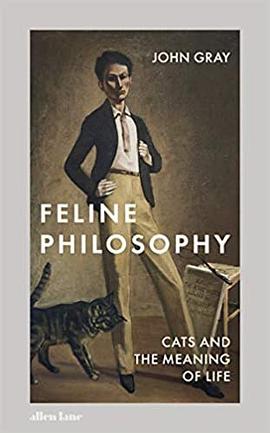
Feline Philosophy [Book] Douban
There is no real evidence that humans ever 'domesticated' cats. Rather, it seems that at some point cats saw the potential value to themselves of humans. John Gray's wonderful new book is an attempt to get to grips with the philosophical and moral issues around the uniquely strange relationship between ourselves and these remarkable animals.
Feline Philosophy draws on centuries of philosophy, from Montaigne to Schopenhauer, to explore the complex and intimate links that have defined how we react to and behave with this most unlikely 'pet'.
At the heart of the book is a sense of gratitude towards cats as perhaps the species that more than any other - in the essential loneliness of our position in the world - gives us a sense of our own animal nature.
Feline Philosophy draws on centuries of philosophy, from Montaigne to Schopenhauer, to explore the complex and intimate links that have defined how we react to and behave with this most unlikely 'pet'.
At the heart of the book is a sense of gratitude towards cats as perhaps the species that more than any other - in the essential loneliness of our position in the world - gives us a sense of our own animal nature.
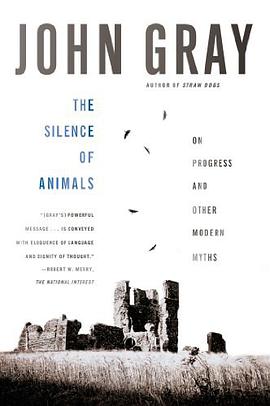
The Silence of Animals [Book] Douban
A searching, captivating look at the persistence of myth in our modern world
"By nature volatile and discordant, the human animal looks to silence for relief from being itself while other creatures enjoy silence as their birthright."
In a book by turns chilling and beautiful, John Gray continues the thinking that made his Straw Dogs such a cult classic.
Gray draws on an extraordinary array of memoirs, poems, fiction, and philosophy to re-imagine our place in the world. Writers as varied as Ballard, Borges, Conrad, and Freud have been mesmerized by forms of human extremity--experiences that are on the outer edge of the possible or that tip into fantasy and myth. What happens to us when we starve, when we fight, when we are imprisoned? And how do our imaginations leap into worlds way beyond our real experiences?
The Silence of Animals is consistently fascinating, filled with unforgettable images and a delight in the conundrum of human existence--an existence that we decorate with countless myths and ideas, where we twist and turn to avoid acknowledging that we too are animals, separated from the others perhaps only by our self-conceit. In the Babel we have created for ourselves, it is the silence of animals that both reproaches and bewitches us.
"By nature volatile and discordant, the human animal looks to silence for relief from being itself while other creatures enjoy silence as their birthright."
In a book by turns chilling and beautiful, John Gray continues the thinking that made his Straw Dogs such a cult classic.
Gray draws on an extraordinary array of memoirs, poems, fiction, and philosophy to re-imagine our place in the world. Writers as varied as Ballard, Borges, Conrad, and Freud have been mesmerized by forms of human extremity--experiences that are on the outer edge of the possible or that tip into fantasy and myth. What happens to us when we starve, when we fight, when we are imprisoned? And how do our imaginations leap into worlds way beyond our real experiences?
The Silence of Animals is consistently fascinating, filled with unforgettable images and a delight in the conundrum of human existence--an existence that we decorate with countless myths and ideas, where we twist and turn to avoid acknowledging that we too are animals, separated from the others perhaps only by our self-conceit. In the Babel we have created for ourselves, it is the silence of animals that both reproaches and bewitches us.
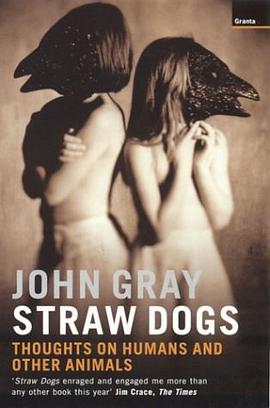
Straw Dogs [Book] Douban
Straw Dogs is an exciting, radical work of philosophy, which sets out to challenge our most cherished assumptions about what it means to be human. From Plato to Christianity, from the Enlightenment to Nietzsche, the Western tradition has been based on the belief that humans are radically different from other animals. Taking inspiration from art, poetry, the frontiers of science, and philosophy itself, John Gray argues that the belief in human difference is an illusion and offers instead a post humanist view of the world. Straw Dogs is an exhilarating, sometimes disturbing, book that explores how the world and human life look once humanism has been finally abandoned.
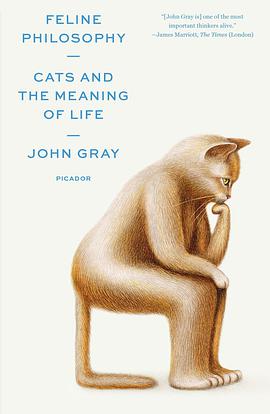
Feline Philosophy [Book] Douban
The author of Straw Dogs, famous for his provocative critiques of scientific hubris and the delusions of progress and humanism, turns his attention to cats—and what they reveal about humans' torturous relationship to the world and to themselves.
The history of philosophy has been a predictably tragic or comical succession of palliatives for human disquiet. Thinkers from Spinoza to Berdyaev have pursued the perennial questions of how to be happy, how to be good, how to be loved, and how to live in a world of change and loss. But perhaps we can learn more from cats--the animal that has most captured our imagination--than from the great thinkers of the world.
In Feline Philosophy, the philosopher John Gray discovers in cats a way of living that is unburdened by anxiety and self-consciousness, showing how they embody answers to the big questions of love and attachment, mortality, morality, and the Self: Montaigne's house cat, whose un-examined life may have been the one worth living; Meo, the Vietnam War survivor with an unshakable capacity for "fearless joy"; and Colette's Saha, the feline heroine of her subversive short story "The Cat", a parable about the pitfalls of human jealousy.
Exploring the nature of cats, and what we can learn from it, Gray offers a profound, thought-provoking meditation on the follies of human exceptionalism and our fundamentally vulnerable and lonely condition. He charts a path toward a life without illusions and delusions, revealing how we can endure both crisis and transformation, and adapt to a changed scene, as cats have always done.
The history of philosophy has been a predictably tragic or comical succession of palliatives for human disquiet. Thinkers from Spinoza to Berdyaev have pursued the perennial questions of how to be happy, how to be good, how to be loved, and how to live in a world of change and loss. But perhaps we can learn more from cats--the animal that has most captured our imagination--than from the great thinkers of the world.
In Feline Philosophy, the philosopher John Gray discovers in cats a way of living that is unburdened by anxiety and self-consciousness, showing how they embody answers to the big questions of love and attachment, mortality, morality, and the Self: Montaigne's house cat, whose un-examined life may have been the one worth living; Meo, the Vietnam War survivor with an unshakable capacity for "fearless joy"; and Colette's Saha, the feline heroine of her subversive short story "The Cat", a parable about the pitfalls of human jealousy.
Exploring the nature of cats, and what we can learn from it, Gray offers a profound, thought-provoking meditation on the follies of human exceptionalism and our fundamentally vulnerable and lonely condition. He charts a path toward a life without illusions and delusions, revealing how we can endure both crisis and transformation, and adapt to a changed scene, as cats have always done.
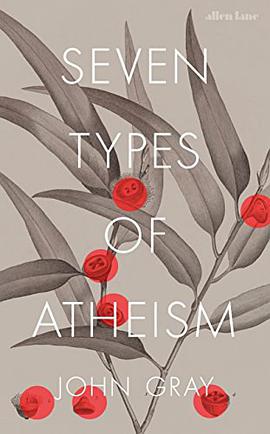
Seven Types of Atheism [Book] Douban
For a generation now, public debate has been corroded by a shrill, narrow derision of religion in the name of an often very vaguely understood 'science'. John Gray's stimulating and extremely enjoyable new book describes the rich, complex world of the atheist tradition, a tradition which he sees as in many ways as rich as that of religion itself, as well as being deeply intertwined with what is so often crudely viewed as its 'opposite'.
The result is a book that sheds an extraordinary and varied light on what it is to be human and on the thinkers who have, at different times and places, battled to understand this issue.
The result is a book that sheds an extraordinary and varied light on what it is to be human and on the thinkers who have, at different times and places, battled to understand this issue.
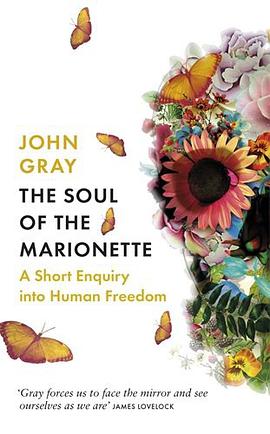
The Soul of the Marionette [Book] Douban
Everyone thinks they want to be free - or do they? John Gray's thought-stirring new book on freedom draws together insights from Gnosticism, science fiction, ancient sacrifice and the occult to show that freedom is an illusion and that, like fairground puppets, humans dream of escaping the burden of choice altogether.

Feline Philosophy [Book] Douban
The author of Straw Dogs, famous for his provocative critiques of scientific hubris and the delusions of progress and humanism, turns his attention to cats―and what they reveal about humans' torturous relationship to the world and to themselves.
The history of philosophy has been a predictably tragic or comical succession of palliatives for human disquiet. Thinkers from Spinoza to Berdyaev have pursued the perennial questions of how to be happy, how to be good, how to be loved, and how to live in a world of change and loss. But perhaps we can learn more from cats--the animal that has most captured our imagination--than from the great thinkers of the world.
In Feline Philosophy, the philosopher John Gray discovers in cats a way of living that is unburdened by anxiety and self-consciousness, showing how they embody answers to the big questions of love and attachment, mortality, morality, and the Self: Montaigne's house cat, whose un-examined life may have been the one worth living; Meo, the Vietnam War survivor with an unshakable capacity for "fearless joy"; and Colette's Saha, the feline heroine of her subversive short story "The Cat", a parable about the pitfalls of human jealousy.
Exploring the nature of cats, and what we can learn from it, Gray offers a profound, thought-provoking meditation on the follies of human exceptionalism and our fundamentally vulnerable and lonely condition. He charts a path toward a life without illusions and delusions, revealing how we can endure both crisis and transformation, and adapt to a changed scene, as cats have always done.
The history of philosophy has been a predictably tragic or comical succession of palliatives for human disquiet. Thinkers from Spinoza to Berdyaev have pursued the perennial questions of how to be happy, how to be good, how to be loved, and how to live in a world of change and loss. But perhaps we can learn more from cats--the animal that has most captured our imagination--than from the great thinkers of the world.
In Feline Philosophy, the philosopher John Gray discovers in cats a way of living that is unburdened by anxiety and self-consciousness, showing how they embody answers to the big questions of love and attachment, mortality, morality, and the Self: Montaigne's house cat, whose un-examined life may have been the one worth living; Meo, the Vietnam War survivor with an unshakable capacity for "fearless joy"; and Colette's Saha, the feline heroine of her subversive short story "The Cat", a parable about the pitfalls of human jealousy.
Exploring the nature of cats, and what we can learn from it, Gray offers a profound, thought-provoking meditation on the follies of human exceptionalism and our fundamentally vulnerable and lonely condition. He charts a path toward a life without illusions and delusions, revealing how we can endure both crisis and transformation, and adapt to a changed scene, as cats have always done.
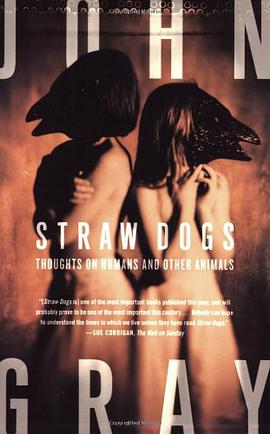
Straw Dogs [Book] Douban
The British bestseller "Straw Dogs "is an exciting, radical work of philosophy, which sets out to challenge our most cherished assumptions about what it means to be human. From Plato to Christianity, from the Enlightenment to Nietzsche and Marx, the Western tradition has been based on arrogant and erroneous beliefs about human beings and their place in the world. Philosophies such as liberalism and Marxism think of humankind as a species whose destiny is to transcend natural limits and conquer the Earth. John Gray argues that this belief in human difference is a dangerous illusion and explores how the world and human life look once humanism has been finally abandoned. The result is an exhilarating, sometimes disturbing book that leads the reader to question our deepest-held beliefs. Will Self, in the "New Statesman," called "Straw Dogs "his book of the year: "I read it once, I read it twice and took notes . . . I thought it that good." "Nothing will get you thinking as much as this brilliant book" ("Sunday Telegraph").
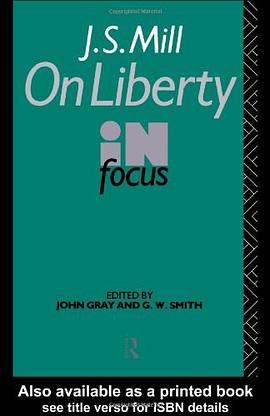
J.S. Mill's On Liberty in Focus [Book] Douban
This volume brings together J.S. Mills On Liberty and a selection of important essays by such eminent scholars as Isaiah Berlin, Alan Ryan, John Rees, C.L. Ten and Richard Wollheim. As well as providing authoritative commentary upon On Liberty, the essays reflect a broader debate about the philosophical foundations of Mill's liberalism, particularly the question of the connection betweenMill's professed utilitarianism and his commitment to individual liberty. Introduced and edited by John Gray and G.W. Smith, the book will be of interest to students of Mill, to ethical and political philosophers and to anyone interested in the contemporary status of liberalism.
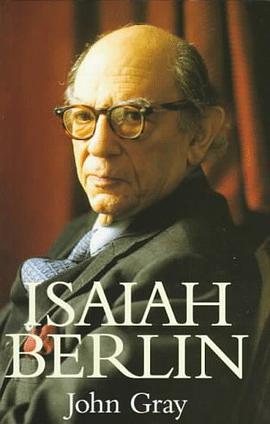
Isaiah Berlin [Book] Douban
Two Faces of Liberalism [Book] Douban
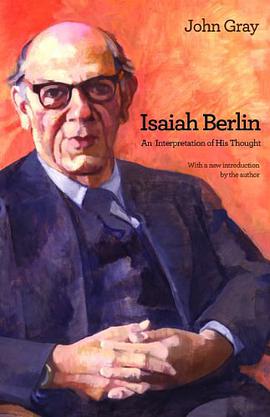
Isaiah Berlin [Book] Douban
Isaiah Berlin (1909-1997) was the greatest intellectual historian of the twentieth century. But his work also made an original and important contribution to moral and political philosophy and to liberal theory. In 1921, at the age of eleven, Isaiah Berlin arrived in England from Riga, Latvia. By the time he was thirty he was at the heart of British intellectual life. He has remained its commanding presence ever since, and few would dispute that he was one of Britain's greatest thinkers. His reputation extends worldwide--as a great conversationalist, intellectual historian, and man of letters. He has been called the century's most inspired reader. Yet Berlin's contributions to thought--in particular to moral and political philosophy, and to liberal theory--are little understood, and surprisingly neglected by the academic world. In this book, they are shown to be animated by a single, powerful, subversive idea: value-pluralism which affirms the reality of a deep conflict between ultimate human values that reason cannot resolve. Though bracingly clear-headed, humane and realist, Berlin's value-pluralism runs against the dominant Western traditions, secular and religious, which avow an ultimate harmony of values. It supports a highly distinctive restatement of liberalism in Berlin's work--an agnostic liberalism, which is founded not on rational choice but on the radical choices we make when faced with intractable dilemmas. It is this new statement of liberalism, the central subject of John Gray's lively and lucid book, which gives the liberal intellectual tradition a new lease on life, a new source of life, and which comprises Berlin's central and enduring legacy. In a new introduction, Gray argues that, in a world in which human freedom has spread more slowly than democracy, Berlin's account of liberty and basic decency is more instructive and useful than ever.
Black Mass [Book] Douban
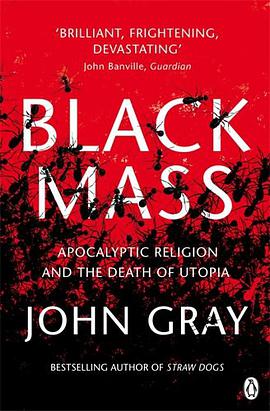
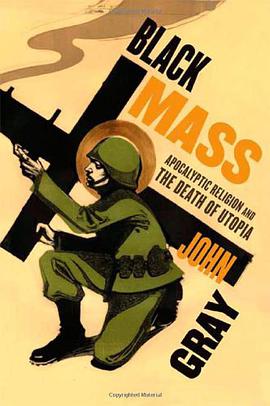
Our conventional view of history and human progress is wrong. It is founded on a pernicious myth of an achievable utopia that in the last century alone caused the murder of tens of millions. In "Black Mass" John Gray tears down the religious, political and secular beliefs that we insist are fundamental to the human project and shows us how a misplaced faith in our ability to improve the world has actually made it far worse.
Black Mass [Book] Douban
Black Mass [Book] Douban
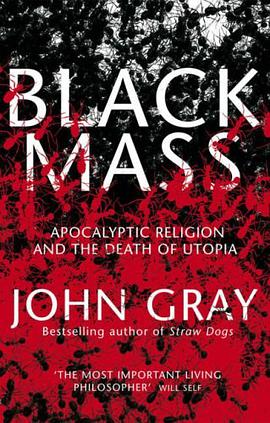
Our conventional view of history and human progress is wrong. It is founded on a pernicious myth of an achievable utopia that in the last century alone caused the murder of tens of millions. In "Black Mass" John Gray tears down the religious, political and secular beliefs that we insist are fundamental to the human project and shows us how a misplaced faith in our ability to improve the world has actually made it far worse.