Who, among you, deserves eternal life?
Daniel is a highly successful stand-up comedian who has made a career out of playing outrageously on the prejudices of his public. But at the beginning of the twenty-first century, he has begun to detest laughter in particular and mankind in general. Despite this, Daniel is unable to stop himself believing in the possibility of love.
A thousand years on, war, drought and earthquakes have decimated the earth and Daniel24 lives alone in a secure compound - his only companion, a cloned dog named Fox. Outside, the remnants of the human race roam in packs, while Daniel24 attempts to decipher his predecessor's history. In a nightmarish vision of the implosion of the modern world, he, like his predecessor attempts to fathom the meaning of love, sex, suffering and regret.
'His deftly constructed novel is a bleak comment on contemporary society, at times funny, brutal and revolting.'
THE ECONOMIST
Text extract from
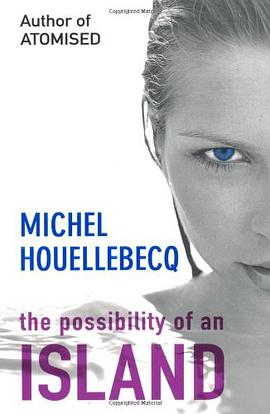
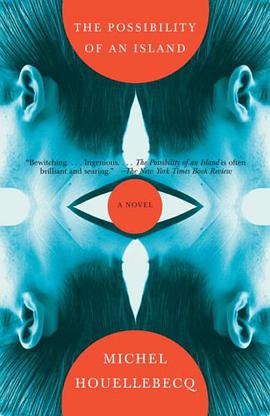
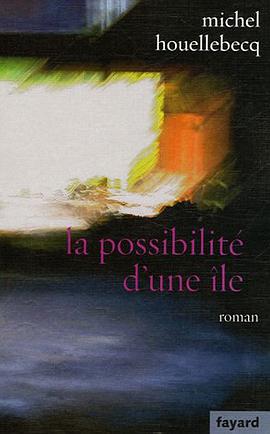
The Possibility of an Island
Michel Houellebecq
Welcome to eternal life, my friends. This book owes its existence to Harriet Wolff, a German journalist I met in Berlin a few years ago. Before putting her questions to me, Harriet wanted to recount a little fable. For her, this fable encapsulated my position as a writer.
I am in a telephone box, after the end of the world. I can make as many telephone calls as I like, there is no limit. I have no idea if anyone else has survived, or if my calls are just the monologues of a lunatic. Sometimes the call is brief, as if someone has hung up on me; sometimes it goes on for a while, as if someone is listening with guilty curiosity. There is neither day nor night; the situation is without end.
Welcome to eternal life, Harriet.
Who, among you, deserves eternal life?
My current incarnation is deteriorating; I do not think it will last much longer. I know that in my next incarnation I will be reunited with my companion, the little dog Fox.
The advantage of having a dog for company lies in the fact that it is possible to make him happy; he demands such simple things, his ego is so limited. Possibly, in a previous era, women found themselves in a comparable situation similar to that of domestic animals. Undoubtedly there used to be a form of domotic happiness, connected to the functioning of the whole, which we are no longer able to understand; there was undoubtedly the pleasure of constituting a functional organism, one that was adequate, conceived with the purpose of accomplishing a discrete series of tasks and these tasks, through repetition, constituted a discrete series of days. All that has disappeared, along with the series of tasks; we no longer really have any specific objective; the joys of humans remain unknowable to us, inversely, we cannot be torn apart by their sorrows. Our nights are no longer shaken by terror or by ecstasy. We live, however; we go through life, without joy and without mystery; time seems brief to us.
The first time I met Marie22 was on a cheap Spanish server; the connection times were appallingly long.
The weariness brought on
By the old dead Dutchman
Is not something attested
Well before the master's return.
2711, 325104, 13375317, 452626. At the address indicated I was shown an image of her pussy jerky, pixellated, but strangely real. Was she alive, dead or an intermediary? Most likely an intermediary, I think; but it was something you did not talk about.
Women give an impression of eternity, as though their pussy were connected to mysteries as though it were a tunnel opening on to the essence of the world, when in fact it is just a hole for dwarves, fallen into disrepair. If they can give us this impression, then good for them; my words are meant sympathetically.
The immobile grace,
Conspicuously crushing,
Flowing from the passage of civilisations,
Does not have death as corollary.
I should have stopped. Stopped the game, the intermediation, the contact; but it was too late. 258, 129, 3727313, 11324410.
The first sequence was filmed from a hill. Immense sheets of grey plastic covered the plain; we were north of Almeria. The harvesting of the fruit and vegetables that grew beneath the plastic used to be done by agricultural labourers most often of Moroccan origin. After mechanisation was introduced, the workers evaporated into the surrounding sierras.
In addition to the usual equipment electric generator powering the protective fence, satellite network, sensors the unit Proyecciones XXI.13 also benefited from a generator of mineral salts and its own source of drinking water. It was far away from the main thoroughfares, and did not figure on any of the recent maps its construction came after the last surveys. Since the cessation of all air traffic and the permanent jamming of satellite transmission frequencies, it had become virtually impossible to locate.
The following sequence could have been a dream. A man with my face was eating a yoghurt in a steel mill; the manual for the machine tools was written in Turkish. It was unlikely that production would start up again.
12, 12, 533, 8467.
The second message from Marie22 was worded thus:
I am alone like a silly cu**
With my
Cu**
245535, 43, 3. When I say 'I', I am lying. Let us posit the 'I' of perception neutral and limpid. Put it next to the 'I' of intermediation when you look at it this way, my body belongs to me; or, more exactly, I belong to my body. What do we observe? An absence of contact. Fear what I say.
I do not want to keep you outside this book; living or dead, you are readers. Reading is done outside of me; and I want it to be done in this way, in silence.
Contrary to received ideas, Words don't create a world; Man speaks like a dog barks To express his anger, or his fear. Pleasure is silent, Just like the state of happiness.
The self is the synthesis of our failures; but it is only a partial synthesis. Fear what I say.
This book is intended for the edification of the Future Ones. Men, they will tell themselves, were able to produce this. It is not nothing; it is not everything; we are dealing with an intermediary production.
Marie22, if she exists, is a woman to the same extent that I am a man; to a limited, refutable extent. I too am approaching the end of my journey. No one will be present at the birth of the Spirit, except for the Future Ones; but the Future Ones are not beings, in our sense of the word. Fear what I say.
PART ONE COMMENTARY OF DANIEL24
DANIEL1, 1
Now, what does a rat do when it's awake? It sniffs about.
Jean-Didier biologist
How vividly I remember the first moments of my vocation as a clown! I was seventeen at the time, and spending a rather dreary month in an all-inclusive resort in Turkey it was, incidentally, the last time I was to go on holiday with my parents. My silly bitch of a sister she was thirteen at the time was just beginning to turn the guys on. It was at breakfast; as usual in the morning, a queue had formed in front of the scrambled eggs, something the holiday- makers seemed incredibly fond of. Next to me, an old English woman (desiccated, nasty, the kind who would cut up foxes to decorate her living room), who had already helped herself copiously to eggs, didn't hesitate to snaffle up the last three sausages on the hotplate. It was five to eleven, the breakfast service had come to an end, it was inconceivable that the waiter would bring out any more sausages. The German who was in the queue behind her became rigid; his fork, already reaching for a sausage, stopped in mid-air, and his face turned red with indignation. He was an enormous German, a colossus, more than two metres tall and weighing at least 150 kilos. I thought for a moment that he was going to plant his fork in the octogenarian's eyes, or grab her by the neck and smash her head on to the hotplates. She, with that senile, unconscious selfishness of old people, came trotting back to her table as if nothing had happened. The German was angry, I could sense that he was incredibly angry, but little by little his face grew calm, and he went off sadly, sausageless, in the direction of his compatriots.
Out of this incident I composed a little sketch about a bloody revolt in a holiday resort, sparked by the tiny details that contradicted the all-inclusive formula: a shortage of sausages at breakfast, followed by a supplemental charge for the mini-golf. That evening, I performed this sketch at the 'You have talent!' soiree (one evening every week the show was made up of turns done by the holiday- makers, instead of by professionals); I played all the characters, thus taking my first steps down the road of the one-man show, a road I scarcely left throughout my career. Nearly everyone came to the after-dinner show, as there was fu**-all to do until the discotheque opened; that meant an audience of 800 people. My sketch was a resounding success, people cried with laughter, and there was noisy applause. That very evening, at the discotheque, a pretty brunette called Sylvie told me I had made her laugh a lot, and that she liked boys with a sense of humour. Dear Sylvie. And so, in this way, my virginity was lost and my vocation decided.
After my baccalaureate, I signed up for acting lessons; there followed some inglorious years, during which I grew nastier and nastier and, as a consequence, more and more caustic; thanks to this, success finally arrived on a scale which surprised me. I had begun with small sketches on reunited immigrant families, journalists for Le Monde and the mediocrity of the middle classes in general I successfully captured the incestuous temptations of mid-career intellectuals aroused by their daughters or daughters- in-law, with their bare belly-buttons and thongs showing above their trousers. In short, I was a cutting observer of contemporary reality; I was often compared to Pierre Desproges. While continuing to devote myself to the one-man show, I occasionally accepted invitations to appear on television programmes, which I chose for their big audiences and general mediocrity. I never forgot to emphasise this mediocrity, albeit subtly: the presenter had to feel a little endangered, but not too much. All in all, I was a good professional; I was just a bit overrated. I was not the only one.
I don't mean that my sketches were unfunny; they were funny. I was, indeed, a cutting observer of contemporary reality; it was just that everything now seemed so elementary to me, it seemed that so few things remained that could be observed in contemporary reality: we had simplified and pruned so much, broken so many barriers, taboos, misplaced hopes and false aspirations; truly, there was so little left. On the social level, there were the rich and the with a few fragile links between them the social ladder,a subject on which it was the done thing to joke; and the more serious possibility of being ruined. On the sexual level there were those who aroused desire, and those who did not: a tiny mechanism, with a few complications of modality (homosexuality, etc.), that could nevertheless be easily summarised as vanity and narcissistic competition, which had already been well described by the French moralists, three centuries before. There were also, of course, the honest folk, those who work, who ensure the effective production of wealth, also those who make sacrifices for their children in a manner that is rather comic or, if you like, pathetic (but I was, above all, a comedian); those who have neither beauty in their youth, nor ambition later, nor riches ever; but who hold on wholeheartedly, and more sincerely than anyone, to the values of beauty, youth, wealth, ambition and sex; those who, in some kind of way, make the sauce bind. Those people, I am afraid to say, could not constitute a subject. I did, however, include a few of them in my sketches to give diversity, and the reality effect; but I began all the same to get seriously tired. What's worse is that I was considered to be a humanist; a pretty abrasive humanist, but a humanist all the same. To give some context, here is one of the jokes that peppered my shows:
'Do you know what they call the fat stuff around the vagina?'
'No.'
'The woman.'
Strangely, I managed to throw in that kind of thing, whilst still getting good reviews in Elle and Telerama; it's true that the arrival of the Arab immigrant comedians had validated macho excesses once more, and that I was genuinely excessive, albeit with grace: going close to the bone, repeatedly, but always staying in control. Finally, the benefit of the humorist's trade, or more generally of a humorous attitude in life, is to be able to behave like a complete bastard with impunity, and even to profit hugely from your depravity, in terms of sexual conquests and money, all with general approval.
My supposed humanism was, in reality, built on very thin foundations: a vague outburst against tobacconists, an allusion to the corpses of negro clandestines cast up on the Spanish coasts, had been enough to give me a reputation as a lefty and a defender of human rights. Me, a lefty? I had occasionally been able to introduce a few, vaguely young, anti-globalisation campaigners into my sketches, without giving them an immediately antipathetic role; I had occasionally indulged in a certain demagogy: I was, I repeat, a good professional. Besides, I looked like an Arab, which helps; the only residual ideological content of the left, in those days, was anti- racism, or more precisely anti-white racism. I did not in fact know the origins of these Arab features, which became more pronounced as the years went by: my mother was of Spanish origin and my father, as far as I know, was Breton. For example, my sister, that little bitch, was undoubtedly the Mediterranean type, but she wasn't half as dark as me, and her hair was straight. One had to wonder: had my mother always been scrupulously faithful? Or had I been engendered by some Mustapha? Or even another hypothesis by a Jew? Fu** that: Arabs came to my shows in droves Jews also, by the way, although in smaller numbers; and all these people paid for their tickets, at the full price. We all worry about the circumstances of our death; the circumstances of our birth, however, are less worrisome to us.
As for human rights, quite obviously I couldn't give a toss; I could hardly manage to be interested in the rights of my cock.
In that particular respect, the rest of my career had more or less confirmed my first success at the holiday club. Women in general lack a sense of humour, which is why they consider humour to be one of the virile qualities; throughout my career, opportunities for placing my organ in one of the appropriate orifices were never lacking. To tell the truth, such intercourse was never up to much: women who are interested in comedians are getting old, nearly forty, and are beginning to suspect that things are going to turn bad. Some of them had fat asses, others breasts like flannels, sometimes both. In other words, there was nothing arousing about them; and, anyway, when it's more and more difficult to get a hard-on, the interest goes. They weren't all that old, either; I knew that as they approached fifty they would once again long for something reassuring, easy and false and of course they wouldn't find it. In the meantime, I could only confirm to them completely unintentionally, believe me, it's never a pleasure the decline of their erotic value; I could only confirm their first suspicions, and instil in them, despite myself, a despairing view of life: no, it was not maturity that awaited them, but simply old age; there was not a new blossoming at the end of the road, but a bundle of frustrations and sufferings, at first insignificant, then very quickly unbearable; it wasn't very healthy, all that, not very healthy at all. Life begins at fifty, that's true; insomuch as it ends at forty.