Susan Wise Bauer — 作者 (9)
The Story of the World [图书] 豆瓣
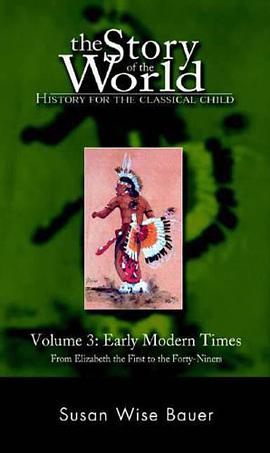
Now more than ever, other cultures are affecting our everyday lives and our children need to learn about the other countries of the world and their history. Susan Wise Bauer has provided a captivating guide to the history of other lands. Written in an engaging, straightforward manner, The Story of the World: History for the Classical Child; Volume 3: Early Modern Times weaves world history into a story book format. Who was the Sun King? Why did the Luddites go around England smashing machines? And how did samurai become sumo wrestlers? The Story of the World covers the sweep of human history from ancient times until the present. Africa, China, Europe, the Americas find out what happened all around the world in long-ago times. Designed as a read-aloud project for parents and children to share together, The Story of the World includes each continent and major people group. Volume 3: Early Modern Times is the third of a four volume series and covers the major historical events in the years 1600 to 1850, as well as including maps, illustrations, and tales from each culture. Each Story of the World volume provides a full year of history study when combined with the Activity Book, Audiobook, and Tests each available separately to accompany each volume of The Story of the World Text Book. Volume 3 Grade Recommendation: Grades 3-8.
The Story of the World [图书] 豆瓣
This first book in the four-volume narrative history series for elementary students will transform your study of history. The Story of the World has won awards from numerous homeschooling magazines and readers' polls—over 150,000 copies of the series in print! What terrible secret was buried in Shi Huangdi's tomb? Did nomads like lizard stew? What happened to Anansi the Spider in the Village of the Plantains? And how did a six-year-old become the last emperor of Rome?
Told in a straightforward, engaging style that has become Susan Wise Bauer's trademark, The Story of the World series covers the sweep of human history from ancient times until the present. Africa, China, Europe, the Americas—find out what happened all around the world in long-ago times. This first revised volume begins with the earliest nomads and ends with the last Roman emperor. Newly revised and updated, The Story of the World, Volume 1 includes maps, a new timeline, more illustrations, and additional parental aids. This read-aloud series is designed for parents to share with elementary-school children. Enjoy it together and introduce your child to the marvelous story of the world's civilizations.
Each Story of the World volume provides a full year of history study when combined with the Activity Book, Audiobook, and Tests—each available separately to accompany each volume of The Story of the World Text Book. Volume 1 Grade Recommendation: Grades 1-5. Illustrated throughout with black-and-white drawings and maps
Told in a straightforward, engaging style that has become Susan Wise Bauer's trademark, The Story of the World series covers the sweep of human history from ancient times until the present. Africa, China, Europe, the Americas—find out what happened all around the world in long-ago times. This first revised volume begins with the earliest nomads and ends with the last Roman emperor. Newly revised and updated, The Story of the World, Volume 1 includes maps, a new timeline, more illustrations, and additional parental aids. This read-aloud series is designed for parents to share with elementary-school children. Enjoy it together and introduce your child to the marvelous story of the world's civilizations.
Each Story of the World volume provides a full year of history study when combined with the Activity Book, Audiobook, and Tests—each available separately to accompany each volume of The Story of the World Text Book. Volume 1 Grade Recommendation: Grades 1-5. Illustrated throughout with black-and-white drawings and maps
The Well-Trained Mind [图书] 豆瓣
"Outstanding ... should be on every home educator's reference bookshelf." — Homeschooling Today This educational bestseller has dominated its field for the last decade, sparking a homeschooling movement that has only continued to grow. It will instruct you, step by step, on how to give your child an academically rigorous, comprehensive education from preschool through high school. Two veteran home educators outline the classical pattern of education—the trivium —which organizes learning around the maturing capacity of the child's mind. With this model, you will be able to instruct your child in all levels of reading, writing, history, geography, mathematics, science, foreign languages, rhetoric, logic, art, and music, regardless of your own aptitude in those subjects. Newly revised and updated, The Well-Trained Mind includes detailed book lists with complete ordering information; up-to-date listings of resources, publications, and Internet links; and useful contact information.
The History of the Ancient World: From the Earliest Accounts to the Fall of Rome [图书] 豆瓣 Goodreads
This is the first volume in a bold new series that tells the stories of all peoples, connecting historical events from Europe to the Middle East to the far coast of China, while still giving weight to the characteristics of each country.
Susan Wise Bauer provides both sweeping scope and vivid attention to the individual lives that give flesh to abstract assertions about human history.
Dozens of maps provide a clear geography of great events, while timelines give the reader an ongoing sense of the passage of years and cultural interconnection. This narrative history employs the methods of “history from beneath”—literature, epic traditions, private letters and accounts—to connect kings and leaders with the lives of those they ruled. The result is an engrossing tapestry of human behavior from which we may draw conclusions about the direction of world events and the causes behind them.
Susan Wise Bauer provides both sweeping scope and vivid attention to the individual lives that give flesh to abstract assertions about human history.
Dozens of maps provide a clear geography of great events, while timelines give the reader an ongoing sense of the passage of years and cultural interconnection. This narrative history employs the methods of “history from beneath”—literature, epic traditions, private letters and accounts—to connect kings and leaders with the lives of those they ruled. The result is an engrossing tapestry of human behavior from which we may draw conclusions about the direction of world events and the causes behind them.
The Well-Educated Mind [图书] 豆瓣
This book is a wonderful resource for anyone wishing to explore and develop the mind's capacity to read and comprehend the greatest works in fiction, autobiography, history, poetry, and drama. It offers brief, entertaining histories of the five literary genres, accompanied by detailed instructions on how to read each type.
The History of the Renaissance World: From the Rediscovery of Aristotle to the Conquest of Constantinople [图书] Goodreads
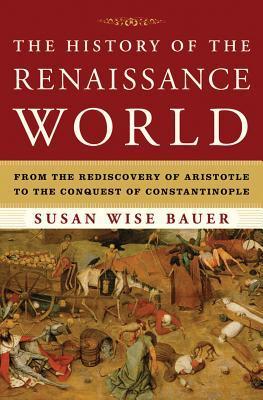
Beginning in the heady days just after the First Crusade, this volume—the third in the series that began with The History of the Ancient World and The History of the Medieval World —chronicles the contradictions of a world in transition.
Popes continue to preach crusade, but the hope of a Christian empire comes to a bloody end at the walls of Constantinople. Aristotelian logic and Greek rationality blossom while the Inquisition gathers strength. As kings and emperors continue to insist on their divine rights, ordinary people all over the world seize power: the lingayats of India, the Jacquerie of France, the Red Turbans of China, and the peasants of England.
New threats appear, as the Ottomans emerge from a tiny Turkish village and the Mongols ride out of the East to set the world on fire. New currencies are forged, new weapons invented, and world-changing catastrophes alter the landscape: the Little Ice Age and the Great Famine kill millions; the Black Death, millions more. In the chaos of these epoch-making events, our own world begins to take shape.
Impressively researched and brilliantly told, The History of the Renaissance World offers not just the names, dates, and facts but the memorable characters who illuminate the years between 1100 and 1453 — years that marked a sea change in mankind’s perception of the world.
Popes continue to preach crusade, but the hope of a Christian empire comes to a bloody end at the walls of Constantinople. Aristotelian logic and Greek rationality blossom while the Inquisition gathers strength. As kings and emperors continue to insist on their divine rights, ordinary people all over the world seize power: the lingayats of India, the Jacquerie of France, the Red Turbans of China, and the peasants of England.
New threats appear, as the Ottomans emerge from a tiny Turkish village and the Mongols ride out of the East to set the world on fire. New currencies are forged, new weapons invented, and world-changing catastrophes alter the landscape: the Little Ice Age and the Great Famine kill millions; the Black Death, millions more. In the chaos of these epoch-making events, our own world begins to take shape.
Impressively researched and brilliantly told, The History of the Renaissance World offers not just the names, dates, and facts but the memorable characters who illuminate the years between 1100 and 1453 — years that marked a sea change in mankind’s perception of the world.
The History of the Medieval World: From the Conversion of Constantine to the First Crusade [图书] Goodreads
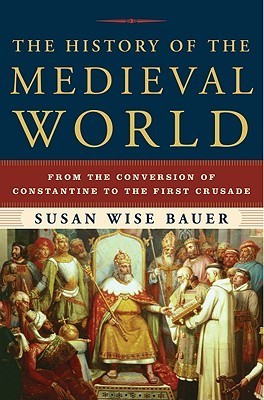
A masterful narrative of the Middle Ages, when religion became a weapon for kings all over the world.
From the schism between Rome and Constantinople to the rise of the T’ang Dynasty, from the birth of Muhammad to the crowning of Charlemagne, this erudite book tells the fascinating, often violent story of kings, generals, and the peoples they ruled.
In her earlier work, The History of the Ancient World , Susan Wise Bauer wrote of the rise of kingship based on might. But in the years between the fourth and the twelfth centuries, rulers had to find new justification for their power, and they turned to divine truth or grace to justify political and military action. Right thus replaces might as the engine of empire.
Not just Christianity and Islam but the religions of the Persians and the Germans, and even Buddhism, are pressed into the service of the state. This phenomenon—stretching from the Americas all the way to Japan—changes religion, but it also changes the state. 4 illustrations; 46 maps.
From the schism between Rome and Constantinople to the rise of the T’ang Dynasty, from the birth of Muhammad to the crowning of Charlemagne, this erudite book tells the fascinating, often violent story of kings, generals, and the peoples they ruled.
In her earlier work, The History of the Ancient World , Susan Wise Bauer wrote of the rise of kingship based on might. But in the years between the fourth and the twelfth centuries, rulers had to find new justification for their power, and they turned to divine truth or grace to justify political and military action. Right thus replaces might as the engine of empire.
Not just Christianity and Islam but the religions of the Persians and the Germans, and even Buddhism, are pressed into the service of the state. This phenomenon—stretching from the Americas all the way to Japan—changes religion, but it also changes the state. 4 illustrations; 46 maps.