安德鲁·罗宾逊 — 作者 (15)
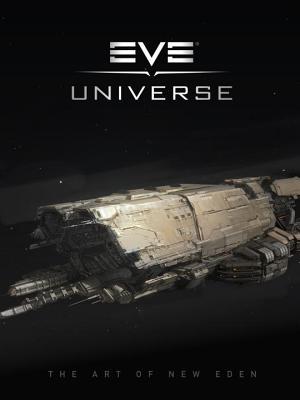
EVE Universe: The Art of New Eden [图书] 豆瓣 Goodreads
作者: Torfi Frans Ólafsson / Paul Elsy 出版社: Dark Horse Books 2015 - 4
Revealing over a decade of images created during the development of
,
, and
--this is the ultimate look at the most massive and dynamic universe in video games!
Created in close collaboration with the developers behind each game, this gorgeous full-color hardcover immerses readers in New Eden through hundreds of stunning, never-before-seen pieces of art. With in-depth commentary by CCP throughout, this is a must-have for any fan of science fiction, video games, or jaw-dropping visuals!
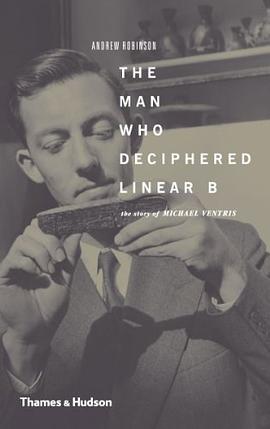
The Man Who Deciphered Linear B [图书] 豆瓣
作者: Andrew Robinson 出版社: Thames & Hudson 2012 - 4
Linear B is Europe's oldest readable writing, dating from the middle of the second millennium BC. This book, newly available in paperback, tells the life story of Michael Ventris, interlaced with that of his decipherment of Linear B. First discovered in 1900, on clay tablets among the ruins of the Palace of Minos at Knossos, Crete, it remained a mystery for over fifty years until 1952, when Michael Ventris discovered that its signs did not represent an unknown language as previously believed, but an archaic dialect of Greek, more than 500 years older than the Greek of Homer. Dubbed the Everest of archaeology, the decipherment was all the more remarkable because Ventris was not a trained classical scholar but an architect by profession, who had first heard of Linear B as a schoolboy. An initial fascination became a lifelong obsession for this intriguing and contradictory man, a gifted linguist but a divided soul. "Excellent: well researched and clearly presented compelling reading". ("The Times Literary Supplement"). "Excellent, Robinson understands how to make the complexities of pictograms clear to the non-expert. The book gives many examples, and would appeal to anyone interested in crosswords, codes and cyphers, but it also tells a fascinating human story". ("The Independent"). "A wonderfully swift and clear biography, written for the nonspecialist". ("The Economist"). "A superb biography of Michael Ventris, combining a warm account of his life with just enough technical details to satisfy those who have knowledge of linguistics or indeed of the classics. It is a splendid read, and a fine memorial to the split personality that enabled Ventris to decipher Minoan Linear B so triumphantly. ("Current World Archaeology").
Introduction to Scientific Programming and Simulation Using R [图书] 豆瓣
作者: Owen Jones / Robert Maillardet 出版社: Chapman & Hall 2009 - 3
Known for its versatility, the free programming language R is widely used for statistical computing and graphics, but is also a fully functional programming language well suited to scientific programming.
An Introduction to Scientific Programming and Simulation Using R teaches the skills needed to perform scientific programming while also introducing stochastic modelling. Stochastic modelling in particular, and mathematical modelling in general, are intimately linked to scientific programming because the numerical techniques of scientific programming enable the practical application of mathematical models to real-world problems.
Following a natural progression that assumes no prior knowledge of programming or probability, the book is organised into four main sections:
* Programming In R starts with how to obtain and install R (for Windows, MacOS, and Unix platforms), then tackles basic calculations and program flow, before progressing to function based programming, data structures, graphics, and object-oriented code
* A Primer on Numerical Mathematics introduces concepts of numerical accuracy and program efficiency in the context of root-finding, integration, and optimization
* A Self-contained Introduction to Probability Theory takes readers as far as the Weak Law of Large Numbers and the Central Limit Theorem, equipping them for point and interval estimation
* Simulation teaches how to generate univariate random variables, do Monte-Carlo integration, and variance reduction techniques
In the last section, stochastic modelling is introduced using extensive case studies on epidemics, inventory management, and plant dispersal. A tried and tested pedagogic approach is employed throughout, with numerous examples, exercises, and a suite of practice projects. Unlike most guides to R, this volume is not about the application of statistical techniques, but rather shows how to turn algorithms into code. It is for those who want to make tools, not just use them.
r
The Story of Writing [图书] 豆瓣
作者: Andrew Robinson 出版社: Thames & Hudson 1995
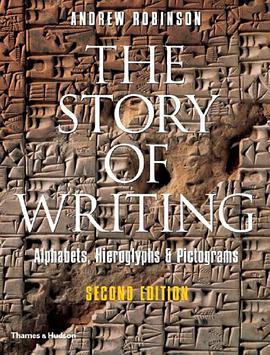
People can be interested in language, writing and scripts. They may wonder how, when and where did writing evolve? Do alphabets function better than hieroglyphs? And are we today, in the computer age, moving towards a "universal language" of signs and symbols? This text aims to demystify writing for the general reader. It explains the interconnection between sound, symbol and script for each of the major writing systems in turn, and discovers and deciphers writing forms from cuneiform and Egyptian and Maya hieroglyphs to alphabets and the scripts of China and Japan today. Throughout, the reader is guided by step-by-step graphic analysis of the way each script works, with illustrated examples.
The Story of Writing [图书] 豆瓣
作者: Andrew Robinson 出版社: Thames & Hudson 1999 - 9
Writing is arguably humanity's greatest invention, for without it there would be no history and no civilization as we know it. In a succinct and absorbing text, Andrew Robinson demystifies writing, explaining the interconnection between sound, symbol, and script, and discussing the major writing systems, from cuneiform and Egyptian and Maya hieroglyphs to alphabets and the scripts of China and Japan. He explores "proto-writing," including Ice Age symbols, tallies, and Native American pictograms, and surveys the astonishing multiplicity of alphabets--not only Greek, Roman, Hebrew, Arabic, and Indian scripts, but also the Cherokee "alphabet" and the writing of runes. Full coverage is given to the story of decipherment, and how the words of past ages have been brought back to life through the efforts of Champollion, Ventris, and others. In a provocative chapter devoted to still-undeciphered scripts, Robinson challenges the reader: Can the code of the Indus script, Cretan Linear A, the Phaistos Disc, or Easter Island ever be broken? A special feature of the book is the step-by-step illustrated analysis of the way each script works. By the end, even the beginner will have gained a basic understanding of the world's major scripts. With its dynamic layout and authoritative text, this is both a book to read for pleasure and an invaluable reference on the world's major writing systems. "The Story of Writing" is a winner of the 1996 Scientific American Young Readers Book Award.
The Story of Writing [图书] 豆瓣
作者: Andrew Robinson 出版社: Thames & Hudson 2007 - 5
Writing is one of humanity's greatest inventions. Without it there would be no history and no civilization as we know it. But how, when and where did writing evolve? In a succinct, absorbing and well-illustrated text, Andrew Robinson discusses the history of decipherment and then each of the major writing systems in turn, from cuneiform and Egyptian and Mayan hieroglyphs to alphabets and the scripts of China and Japan. An invaluable guide to the worlds major writing systems, "The Story of Writing" is a book to read for both pleasure and enlightenment.
爱因斯坦 [图书] 豆瓣
作者: 安德鲁·罗宾逊 译者: 张卜天 出版社: 湖南科学技术出版社 2005 - 11
爱因斯坦(相对论一百年),ISBN:9787535744135,作者:(英)安德鲁·罗宾逊
The Indus [图书] 豆瓣
作者: Andrew Robinson 出版社: Reaktion Books 2015 - 11
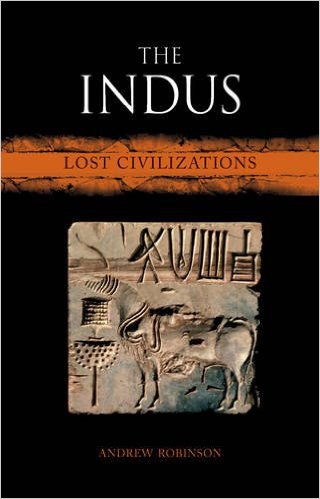
When Alexander the Great invaded the Indus Valley in the fourth century BCE, he was completely unaware that it had once been the center of a civilization that could have challenged ancient Egypt and neighboring Mesopotamia in size and sophistication. In this accessible introduction, Andrew Robinson tells the story—so far as we know it—of this enigmatic people, who lay forgotten for around 4,000 years.
Going back to 2600 BCE, Robinson investigates a civilization that flourished over half a millennium, until 1900 BCE, when it mysteriously declined and eventually vanished. Only in the 1920s, did British and Indian archaeologists in search of Alexander stumble upon the ruins of a civilization in what is now northwest India and eastern Pakistan. Robinson surveys a network of settlements—more than 1,000—that covered over 800,000 square kilometers. He examines the technically advanced features of some of the civilization’s ancient cities, such as Harappa and Mohenjo-daro, where archaeologists have found finely crafted gemstone jewelry, an exquisite part-pictographic writing system (still requiring decipherment), apparently Hindu symbolism, plumbing systems that would not be bettered until the Roman empire, and street planning worthy of our modern world. He also notes what is missing: any evidence of warfare, notwithstanding an adventurous maritime trade between the Indus cities and Mesopotamia via the Persian Gulf.
A fascinating look at a tantalizingly “lost” civilization, this book is a testament to its artistic excellence, technological progress, economic vigor, and social tolerance, not to mention the Indus legacy to modern South Asia and the wider world.
The Story of Measurement [图书] 豆瓣
作者: Andrew Robinson 出版社: Thames & Hudson 2007 - 11
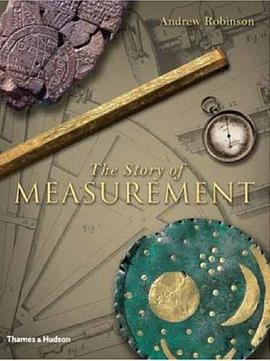
New from the author of the highly successful "The Story of Writing", here is the first fully illustrated guide to the human passion for measurement - of ourselves, our experiences, our surroundings and the universe - published at a time of great interest in popular science titles. Answering many of the questions of everyday life, and sure to appeal to a broad readership, the book is at once a valuable reference that every home should have, an important work that catalogues our obsession with quantifying the universe - and a wonderful gift.
India: A Short History [图书] 谷歌图书
作者: Andrew Robinson 出版社: Thames & Hudson 2014 - 05
India’s unfolding story, from the ancient Hindu dynasties to the coming of Islam, from the Mughal Empire to the present day   India has always been a land of great contradictions. To Alexander the Great, the country was a place of clever naked philosophers and massive armies mounted on elephants – which eventually forced his army to retreat. To ancient Rome, it was a source of luxuries, mainly spices and textiles, paid for in gold—hence the enormous numbers of Roman gold coins excavated in India. At the height of the Mughal empire in 1700, India boasted 24 percent of the world economy—a share virtually equal to Europe’s 25 percent. But then its economy declined. Colonial India was known for its extremes of wealth and poverty, epitomized by the Taj Mahal and famines, maharajas and untouchables, and also for its spirituality: many-armed Hindu gods and Buddhist philosophy, Mahatma Gandhi and Rabindranath Tagore.

India: A Short History places as much emphasis on individuals, ideas and cultures as on the rise and fall of kingdoms, political parties and economies. Anyone curious about a great civilization, and its future, will find this an ideal introduction, at times controversial, written by an author who has been strongly engaged with India for more than three decades.
Genius [图书] 豆瓣
作者: Andrew Robinson 出版社: Oxford University Press 2011
Homer, Leonardo da Vinci, Mozart, Shakespeare, and Tolstoy; Curie, Darwin, Einstein, Galileo, and Newton. What do these world-famous artists and scientists have in common?- apart from the fact that their achievements predate our own time by a century or more. Most of us would probably answer: all ten possessed something we call genius, which in each instance permanently changed the way that humanity perceived the world. But pressed to be more precise, we find it remarkably hard to define genius. Genius is highly individual and unique, of course, yet it shares a compelling, inevitable quality for professionals and the general public alike. Darwin's ideas are still required reading for every working biologist; they continue to generate fresh thinking and experiments around the world. So do Einstein's theories among physicists. Shakespeare's plays and Mozart's melodies and harmonies continue to move people in languages and cultures far removed from their native England and Austria. Contemporary 'geniuses' may come and go, but the idea of genius will not let go of us. Genius is the name we give to a quality of work that transcends fashion, celebrity, fame, and reputation: the opposite of a period piece. Somehow, genius abolishes both the time and the place of its origin. This Very Short Introduction uses the life and work of familiar geniuses-and some less familiar-to illuminate both the individual and the general aspects of genius. In particular: the roles of talent, heredity, parenting, education, training, hard work, intelligence, personality, mental illness, inspiration, eureka moments, and luck, in the making of genius.
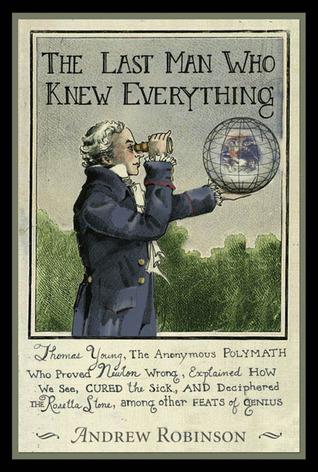
The Last Man Who Knew Everything: Thomas Young, The Anonymous Polymath Who Proved Newton Wrong, Explained How We See, Cured the Sick, and Deciphered the Rosetta Stone, Among Other Feats of Genius [图书] Goodreads
作者: Andrew Robinson 出版社: Pi Press 2005 - 1
Physics textbooks identify Thomas Young (1773-1829) as the experimenter who first proved that light is a wave--not a stream of corpuscles as Newton proclaimed. In any book on the eye and vision, Young is the London physician who showed how the eye focuses and proposed the three-color theory of vision confirmed only in 1959. In any book on ancient Egypt, Young is credited for his crucial detective work in deciphering the Rosetta Stone. It is hard to grasp how much he knew.
Invited to contribute to a new edition of the Encyclopedia Britannica, Young offered the following Alphabet, Annuities, Attraction, Capillary Action, Cohesion, Colour, Dew, Egypt, Eye, Focus, Friction, Halo, Hieroglyphic, Hydraulics, Motion, Resistance, Ship, Sound, Strength, Tides, Waves, and anything of a medical nature. He asked that all his contributions be kept anonymous.
While not yet thirty he gave a course of lectures at the Royal Institution covering virtually all of known science. But polymathy made him unpopular in the academy. An early attack on his wave theory of light was so scathing that English physicists buried it for nearly two decades until it was rediscovered in France. But slowly, after his death, great scientists recognized his genius.
Today, in an age of professional specialization unimaginable in 1800, polymathy still disturbs us. Is this kind of curiosity selfish, even irresponsible? Here is the story of a driven yet modest hero, the last man who knew everything.