卢奇安·平蒂列 — 导演 (12)
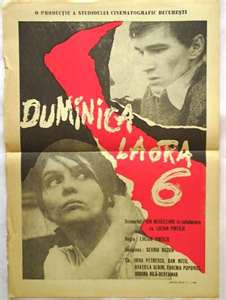
周日六点 (1965) [电影] 豆瓣
Duminică la ora 6
导演:
Lucian Pintilie
其它标题:
Duminică la ora 6
/
星期天六点钟
…
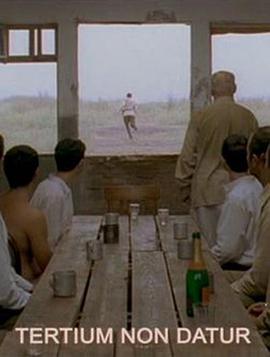
Lucian Pintilie's first film, Sunday at 6 O'clock (Duminica la ora 6, 1965) , one of the few Romanian modernist auteur films. The story, about a couple of young, anti-Fascist fighters who are persecuted and killed by the Iron Guard [2] after being betrayed by one of their own, meets the requirements of socialist realism to a point.
The film's style, however, takes on a life of its own, and the poetic parable about the Angels of Light confronting the Demons of Darkness is transformed into a disturbing psychological thriller, replete with sadistic torture scenes. From a close-up on the perspiring face of the hiding boy, the camera rapidly zooms down the elevator shaft to reveal the girl's body far below in the dungeons, and then cuts to a sun-bleached courtyard where young people are happily chatting, thus escalating the foreboding anticipation to the limit. The recurring audio-visual leitmotifs (the dark stairwell, the sounds of elevator machinery, the overexposed courtyard) trigger a series of flashbacks, introducing bit by bit the poignant story of two people destroyed by the uncanny forces of history. Thus, Pintilie's film yields a transparent existential metaphor for the despondency of young people in his country, trapped in the shaft of Communist dictatorship.
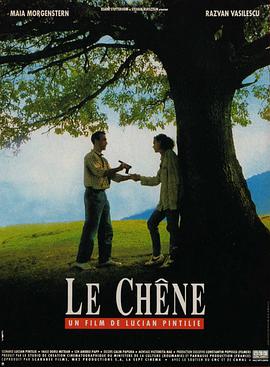
橡树 (1992) [电影] TMDB IMDb 维基数据 豆瓣
Balanţa
其它标题:
Balanţa
/
Balanta
…
这部在欧洲电影节上获得最佳女主角奖的电影讲80年代末东欧巨变时两个普通人的爱情故事。80年代末的布加勒斯特,一个刚刚丧父的女子不愿仿效姐姐走上警察的道路,决定到外省寻求发展,结果她做了个教书老师,与性格乐观的医生米提克恋爱。尽管迎接他们的是漫天的政治风暴和社会动荡,但在坚贞的爱情呵护下,这对恋人如同他们约会旁的橡树一样,保留着对生活、对明天的无限期望和信念。
这部电影节奏感很强,也有大量超现实的场景,其中不乏对当时罗马尼亚独裁政权的讥讽谴责和对黑暗专制下人性压抑的描述,但透过这对置身自我恋爱天地而无忧无虑的恋人,导演意旨在于表达对国家、对民族深切的同情和满心的冀望,以及对美好将来永不磨灭的信心。令人回想起库斯图里卡的《没有天空的都市》,两者均有异曲同工的地方。
最后的天堂 (1998) [电影] 豆瓣
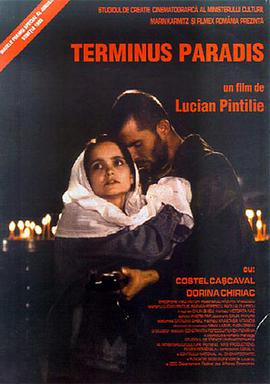
Terminus paradis
导演:
卢奇安·平蒂列
演员:
Costel Cascaval
/
Dorina Chiriac
…
其它标题:
Terminus paradis
/
下一站天堂
一个怀抱着美国梦的青年,却因为父亲的反对之下,只好靠着养猪为生。他与一名美丽的女服务生陷入热恋,恋人间的挑衅让两人愈陷愈深,将他们带向无法挽救的悲剧结局。
在过去与现在之间拉锯,导演似乎在告诉我们:遗忘过去、抓住现在,是减低历史加诸在我们身上之暴力最好的良方;那是无悔的青春列车,因为下一站是天堂。
太晚 (1996) [电影] 豆瓣 IMDb 维基数据 TMDB
Prea târziu
导演:
卢奇安·平蒂列
演员:
Cecilia Barbora
/
Florin Calinescu
…
其它标题:
Prea târziu
/
Too Late
…
本片为戛纳电影节正式竞赛片
简介:事关地方政治... 但是, Pintilie 超出了以前的艺术套路和制片样式范围。 在本片中,他显示了残酷现实反应, 坏人, 坏联系, 坏价值, 坏的一切... 并且他显示它的一个好方式。即使您不习惯罗马尼亚样式, 观察存在的某些人民- 当然, 不是那显著, 但仍然很可能早今天发生, 不是某处离我们很远的地方。很熟悉,很亲近。这不是罗马尼亚, 这不是真正的材料, 但它是关于存在的人民。绝对的天才喜剧。观看它。您不会后悔它。...
米蒂克,为什么钟响了? (1981) [电影] 豆瓣
De ce trag clopotele, Mitică?
导演:
卢奇安·平蒂列
演员:
Victor Rebengiuc
/
Mariana Mihut
其它标题:
De ce trag clopotele, Mitică?
/
春色无边嘉年华(港)
…
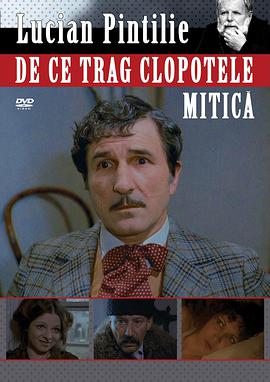
她愛上了理髮師浪子,浪子愛的卻是別人情婦。情婦寫給浪子的情信輾轉流落她家,又神推鬼使的被一直包養她的情夫發現,誤會重重下引發一場大醜聞。牆外嘉年華會正盛大進行,牆內春色無邊,愚人終愚己。那比真實還大的荒唐所映照的,不就是社會帷幕、種種偽相遮蓋住的軟弱人性嗎?改編自羅馬尼亞戲劇大師卡拉迦列(1852-1912)原作,卻也許把背叛和錯許拍得過於殘酷,有損國體,電影完成即被黨官禁制,壽西斯古倒台後才可重見天日。
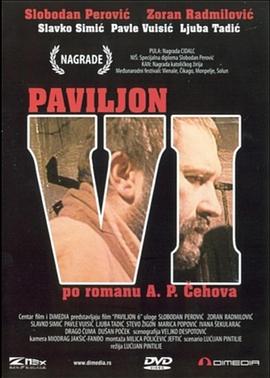
六号病房 (1978) [电影] 豆瓣
Paviljon VI
导演:
卢奇安·平蒂列
演员:
佐兰·拉德米洛维奇
/
斯洛博丹·佩罗维奇
其它标题:
Paviljon VI
/
Palata No.6
…
根据契诃夫的同名短篇小说改编。获嘎纳电影节Catholic奖。
The story of a province hospital doctor in czarist Russia, who spends his days aimlessly, losing his will even for regular work. One day, in Department for mental diseases, the Pavillion VI, he meets his former student, rebellious, with restles spirit. Attracted with, by his own judgement, original ideas of his patient, the doctor spends great deal of his time with him and, letting himself to meditations, loses touch with reality. People around him laugh at him at start, and in the end, he finishes his life tragically in Pavillion VI. Screening of the synonymous Anton Chekhov's novel. This film won the Catholic Jury Prize at Cannes.