George Soros — 作者 (16)
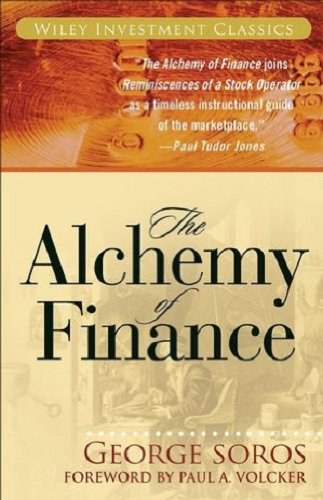
The Alchemy of Finance [图书] 豆瓣 Goodreads
作者: George Soros 出版社: Wiley 2015 - 6
在线阅读本书
Book Description
New chapter by Soros on the secrets to his success along with a new Preface and Introduction. New Foreword by renowned economist Paul Volcker "An extraordinary ... inside look into the decision-making process of the most successful money manager of our time. Fantastic." - "The Wall Street Journal". George Soros is unquestionably one of the most powerful and profitable investors in the world today. Dubbed by "BusinessWeek" as "the Man who Moves Markets," Soros made a fortune competing with the British pound and remains active today in the global financial community. Now, in this special edition of the classic investment book, "The Alchemy of Finance", Soros presents a theoretical and practical account of current financial trends and a new paradigm by which to understand the financial market today. This edition's expanded and revised Introduction details Soros's innovative investment practices along with his views of the world and world order. He also describes a new paradigm for the "theory of reflexivity" which underlies his unique investment strategies. Filled with expert advice and valuable business lessons, "The Alchemy of Finance" reveals the timeless principles of an investing legend. This special edition will feature a new chapter by Soros on the secrets of his success and a new Foreword by the Honorable Paul Volcker, former Chairman of the Federal Reserve. George Soros (New York, NY) is President of Soros Fund Management and Chief Investment Advisor to Quantum Fund N.V., a GTB 12 billion international investment fund. Besides his numerous ventures in finance, Soros is also extremely active in the worlds of education, culture, and economic aid and development through his Open Society Fund and the Soros Foundation.
Book Dimension
length: (cm)22.8                 width:(cm)15.4
The Age of Fallibility [图书] 豆瓣
作者: George Soros 出版社: PublicAffairs 2006 - 6
The legendary financier-and founder of the Open Society Institute-offers crucial insight into the real meaning of freedom, and how societies can best promote it
After reflecting on his support of a losing Democrat for president, George Soros steps back to revisit his views on why George Bush's policies around the world fall short in the arenas most important to Soros: democracy, human rights and open society. As a survivor of the Holocaust and a life-long proponent of free expression, Soros understands the meaning of freedom. And yet his differences with George Bush, another proponent of freedom, are profound.
In this powerful essay Soros spells out his views and how they differ from the president's. He reflects on why the Democrats may have lost the high ground on these values issues and how they might reclaim it. As he has in his recent books, On Globalization and The Bubble of American Supremacy, Soros uses facts, anecdotes, personal experience and philosophy to illuminate a major topic in a way that both enlightens and inspires.
The New Paradigm for Financial Markets [图书] 豆瓣
作者: George Soros 出版社: PublicAffairs 2008 - 5
In the midst of one of the most serious financial upheavals since the Great Depression, George Soros, the legendary financier and philanthropist, writes about the origins of the crisis and proposes a set of policies that should be adopted to confront it. Soros, whose breadth of experience in financial markets is unrivaled, places the current crisis in the context of his decades of study of how individuals and institutions handle the boom and bust cycles that now dominate global economic activity. "This is a once in a lifetime moment," writes Soros in characterizing the scale of financial distress spreading across Wall Street and other financial centers around the world. In a concise essay that combines practical insight with philosophical depth, Soros makes an invaluable contribution to our understanding of the great credit crisis and its implications for our nation and the world.
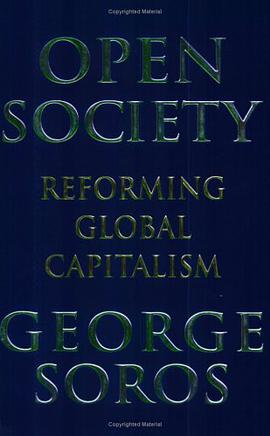
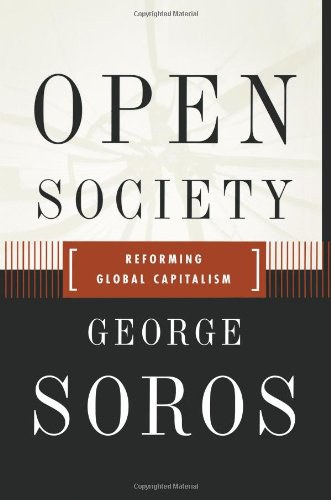
Open Society [图书] 豆瓣
作者: George Soros 出版社: PublicAffairs 2000 - 1
The renowned financier reconsiders the state of the world economy, and the arguments he made in his New York Times and Wall Street Journal bestseller The Crisis of Global Capitalism . Lauded by the New York Times as "brilliant and persuasive," and published in more than thirty-five foreign editions, George Soros's The Crisis of Global Capitalism became an instant classic. A must read for anyone concerned with the complex market forces that rule our global economy and that have thrust us into a state of financial flux and international economic insecurity. Now Soros takes a whole new look at the arguments he made in that book, incorporating the very latest in global economic and political developments. He shows how the recovery following the economic meltdown of 1998 may have been a false dawn, leaving us in a much more precarious position than we realize. He also explores surprising connections between events like the war in Kosovo and the economic wealth of nations. And he offers new insights into the fates of Russia, Asia, Europe and the United States. Demonstrating that our still unquestioning faith in market forces blinds us to crucial economic instabilities, Open Society provides an inspiring vision of how to fix the flaws in the system - suggestions that have already influenced leaders at the IMF, the World Bank, and in many national governments.
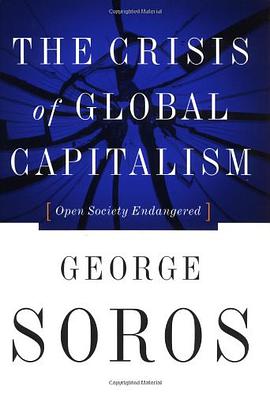
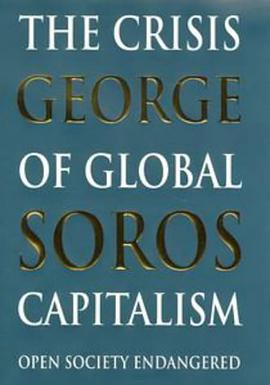
The Crisis of Global Capitalism [图书] 豆瓣
作者: George Soros 出版社: PublicAffairs 1998
George Soros is a legend in the world of finance, a man whose name is known from Wall Street to Wuhan, from Manchester to Moscow, from Brussels to Bangkok. His Quantum Fund has been the best-performing investment fund in history and his foundations have helped reshape the post-Cold War world. Now Soros applies all of his wisdom, expertise and insight to explain what's happening in the collapsing global economy. The result is a brilliant work of profound importance, a startling critique of what's gone wrong and an inspiring vision of how it can be fixed.
In THE CRISIS OF GLOBAL CAPITALISM, Soros dissects the current crisis and economic theory in general, revealing how theoretical assumptions have combined with human behavior to lead to today's mess. He shows how unquestioning faith in market forces blinds us to crucial instabilities, and how those instabilities have chain-reacted to cause the current crisis-a crisis that has the potential to get much, much worse. But there is a way out, and it involves embracing the concept of the open society. And by doing so we can save not only our financial system, but also our civilization.
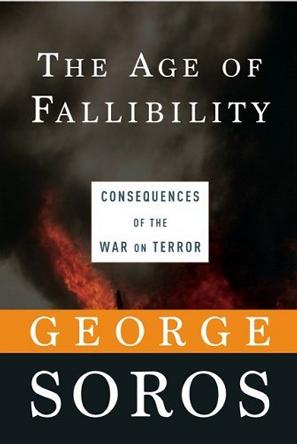
The Age of Fallibility [图书] 豆瓣
作者: George Soros 出版社: PublicAffairs,U.S. 2007 - 1
Blinded by a concept
11:06 AM PDT, August 31, 2006
The failure of Israel to subdue Hezbollah demonstrates the many weaknesses of the war-on-terror concept. One of those weaknesses is that even if the targets are terrorists, the victims are often innocent civilians, and their suffering reinforces the terrorist cause.
In response to Hezbollah's attacks, Israel was justified in attacking Hezbollah to protect itself against the threat of missiles on its border. However, Israel should have taken greater care to minimize collateral damage. The civilian casualties and material damage inflicted on Lebanon inflamed Muslims and world opinion against Israel and converted Hezbollah from aggressors to heroes of resistance for many. Weakening Lebanon has also made it more difficult to rein in Hezbollah.
Another weakness of the war-on-terror concept is that it relies on military action and rules out political approaches. Israel previously withdrew from Lebanon and then from Gaza unilaterally, rather than negotiating political settlements with the Lebanese government and the Palestinian authority. The strengthening of Hezbollah and Hamas was a direct consequence of that approach. The war-on-terror concept stands in the way of recognizing this fact because it separates "us" from "them" and denies that our actions help shape their behavior.
?
A third weakness is that the war-on-terror concept lumps together different political movements that use terrorist tactics. It fails to distinguish between Hamas, Hezbollah, Al Qaeda or the Sunni insurrection and the Mahdi militia in Iraq. Yet all these terrorist manifestations, being different, require different responses. Neither Hamas nor Hezbollah can be treated merely as targets in the war on terror because they have deep roots in their societies; yet there are profound differences between them.
Looking back, it is easy to see where Israeli policy went wrong. When Mahmoud Abbas was elected president of the Palestinian Authority, Israel should have gone out of its way to strengthen him and his reformist team. When Israel withdrew from Gaza, the former head of the World Bank, James Wolfensohn, negotiated a six-point plan on behalf of the Quartet for the Middle East (Russia, the United States, the European Union and the United Nations). It included opening crossings between Gaza and the West Bank, an airport and seaport in Gaza, opening the border with Egypt, and transferring the greenhouses abandoned by Israeli settlers into Arab hands.
None of the six points was implemented. This contributed to Hamas?s electoral victory. The Bush administration, having pushed Israel to allow the Palestinians to hold elections, then backed Israel?s refusal to deal with a Hamas government. The effect was to impose further hardship on the Palestinians.
Nevertheless, Abbas was able to forge an agreement with the political arm of Hamas for the formation of a unity government. It was to foil this agreement that the military branch of Hamas, run from Damascus, engaged in the provocation that brought a heavy-handed response from Israel - which in turn incited Hezbollah to further provocation, opening a second front. That is how extremists play off against each other to destroy any chance of political progress.
Israel has been a participant in this game, and President Bush bought into this flawed policy, uncritically supporting Israel. Events have shown that this policy leads to the escalation of violence. The process has advanced to the point where Israel's unquestioned military superiority is no longer sufficient to overcome the negative consequences of its policy.
Israel is now more endangered in it existence that it was at the time of the Oslo Agreement on peace. Similarly, The United States has become less safe since President Bush declared war on terror.
The time has come to realize that the present policies are counterproductive. There will be no end to the vicious circle of escalating violence without a political settlement of the Palestine question. In fact, the prospects for engaging in negotiations are better now than they were a few months ago. The Israelis must realize that a military deterrent is not sufficient on its own. And Arabs, having redeemed themselves on the battlefield, may be more willing to entertain a compromise.
There are strong voices arguing that Israel must never negotiate from a position of weakness. They are wrong. Israel?s position is liable to become weaker the longer it persists on its present course. Similarly Hezbollah, having tasted the sense but not the reality of victory (and egged on by Syria and Iran) may prove recalcitrant. But that is where the difference between Hezbollah and Hamas comes into play. The Palestinian people yearn for peace and relief from suffering. The political - as distinct from the military - wing of Hamas must be responsive to their desires. It is not too late for Israel to encourage and deal with an Abbas-led Palestinian unity government as the first step toward a better-balanced approach. Given how strong the U.S.-Israeli relationship is, it would help Israel achieve its own legitimate aims if the U.S. government were not blinded by the war-on-terror concept.
Open Society [图书] 豆瓣
作者: George Soros 出版社: Little, Brown & Company 2000
George Soros is a legend in the world of finance. His Quantum Fund has been the best performing investment fund in history and his foundations have helped re-shape the post-Cold War world. In this thoroughly revised version of his international bestseller, George Soros reconsiders his analysis in the light of recent economic events. We need to improve our international arrangements to match our increasing economic interdependence. Soros proposes that the open societies of the world should form an alliance for the dual purpose of fostering the development of open society within individual countries, and to lay the groundwork for a global open society by strengthening international institutions and rules of behaviour. Whilst the hardback edition emphasised the financial side of the system, the paperback adds more weight to its political aspects. Offering brilliant solutions based on years of Soros's own experience as a financier and philanthropist, THE CRISIS OF GLOBAL CAPITALISM is essential reading for anyone involved with the new economy - that is, all of us.
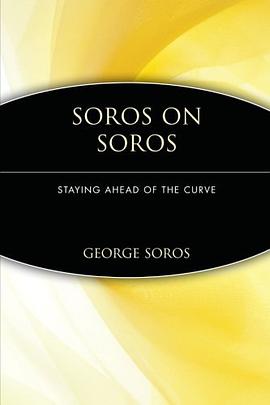
Soros on Soros [图书] 豆瓣
作者: George Soros 出版社: Wiley 1995 - 8
在线阅读本书
George Soros Ends the Speculation
The outcome [of this book] is a summing up of my life′s work. . . As I finish the book, I feel I have succeeded."–George Soros from the Preface

Critical praise for Soros on Soros
If you have ever wanted to sit down for a candid conversation with a phenomenal financial success, George Soros′s book provides the opportunity. You will meet a complex man and a first–rate mind."–Henry A. Kissinger
The best expert on Soros is undoubtedly George Soros! After all, who is better equipped to tell us what he really thinks and how he thinks, a matter of some importance given the fact that he has translated a remarkable personal financial success into a truly generous and historically significant effort to promote postcommunist democracy." –Zbigniew Brzezinski
The best X–ray of the mind of the master yet." –Barton M. Biggs
George Soros brings a lot more to the world of finance than the intuition and nerve of a born trader–and in Soros on Soros he′s no longer bashful about telling us about it. A philosopher at heart, George attributes his success at investing to a theory of the interaction of reality and human perception. What really drives the man now, with a personal fortune beyond all personal need, is a different kind of strategic investing–investment to build in Eastern Europe the kind of open societies he came to value in his own life." –Paul A. Volcker

Financial guru George Soros is one of the most colorful and intriguing figures in the financial world today. Now in Soros on Soros, readers are given their most intimate and revealing look yet into the life and mind of the one BusinessWeek dubbed, "The Man Who Moves Markets."

Soros on Soros interweaves financial theory and personal reminiscence, political analysis and moral reflection to offer a compelling portrait of the world (and its markets) according to Soros. In an interview–style narrative with Byron Wien, Managing Director at Morgan Stanley, and with German journalist Krisztina Koenen, Soros vividly describes the genesis of his brilliant financial career and shares his views on investing and global finance, politics and the emerging world order, and the responsibility of power.

Speaking with remarkable candor, he traces his progress from Holocaust survivor to philosophy student, unsuccessful tobacco salesman to the world′s most powerful and profitable trader and introduces us to the people and events that helped shape his character and his often controversial views.

In describing the investment theories and financial strategies that have made him "a superstar among money managers" (The New York Times), Soros tells the fascinating story of the phenomenally successful Soros Fund Management and its $12 billion flagship, Quantum Fund. He also offers fresh insights into some of his most sensational wins and losses, including a firsthand account of the $1 billion he made going up against the British pound and the fortune he lost speculating on the yen. Plus: Soros′s take on the devaluation of the peso and currency fluctuations internationally.

He tells of the personal and professional crises that more than once threatened to destroy him and of the personal resources he drew upon to turn defeat into resounding victory. And he explains his motivations for establishing the Soros Foundation and the Open Society Institute through which he worked to build open societies in postcommunist countries in Eastern Europe and the former Soviet Union.

Finally, turning his attention to international politics, Soros offers keen insights into the current state of affairs in Russia and the former communist bloc countries and analyzes the reasons behind and likely consequences of the West′s failure to properly integrate them into the free world. He also explores the crisis of the ERM and analyzes the pros and cons of investing in a number of emerging markets.

Find out what makes one of the greatest financial wizards of this or any age tick. Soros on Soros is a must read for anyone interested in world finance and international policy.
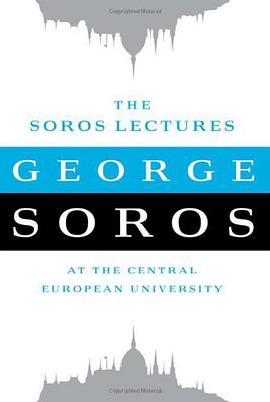
The Soros Lectures [图书] 豆瓣
作者: George Soros 出版社: PublicAffairs 2010 - 2
Five lectures George Soros recently delivered at the Central European University in Budapest - which he founded in 1991 - distill a lifetime of thinking on finance, capitalism and open society In a series of lectures delivered at the Central European University in October 2009, George Soros provided a broad overview of his thoughts on economics and politics. The lectures are the culmination of a lifetime of practical and philosophical reflection. In the first and second lecture, Soros discusses his general theory of reflexivity and its application to financial markets, providing insight into the recent financial crisis. The third and fourth lectures examine the concept of open society, which has guided Soros' global philanthropy, as well as the potential for conflict between capitalism and open society. The closing lecture focuses on the way ahead, closely examining the increasingly important economic and political role that China will play in the future. "The Budapest Lectures" presents these five seminal talks into one volume, which offers a condensed and highly readable summary of Soros' world view.
点击链接进入中文版:
超越金融:索罗斯的哲学
全球资本主义危机 [图书] 豆瓣
作者: 乔治 索罗斯 / George Soros 出版社: 联经出版事业公司 1998
在「全球資本主義危機」一書中,索羅斯剖析了目前的危機以及經濟理論,揭露了理論假設如何和人類行為結合,結果搞出現在的一團糟來。他讓讀者看到,對市場力量全不置疑的信念如何使我們對重大的不穩定因素視而不見,以及這些不穩定因素如何發生連鎖反應,引起當前的危機,而這危機卻有可能變得更加嚴重。但我們就這麼一條出路,這牽涉到接受開放社會概念。接納了開放社會概念後,我們不但能夠挽救我們的金融體系,也可以挽救我們的文明。
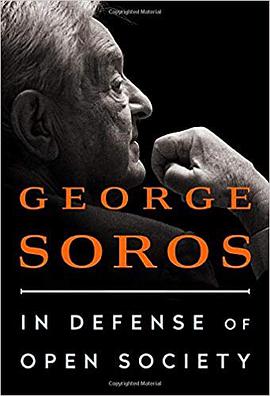
In Defense of Open Society [图书] 豆瓣 Goodreads
作者: George Soros 出版社: Little Brown Imports 2019 - 9
An impassioned defense of open society, academic and media freedom, and human rights.


George Soros -- universally known for his philanthropy, progressive politics, and investment success--has been under sustained attack from the far right, nationalists, and anti-Semites in the United States and around the world because of his commitment to open society and liberal democracy.


In this brilliant and spirited book, Soros brings together a vital collection of his writings, some never previously published. They deal with a wide range of important and timely the dangers that the instruments of control produced by artificial intelligence and machine learning pose to open societies; what Soros calls his "political philanthropy"; his founding of the Central European University, one of the world's foremost defender of academic freedom; his philosophy; his boom/bust theory of financial markets and its policy implications; and what he calls the tragedy of the European Union. Soros's forceful affirmation of freedom, democracy, the rule of law, human rights, social justice, and social responsibility as a universal idea is a clarion call-to-arms for the ideals of open society.
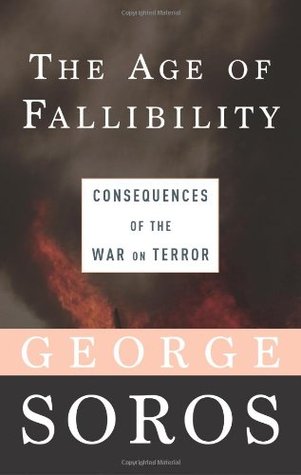
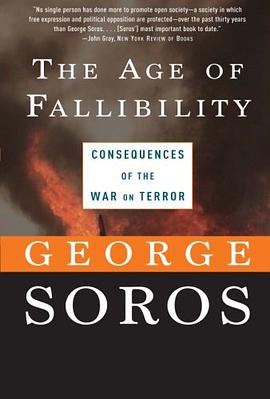
The Age of Fallibility: Consequences of the War on Terror [图书] Goodreads
The Age of Fallibility: Consequences of the War on Terror
作者: George Soros 出版社: PublicAffairs 2006 - 6
After reflecting on his support of a losing Democrat for president, George Soros steps back to revisit his views on why George Bush's policies around the world fall short in the arenas most important to Soros: democracy, human rights and open society. As a survivor of the Holocaust and a life-long proponent of free expression, Soros understands the meaning of freedom. And yet his differences with George Bush, another proponent of freedom, are profound. In this powerful essay Soros spells out his views and how they differ from the president's. He reflects on why the Democrats may have lost the high ground on these values issues and how they might reclaim it. As he has in his recent books,
and
, Soros uses facts, anecdotes, personal experience and philosophy to illuminate a major topic in a way that both enlightens and inspires.
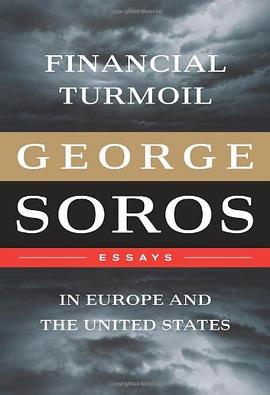
Financial Turmoil in Europe and the United States [图书] 豆瓣
作者: George Soros 出版社: PublicAffairs 2012 - 2
In a natural follow-up to his international bestseller "The Crash of 2008: The New Paradigm for Financial Markets", George Soros reflects on what went wrong with the global economy, and how to get it back on track. The dire economic situation we find ourselves in is not a result of economic forces alone, but of the policies pursued, and not pursued, by world leaders. In this collection of his recent writings on the global financial situation, George Soros presents his views and analysis of key economic policy choices leading up to, during, and following the financial crisis of 2008-2009. Soros explores domestic and international policy choices, like how to manage the (then) potential implosion of Fannie Mae & Freddie Mac; options for "setting a floor" on the collapsing housing market; deploying measures to stem global contagion from the sub-prime crisis; alternative options for bailing out lesser developed countries and why this was vital; how to bring the credit default swap industry under control; the structural problems of European economic management; and, more. "Financial Turmoil in Europe and the United States" elegantly distills the choices at hand, and takes the reader on a journey of real time economic policy work and experimentation. Soros shows that economic outcomes are a result of choices made and paths not taken, and sounds the warning on the dangers of ideologically-based policy making.
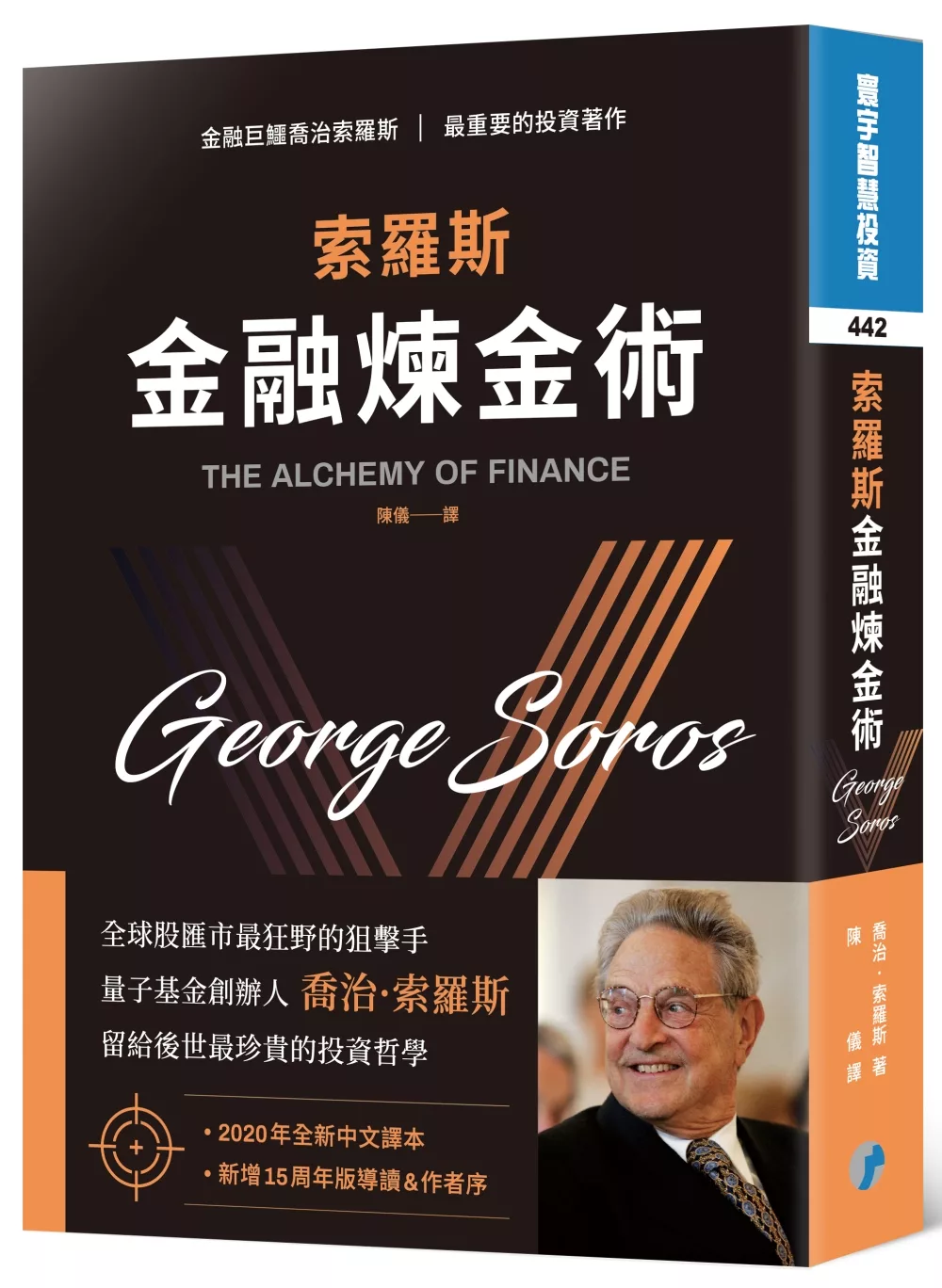
索羅斯金融煉金術(中文新譯版) [图书] 博客來
The Alchemy of Finance
作者: George Soros 译者: 陳儀 出版社: 寰宇 2020 - 1


  勇於犯錯,縱使判斷失敗也能勇於反轉部位;
  毫不手軟,嗅到良機必用槓桿重押來積極回應;
  先發制人,總是先投資再研究而不浪費一絲機會;
  看似無跡可尋,卻憑一己之力造就了量子基金年均報酬超過三十%的驚人紀錄; 
  引爆亞洲金融風暴、擊垮英格蘭銀行的幕後推手,另一面卻是個徹徹底底的大慈善家。
  ——這就是歷史級投機客喬治 · 索羅斯一生不凡的投資寫照
 
  ◆ 金融史上首部以「哲學」角度切入的投資著作,2020年中文新譯版全新問市
  ◆ 完全揭露索羅斯閃電般的投機思維,並完整收錄長達150頁量子基金珍貴操盤筆記
  ◆ 全新增訂15周年版最新導讀&序文,索羅斯親筆重新詮釋其最著名的「反射理論」
  ◆ 上半部分析股、匯市、信用及債務的反射現象,下半部解析其煉金實戰法則
 
  「本書意義重大,因為它代表我的畢生心血之作,直到今天,我依舊這麼認為。」——喬治·索羅斯
 
  《索羅斯金融煉金術》中,索羅斯融合他最愛的投資者與哲學家角色,架構出可以解釋市場與其參與者如何互相影響的反射理論,這可以說是索羅斯投資哲學的中心思考,也讓他在金融界可以呼風喚雨、屹立不搖。市場與投資人行為隨時都在變動,只要能早一步掌握變動趨勢並快速因應,就能立於不敗之地。為了讓讀者了解他如何應用理論,索羅斯特別進行為期近十六個月的實驗,並公開這段期間的投資日誌,上面詳細記錄他進行量子基金決策的複雜思考過程。
 
  透過本書,讀者可以看見索羅斯對國際局勢牽一髮動全身的精準觀察,也能看見他如何游刃有餘地在各個金融市場進行操作,甚至是他對投資的專注與熱情。這是索羅斯的第一本著作,雖然書寫背景為上個世紀八〇年代,但市場與投資人的行為總是不斷重複,因此也讓這部經典能持續激勵新世代的投資人。
 
  【深入索羅斯的股市煉金術】
  其一、從市場的錯誤中煉金
  一般認為股票市場能搶在經濟衰退到來前預先反映,但更正確來說,應該是股市可能會加速經濟衰退的到來。我要用另外兩個主張來取代市場永遠是對的主張:
   1.市場永遠朝某個方向偏斜。
   2.市場有可能影響到它已預先作出反映的那些事件。
  這兩個主張合併起來,就能解釋為何市場經常看似能正確預先反映各項事件的發展。(摘自第一章)
 
  其二、從預測的錯誤中煉金 
  金融市場預測現實世界發展的能力有多強?從過去的紀錄可見,我先前預期將發生的災難都未曾真的發生。金融市場必定也已反映了相同的疑慮,否則錯誤期望不可能讓我獲得那麼高的報酬。這衍生了一個有趣的可能性。或許市場也預見到我預測的某些發展將會發生,也因此做出某種防止那些發展發生的反應,換言之,市場先發制人,導致我預期中的發展最終沒有發生。(摘自第十四章)
 
  其三、透過先發制人來煉金
  我培養了「先投資後研究」的習慣。這個習慣的成效很好,如果我初次聽到某個概念就馬上受它的魅力吸引,它對其他人也可能產生相同的影響。在那種情況下,就算進一步研究後發現那個概念有瑕疵,我隨時可以改弦易轍,趁著還有獲利的時候(只要不是最後一隻進場的老鼠)出清那些部位;如果這個概念通過檢驗,我也會居於更有利的加碼地位,因為先前在較低價格介入的多頭部位,或在較高價格放空的部位,讓我得到一些先機。(摘自新版導讀)
 
  其四、利用槓桿操作來煉金
  槓桿的使用導致投資組合增加了風險維度。一個未採用槓桿的投資組合很乏味。沒錯,就是乏味。這樣的投資組合也會成長或縮水,但永遠不會遭遇到融資保證金追繳的問題,也不可能化為烏有。可是一旦使用信用—不管是作多或放空—避險基金頓時變得立體起來。(摘自新版導讀)