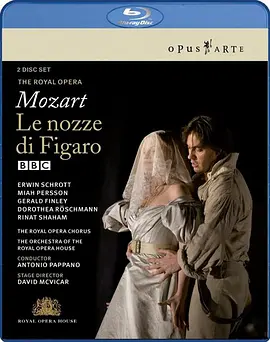
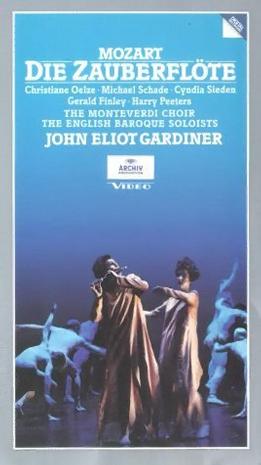
Gerald Finley — 演员 (10)
1995年荷兰节日剧院现场演出 (1995) [电影] 豆瓣
Mozart - Die Zauberflöte
导演: John Eliot Gardiner 演员: Michael Schade / Gerald Finley
其它标题: 莫扎特 歌剧《魔笛》 / Mozart - Die Zauberflöte
埃及王子塔米诺(Michael Schade 饰)在临危受难之际得到了夜女王的拯救,夜女王将自己的女儿帕米纳的肖像拿给塔米诺看,美丽的帕米纳一下子就俘虏了王子的心。夜女王告诉王子,帕米纳被一位名叫萨拉斯特罗的男子给掳走了,如果王子能够将自己的女儿平安的带回来,就把帕米纳许配给他为妻,塔米诺欣然应允。
实际上,萨拉斯特罗并非夜女王所说的那样十恶不赦,夜女王的丈夫在死前将女儿托付给他,交由他来管教,这一举动招致了夜女王的不满,于是设下了如此的计谋。在拯救帕米纳的途中,聪慧的塔米诺渐渐识破了夜女王的阴谋。
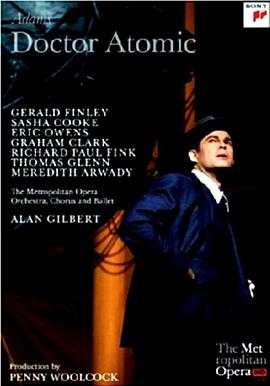
亚当斯《原子弹博士》 (2008) [电影] 豆瓣
The Metropolitan Opera HD Live: Season 3, Episode 3 Doctor Atomic
导演: Gary Halvorson / Penny Woolcock 演员: Gerald Finley / Sasha Cooke
其它标题: The Metropolitan Opera HD Live: Season 3, Episode 3 Doctor Atomic / 大都会歌剧院高清转播系列 第三季第三集
约翰·亚当斯和脚本作家彼得·塞拉斯再度合作,推出歌剧《原子弹博士》,讲述奥本海默研发原子弹的故事,男中音芬雷演唱主角奥本海默。该制作获得年度格莱美奖的表彰。
魔笛 1995年荷兰艺术节版 [演出] 豆瓣
所属 演出: 魔笛
语言: 德语 german 剧团: English Baroque Soloists 英格兰巴洛克独奏家合奏团 ; Monteverdi Choir 蒙特威尔第合唱团 ; Pilobolus Dance Theatre 皮洛博卢斯舞蹈团 剧院: Concertgebouw 阿姆斯特丹音乐厅 导演: Stephen Medcalf
其它标题: 1995年荷兰艺术节版 编剧: Emanuel Schikaneder 作曲: Wolfgang Amadeus Mozart 演员: Michael Schade / Christiane Oelze
The opera begins with the overture, which Mozart composed last.
Act 1
Scene 1: A rough, rocky landscape
Tamino, a handsome prince lost in a distant land, is pursued by a serpent and asks the gods to save him (aria: "Zu Hilfe! Zu Hilfe!" segued into trio: "Stirb, Ungeheuer, durch uns're Macht!"). He faints, and three ladies, attendants of the Queen of the Night, appear and kill the serpent. They find the unconscious prince extremely attractive, and each of them tries to convince the other two to leave. After arguing, they reluctantly decide to leave together.
Tamino wakes up, and is surprised to find himself still alive. Papageno enters dressed as a bird. He describes his life as a bird-catcher, complaining he has no wife or girlfriend (aria: "Der Vogelfänger bin ich ja"). Tamino introduces himself to Papageno, thinking Papageno killed the serpent. Papageno happily takes the credit – claiming he strangled it with his bare hands. The three ladies suddenly reappear and instead of giving Papageno wine, cake and figs, they give him water, a stone and place a padlock over his mouth as a warning not to lie. They give Tamino a portrait of the Queen of the Night's daughter Pamina, with whom Tamino falls instantly in love (aria: "Dies Bildnis ist bezaubernd schön" / This image is enchantingly beautiful).
The ladies return and tell Tamino that Pamina has been captured by Sarastro, whom they describe as a powerful, evil demon. Tamino vows to rescue Pamina. The Queen of the Night appears and promises Tamino that Pamina will be his if he rescues her from Sarastro (Recitative and aria: "O zittre nicht, mein lieber Sohn" / Oh, tremble not, my dear son!). The Queen leaves and the ladies remove the padlock from Papageno's mouth with a warning not to lie any more. They give Tamino a magic flute which has the power to change sorrow into joy. They tell Papageno to go with Tamino, and give him (Papageno) magic bells for protection. The ladies introduce three child-spirits, who will guide Tamino and Papageno to Sarastro's temple. Together Tamino and Papageno set forth (Quintet: "Hm! Hm! Hm! Hm!").
Scene 2: A room in Sarastro's palace
Pamina is dragged in by Sarastro's slaves, apparently having tried to escape. Monostatos, a blackamoor and chief of the slaves, orders the slaves to chain her and leave him alone with her. Papageno, sent ahead by Tamino to help find Pamina, enters (Trio: "Du feines Täubchen, nur herein!"). Monostatos and Papageno are each terrified by the other's strange appearance and both flee. Papageno returns and announces to Pamina that her mother has sent Tamino to save her. Pamina rejoices to hear that Tamino is in love with her. She offers sympathy and hope to Papageno, who longs for a wife. Together they reflect on the joys and sacred duties of marital love (duet: "Bei Männern welche Liebe fühlen").
Finale. Scene 3: A grove in front of a temple
The three child-spirits lead Tamino to Sarastro's temple, promising that if he remains patient, wise and steadfast, he will succeed in rescuing Pamina (Quartet: "Zum Ziele führt dich diese Bahn"). Tamino approaches the left-hand entrance and is denied access by voices from within. The same happens when he goes to the entrance on the right. But from the entrance in the middle, an old priest appears and lets Tamino in. (The old priest is referred to as "The Speaker" in the libretto, but his role is a singing role.) He tells Tamino that Sarastro is benevolent, not evil, and that he should not trust the Queen of the Night. He promises that Tamino's confusion will be lifted when Tamino approaches the temple in a spirit of friendship. Tamino plays his magic flute. Animals appear and dance, enraptured, to his music. Tamino hears Papageno's pipes sounding offstage, and hurries off to find him (aria: "Wie stark ist nicht dein Zauberton").
Papageno and Pamina enter, searching for Tamino (trio: "Schnelle Füße, rascher Mut"). They are recaptured by Monostatos and his slaves. Papageno plays his magic bells, and Monostatos and his slaves begin to dance, and exit the stage, still dancing, mesmerised by the beauty of the music (chorus: "Das klinget so herrlich"). Papageno and Pamina hear the sound of Sarastro's retinue approaching. Papageno is frightened and asks Pamina what they should say. She answers that they must tell the truth. Sarastro enters, with a crowd of followers. (chorus: "Es lebe Sarastro!")
Pamina falls at Sarastro's feet and confesses that she tried to escape because Monostatos had forced his attentions on her. Sarastro receives her kindly and assures her that he wishes only for her happiness. But he refuses to return her to her mother, whom he describes as a proud, headstrong woman, and a bad influence on those around her. Pamina, he says, must be guided by a man.
Monostatos brings in Tamino. The two lovers see one another for the first time and embrace, causing indignation among Sarastro's followers. Monostatos tells Sarastro that he caught Papageno and Pamina trying to escape, and demands a reward. Sarastro, however, punishes Monostatos for his lustful behaviour toward Pamina, and sends him away. He announces that Tamino must undergo trials of wisdom in order to become worthy as Pamina's husband. The priests declare that virtue and righteousness will sanctify life and make mortals like gods ("Wenn Tugend und Gerechtigkeit").
Act 2
Scene 1: A grove of palms
The council of priests of Isis and Osiris, headed by Sarastro, enters to the sound of a solemn march. Sarastro tells the priests that Tamino is ready to undergo the ordeals that will lead to enlightenment. He invokes the gods Isis and Osiris, asking them to protect Tamino and Pamina (Aria and chorus: "O Isis und Osiris").
Scene 2: The courtyard of the Temple of Ordeal
Tamino and Papageno are led in by two priests for the first trial. The two priests advise Tamino and Papageno of the dangers ahead of them, warn them of women's wiles and swear them to silence (Duet: "Bewahret euch von Weibertücken"). The three ladies appear and try to frighten Tamino and Papageno into speaking. (Quintet: "Wie, wie, wie") Papageno cannot resist answering the ladies, but Tamino remains aloof, angrily instructing Papageno not to listen to the ladies' threats and to keep quiet. Seeing that Tamino will not speak to them, the ladies withdraw in confusion.
Scene 3: A garden
Pamina is asleep. Monostatos approaches and gazes upon her with rapture. (Aria: "Alles fühlt der Liebe Freuden") He is about to kiss the sleeping Pamina, when the Queen of the Night appears. Monostatos hides. In response to the Queen's questioning, Pamina explains that Tamino is joining Sarastro's brotherhood and she is thinking of accompanying him too. The Queen is not pleased. She explains that her husband was the previous owner of the temple and on his deathbed, gave the ownership to Sarastro instead of her, rendering the Queen powerless (this is in the original libretto, but is usually omitted from modern productions, to shorten the scene with Pamina and her mother). She gives Pamina a dagger, ordering her to kill Sarastro with it and threatening to disown her if she does not. (Aria: "Der Hölle Rache kocht in meinem Herzen"). She leaves. Monostatos returns and tries to force Pamina's love by threatening to reveal the Queen's plot, but Sarastro enters and drives him off. Pamina begs Sarastro to forgive her mother and he reassures her that revenge and cruelty have no place in his domain (Aria: "In diesen heil'gen Hallen").
Scene 4: A hall in the Temple of Ordeal
Tamino and Papageno are led in by priests, who remind them that they must remain silent. Papageno complains of thirst. An old woman enters and offers Papageno a cup of water. He drinks and teasingly asks whether she has a boyfriend. She replies that she does and that his name is Papageno. She disappears as Papageno asks for her name, and the three child-spirits bring in food, the magic flute, and the bells, sent from Sarastro (Trio: "Seid uns zum zweiten Mal willkommen"). Tamino begins to play the flute, which summons Pamina. She tries to speak with him, but Tamino, bound by his vow of silence, cannot answer her, and Pamina begins to believe that he no longer loves her. (Aria: "Ach, ich fühl's, es ist verschwunden") She leaves in despair.
Scene 5: The pyramids
The priests celebrate Tamino's successes so far, and pray that he will succeed and become worthy of their order (Chorus: "O Isis und Osiris"). Pamina is brought in and Sarastro instructs Pamina and Tamino to bid each other farewell before the greater trials ahead, alarming them by describing it as their "final farewell". (Trio: Sarastro, Pamina, Tamino – "Soll ich dich, Teurer, nicht mehr sehn?" Note: In order to preserve the continuity of Pamina's suicidal feelings, this trio is sometimes performed earlier in act 2, preceding or immediately following Sarastro's aria "O Isis und Osiris".[f][30]) They exit and Papageno enters. The priests grant his request for a glass of wine and he expresses his desire for a wife. (Aria: "Ein Mädchen oder Weibchen"). The elderly woman reappears and warns him that unless he immediately promises to marry her, he will be imprisoned forever. When Papageno promises to love her faithfully (muttering that he will only do this until something better comes along), she is transformed into the young and pretty Papagena. Papageno rushes to embrace her, but the priests drive him back, telling him that he is not yet worthy of her.
Finale. Scene 6: A garden
The three child-spirits hail the dawn. They observe Pamina, who is contemplating suicide because she believes Tamino has abandoned her. The child-spirits restrain her and reassure her of Tamino's love. (Quartet: "Bald prangt, den Morgen zu verkünden").
Scene change without interrupting the music, to Scene 7: Outside the Temple of Ordeal
Two men in armor lead in Tamino. They recite one of the formal creeds of Isis and Osiris, promising enlightenment to those who successfully overcome the fear of death ("Der, welcher wandert diese Strasse voll Beschwerden"). This recitation takes the musical form of a Baroque chorale prelude, to a tune inspired by Martin Luther's hymn "Ach Gott, vom Himmel sieh darein" (Oh God, look down from heaven).[g][32] Tamino declares that he is ready to be tested. Pamina calls to him from offstage. The men in armour assure him that the trial by silence is over and he is free to speak with her. Pamina enters and declares her intention to undergo the remaining trials with him. She hands him the magic flute to help them through the trials ("Tamino mein, o welch ein Glück!"). Protected by the music of the magic flute, they pass unscathed through chambers of fire and water. Offstage, the priests hail their triumph and invite the couple to enter the temple.
Scene change without interrupting the music, to Scene 8: A garden with a tree
Papageno despairs at having lost Papagena and decides to hang himself (Aria/Quartet: "Papagena! Papagena! Papagena! Weibchen, Täubchen, meine Schöne") The three child-spirits appear and stop him. They advise him to play his magic bells to summon Papagena. She appears and, united, the happy couple stutter in astonishment and make bird-like courting sounds at each other. They plan their future and dream of the many children they will have together (Duet: "Pa... pa... pa...").
Scene change without interrupting the music, to Scene 9: A rocky landscape outside the temple; night
The traitorous Monostatos appears with the Queen of the Night and her three ladies. They plot to destroy the temple ("Nur stille, stille") and the Queen confirms that she has promised her daughter Pamina to Monostatos. But before the conspirators can enter the temple, they are magically cast out into eternal night.
Scene change without interrupting the music, to Scene 10: The Temple of the Sun
Sarastro announces the sun's triumph over the night, and hails the dawn of a new era of wisdom and brotherhood. Animals appear again and dance in the sun.
费加罗的婚礼 1994年格林德伯恩歌剧节版 [演出] 豆瓣
所属 演出: 费加罗的婚礼
语言: 意大利语 剧团: London Philharmonic Orchestra 伦敦爱乐乐团 ; The Glyndebourne Chorus 格林德伯恩合唱团 剧院: Glyndebourne 格林德伯恩 导演: Stephen Medcalf
其它标题: 1994年格林德伯恩歌剧节版 编剧: Lorenzo Da Ponte 作曲: Wolfgang Amadeus Mozart 演员: Gerald Finley / Alison Hagley / Susan Gritton
The Marriage of Figaro continues the plot of The Barber of Seville several years later, and recounts a single "day of madness" (la folle journée) in the palace of Count Almaviva near Seville, Spain. Rosina is now the Countess; Dr. Bartolo is seeking revenge against Figaro for thwarting his plans to marry Rosina himself; and Count Almaviva has degenerated from the romantic youth of Barber into a scheming, bullying, skirt-chasing baritone. Having gratefully given Figaro a job as head of his servant-staff, he is now persistently trying to exercise his droit du seigneur – his right to bed a servant girl on her wedding night – with Figaro's bride-to-be, Susanna, who is the Countess's maid. He keeps finding excuses to delay the civil part of the wedding of his two servants, which is arranged for this very day. Figaro, Susanna, and the Countess conspire to embarrass the Count and expose his scheming. He retaliates by trying to compel Figaro legally to marry a woman old enough to be his mother, but it turns out at the last minute that she really is his mother. Through Figaro's and Susanna's clever manipulations, the Count's love for his Countess is finally restored.
Place: Count Almaviva's estate, Aguas-Frescas, three leagues outside Seville, Spain.
Overture
The overture is in the key of D major; the tempo marking is presto; i.e. very fast. The work is well known and often played independently as a concert piece.
Act 1
A partly furnished room, with a chair in the centre.
Figaro happily measures the space where the bridal bed will fit while Susanna tries on her wedding bonnet in front of a mirror (in the present day, a more traditional French floral wreath or a modern veil are often substituted, often in combination with a bonnet, so as to accommodate what Susanna happily describes as her wedding cappellino). (Duet: "Cinque, dieci, venti" – "Five, ten, twenty"). Figaro is quite pleased with their new room; Susanna far less so (Duettino: "Se a caso madama la notte ti chiama" – "If the Countess should call you during the night"). She is bothered by its proximity to the Count's chambers: it seems he has been making advances toward her and plans on exercising his droit du seigneur, the purported feudal right of a lord to bed a servant girl on her wedding night before her husband can sleep with her. The Count had the right abolished when he married Rosina, but he now wants to reinstate it. The Countess rings for Susanna and she rushes off to answer. Figaro, confident in his own resourcefulness, resolves to outwit the Count (Cavatina: "Se vuol ballare signor contino" – "If you want to dance, sir count").
Figaro departs, and Dr. Bartolo arrives with Marcellina, his old housekeeper. Figaro had previously borrowed a large sum of money from her, and, in lieu of collateral, had promised to marry her if unable to repay at the appointed time; she now intends to enforce that promise by suing him. Bartolo, seeking revenge against Figaro for having facilitated the union of the Count and Rosina (in The Barber of Seville), agrees to represent Marcellina pro bono, and assures her, in comical lawyer-speak, that he can win the case for her (aria: "La vendetta" – "Vengeance").
Bartolo departs, Susanna returns, and Marcellina and Susanna exchange very politely delivered sarcastic insults (duet: "Via resti servita, madama brillante" – "After you, brilliant madam"). Susanna triumphs in the exchange by congratulating her rival on her impressive age. The older woman departs in a fury.
Cherubino then arrives and, after describing his emerging infatuation with all women, particularly with his "beautiful godmother" the Countess (aria: "Non so più cosa son" – "I don't know anymore what I am"), asks for Susanna's aid with the Count. It seems the Count is angry with Cherubino's amorous ways, having discovered him with the gardener's daughter, Barbarina, and plans to punish him. Cherubino wants Susanna to ask the Countess to intercede on his behalf. When the Count appears, Cherubino hides behind a chair, not wanting to be seen alone with Susanna. The Count uses the opportunity of finding Susanna alone to step up his demands for favours from her, including financial inducements to sell herself to him. As Basilio, the music teacher, arrives, the Count, not wanting to be caught alone with Susanna, hides behind the chair. Cherubino leaves that hiding place just in time, and jumps onto the chair while Susanna scrambles to cover him with a dress.
When Basilio starts to gossip about Cherubino's obvious attraction to the Countess, the Count angrily leaps from his hiding place (terzetto: "Cosa sento!" – "What do I hear!"). He disparages the "absent" page's incessant flirting and describes how he caught him with Barbarina under the kitchen table. As he lifts the dress from the chair to illustrate how he lifted the tablecloth to expose Cherubino, he finds ... the self same Cherubino! The count is furious, but is reminded that the page overheard the Count's advances on Susanna, something that the Count wants to keep from the Countess. The young man is ultimately saved from punishment by the entrance of the peasants of the Count's estate, a preemptive attempt by Figaro to commit the Count to a formal gesture symbolizing his promise that Susanna would enter into the marriage unsullied. The Count evades Figaro's plan by postponing the gesture. The Count says that he forgives Cherubino, but he dispatches him to his own regiment in Seville for army duty, effective immediately. Figaro gives Cherubino mocking advice about his new, harsh, military life from which all luxury, and especially women, will be totally excluded (aria: "Non più andrai" – "No more gallivanting").
Act 2
A handsome room with an alcove, a dressing room on the left, a door in the background (leading to the servants' quarters) and a window at the side.
The Countess laments her husband's infidelity (aria: "Porgi, amor, qualche ristoro" – "Grant, love, some comfort"). Susanna comes in to prepare the Countess for the day. She responds to the Countess's questions by telling her that the Count is not trying to seduce her; he is merely offering her a monetary contract in return for her affection. Figaro enters and explains his plan to distract the Count with anonymous letters warning him of adulterers. He has already sent one to the Count (via Basilio) that indicates that the Countess has a rendezvous of her own that evening. They hope that the Count will be too busy looking for imaginary adulterers to interfere with Figaro and Susanna's wedding. Figaro additionally advises the Countess to keep Cherubino around. She should dress him up as a girl and lure the Count into an illicit rendezvous where he can be caught red-handed. Figaro leaves.
Cherubino arrives, sent in by Figaro and eager to co-operate. Susanna urges him to sing the song he wrote for the Countess (aria: "Voi che sapete che cosa è amor" – "You ladies who know what love is, is it what I'm suffering from?"). After the song, the Countess, seeing Cherubino's military commission, notices that the Count was in such a hurry that he forgot to seal it with his signet ring (which would be necessary to make it an official document).
Susanna and the Countess then begin with their plan. Susanna takes off Cherubino's cloak, and she begins to comb his hair and teach him to behave and walk like a woman (aria of Susanna: "Venite, inginocchiatevi" – "Come, kneel down before me"). Then she leaves the room through a door at the back to get the dress for Cherubino, taking his cloak with her.
While the Countess and Cherubino are waiting for Susanna to come back, they suddenly hear the Count arriving. Cherubino hides in the closet. The Count demands to be allowed into the room and the Countess reluctantly unlocks the door. The Count enters and hears a noise from the closet. He tries to open it, but it is locked. The Countess tells him it is only Susanna, trying on her wedding dress. At this moment, Susanna re-enters unobserved, quickly realizes what's going on, and hides behind a couch (Trio: "Susanna, or via, sortite" – "Susanna, come out!"). The Count shouts for her to identify herself by her voice, but the Countess orders her to be silent. Furious and suspicious, the Count leaves, with the Countess, in search of tools to force the closet door open. As they leave, he locks all the bedroom doors to prevent the intruder from escaping. Cherubino and Susanna emerge from their hiding places, and Cherubino escapes by jumping through the window into the garden. Susanna then takes Cherubino's former place in the closet, vowing to make the Count look foolish (duet: "Aprite, presto, aprite" – "Open the door, quickly!").
The Count and Countess return. The Countess, thinking herself trapped, desperately admits that Cherubino is hidden in the closet. The enraged Count draws his sword, promising to kill Cherubino on the spot, but when the door is opened, they both find to their astonishment only Susanna (Finale: "Esci omai, garzon malnato" – "Come out of there, you ill-born boy!"). The Count demands an explanation; the Countess tells him it is a practical joke, to test his trust in her. Shamed by his jealousy, the Count begs for forgiveness. When the Count presses about the anonymous letter, Susanna and the Countess reveal that the letter was written by Figaro, and then delivered by Basilio. Figaro then arrives and tries to start the wedding festivities, but the Count berates him with questions about the anonymous note. Just as the Count is starting to run out of questions, Antonio the gardener arrives, complaining that a man has jumped out of the window and damaged his carnations while running away. Antonio adds that he tentatively identified the running man as Cherubino, but Figaro claims it was he himself who jumped out of the window, and pretends to have injured his foot while landing. Figaro, Susanna, and the Countess attempt to discredit Antonio as a chronic drunkard whose constant inebriation makes him unreliable and prone to fantasy, but Antonio brings forward a paper which, he says, was dropped by the escaping man. The Count orders Figaro to prove he was the jumper by identifying the paper (which is, in fact, Cherubino's appointment to the army). Figaro is at a loss, but Susanna and the Countess manage to signal the correct answers, and Figaro triumphantly identifies the document. His victory is, however, short-lived: Marcellina, Bartolo, and Basilio enter, bringing charges against Figaro and demanding that he honor his contract to marry Marcellina, since he cannot repay her loan. The Count happily postpones the wedding in order to investigate the charge.
Act 3
A rich hall, with two thrones, prepared for the wedding ceremony.
The Count mulls over the confusing situation. At the urging of the Countess, Susanna enters and gives a false promise to meet the Count later that night in the garden (duet: "Crudel! perchè finora" – "Cruel girl, why did you make me wait so long"). As Susanna leaves, the Count overhears her telling Figaro that he has already won the case. Realizing that he is being tricked (recitative and aria: "Hai già vinta la causa! ... Vedrò, mentr'io sospiro" – "You've already won the case!" ... "Shall I, while sighing, see"), he resolves to punish Figaro by forcing him to marry Marcellina.
Figaro's hearing follows, and the Count's judgment is that Figaro must marry Marcellina. Figaro argues that he cannot get married without his parents' permission, and that he does not know who his parents are, because he was stolen from them when he was a baby. The ensuing discussion reveals that Figaro is Rafaello, the long-lost illegitimate son of Bartolo and Marcellina. A touching scene of reconciliation occurs. During the celebrations, Susanna enters with a payment to release Figaro from his debt to Marcellina. Seeing Figaro and Marcellina in celebration together, Susanna mistakenly believes that Figaro now prefers Marcellina to her. She has a tantrum and slaps Figaro's face. Marcellina explains, and Susanna, realizing her mistake, joins the celebration. Bartolo, overcome with emotion, agrees to marry Marcellina that evening in a double wedding (sextet: "Riconosci in questo amplesso" – "Recognize in this embrace").
All leave, before Barbarina, Antonio's daughter, invites Cherubino back to her house so they can disguise him as a girl. The Countess, alone, ponders the loss of her happiness (aria: "Dove sono i bei momenti" – "Where are they, the beautiful moments"). Meanwhile, Antonio informs the Count that Cherubino is not in Seville, but in fact at his house. Susanna enters and updates her mistress regarding the plan to trap the Count. The Countess dictates a love letter for Susanna to send to the Count, which suggests that he meet her (Susanna) that night, "under the pines". The letter instructs the Count to return the pin which fastens the letter (duet: "Sull'aria...che soave zeffiretto" – "On the breeze... What a gentle little zephyr").
A chorus of young peasants, among them Cherubino disguised as a girl, arrives to serenade the Countess. The Count arrives with Antonio and, discovering the page, is enraged. His anger is quickly dispelled by Barbarina, who publicly recalls that he had once offered to give her anything she wants in exchange for certain favors, and asks for Cherubino's hand in marriage. Thoroughly embarrassed, the Count allows Cherubino to stay.
The act closes with the double wedding, during the course of which Susanna delivers her letter to the Count (Finale: "Ecco la marcia" – "Here is the procession"). Figaro watches the Count prick his finger on the pin, and laughs, unaware that the love-note is an invitation for the Count to tryst with Figaro's own bride Susanna. As the curtain drops, the two newlywed couples rejoice.
Act 4
The garden, with two pavilions. Night.
Following the directions in the letter, the Count has sent the pin back to Susanna, giving it to Barbarina. However, Barbarina has lost it (aria: "L'ho perduta, me meschina" – "I have lost it, poor me"). Figaro and Marcellina see Barbarina, and Figaro asks her what she is doing. When he hears the pin is Susanna's, he is overcome with jealousy, especially as he recognises the pin to be the one that fastened the letter to the Count. Thinking that Susanna is meeting the Count behind his back, Figaro complains to his mother, and swears to be avenged on the Count and Susanna, and on all unfaithful wives. Marcellina urges caution, but Figaro will not listen. Figaro rushes off, and Marcellina resolves to inform Susanna of Figaro's intentions. Marcellina sings an aria lamenting that male and female wild beasts get along with each other, but rational humans can't (aria: "Il capro e la capretta" – "The billy-goat and the she-goat"). (This aria and Basilio's ensuing aria are usually omitted from performances due to their relative unimportance, both musically and dramatically; however, some recordings include them.)
Motivated by jealousy, Figaro tells Bartolo and Basilio to come to his aid when he gives the signal. Basilio comments on Figaro's foolishness and claims he was once as frivolous as Figaro was. He tells a tale of how he was given common sense by "Donna Flemma" ("Dame Prudence") and learned the importance of not crossing powerful people. (aria: "In quegli anni" – "In those years"). They exit, leaving Figaro alone. Figaro muses bitterly on the inconstancy of women (recitative and aria: "Tutto è disposto ... Aprite un po' quegli occhi" – "Everything is ready ... Open those eyes a little"). Susanna and the Countess arrive, each dressed in the other's clothes. Marcellina is with them, having informed Susanna of Figaro's suspicions and plans. After they discuss the plan, Marcellina and the Countess leave, and Susanna teases Figaro by singing a love song to her beloved within Figaro's hearing (aria: "Deh vieni, non tardar" – "Oh come, don't delay"). Figaro is hiding behind a bush and, thinking the song is for the Count, becomes increasingly jealous.
The Countess arrives in Susanna's dress. Cherubino shows up and starts teasing "Susanna" (really the Countess), endangering the plan. (Finale: "Pian pianin le andrò più presso" - "Softly, softly I'll approach her") The Count gets rid of him by striking out in the dark. His punch actually ends up hitting Figaro, but the point is made and Cherubino runs off.
The Count now begins making earnest love to "Susanna" (really the Countess), and gives her a jeweled ring. They go offstage together, where the Countess dodges him, hiding in the dark. Onstage, meanwhile, the real Susanna enters, wearing the Countess' clothes. Figaro mistakes her for the real Countess, and starts to tell her of the Count's intentions, but he suddenly recognizes his bride in disguise. He plays along with the joke by pretending to be in love with "my lady", and inviting her to make love right then and there. Susanna, fooled, loses her temper and slaps him many times. Figaro finally lets on that he has recognized Susanna's voice, and they make peace, resolving to conclude the comedy together ("Pace, pace, mio dolce tesoro" - "Peace, peace, my sweet treasure").
The Count, unable to find "Susanna", enters frustrated. Figaro gets his attention by loudly declaring his love for "the Countess" (really Susanna). The enraged Count calls for his people and for weapons: his servant is seducing his wife. (Ultima scena: "Gente, gente, all'armi, all'armi" – "Gentlemen, to arms!") Bartolo, Basilio and Antonio enter with torches as, one by one, the Count drags out Cherubino, Barbarina, Marcellina and the "Countess" from behind the pavilion.
All beg him to forgive Figaro and the "Countess", but he loudly refuses, repeating "no" at the top of his voice, until finally the real Countess re-enters and reveals her true identity. The Count, seeing the ring he had given her, realizes that the supposed Susanna he was trying to seduce was actually his wife. Ashamed and remorseful, he kneels and pleads for forgiveness himself ("Contessa perdono!" – "Countess, forgive me!"). The Countess, more kind than he ("Più docile io sono" – "I am more mild"), forgives her husband and all are contented.

费加罗的婚礼 2006年英国皇家歌剧团版 [演出] 豆瓣
所属 演出: 费加罗的婚礼
语言: 意大利语 italian 剧团: Orchestra of the Royal Opera House 英国皇家歌剧院管弦乐团 ; Royal Opera Chorus 英国皇家歌剧团合唱团 剧院: Royal Opera House, Covent Garden 考文特花园皇家歌剧院 导演: David McVicar
其它标题: 2006年英国皇家歌剧团版 编剧: Lorenzo Da Ponte 作曲: Wolfgang Amadeus Mozart 演员: Erwin Schrott / Miah Persson
The Marriage of Figaro continues the plot of The Barber of Seville several years later, and recounts a single "day of madness" (la folle journée) in the palace of Count Almaviva near Seville, Spain. Rosina is now the Countess; Dr. Bartolo is seeking revenge against Figaro for thwarting his plans to marry Rosina himself; and Count Almaviva has degenerated from the romantic youth of Barber into a scheming, bullying, skirt-chasing baritone. Having gratefully given Figaro a job as head of his servant-staff, he is now persistently trying to exercise his droit du seigneur – his right to bed a servant girl on her wedding night – with Figaro's bride-to-be, Susanna, who is the Countess's maid. He keeps finding excuses to delay the civil part of the wedding of his two servants, which is arranged for this very day. Figaro, Susanna, and the Countess conspire to embarrass the Count and expose his scheming. He retaliates by trying to compel Figaro legally to marry a woman old enough to be his mother, but it turns out at the last minute that she really is his mother. Through Figaro's and Susanna's clever manipulations, the Count's love for his Countess is finally restored.
Place: Count Almaviva's estate, Aguas-Frescas, three leagues outside Seville, Spain.
Overture
The overture is in the key of D major; the tempo marking is presto; i.e. very fast. The work is well known and often played independently as a concert piece.
Act 1
A partly furnished room, with a chair in the centre.
Figaro happily measures the space where the bridal bed will fit while Susanna tries on her wedding bonnet in front of a mirror (in the present day, a more traditional French floral wreath or a modern veil are often substituted, often in combination with a bonnet, so as to accommodate what Susanna happily describes as her wedding cappellino). (Duet: "Cinque, dieci, venti" – "Five, ten, twenty"). Figaro is quite pleased with their new room; Susanna far less so (Duettino: "Se a caso madama la notte ti chiama" – "If the Countess should call you during the night"). She is bothered by its proximity to the Count's chambers: it seems he has been making advances toward her and plans on exercising his droit du seigneur, the purported feudal right of a lord to bed a servant girl on her wedding night before her husband can sleep with her. The Count had the right abolished when he married Rosina, but he now wants to reinstate it. The Countess rings for Susanna and she rushes off to answer. Figaro, confident in his own resourcefulness, resolves to outwit the Count (Cavatina: "Se vuol ballare signor contino" – "If you want to dance, sir count").
Figaro departs, and Dr. Bartolo arrives with Marcellina, his old housekeeper. Figaro had previously borrowed a large sum of money from her, and, in lieu of collateral, had promised to marry her if unable to repay at the appointed time; she now intends to enforce that promise by suing him. Bartolo, seeking revenge against Figaro for having facilitated the union of the Count and Rosina (in The Barber of Seville), agrees to represent Marcellina pro bono, and assures her, in comical lawyer-speak, that he can win the case for her (aria: "La vendetta" – "Vengeance").
Bartolo departs, Susanna returns, and Marcellina and Susanna exchange very politely delivered sarcastic insults (duet: "Via resti servita, madama brillante" – "After you, brilliant madam"). Susanna triumphs in the exchange by congratulating her rival on her impressive age. The older woman departs in a fury.
Cherubino then arrives and, after describing his emerging infatuation with all women, particularly with his "beautiful godmother" the Countess (aria: "Non so più cosa son" – "I don't know anymore what I am"), asks for Susanna's aid with the Count. It seems the Count is angry with Cherubino's amorous ways, having discovered him with the gardener's daughter, Barbarina, and plans to punish him. Cherubino wants Susanna to ask the Countess to intercede on his behalf. When the Count appears, Cherubino hides behind a chair, not wanting to be seen alone with Susanna. The Count uses the opportunity of finding Susanna alone to step up his demands for favours from her, including financial inducements to sell herself to him. As Basilio, the music teacher, arrives, the Count, not wanting to be caught alone with Susanna, hides behind the chair. Cherubino leaves that hiding place just in time, and jumps onto the chair while Susanna scrambles to cover him with a dress.
When Basilio starts to gossip about Cherubino's obvious attraction to the Countess, the Count angrily leaps from his hiding place (terzetto: "Cosa sento!" – "What do I hear!"). He disparages the "absent" page's incessant flirting and describes how he caught him with Barbarina under the kitchen table. As he lifts the dress from the chair to illustrate how he lifted the tablecloth to expose Cherubino, he finds ... the self same Cherubino! The count is furious, but is reminded that the page overheard the Count's advances on Susanna, something that the Count wants to keep from the Countess. The young man is ultimately saved from punishment by the entrance of the peasants of the Count's estate, a preemptive attempt by Figaro to commit the Count to a formal gesture symbolizing his promise that Susanna would enter into the marriage unsullied. The Count evades Figaro's plan by postponing the gesture. The Count says that he forgives Cherubino, but he dispatches him to his own regiment in Seville for army duty, effective immediately. Figaro gives Cherubino mocking advice about his new, harsh, military life from which all luxury, and especially women, will be totally excluded (aria: "Non più andrai" – "No more gallivanting").
Act 2
A handsome room with an alcove, a dressing room on the left, a door in the background (leading to the servants' quarters) and a window at the side.
The Countess laments her husband's infidelity (aria: "Porgi, amor, qualche ristoro" – "Grant, love, some comfort"). Susanna comes in to prepare the Countess for the day. She responds to the Countess's questions by telling her that the Count is not trying to seduce her; he is merely offering her a monetary contract in return for her affection. Figaro enters and explains his plan to distract the Count with anonymous letters warning him of adulterers. He has already sent one to the Count (via Basilio) that indicates that the Countess has a rendezvous of her own that evening. They hope that the Count will be too busy looking for imaginary adulterers to interfere with Figaro and Susanna's wedding. Figaro additionally advises the Countess to keep Cherubino around. She should dress him up as a girl and lure the Count into an illicit rendezvous where he can be caught red-handed. Figaro leaves.
Cherubino arrives, sent in by Figaro and eager to co-operate. Susanna urges him to sing the song he wrote for the Countess (aria: "Voi che sapete che cosa è amor" – "You ladies who know what love is, is it what I'm suffering from?"). After the song, the Countess, seeing Cherubino's military commission, notices that the Count was in such a hurry that he forgot to seal it with his signet ring (which would be necessary to make it an official document).
Susanna and the Countess then begin with their plan. Susanna takes off Cherubino's cloak, and she begins to comb his hair and teach him to behave and walk like a woman (aria of Susanna: "Venite, inginocchiatevi" – "Come, kneel down before me"). Then she leaves the room through a door at the back to get the dress for Cherubino, taking his cloak with her.
While the Countess and Cherubino are waiting for Susanna to come back, they suddenly hear the Count arriving. Cherubino hides in the closet. The Count demands to be allowed into the room and the Countess reluctantly unlocks the door. The Count enters and hears a noise from the closet. He tries to open it, but it is locked. The Countess tells him it is only Susanna, trying on her wedding dress. At this moment, Susanna re-enters unobserved, quickly realizes what's going on, and hides behind a couch (Trio: "Susanna, or via, sortite" – "Susanna, come out!"). The Count shouts for her to identify herself by her voice, but the Countess orders her to be silent. Furious and suspicious, the Count leaves, with the Countess, in search of tools to force the closet door open. As they leave, he locks all the bedroom doors to prevent the intruder from escaping. Cherubino and Susanna emerge from their hiding places, and Cherubino escapes by jumping through the window into the garden. Susanna then takes Cherubino's former place in the closet, vowing to make the Count look foolish (duet: "Aprite, presto, aprite" – "Open the door, quickly!").
The Count and Countess return. The Countess, thinking herself trapped, desperately admits that Cherubino is hidden in the closet. The enraged Count draws his sword, promising to kill Cherubino on the spot, but when the door is opened, they both find to their astonishment only Susanna (Finale: "Esci omai, garzon malnato" – "Come out of there, you ill-born boy!"). The Count demands an explanation; the Countess tells him it is a practical joke, to test his trust in her. Shamed by his jealousy, the Count begs for forgiveness. When the Count presses about the anonymous letter, Susanna and the Countess reveal that the letter was written by Figaro, and then delivered by Basilio. Figaro then arrives and tries to start the wedding festivities, but the Count berates him with questions about the anonymous note. Just as the Count is starting to run out of questions, Antonio the gardener arrives, complaining that a man has jumped out of the window and damaged his carnations while running away. Antonio adds that he tentatively identified the running man as Cherubino, but Figaro claims it was he himself who jumped out of the window, and pretends to have injured his foot while landing. Figaro, Susanna, and the Countess attempt to discredit Antonio as a chronic drunkard whose constant inebriation makes him unreliable and prone to fantasy, but Antonio brings forward a paper which, he says, was dropped by the escaping man. The Count orders Figaro to prove he was the jumper by identifying the paper (which is, in fact, Cherubino's appointment to the army). Figaro is at a loss, but Susanna and the Countess manage to signal the correct answers, and Figaro triumphantly identifies the document. His victory is, however, short-lived: Marcellina, Bartolo, and Basilio enter, bringing charges against Figaro and demanding that he honor his contract to marry Marcellina, since he cannot repay her loan. The Count happily postpones the wedding in order to investigate the charge.
Act 3
A rich hall, with two thrones, prepared for the wedding ceremony.
The Count mulls over the confusing situation. At the urging of the Countess, Susanna enters and gives a false promise to meet the Count later that night in the garden (duet: "Crudel! perchè finora" – "Cruel girl, why did you make me wait so long"). As Susanna leaves, the Count overhears her telling Figaro that he has already won the case. Realizing that he is being tricked (recitative and aria: "Hai già vinta la causa! ... Vedrò, mentr'io sospiro" – "You've already won the case!" ... "Shall I, while sighing, see"), he resolves to punish Figaro by forcing him to marry Marcellina.
Figaro's hearing follows, and the Count's judgment is that Figaro must marry Marcellina. Figaro argues that he cannot get married without his parents' permission, and that he does not know who his parents are, because he was stolen from them when he was a baby. The ensuing discussion reveals that Figaro is Rafaello, the long-lost illegitimate son of Bartolo and Marcellina. A touching scene of reconciliation occurs. During the celebrations, Susanna enters with a payment to release Figaro from his debt to Marcellina. Seeing Figaro and Marcellina in celebration together, Susanna mistakenly believes that Figaro now prefers Marcellina to her. She has a tantrum and slaps Figaro's face. Marcellina explains, and Susanna, realizing her mistake, joins the celebration. Bartolo, overcome with emotion, agrees to marry Marcellina that evening in a double wedding (sextet: "Riconosci in questo amplesso" – "Recognize in this embrace").
All leave, before Barbarina, Antonio's daughter, invites Cherubino back to her house so they can disguise him as a girl. The Countess, alone, ponders the loss of her happiness (aria: "Dove sono i bei momenti" – "Where are they, the beautiful moments"). Meanwhile, Antonio informs the Count that Cherubino is not in Seville, but in fact at his house. Susanna enters and updates her mistress regarding the plan to trap the Count. The Countess dictates a love letter for Susanna to send to the Count, which suggests that he meet her (Susanna) that night, "under the pines". The letter instructs the Count to return the pin which fastens the letter (duet: "Sull'aria...che soave zeffiretto" – "On the breeze... What a gentle little zephyr").
A chorus of young peasants, among them Cherubino disguised as a girl, arrives to serenade the Countess. The Count arrives with Antonio and, discovering the page, is enraged. His anger is quickly dispelled by Barbarina, who publicly recalls that he had once offered to give her anything she wants in exchange for certain favors, and asks for Cherubino's hand in marriage. Thoroughly embarrassed, the Count allows Cherubino to stay.
The act closes with the double wedding, during the course of which Susanna delivers her letter to the Count (Finale: "Ecco la marcia" – "Here is the procession"). Figaro watches the Count prick his finger on the pin, and laughs, unaware that the love-note is an invitation for the Count to tryst with Figaro's own bride Susanna. As the curtain drops, the two newlywed couples rejoice.
Act 4
The garden, with two pavilions. Night.
Following the directions in the letter, the Count has sent the pin back to Susanna, giving it to Barbarina. However, Barbarina has lost it (aria: "L'ho perduta, me meschina" – "I have lost it, poor me"). Figaro and Marcellina see Barbarina, and Figaro asks her what she is doing. When he hears the pin is Susanna's, he is overcome with jealousy, especially as he recognises the pin to be the one that fastened the letter to the Count. Thinking that Susanna is meeting the Count behind his back, Figaro complains to his mother, and swears to be avenged on the Count and Susanna, and on all unfaithful wives. Marcellina urges caution, but Figaro will not listen. Figaro rushes off, and Marcellina resolves to inform Susanna of Figaro's intentions. Marcellina sings an aria lamenting that male and female wild beasts get along with each other, but rational humans can't (aria: "Il capro e la capretta" – "The billy-goat and the she-goat"). (This aria and Basilio's ensuing aria are usually omitted from performances due to their relative unimportance, both musically and dramatically; however, some recordings include them.)
Motivated by jealousy, Figaro tells Bartolo and Basilio to come to his aid when he gives the signal. Basilio comments on Figaro's foolishness and claims he was once as frivolous as Figaro was. He tells a tale of how he was given common sense by "Donna Flemma" ("Dame Prudence") and learned the importance of not crossing powerful people. (aria: "In quegli anni" – "In those years"). They exit, leaving Figaro alone. Figaro muses bitterly on the inconstancy of women (recitative and aria: "Tutto è disposto ... Aprite un po' quegli occhi" – "Everything is ready ... Open those eyes a little"). Susanna and the Countess arrive, each dressed in the other's clothes. Marcellina is with them, having informed Susanna of Figaro's suspicions and plans. After they discuss the plan, Marcellina and the Countess leave, and Susanna teases Figaro by singing a love song to her beloved within Figaro's hearing (aria: "Deh vieni, non tardar" – "Oh come, don't delay"). Figaro is hiding behind a bush and, thinking the song is for the Count, becomes increasingly jealous.
The Countess arrives in Susanna's dress. Cherubino shows up and starts teasing "Susanna" (really the Countess), endangering the plan. (Finale: "Pian pianin le andrò più presso" - "Softly, softly I'll approach her") The Count gets rid of him by striking out in the dark. His punch actually ends up hitting Figaro, but the point is made and Cherubino runs off.
The Count now begins making earnest love to "Susanna" (really the Countess), and gives her a jeweled ring. They go offstage together, where the Countess dodges him, hiding in the dark. Onstage, meanwhile, the real Susanna enters, wearing the Countess' clothes. Figaro mistakes her for the real Countess, and starts to tell her of the Count's intentions, but he suddenly recognizes his bride in disguise. He plays along with the joke by pretending to be in love with "my lady", and inviting her to make love right then and there. Susanna, fooled, loses her temper and slaps him many times. Figaro finally lets on that he has recognized Susanna's voice, and they make peace, resolving to conclude the comedy together ("Pace, pace, mio dolce tesoro" - "Peace, peace, my sweet treasure").
The Count, unable to find "Susanna", enters frustrated. Figaro gets his attention by loudly declaring his love for "the Countess" (really Susanna). The enraged Count calls for his people and for weapons: his servant is seducing his wife. (Ultima scena: "Gente, gente, all'armi, all'armi" – "Gentlemen, to arms!") Bartolo, Basilio and Antonio enter with torches as, one by one, the Count drags out Cherubino, Barbarina, Marcellina and the "Countess" from behind the pavilion.
All beg him to forgive Figaro and the "Countess", but he loudly refuses, repeating "no" at the top of his voice, until finally the real Countess re-enters and reveals her true identity. The Count, seeing the ring he had given her, realizes that the supposed Susanna he was trying to seduce was actually his wife. Ashamed and remorseful, he kneels and pleads for forgiveness himself ("Contessa perdono!" – "Countess, forgive me!"). The Countess, more kind than he ("Più docile io sono" – "I am more mild"), forgives her husband and all are contented.
唐璜 2010年格林德伯恩歌剧节版 [演出] 豆瓣
所属 演出: 唐璜
语言: italian 意大利语 剧团: Orchestra of the Age of Enlightenment 启蒙时代管弦乐团 ; The Glyndebourne Chorus 格林德伯恩合唱团 剧院: Glyndebourne 格林德伯恩 导演: Jonathan Kent
其它标题: 2010年格林德伯恩歌剧节版 编剧: Lorenzo Da Ponte 作曲: Wolfgang Amadeus Mozart 演员: Gerald Finley / Luca Pisaroni
Don Giovanni, a young, arrogant, and sexually promiscuous nobleman, abuses and outrages everyone else in the cast until he encounters something he cannot kill, beat up, dodge, or outwit.
Act 1
The overture begins with a thundering D minor cadence, followed by a short misterioso sequence which leads into a light-hearted D major allegro.
Scene 1 – The garden of the Commendatore
Leporello, Don Giovanni's servant, grumbles about his demanding master and daydreams about being free of him ("Notte e giorno faticar" – "Night and day I slave away"). He is keeping watch while Don Giovanni is in the Commendatore's house attempting to seduce or rape the Commendatore's daughter, Donna Anna. Don Giovanni enters the garden from inside the house, pursued by Donna Anna. Don Giovanni is masked and Donna Anna tries to hold him and to unmask him, shouting for help. (Trio: "Non sperar, se non m'uccidi, Ch'io ti lasci fuggir mai!" – "Do not hope, unless you kill me, that I shall ever let you run away!"). He breaks free and she runs off as the Commendatore enters the garden. The Commendatore blocks Don Giovanni's path and forces him to fight a duel. Don Giovanni kills the Commendatore with his sword and escapes with Leporello. Donna Anna, returning with her fiancé, Don Ottavio, is horrified to see her father lying dead in a pool of his own blood. She makes Don Ottavio swear vengeance against the unknown murderer. (Duet: "Ah, vendicar, se il puoi, giura quel sangue ognor!" – "Ah, swear to avenge that blood if you can!")
Scene 2 – A public square outside Don Giovanni's palace
Leporello tells Don Giovanni that he (Giovanni) is leading a rotten life; Don Giovanni reacts angrily. They hear a woman (Donna Elvira) singing of having been abandoned by her lover, on whom she is seeking revenge ("Ah, chi mi dice mai" – "Ah, who could ever tell me"). Don Giovanni starts to flirt with her, but it turns out he is the former lover she is seeking. The two recognize each other and she reproaches him bitterly. He shoves Leporello forward, ordering him to tell Donna Elvira the truth about him, and then hurries away.
Leporello tells Donna Elvira that Don Giovanni is not worth her feelings for him. He is unfaithful to everyone; his conquests include 640 women and girls in Italy, 231 in Germany, 100 in France, 91 in Turkey, but in Spain, 1,003 ("Madamina, il catalogo è questo" – "My dear lady, this is the catalogue"). In a frequently cut recitative, Donna Elvira vows vengeance.
Scene 3 – The open country
A marriage procession with Masetto and Zerlina enters. Don Giovanni and Leporello arrive soon after. Don Giovanni is immediately attracted to Zerlina, and he attempts to remove the jealous Masetto by offering to host a wedding celebration at his castle. On realizing that Don Giovanni means to remain behind with Zerlina, Masetto becomes angry ("Ho capito! Signor, sì" – "I understand! Yes, my lord!") but is forced to leave. Don Giovanni and Zerlina are soon alone and he immediately begins his seductive arts (Duet: "Là ci darem la mano" – "There we will entwine our hands").
Donna Elvira arrives and thwarts the seduction ("Ah, fuggi il traditor" – "Flee from the traitor!"). She leaves with Zerlina. Don Ottavio and Donna Anna enter, plotting vengeance on the still unknown murderer of Donna Anna's father. Donna Anna, unaware that she is speaking to her attacker, pleads for Don Giovanni's help. Don Giovanni, relieved that he is unrecognised, readily promises it, and asks who has disturbed her peace. Before she can answer, Donna Elvira returns and tells Donna Anna and Don Ottavio that Don Giovanni is a false-hearted seducer. Don Giovanni tries to convince Don Ottavio and Donna Anna that Donna Elvira is insane (Quartet: "Non ti fidar, o misera" – "Don't trust him, oh sad one"). As Don Giovanni leaves, Donna Anna suddenly recognizes him as her father's murderer and tells Don Ottavio the story of his intrusion, claiming that she was deceived at first because she was expecting a night visit from Don Ottavio himself, but managed to fight Don Giovanni off after discovering the imposture (long recitative exchange between Donna Anna and Don Ottavio). She repeats her demand that he avenge her and points out that he will be avenging himself as well (aria: "Or sai chi l'onore Rapire a me volse" – "Now you know who wanted to rob me of my honour"). In the Vienna version, Don Ottavio, not yet convinced (Donna Anna having only recognised Don Giovanni's voice, not seen his face), resolves to keep an eye on his friend ("Dalla sua pace la mia dipende" – "On her peace my peace depends").
Leporello informs Don Giovanni that all the guests of the peasant wedding are in Don Giovanni's house and that he distracted Masetto from his jealousy, but that Zerlina, returning with Donna Elvira, made a scene and spoiled everything. However, Don Giovanni remains cheerful and tells Leporello to organize a party and invite every girl he can find. (Don Giovanni's "Champagne Aria": "Fin ch'han dal vino calda la testa" – "Till they are tipsy"). They hasten to his palace.
Scene 4 – A garden outside Don Giovanni's palace
Zerlina follows the jealous Masetto and tries to pacify him ("Batti, batti o bel Masetto" – "Beat, O beat me, handsome Masetto"), but just as she manages to persuade him of her innocence, Don Giovanni's voice from offstage startles and frightens her. Masetto hides, resolving to see for himself what Zerlina will do when Don Giovanni arrives. Zerlina tries to hide from Don Giovanni, but he finds her and attempts to continue the seduction, until he stumbles upon Masetto's hiding place. Confused but quickly recovering, Don Giovanni reproaches Masetto for leaving Zerlina alone, and returns her temporarily to him. Don Giovanni then leads both offstage to his ballroom. Three masked guests – the disguised Don Ottavio, Donna Anna, and Donna Elvira – enter the garden. From a balcony, Leporello invites them to his master's party. They accept the invitation and Leporello leaves the balcony. Alone, Don Ottavio and Donna Anna pray for protection, Donna Elvira for vengeance (Trio: "Protegga il giusto cielo" – "May the just heavens protect us").
Scene 5 – Don Giovanni's ballroom
As the merriment, featuring three separate chamber orchestras on stage, proceeds, Leporello distracts Masetto by dancing with him, while Don Giovanni leads Zerlina offstage to a private room and tries to assault her. When Zerlina screams for help, Don Giovanni drags Leporello onstage from the room, accuses Leporello of assaulting Zerlina himself, and threatens to kill him. The others are not fooled. Don Ottavio produces a pistol and points it at Don Giovanni, and the three guests unmask and declare that they know all. But despite being denounced and menaced from all sides, Don Giovanni remains calm and escapes – for the moment.
Act 2
Scene 1 – Outside Donna Elvira's house
Leporello threatens to leave Don Giovanni, but his master calms him with a peace offering of money (Duet: "Eh via buffone" – "Go on, fool"). Wanting to seduce Donna Elvira's maid, and believing that she will trust him better if he appears in lower-class clothes, Don Giovanni orders Leporello to exchange cloak and hat with him. Donna Elvira comes to her window (Trio: "Ah taci, ingiusto core" – "Ah, be quiet unjust heart"). Seeing an opportunity for a game, Don Giovanni hides and sends Leporello out in the open wearing Don Giovanni's cloak and hat. From his hiding place Don Giovanni sings a promise of repentance, expressing a desire to return to her and threatening to kill himself if she does not take him back, while Leporello poses as Don Giovanni and tries to keep from laughing. Donna Elvira is convinced and descends to the street. Leporello, continuing to pose as Don Giovanni, leads her away to keep her occupied while Don Giovanni serenades her maid with his mandolin. ("Deh, vieni alla finestra" – "Ah, come to the window").
Before Don Giovanni can complete his seduction of the maid, Masetto and his friends arrive, looking for Don Giovanni in order to kill him. Don Giovanni poses as Leporello (whose clothes he is still wearing) and joins the posse, pretending that he also hates Don Giovanni. After cunningly dispersing Masetto's friends (Don Giovanni aria: "Metà di voi qua vadano" – "Half of you go this way. the others, go that way"), Don Giovanni takes Masetto's weapons away, beats him up, and runs off, laughing. Zerlina arrives and consoles the bruised and battered Masetto ("Vedrai carino" – "You'll see, dear one").
Scene 2 – A dark courtyard
Leporello abandons Donna Elvira. (Sextet: "Sola, sola in buio loco" – "All alone in this dark place"). As he tries to escape, he bumps into Don Ottavio and Donna Anna. Zerlina and Masetto also enter the scene. Everyone mistakes Leporello for Don Giovanni, whose clothes he is still wearing. They surround Leporello and threaten to kill him. Donna Elvira tries to protect the man who she thinks is Don Giovanni, claiming that he is her husband and begging the others to spare him. Leporello takes off Don Giovanni's cloak and reveals his true identity. He begs for mercy and, seeing an opportunity, runs off (Leporello aria: "Ah pietà signori miei" – "Ah, have mercy, my lords"). Don Ottavio is now convinced that Don Giovanni is the one who murdered Donna Anna's father (the deceased Commendatore). He swears vengeance ("Il mio tesoro" – "My treasure" – though in the Vienna version this was cut).
In the Vienna production of the opera, Zerlina follows Leporello and recaptures him. Threatening him with a razor, she ties him to a stool. He attempts to sweet-talk her out of hurting him. (Duet: "Per queste tue manine" – "For these hands of yours"). Zerlina goes to find Masetto and the others; Leporello escapes again before she returns. This scene, marked by low comedy, is rarely performed today. Also in the Vienna production, Donna Elvira is still furious at Don Giovanni for betraying her, but she also feels sorry for him. ("Mi tradì quell'alma ingrata" – "That ungrateful wretch betrayed me").
Scene 3 – A graveyard with the statue of the Commendatore.
Don Giovanni wanders into a graveyard. Leporello happens along and the two are reunited. Leporello tells Don Giovanni of his brush with danger, and Don Giovanni laughingly taunts him, saying that he took advantage of his disguise as Leporello by trying to seduce one of Leporello's girlfriends. The voice of the statue interrupts and warns Don Giovanni that his laughter will not last beyond sunrise. At the command of his master, Leporello reads the inscription upon the statue's base: "Here am I waiting for revenge against the scoundrel who killed me" (Dell'empio che mi trasse al passo estremo qui attendo la vendetta). The servant trembles, but Don Giovanni scornfully orders him to invite the statue to dinner, and threatens to kill him if he does not. Leporello makes several attempts to invite the statue to dinner but is too frightened to complete the invitation (Duet: "O, statua gentilissima" – "Oh most noble statue"). Don Giovanni invites the statue to dinner himself. Much to his surprise, the statue nods its head and responds affirmatively.
Scene 4 – Donna Anna's room
Don Ottavio pressures Donna Anna to marry him, but she thinks it is inappropriate so soon after her father's death. He accuses her of being cruel, and she assures him that she loves him, and is faithful ("Non mi dir" – "Tell me not").
Scene 5 – Don Giovanni's chambers
Don Giovanni revels in the luxury of a great meal, served by Leporello, and musical entertainment during which the orchestra plays music from popular (at the time) late-18th-century operas: "O quanto un sì bel giubilo" from Vicente Martín y Soler's Una cosa rara (1786), "Come un agnello" from Giuseppe Sarti's Fra i due litiganti il terzo gode (1782) and finally, "Non più andrai" from Mozart's own The Marriage of Figaro (1786). Leporello complains that he is sick and tired of hearing Mozart's aria everywhere all the time. (Finale "Già la mensa preparata" – "Already the table is prepared"). Donna Elvira enters, saying that she no longer feels resentment against Don Giovanni, only pity for him. ("L'ultima prova dell'amor mio" – "The final proof of my love"). Don Giovanni, surprised, asks what she wants, and she begs him to change his life. Don Giovanni taunts her and then turns away, praising wine and women as the "support and glory of humankind" (sostegno e gloria d'umanità). Hurt and angry, Donna Elvira gives up and leaves. Offstage, she screams in sudden terror. Don Giovanni orders Leporello to see what has upset her; when he does, he also cries out, and runs back into the room, stammering that the statue has appeared as promised. An ominous knocking sounds at the door. Leporello, paralyzed by fear, cannot answer it, so Don Giovanni opens it himself, revealing the statue of the Commendatore. With the rhythmic chords of the overture, now reharmonized with diabolic diminished sevenths accompanying the Commendatore ("Don Giovanni! A cenar teco m'invitasti" – "Don Giovanni! You invited me to dine with you"), the statue offers a last chance to repent, but Don Giovanni adamantly refuses. The statue disappears and Don Giovanni cries out in pain and terror as he is surrounded by a chorus of demons, who carry him down to Hell. Leporello, watching from under the table, also cries out in fear.
Donna Anna, Don Ottavio, Donna Elvira, Zerlina, and Masetto arrive, searching for the villain. They find instead Leporello hiding under the table, shaken by the supernatural horror he has witnessed. He assures them that no one will ever see Don Giovanni again. The remaining characters announce their plans for the future: Donna Anna and Don Ottavio will marry when Donna Anna's year of mourning is over; Donna Elvira will withdraw from society for the rest of her life; Zerlina and Masetto will finally go home for dinner; and Leporello will go to the tavern to find a better master.
The concluding ensemble delivers the moral of the opera – "Such is the end of the evildoer: the death of a sinner always reflects his life" ("Questo è il fin di chi fa mal, e de' perfidi la morte alla vita è sempre ugual"). As mentioned above, the final ensemble was customarily omitted from productions for over a century beginning with the original run in Prague, but it started to be performed again frequently in the 20th century and is now is usually included in productions of the opera. The return to D major and the innocent simplicity of the last few bars conclude the opera.