Beyond Ultra Violence: Uneasy Listening by Merzbow (1998) [Movie] Douban
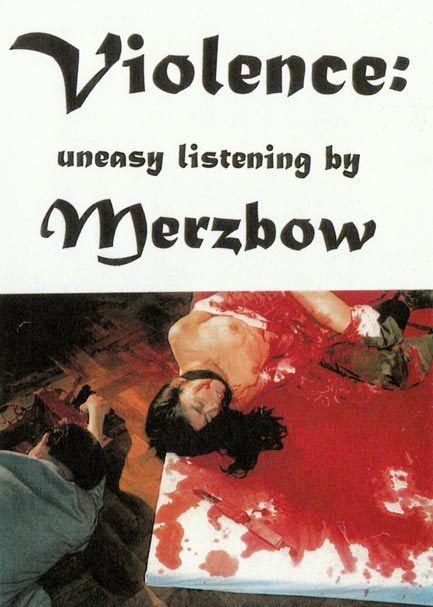
Beyond Ultra Violence: Uneasy Listening by Merzbow
director:
Aryan Kaganof
actor:
秋田昌美
other title:
超越极端的暴力:Merzbow的不安聆听
/
噪音狂人:秋田昌美
Masami Akita aka Merzbow is one of the most prolific “noisicians” in the Harsh Noise genre, with over 300 releases since 1979 that range from 5 cassette sets packaged inside VHS boxes and limited edition CD-R’s to the 50 CD Merzbox and the ULTRA-limited edition of Noise Embryo that comes packaged inside a Mercedes. Merzbow takes his name (and indeed much of his inspiration) from Dada anti-artist Kurt Schwitters and his house-sized installation, Merzbau.
Aside from creating his symphonies of cacophony Masami Akita has also written books and articles on extreme culture and Sadomasochism, lends his services as a freelance writer to a variety of pornography magazines and has directed / acted as consultant on various Harakiri and Kinbaku fetish films. He also scored the film Deadman 2 for the director of this documentary, Ian Kerkhof (aka Aryan Kaganof).
Over the years I have managed to amass a fair amount of Merzbow’s output, but I have never really known much about the man himself, other than the fact that he digs bondage and animal rights. So when I discovered Ian Kerkhof director of the brilliant Tokyo Elegy and Nice to Meet You, Please Don’t Rape Me!, had made a documentary on this Japanese enigma, I had to find and view it immediately.
The opening 20 minutes or so of the film is basically footage of Masami hanging out with some pigeons, walking the streets of Tokyo, puttering around with his electronics, etc. with some dated visual effects superimposed on top of it while a sample of his dissonance throbs on the soundtrack. Then he begins to speak about how he got into the noise scene in the late 70s/early 80s (via an article in underground German zine and tape trading), how as a youth he wanted to make music “so dreadful to listen to that it wouldn’t be considered music”, and his obsession with collecting various everyday sounds and incorporating them into his work.
As the documentary progresses it is clear Mr. Kerkhof is attempting to translate the ideas of Masami and his heroes, the Dadaists to the film medium; the flow is relentlessly interrupted by cuts, splices, inserts, samples and seizure-inducing strobes making it somewhat of a task to endure (or, just fucking inane), which I’m sure is what he had in mind. Although for me the segments where these disruptions are kept to a minimum as Masami enlightens us on his inspirations and fixations were the most intriguing.
Throughout the films runtime The Merz waxes philosophical on such subjects as pre and post-WWII pornography, Japan’s uniform fetish, the national significance of Sepukku / Harakiri and the distinction between the two (there’s no decapitation in Harakiri and it’s generally practiced by women), Bataille’s concepts of eroticism, Gothic architecture and much more. We also are treated to some live performances where he rocks his bizarro noise machine-cum-guitar contraption and some excerpts from his Harakiri fetish film Lost Paradise, over which he explains that in certain archaic (Japanese) religious ceremonies, to testify their utter devotion, women would offer up their entrails to the gods.
Around halfway through the duration Masami pronounces my favourite quote of his: “If music was sex, Merzbow would be pornography” - for me, that pretty much sums up his work in a nutshell.
Aside from creating his symphonies of cacophony Masami Akita has also written books and articles on extreme culture and Sadomasochism, lends his services as a freelance writer to a variety of pornography magazines and has directed / acted as consultant on various Harakiri and Kinbaku fetish films. He also scored the film Deadman 2 for the director of this documentary, Ian Kerkhof (aka Aryan Kaganof).
Over the years I have managed to amass a fair amount of Merzbow’s output, but I have never really known much about the man himself, other than the fact that he digs bondage and animal rights. So when I discovered Ian Kerkhof director of the brilliant Tokyo Elegy and Nice to Meet You, Please Don’t Rape Me!, had made a documentary on this Japanese enigma, I had to find and view it immediately.
The opening 20 minutes or so of the film is basically footage of Masami hanging out with some pigeons, walking the streets of Tokyo, puttering around with his electronics, etc. with some dated visual effects superimposed on top of it while a sample of his dissonance throbs on the soundtrack. Then he begins to speak about how he got into the noise scene in the late 70s/early 80s (via an article in underground German zine and tape trading), how as a youth he wanted to make music “so dreadful to listen to that it wouldn’t be considered music”, and his obsession with collecting various everyday sounds and incorporating them into his work.
As the documentary progresses it is clear Mr. Kerkhof is attempting to translate the ideas of Masami and his heroes, the Dadaists to the film medium; the flow is relentlessly interrupted by cuts, splices, inserts, samples and seizure-inducing strobes making it somewhat of a task to endure (or, just fucking inane), which I’m sure is what he had in mind. Although for me the segments where these disruptions are kept to a minimum as Masami enlightens us on his inspirations and fixations were the most intriguing.
Throughout the films runtime The Merz waxes philosophical on such subjects as pre and post-WWII pornography, Japan’s uniform fetish, the national significance of Sepukku / Harakiri and the distinction between the two (there’s no decapitation in Harakiri and it’s generally practiced by women), Bataille’s concepts of eroticism, Gothic architecture and much more. We also are treated to some live performances where he rocks his bizarro noise machine-cum-guitar contraption and some excerpts from his Harakiri fetish film Lost Paradise, over which he explains that in certain archaic (Japanese) religious ceremonies, to testify their utter devotion, women would offer up their entrails to the gods.
Around halfway through the duration Masami pronounces my favourite quote of his: “If music was sex, Merzbow would be pornography” - for me, that pretty much sums up his work in a nutshell.