西奥多·卢斯 — 演员 (15)
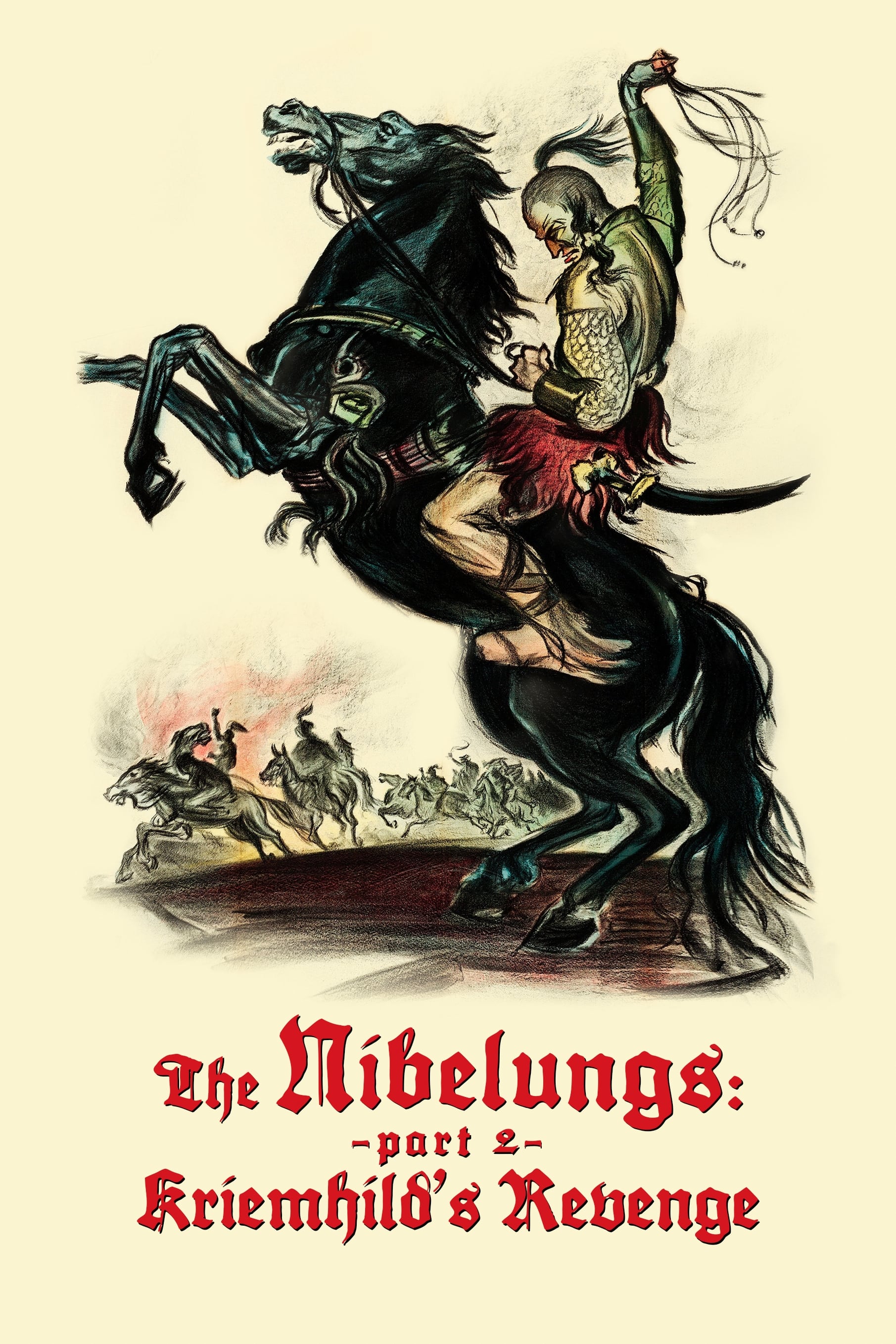
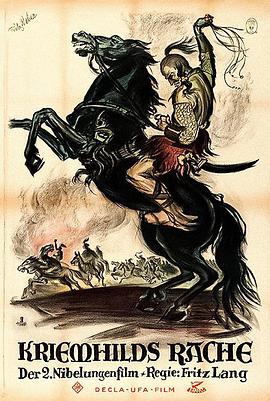
尼伯龙根2:克里姆希尔德的复仇 (1924) [电影] 豆瓣 维基数据 IMDb TMDB
Die Nibelungen: Kriemhilds Rache
8.5 (30 个评分) 导演: 弗里茨·朗 演员: Margarete Schön / Gertrud Arnold
其它标题: 니벨룽겐 - 크림힐트의 복수 / Die Nibelungen: Kriemhilds Rache
根据德国古典史诗《尼贝龙根之歌》改编。本片共两部,第一部的副标题是《西格弗里德》《西格弗里德之死》,又译《斩龙遇仙》;第二部《克伦希尔德的复仇》。第一部剧情:库山王子西格弗里德从传说中得知,如果能用丛林内的巨龙血液沐浴,就能全身刀剑不入,乃立刻启程斩龙取血。不料飘来一片树叶 贴在他的背上挡住了龙血。他自恃刀剑不入,乃出兵讨伐矮人国,夺取隐身头巾和尼伯龙根的国宝。后来,他更凭这两样法宝之助打败冰岛女王的武士,跟王妹克伦希尔德结婚。武士哈根获悉,将长矛对准被树叶贴住而未沾龙血的背部猛掷,西格弗里德应声倒地。第二部描述西格弗里德死后,克伦希尔德嫁给了匈奴国王伊泽尔,生下一个孩子。她邀请她的兄弟前来参加派对,并鼓励伊泽尔向杀死她前夫西格弗里德的凶手哈根报仇。不料哈根得到她兄弟们的保护,于是她必须为逼迫自己的兄弟交出哈根而展开一场激战。
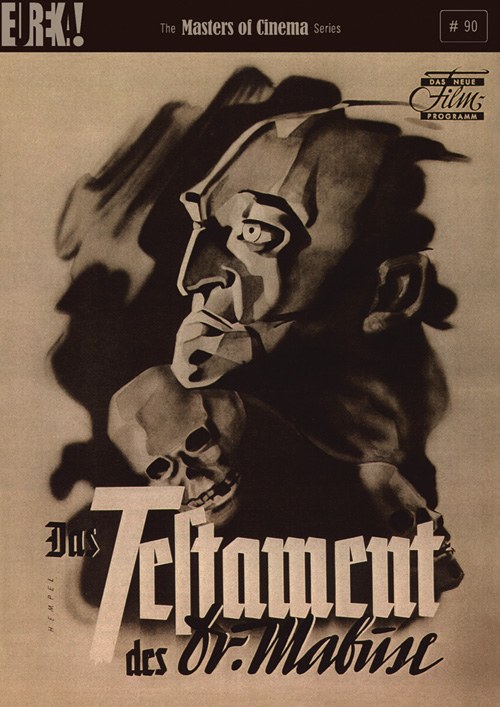
马布斯博士的遗嘱 (1933) [电影] 豆瓣 IMDb TMDB 维基数据
Das Testament des Dr. Mabuse
8.0 (19 个评分) 导演: 弗里茨·朗 / René Sti 演员: 鲁道夫·克莱恩-鲁格 / Thomy Bourdelle
其它标题: Das Testament des Dr. Mabuse / The Testament of Dr. Mabuse
一部曾被德国纳粹禁映的表现主义电影代表作!
本片是1922年《马布斯博士》上下集后的续集,有着浓厚的表现主义色彩。影片对纳粹和希特勒的影射非常明显,因此刚上映便遭禁。
本片讲述地下犯罪集团头目马布斯被抓到疯人院,但在那里依然口出狂言,发号施令,直到他死后,这些指令在外面仍有人执行,让警察百思不得其解……
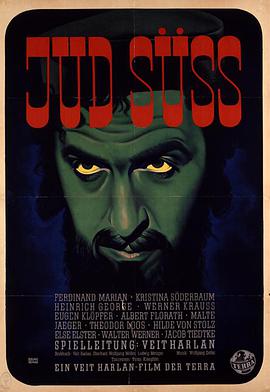
犹太人苏斯 (1940) [电影] 豆瓣
Jud Süß
导演: 威特·哈尔兰 演员: Ferdinand Marian / Kristina Söderbaum
其它标题: Jud Süß / Jew Süss
In this notorious Nazi propaganda historical costume melodrama, a conniving, ambitious Jewish businessman, Suess Oppenheimer, snares a post as treasurer to the Duke of Wurttemburg by showering the corrupt duke with treasure and promises of even greater riches. As the Jew's schemes grow more elaborate and his actions more brazen, the dukedom nearly erupts into civil war. Persuaded by the Jew, the Duke all but scuttles the constitution and alienates the assembly by lifting the local ban on Jews in Stuttgart. In a final outrage, the Jew rapes a wholesome German girl and tortures her father and fiancee. When the Duke succumbs to a sudden heart attack, the assembly of Elders try the Jew and sentence him to death for having "carnal knowledge of a Christian woman."

Summary written by Kevin Rayburn
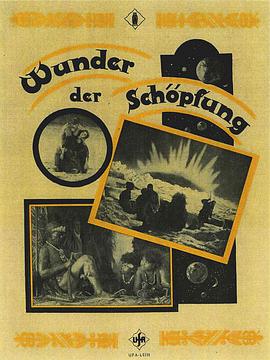
造物的奇迹 (1925) [电影] 豆瓣 TMDB IMDb 维基数据
Wunder der Schöpfung
导演: Hanns Walter Kornblum 演员: Margarete Schön / Theodor Loos
其它标题: Wunder der Schöpfung / Our Heavenly Bodies
Wunder der Schöpfung is an extraordinary, fascinating Kulturfilm trying to explain the whole human knowledge of the 1920s about the world and the universe. 15 special effects experts and 9 cameramen were involved in the production of this film which combines documentary scenes, historical documents, fiction elements, animation scenes and educational impact. It its beautifully colored, using tinting and toning in a very elaborated way. Some visual ideas in the sequences with a space shuttle visiting different planets in the universe seem to have to be the inspiration for Stanley Kubrick's 2001: A Space Odyssey.
In the context of Germany's Kulturfilm phenomenon, Wunder der Schöpfung was among the greatest achievements of the 1920s. The production was constructed, rehearsed, and shot over a period of two and a half years, under the supervision of Hanns Walter Kornblum. The idea to describe the universe and man's place in it well suited UFA's Grossfilm mentality, one year before the Metropolis catastrophe. Hundreds of skilled craftsmen participated in the project, building props and constructing scale models drawn by 15 special effects draughtsmen, while 9 cameramen in separate units worked on the historical, documentary, fiction, animation, and science-fiction sequences. Without star roles or even protagonists, the film's plot is crowded with meticulously structured and skillfully acted single scenes an artful mosaic of small vignettes. No less than four credited university professors ensured the factual background behind the scientific and historical events portrayed.
The film's symbol of progress and the new scientific era is a spacecraft, travelling through the Milky Way, making all the planets and their inspiring worlds familiar to us, with the extravaganza of their distinctive features. The film's educational intentions, however, become steadily more obscure, humorous, or even campy as this popularization project proceeds. With the excuse of presenting the end of the world a not-so-new concept as a new, undeniably scientific truth, the film veers happily along a new path, displaying detailed apocalyptic scenes of the end of mankind. For today's audiences, this amazing film demonstrates how the universe was comprehended in the 1920s, and how that view was sold to contemporary audiences.
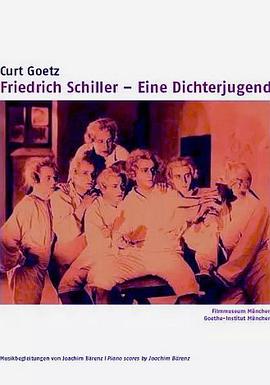
弗里德里克·席勒:年轻诗人 (1923) [电影] 豆瓣
Friedrich Schiller - Eine Dichterjugend
导演: Curt Goetz 演员: Theodor Loos / Hermann Vallentin
其它标题: Friedrich Schiller - Eine Dichterjugend
After 16 years' experience on stage, the actor and playwright Curt Goetz (1888-1960) made his debut as a film director and producer with the silent movie Friedrich Schiller - Eine Dichterjugend (1923). Writing razor sharp dialogue was his profession; acting comic parts in the theatre - without having to renounce speech - was his craft. And that is why the silent cinema presented such a special artistic challenge to Goetz, a task whose accomplishment was prompted by a difficult subject: the poet Friedrich Schiller's adolescence. An enthusiast of the spoken word makes a movie about the early life of a powerfully eloquent poet, but has to eschew the cadence of poetry. Under such circumstances, the artistic potential of a film director must prove itself.
In his film version, Curt Goetz shifts the focus away from the poetic output towards the young Friedrich Schiller himself: on the misery of his soul whilst a pupil of the ducal military academy, his opposition to the strict physical drill and the narrow intellectual confines of the "Karlsschule", his juvenile passion for the works of Shakespeare, Klopstock and Lessing, his anger at unjust authorities, his devotion to women, and finally his inability to cope with financial matters. Curt Goetz presumes that these facets of the artist's life are the source of all anger and distress. It is the same affection with which the lead actors in Schiller's debut "The Robbers" confronted the audience at the 1782 Mannheim premiere. The audience acclaimed the play, but in his homeland the young Schiller was banned from writing and was forced to flee.
The director Curt Goetz allows the actors to perform almost without pathos, which turns out to be a suitable cinematic device. The leading roles of the opponents are taken by Theodor Loos (Friedrich Schiller) and Hermann Vallentin (Duke Karl Eugen von Württemberg). The intertitles and Schiller's occasionally colourful behaviour leave no doubt about his Swabian origins. Such characterisation is sometimes achieved by the director's habit of using puns in the intertitles, the kind of jokes audiences enjoyed in subsequent talkies such as the comedies Napoleon ist an allem schuld, Das Haus in Montevideo, or Hokuspokus.
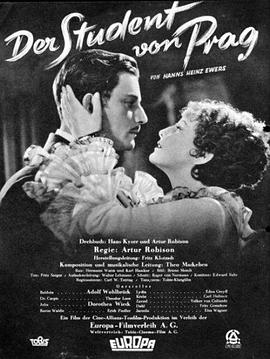
布拉格的大学生 (1935) [电影] 豆瓣
Der Student von Prag
导演: 阿图尔·罗比森 演员: 安东·沃尔布鲁克 / 西奥多·卢斯
其它标题: Der Student von Prag
十九世纪六十年代的布拉格:巴尔丁是个受欢迎的英俊学生,他是镇上最厉害的击剑手。他和他的朋友达尔,都喜欢店主的侄女莉迪亚。当学生们帮莉迪亚庆生时,歌剧明星茱莉亚来到了旅店。巴尔丁平静的生活开始发生变化。他迷恋上茱莉亚,但茱莉亚已经有了一位仰慕者,就是富有的花花公子沃迪思男爵。一个穷学生要怎样与之竞争?这时,神秘的卡皮斯医生出现了,他似乎与茱莉亚有千丝万缕的联系,而且深深的嫉妒着沃迪思男爵。卡皮斯医生为巴尔丁指引了一条道路,却要巴尔丁付出的超乎想象的代价,他的风险他的理智他的生命,甚至是他的灵魂……(豆瓣电影字幕翻译2.0小组)
人造人 (1916) [电影] 豆瓣
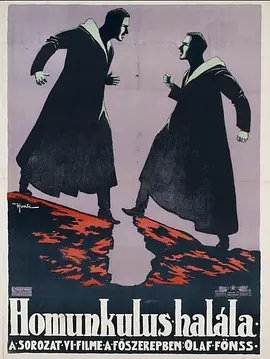
Homunculus, 1. Teil
导演: Otto Rippert 演员: 奥拉夫·方斯 / Ernst Ludwig
其它标题: Homunculus, 1. Teil / 侏儒
Part of the artificial-creature series encompassing Der Golem (1914 and 1920), Alraune (1918, 1928, 1930) and Metropolis (1926), 'Homunculus' was the most popular serial in Germany during World War I even influencing the dress of the fashionableset in Berlin. Foenss, a Danish star, is the perfect creature manufactured in a laboratory by Kuehne. Having discovered his origins, that he has no 'soul' and is incapable of love, he revenges himself on mankind, instigating revolutions and becoming a monstruos but beautiful tyrant, relentlessly pursued by his creator-father who seeks to rectify his mistake.
Man’s attempts to create artificial life have long been a staple of cinema science fiction. That plot device achieved a high level of sophistication with director Otto Rippert’s Homunculus series. No grotesque pastiche of human body parts like his notorious counterpart Frankenstein’s monster, Homunculus is the beloved “test-tube child” of a German scientist who lacks only one thing—the capacity to feel love. The film seen here is preserved from a decomposing 35mm nitrate print with tinting and toning that may be a condensed version of the original six-episode series. Structurally, the story (with Italian intertitles) is still intact, and the combination of decomposing nitrate with the remains of the original colors creates an otherworldly beauty that serves to heighten the drama. Homunculus was preserved with funding from The Louis B. Mayer Foundation.
尼伯龙根:西格弗里德之死 (1924) [电影] Eggplant.place
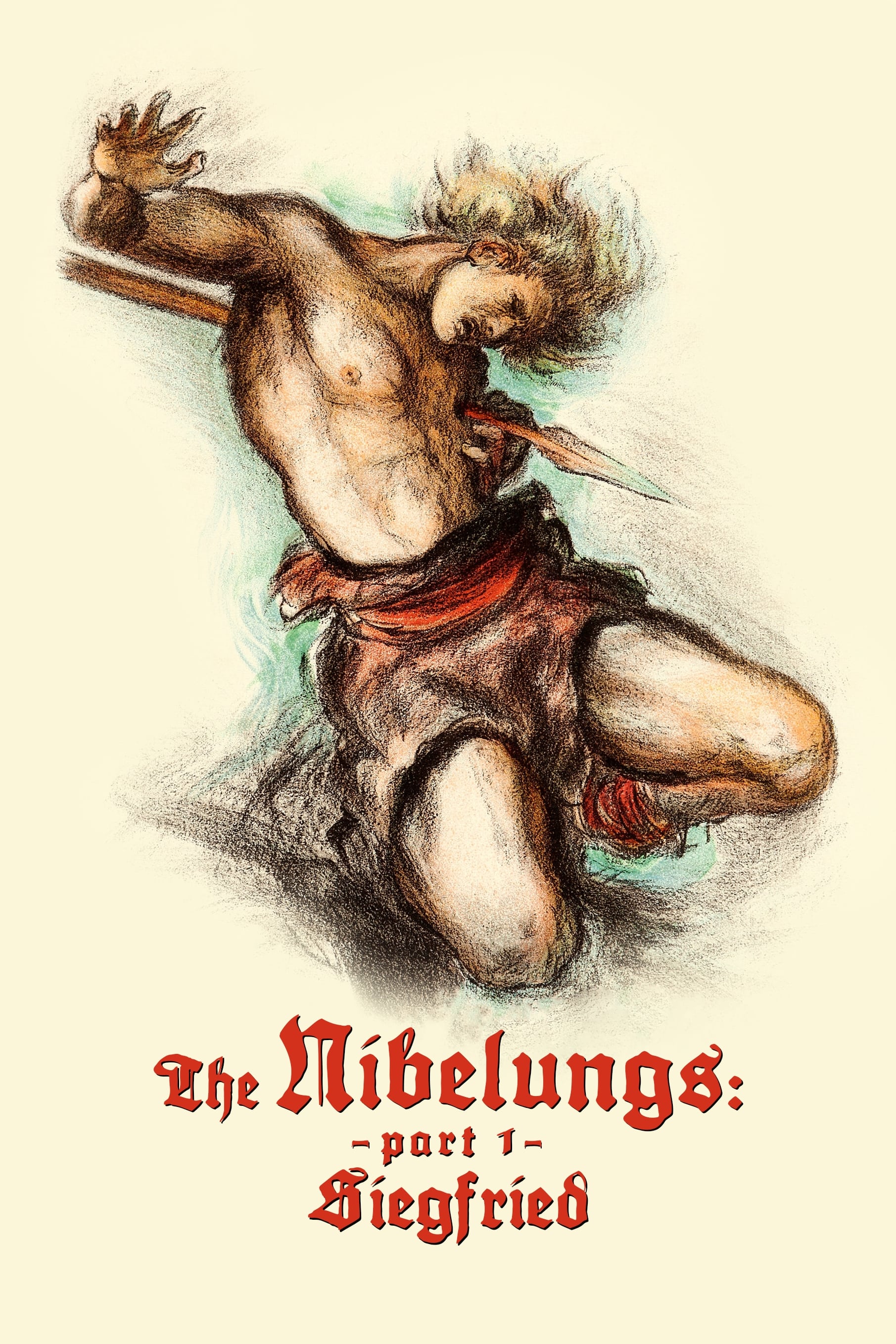
Die Nibelungen: Siegfried
导演: Fritz Lang 演员: Gertrud Arnold / Margarete Schön
其它标题: I Nibelunghi: Sigfrido / Die Nibelungen: Siegfried
这是一个根据一个古老的德国传说改编的故事。很久以前有一个英雄,他叫西格弗里德。因为龙血沐浴,他浑身刀枪不入,力大无比。有一天,他邂逅了美丽的公主西里姆希尔德而坠入了情网,决心去城堡里找她,他这一路经历了很多,遇到了好人还有坏人......
尼伯龙根2:克里姆希尔德的复仇 (1924) [电影] Eggplant.place
Die Nibelungen: Kriemhilds Rache
导演: Fritz Lang 演员: Margarete Schön / Gertrud Arnold
其它标题: I nibelunghi: la vendetta di Crimilde / Die Nibelungen: Kriemhilds Rache
根据德国古典史诗《尼贝龙根之歌》改编。本片共两部,第一部的副标题是《西格弗里德》《西格弗里德之死》,又译《斩龙遇仙》;第二部《克伦希尔德的复仇》。第一部剧情:库山王子西格弗里德从传说中得知,如果能用丛林内的巨龙血液沐浴,就能全身刀剑不入,乃立刻启程斩龙取血。不料飘来一片树叶 贴在他的背上挡住了龙血。他自恃刀剑不入,乃出兵讨伐矮人国,夺取隐身头巾和尼伯龙根的国宝。后来,他更凭这两样法宝之助打败冰岛女王的武士,跟王妹克伦希尔德结婚。武士哈根获悉,将长矛对准被树叶贴住而未沾龙血的背部猛掷,西格弗里德应声倒地。第二部描述西格弗里德死后,克伦希尔德嫁给了匈奴国王伊泽尔,生下一个孩子。她邀请她的兄弟前来参加派对,并鼓励伊泽尔向杀死她前夫西格弗里德的凶手哈根报仇。不料哈根得到她兄弟们的保护,于是她必须为逼迫自己的兄弟交出哈根而展开一场激战。
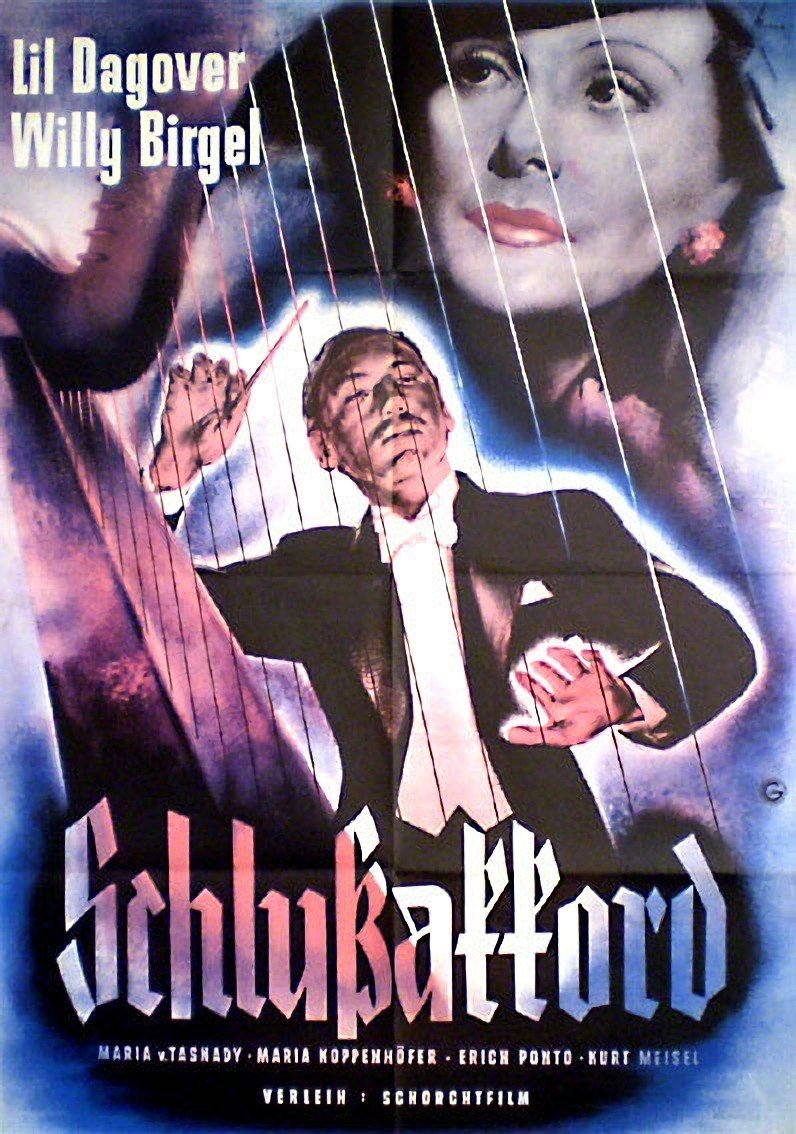
最后的交响曲 (1936) [电影] IMDb 维基数据 TMDB
Schlußakkord
导演: Douglas Sirk 演员: Maria von Tasnady / Willy Birgel
其它标题: Schlußakkord / La Neuvième Symphonie
After her husband dies, a German woman who gave up her infant for adoption to emigrate to America returns to Germany, discovering that her child is being raised by a married orchestra conductor.
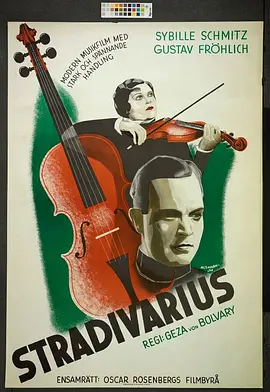
Stradivari (1935) [电影] 豆瓣 IMDb
Stradivari
导演: Géza von Bolváry 演员: Gustav Fröhlich / Sybille Schmitz
Im Jahr 1914: Sandor, ein ungarischer Offizier, erbt von seinem Onkel eine wertvolle Geige, bei der es sich, wie sich herausstellt, um ein Meisterwerk des berühmten Geigenbauers Stradivari handelt. Sandors Verlobte Maria findet heraus, dass sie Geige ihren Besitzern immer Unglück gebracht hat, aber Sandor hält nichts von derlei Aberglauben. Jedoch kurz bevor sie heiraten und gemeinsam nach Amerika aufbrechen wollen, bricht der Krieg aus. Sandor muss zurück zu seinem Regiment und kann vier Jahre lang kein Lebenszeichen von sich geben.
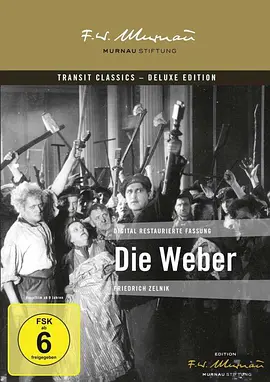
织工 (1927) [电影] 豆瓣 IMDb
Die Weber
导演: Frederic Zelnik 演员: Paul Wegener / Wilhelm Dieterle
其它标题: Les tisserands / The Weavers
Die Weber (1927), a rousing German tale of the 1844 weavers’ revolution.
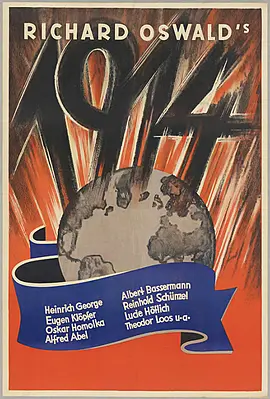
1914: The Last Days Before the War (1931) [电影] 豆瓣 IMDb
1914, die letzten Tage vor dem Weltbrand
导演: Richard Oswald 演员: Heinrich George / Albert Bassermann
其它标题: 1914, die letzten Tage vor dem Weltbrand
The film focuses on the leadership of the Great Powers of Europe in the days leading up to the outbreak of the First World War.