Hans Werner Henze — 艺术家 (8)
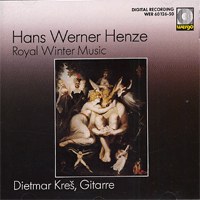
亨策《皇家冬乐》 / 两首根据莎士比亚角色而作的吉他奏鸣曲 [音乐] 豆瓣
Hans Werner Henze / Dietmar Kres
发布日期 1994年5月17日 出版发行: Wergo
This recording of Hans Werner Henze’s Royal Winter Music sonatas by the young Austrian guitarist Dietmar Kreš is fascinating for its ability to lend a precision of character to these musical Shakespeare sketches in a way that is as unobtrusive as it is forceful. Henze himself was enthusiastic about this interpretation and its many gentle nuances – and anyone who listens to the CD carefully will share his euphoria for this guitarist, who is technically brilliant in any case. (Fono Forum)
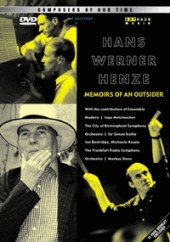
纪录片《局外人的回忆-德国作曲家亨策》 / 亨策《安魂曲-九首圣乐协奏曲》 [音乐] 豆瓣
Barry Gavin / Ensemble Modern
发布日期 2001年1月1日 出版发行: ART HAUS
"I have evolved a concept of beauty nurtured by experiences both terrible and wonderful." (Hans Werner Henze)
Henze pours his very soul in to this portrait. Interviewed at his home just outside Rome his life story is one of political protest and struggle in many guises. It is clear that his many experiences both terrible and wonderful are deep-dyed into the very fabric of his music.
Henze's dramatic and moving Requiem begins in gentle, tender mood and ends with a radiant, hymn-like Sanctus. It contains fierce and satirical passages, but also ones which express penetrating or suppressed sorrow.
"Essentially, he is always going to be an outsider...as a gay man, a liberal, growing up in the third Reich...as a person who is always somewhere else..."
(Sir Simon Rattle)
亨策-清唱剧《梅杜萨之筏》 [音乐] 豆瓣
Edda Moser / Dietrich Fischer-Dieskau
发布日期 1996年6月17日 出版发行: DG
汉斯·维尔纳·亨策 Hans Werner Henze (1926- )
1926年生于威斯特法里亚的德国作曲家、指挥家。1942-44年在不伦瑞克国立音乐学校、1946年在海德堡求学。1948年在达姆施塔特跟莱波维茨学习勋伯格的12音体系。1950年在威斯巴登任赫塞国家歌剧院芭蕾舞团音乐指导。1953年定居意大利。60年代中在政治上走向极左,此后的作品很多都反映了他的激进理想与信条。音乐风格五花八门,令人眼花缭乱,表现出他天赋的丰富想象力和不拘绳墨的性格。 ——《牛津简明音乐词典》
梅杜沙之筏
《梅杜沙之筏》是亨策最具代表性的作品,完成于1968年。“梅杜沙号”是路易18时期的一艘法国远洋帆船。在航海途中遭遇不测,150名水手用帆船的残骸制作了简易筏漂流海上。15天后,当另一艘船路过将他们营救上船时,只有15人依旧幸存。此事在法国国内引起轩然大波,画家席里科以部分幸存者为模特,创作了举世闻名的现实主义画作。此后,《梅杜沙之筏》就成了关注不幸的底层人的代名词,与之相关的艺术品无不饱含革命的精神。
20世纪60年代,亨策与脚本作家施纳贝尔重新拾起这个题材,创作了同名清唱剧。然而在演出前夕,这部作品的敏感内容依旧引起了社会上的震动。青年学生在演出现场高挂象征革命的红旗,警察逮捕了施纳贝尔,亨策则拒绝在混乱中上台指挥。直到1971年1月,亨策才在维也纳音乐之友大厅首次公演了这部作品。
整部作品由一个朗诵者穿插其间,在演出现场,他站在合唱队与女高音之间,象征着生死之隔。代表死亡的女高音与代表求生的男中音分列左右。随着作品的进行,生者行列中不断有人走到死亡的那边。亨策的作品并不采用描画式的现实主义的音乐,而通过刺激与新奇的音响效果追求人在生死之间的挣扎与无助。这种内心的现实主义成为他激进风格的代表。
乐海览奇网提供该作品试听: