约翰·劳 — 作者 (3)
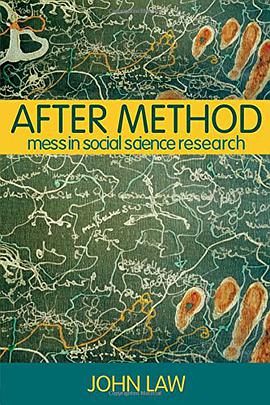
After Method [图书] 豆瓣
作者: 约翰·劳 publishing house: Routledge 2004 - 8
John Law argues that methods don't just describe social realities but are also involved in creating them. The implications of this argument are highly significant. If this is the case, methods are always political, and it raises the question of what kinds of social realities we want to create. Most current methods look for clarity and precision. It is usually said that only poor research produces messy findings, and the idea that things in the world might be fluid, elusive, or multiple is unthinkable. Law's startling argument is that this is wrong and it is time for a new approach. Many realities, he says, are vague and ephemeral. If methods want to know and help to shape the world, then they need to reinvent themselves and their politics to deal with mess. That is the challenge. Nothing less will do.
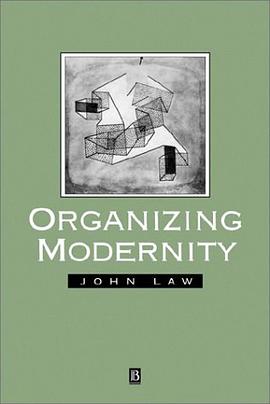
Organizing Modernity [图书] 豆瓣
作者: 约翰·劳 publishing house: Wiley-Blackwell 1993
In this important theoretical and empirical statement John Law argues against the purity of post-enlightenment political and social theory, and offers an alternative post-modern sociology. Arguing in favor of a sociology of verbs, he suggests that power, organizations, mind-body dualisms, and macro-micro distinctions may all be understood as the local performance of recursive modes of social ordering.
Drawing on a range of theoretical traditions including actor-network theory, verstehende sociology, and the writing of Michel Foucault, he explores the production of materials - including agents and architectures - and their importance for these modes of ordering. The book, which draws on organizational ethnography to develop its argument, is essential reading for all those interested in social theory, materialism, or the sociology of organizations at the end of the era of high modernity.
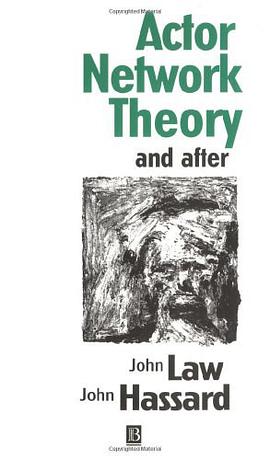
Actor Network Theory and After [图书] 豆瓣
作者: 约翰·劳 / John Hassard publishing house: Wiley-Blackwell 1999 - 5
Actor network theory is a powerful approach which combines the insights of post-structuralism with an analysis of the materials of social life. This controversial and path-breaking volume extends ANT beyond studies of technology, power and organisation to the body, subjectivity, politics, and cultural difference, and puts it into cutting-edge dialogue with feminism, anthropology, psychology and economics.