Anita Rachvelishvili — 演员 (8)
鲍罗丁《伊戈尔王》 (2014) [电影] 豆瓣
"The Metropolitan Opera HD Live" Borodin: Prince Igor
演员: Ildar Abdrazakov / Oksana Dyka
其它标题: "The Metropolitan Opera HD Live" Borodin: Prince Igor / 大都会歌剧院高清歌剧转播系列
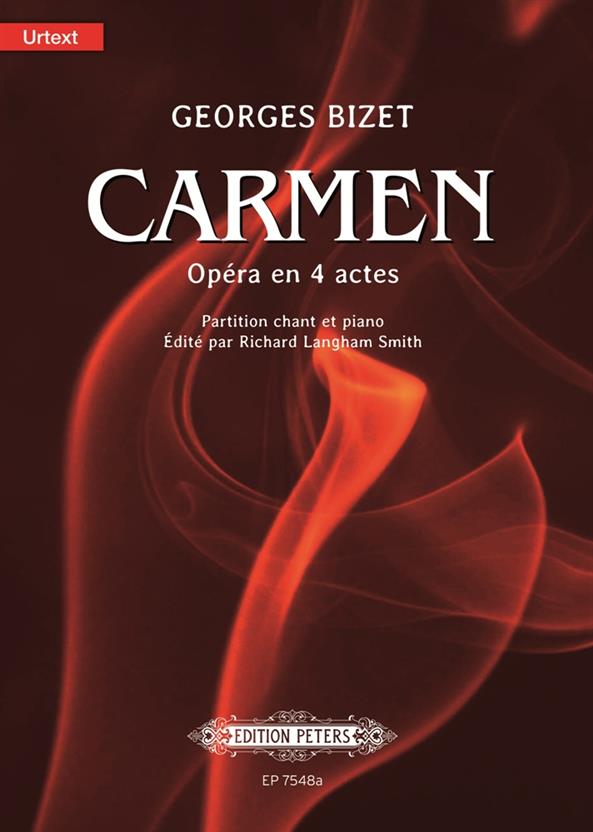
卡门 2014年大都会歌剧团版 [演出] 豆瓣
所属 演出: 卡门
语言: 法语 french 剧团: Metropolitan Opera Orchestra 大都会歌剧团管弦乐团 ; Metropolitan Opera Chorus 大都会歌剧团合唱团 ; Metropolitan Opera Ballet 大都会歌剧团芭蕾舞团 剧院: Metropolitan Opera House 大都会歌剧院 导演: Richard Eyre
其它标题: 2014年大都会歌剧团版 编剧: Henri Meilhac / Ludovic Halévy 作曲: Georges Bizet 演员: Anita Rachvelishvili / Aleksandrs Antonenko
Place: Seville, Spain, and surrounding hills
Time: Around 1820
Act 1
A square, in Seville. On the right, a door to the tobacco factory. At the back, a bridge. On the left, a guardhouse.
A group of soldiers relaxes in the square, waiting for the changing of the guard and commenting on the passers-by ("Sur la place, chacun passe"). Micaëla appears, seeking José. Moralès tells her that "José is not yet on duty" and invites her to wait with them. She declines, saying she will return later. José arrives with the new guard, who is greeted and imitated by a crowd of urchins ("Avec la garde montante").
As the factory bell rings, the cigarette girls emerge and exchange banter with young men in the crowd ("La cloche a sonné"). Carmen enters and sings her provocative habanera on the untameable nature of love ("L'amour est un oiseau rebelle"). The men plead with her to choose a lover, and after some teasing she throws a flower to Don José, who thus far has been ignoring her but is now annoyed by her insolence.
As the women go back to the factory, Micaëla returns and gives José a letter and a kiss from his mother ("Parle-moi de ma mère!"). He reads that his mother wants him to return home and marry Micaëla, who retreats in shy embarrassment on learning this. Just as José declares that he is ready to heed his mother's wishes, the women stream from the factory in great agitation. Zuniga, the officer of the guard, learns that Carmen has attacked a woman with a knife. When challenged, Carmen answers with mocking defiance ("Tra la la... Coupe-moi, brûle-moi"); Zuniga orders José to tie her hands while he prepares the prison warrant. Left alone with José, Carmen beguiles him with a seguidilla, in which she sings of a night of dancing and passion with her lover—whoever that may be—in Lillas Pastia's tavern. Confused yet mesmerised, José agrees to free her hands; as she is led away she pushes her escort to the ground and runs off laughing. José is arrested for dereliction of duty.
Act 2
Lillas Pastia's Inn
Two months have passed. Carmen and her friends Frasquita and Mercédès are entertaining Zuniga and other officers ("Les tringles des sistres tintaient") in Pastia's inn. Carmen is delighted to learn of José's release from two months' detention. Outside, a chorus and procession announces the arrival of the toreador Escamillo ("Vivat, vivat le Toréro"). Invited inside, he introduces himself with the "Toreador Song" ("Votre toast, je peux vous le rendre") and sets his sights on Carmen, who brushes him aside. Lillas Pastia hustles the crowds and the soldiers away.
When only Carmen, Frasquita and Mercédès remain, smugglers Dancaïre and Remendado arrive and reveal their plans to dispose of some recently acquired contraband ("Nous avons en tête une affaire"). Frasquita and Mercédès are keen to help them, but Carmen refuses, since she wishes to wait for José. After the smugglers leave, José arrives. Carmen treats him to a private exotic dance ("Je vais danser en votre honneur ... La la la"), but her song is joined by a distant bugle call from the barracks. When José says he must return to duty, she mocks him, and he answers by showing her the flower that she threw to him in the square ("La fleur que tu m'avais jetée"). Unconvinced, Carmen demands he show his love by leaving with her. José refuses to desert, but as he prepares to depart, Zuniga enters looking for Carmen. He and José fight, and are separated by the returning smugglers, who restrain Zuniga. Having attacked a superior officer, José now has no choice but to join Carmen and the smugglers ("Suis-nous à travers la campagne").
Act 3
A wild spot in the mountains
Carmen and José enter with the smugglers and their booty ("Écoute, écoute, compagnons"); Carmen has now become bored with José and tells him scornfully that he should go back to his mother. Frasquita and Mercédès amuse themselves by reading their fortunes from the cards; Carmen joins them and finds that the cards are foretelling her death, and José's. The women depart to suborn the customs officers who are watching the locality. José is placed on guard duty.
Micaëla enters with a guide, seeking José and determined to rescue him from Carmen ("Je dis que rien ne m'épouvante"). On hearing a gunshot she hides in fear; it is José, who has fired at an intruder who proves to be Escamillo. José's pleasure at meeting the bullfighter turns to anger when Escamillo declares his infatuation with Carmen. The pair fight ("Je suis Escamillo, toréro de Grenade"), but are interrupted by the returning smugglers and girls ("Holà, holà José"). As Escamillo leaves he invites everyone to his next bullfight in Seville. Micaëla is discovered; at first, José will not leave with her despite Carmen's mockery, but he agrees to go when told that his mother is dying. As he departs, vowing he will return, Escamillo is heard in the distance, singing the toreador's song.
Act 4
A square in Seville. At the back, the walls of an ancient amphitheatre
Zuniga, Frasquita and Mercédès are among the crowd awaiting the arrival of the bullfighters ("Les voici ! Voici la quadrille!"). Escamillo enters with Carmen, and they express their mutual love ("Si tu m'aimes, Carmen"). As Escamillo goes into the arena, Frasquita and Mercedes warn Carmen that José is nearby, but Carmen is unafraid and willing to speak to him. Alone, she is confronted by the desperate José ("C'est toi ! C'est moi !"). While he pleads vainly for her to return to him, cheers are heard from the arena. As José makes his last entreaty, Carmen contemptuously throws down the ring he gave her and attempts to enter the arena. He then stabs her, and as Escamillo is acclaimed by the crowds, Carmen dies. José kneels and sings "Ah! Carmen! ma Carmen adorée!"; as the crowd exits the arena, José confesses to killing the woman he loved.
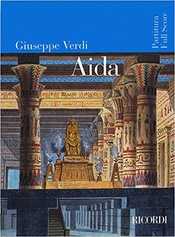
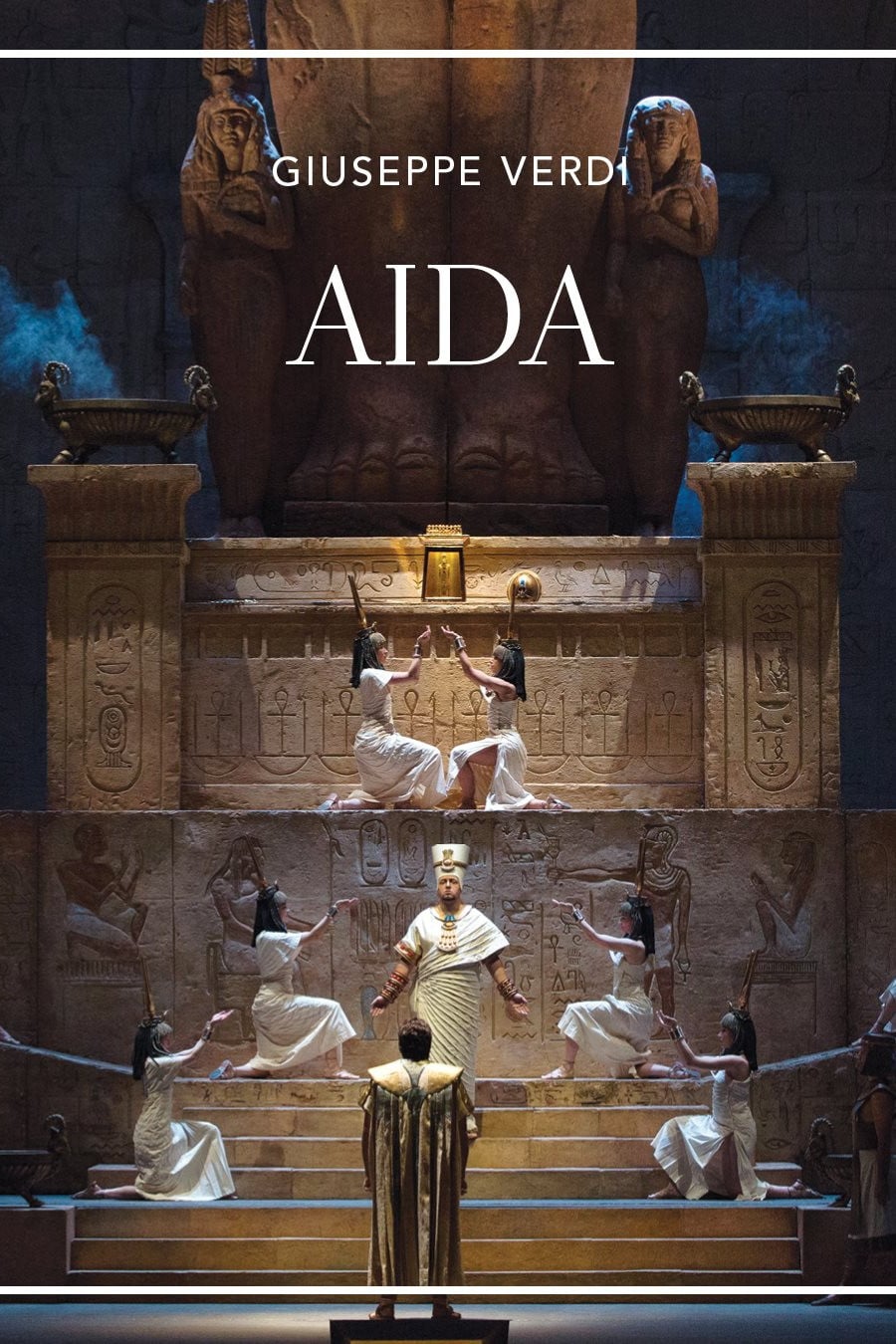
阿伊达 2019年Riccardo Muti指挥芝加哥交响乐团和芝加哥交响乐团合唱团版 [演出] 豆瓣
所属 演出: 阿伊达
语言: italian 意大利语 剧团: Chicago Symphony Orchestra 芝加哥交响乐团 ; Chicago Symphony Chorus 芝加哥交响乐团合唱团 剧院: Symphony Center 芝加哥交响乐中心 导演: nobody
其它标题: 2019年Riccardo Muti指挥芝加哥交响乐团和芝加哥交响乐团合唱团版 编剧: Antonio Ghislanzoni 作曲: Giuseppe Verdi 演员: Krassimira Stoyanova / Francesco Meli
Backstory: The Egyptians have captured and enslaved Aida, an Ethiopian princess. An Egyptian military commander, Radamès, struggles to choose between his love for her and his loyalty to the King of Egypt. To complicate the story further, the King's daughter Amneris is in love with Radamès, although he does not return her feelings.
Act 1
Scene 1: A hall in the King's palace; through the rear gate the pyramids and temples of Memphis are visible
Ramfis, the high priest of Egypt, tells Radamès, the young warrior, that war with the Ethiopians seems inevitable, and Radamès hopes that he will be chosen as the Egyptian commander (Ramfis, Radamès: "Sì, corre voce l'Etiope ardisca" / Yes, it is rumored that Ethiopia dares once again to threaten our power).
Radamès dreams both of gaining victory on the battlefield and of Aida, an Ethiopian slave, with whom he is secretly in love (Radamès: "Se quel guerrier io fossi! ... Celeste Aida" / Heavenly Aida). Aida, who is also secretly in love with Radamès, is the captured daughter of the Ethiopian King Amonasro, but her Egyptian captors are unaware of her true identity. Her father has invaded Egypt to deliver her from servitude.
Amneris, the daughter of the Egyptian King, enters the hall. She too loves Radamès, but fears that his heart belongs to someone else (Radamès, Amneris: "Quale insolita gioia nel tuo sguardo" / In your looks I trace a joy unwonted).
Aida appears and, when Radamès sees her, Amneris notices that he looks disturbed. She suspects that Aida could be her rival, but is able to hide her jealousy and approach Aida (Amneris, Aida, Radamès: "Vieni, o diletta, appressati" / Come, O delight, come closer).
The King enters, along with the High Priest, Ramfis, and the whole palace court. A messenger announces that the Ethiopians, led by King Amonasro, are marching towards Thebes. The King declares war and proclaims that Radamès is the man chosen by the goddess Isis to be the leader of the army (The King, Messenger, Radamès, Aida, Amneris, Ramfis, chorus: "Alta cagion v'aduna .. Guerra, guerra, guerra!" / Oh fate o'er Egypt looming .. War, war, war!). Upon receiving this mandate from the King, Radamès proceeds to the temple of Vulcan to take up the sacred arms (The King, Radamès, Aida, Amneris, chorus: "Su! del Nilo al sacro lido" .. (reprise) "Guerra, guerra guerra!" / On! Of Nilus' sacred river, guard the shores .. (reprise) War, war, war!).
Alone in the hall, Aida feels torn between her love for her father, her country, and Radamès (Aida: "Ritorna vincitor" / Return a conqueror).
Scene 2: Inside the Temple of Vulcan
Solemn ceremonies and dances by the priestesses take place (High Priestess, chorus, Radamès: "Possente Ftha ... Tu che dal nulla" / O mighty Ptah). This is followed by the installation of Radamès to the office of commander-in-chief (High Priestess, chorus, Ramfis, Radamès: "Immenso Ftha .. Mortal, diletto ai Numi" / O mighty one, guard and protect!). All present in the temple pray fervently for the victory of Egypt and protection for their warriors ("Nume, custode e vindice"/ Hear us, O guardian deity).
Act 2
Scene 1: The chamber of Amneris
Dances and music to celebrate Radamès' victory take place (Chorus, Amneris: "Chi mai fra gli inni e i plausi" / Our songs his glory praising). However, Amneris is still in doubt about Radamès' love and wonders whether Aida is in love with him. She tries to forget her doubt, entertaining her worried heart with the dance of Moorish slaves (Chorus, Amneris: "Vieni: sul crin ti piovano" / Come bind your flowing tresses).
When Aida enters the chamber, Amneris asks everyone to leave. By falsely telling Aida that Radamès has died in the battle, she tricks her into professing her love for him. In grief, and shocked by the news, Aida confesses that her heart belongs to Radamès eternally (Amneris, Aida: "Fu la sorte dell'armi a' tuoi funesta" / The battle's outcome was cruel for your people).
This confession fires Amneris with rage, and she plans on taking revenge on Aida. Ignoring Aida's pleadings (Amneris, Aida, chorus: "Su! del Nilo al sacro lido" / Up! at the sacred shores of the Nile), Amneris leaves her alone in the chamber.
Scene 2: The grand gate of the city of Thebes
Radamès returns victorious and the troops march into the city (Chorus, Ramfis: "Gloria all'Egitto, ad Iside" / Glory to Egypt, [and] to Isis!).
The Egyptian king decrees that on this day the triumphant Radamès may have anything he wishes. The Ethiopian captives are led onstage in chains, Amonasro among them. Aida immediately rushes to her father, who whispers to her to conceal his true identity as King of Ethiopia from the Egyptians. Amonasro deceptively proclaims to the Egyptians that the Ethiopian king (referring to himself) has been slain in battle. Aida, Amonasro, and the captured Ethiopians plead with the Egyptian King for mercy, but Ramfis and the Egyptian priests call for their death (Aida, Amneris, Radamès, The King, Amonasro, chorus: "Che veggo! .. Egli? .. Mio padre! .. Anch'io pugnai .. Struggi, o Re, queste ciurme feroci" / What do I see?.. Is it he? My father? .. Destroy, O King, these ferocious creatures).
Claiming the reward promised by the King of Egypt, Radamès pleads with him to spare the lives of the prisoners and to set them free. The King grants Radamès' wish, and declares that he (Radamès) will be his (the King's) successor and will marry the King's daughter (Amneris). (Aida, Amneris, Radamès, Ramfis, The King, Amonasro, chorus: "O Re: pei sacri Numi! .. Gloria all'Egitto" / O King, by the sacred gods ... Glory to Egypt!). At Ramfis' suggestion to the King, Aida and Amonasro remain as hostages to ensure that the Ethiopians do not avenge their defeat.
Act 3
On the banks of the Nile, near the Temple of Isis
Prayers are said (Chorus, High Priestess, Ramfis, Amneris: "O tu che sei d'Osiride" / O thou who to Osiris art) on the eve of Amneris and Radamès' wedding in the Temple of Isis. Outside, Aida waits to meet with Radamès as they had planned (Aida: "Qui Radamès verra .. O patria mia" / Oh, my dear country!).
Amonasro appears and orders Aida to find out the location of the Egyptian army from Radamès. Aida, torn between her love for Radamès and her loyalty to her native land and to her father, reluctantly agrees. (Aida, Amonasro: "Ciel, mio padre! .. Rivedrai le foreste imbalsamate" / Once again shalt thou gaze). When Radamès arrives, Amonasro hides behind a rock and listens to their conversation.
Radamès affirms that he will marry Aida ("Pur ti riveggo, mia dolce Aida .. Nel fiero anelito"; "Fuggiam gli ardori inospiti .. Là, tra foreste vergini" / I see you again, my sweet Aida!), and Aida convinces him to flee to the desert with her.
In order to make their escape easier, Radamès proposes that they use a safe route without any fear of discovery and reveals the location where his army has chosen to attack. Upon hearing this, Amonasro comes out of hiding and reveals his identity. Radamès realizes, to his extreme dismay, that he has unwittingly revealed a crucial military secret to the enemy. At the same time, Amneris and Ramfis leave the temple and, seeing Radamès in conference with the enemy, call for the imperial guards. Amonasro draws a dagger, intending to kill Amneris and Ramfis before the guards can hear them, but Radamès disarms him, quickly orders him to flee with Aida, and surrenders himself to the imperial guards as Aida and Amonasro run off. The guards arrest him as a traitor.
Act 4
Scene 1: A hall in the Temple of Justice. To one side is the door leading to Radamès' prison cell
Amneris desires to save Radamès ("L'aborrita rivale a me sfuggia" / My hated rival has escaped me). She calls for the guard to bring him to her.
She asks Radamès to deny the accusations, but Radamès, who does not wish to live without Aida, refuses. He is relieved to know Aida is still alive and hopes she has reached her own country (Amneris, Radamès: "Già i Sacerdoti adunansi" / Already the priests are assembling).
Offstage, Ramfis recites the charges against Radamès and calls on him to defend himself, but he stands mute, and is condemned to death as a traitor. Amneris, who remains onstage, protests that he Radamès is innocent, and pleads with the priests to show mercy. The priests sentence him to be buried alive; Amneris weeps and curses the priests as he is taken away (Judgment scene, Amneris, Ramfis, and chorus: "Ahimè! .. morir mi sento .. Radamès, e deciso il tuo fato" / Alas .. I feel death .. Radamès, your fate is decided).
Scene 2: The lower portion of the stage shows the vault in the Temple of Vulcan; the upper portion represents the temple itself
Radamès has been taken into the lower floor of the temple and sealed up in a dark vault, where he thinks that he is alone. As he hopes that Aida is in a safer place, he hears a sigh and then sees Aida. She has hidden herself in the vault in order to die with Radamès (Radamès and Aida: "La fatal pietra sovra me si chiuse." / The fatal stone now closes over me). They accept their terrible fate (Radamès: "Morir! Si pura e bella" / To die! So pure and lovely!) and bid farewell to Earth and its sorrows. Above the vault in the temple of Vulcan, Amneris weeps and prays to the goddess Isis. In the vault below, Aida dies in Radamès' arms as the priests, offstage, pray to the god Ftha. (Chorus, Aida, Radamès, Amneris: "Immenso Ftha" / Almighty Ptah).
伊戈尔王子 2019年巴黎国家歌剧团版 [演出] 豆瓣
所属 演出: 伊戈尔王子
语言: russian 俄语 剧团: Orchestre de l'Opéra national de Paris 巴黎国家歌剧团管弦乐团 ; Chœurs de l'Opéra national de Paris 巴黎国家歌剧团合唱团 剧院: Opéra Bastille 巴士底歌剧院 导演: Barrie Kosky
其它标题: 2019年巴黎国家歌剧团版 编剧: Alexander Borodin 作曲: Alexander Borodin 演员: Ildar Abdrazakov / Elena Stikhina
Time: The year 1185
Place: The city of Putivl (prologue, Acts 1 and 4); a Polovtsian camp (Acts 2 and 3)
Prologue
The cathedral square in Putivl
Prince Igor is about to set out on a campaign against the Cumans/Polovtsy and their Khans who have previously attacked the Russian lands. The people sing his praise and that of his son, the other leaders and the army (Chorus: "Glory to the beautiful Sun"). A solar eclipse takes place to general consternation. Two soldiers Skula and Yeroshka desert feeling sure that Vladimir Yaroslavich, Prince Galitsky, will offer them work more to their liking. Although Yaroslavna, Igor's wife, takes the eclipse for a bad omen, Igor insists that honour demands that he go to war. He leaves her to the care of her brother, Prince Galitsky, who tells of his gratitude to Igor for sheltering him after he was banished from his own home by his father and brothers. The people sing a great chorus of praise (Chorus: "Glory to the multitude of stars") as the host sets out on their campaign against the Polovtsy.
Act 1
Scene 1: Vladimir Galitsky's court in Putivl
Galitsky's followers sing his praise. Skula and Yeroshka are now working as gudok-players. They entertain the followers and all sing of how Galitsky and his men abducted a young woman and how she pleaded to be allowed to return to her father without being dishonoured. The prince arrives and sings of how, if he were Prince of Putivl, he would drink and feast all day while dispensing judgment and have the prettiest maidens with him all night (Galitsky's Song). The treasury would be spent on himself and his men while his sister would be praying in a monastery. A group of young women beg the prince to restore their abducted friend. He threatens them and drives them away, saying how she now lives in luxury in his quarters and does not have to work. The prince returns to his rooms having sent for wine for his followers. The gudok players and the prince's followers mock the women. They wonder what might happen if Yaroslavna hears of what happens, but then realise she would be helpless with all her men gone to war. They sing of how they are all drunkards and are supported by Galitsky. The men decide to go to the town square to declare Galitsky the Prince of Putivl, leaving just the two drunk musicians behind.
Scene 2: A room in Yaroslavna's palace
Yaroslavna is alone worrying about why she has not heard from Igor and his companions (Yaroslavna's Arioso). She sings of her tearful nights and nightmares and reminisces about when she was happy with Igor by her side. The nurse brings in the young women who tell Yaroslavna of their abducted friend. They are reluctant at first to reveal the culprit but eventually name Galitsky and talk of how he and his drunken followers cause trouble around Putivl. Galitsky enters and the women run away. Yaroslavna questions him as to the truth of their story and he mocks her saying she should treat him as a guest in her house. She threatens him with what Igor will do on his return, but Galitsky replies that he can seize the throne whenever he wants. Yaroslavna accuses him of repeating the betrayal that he carried out against their father, but he replies that he was only joking and asks if she has a lover now her husband is away. She threatens him with sending him back to their father. He replies that he will return the girl but will take another later and leaves. The council of boyars arrive to inform Yaroslavna that the Polovtsy under Khan Gzak are about to attack Putivl. Igor's army has been utterly destroyed and he has been wounded and captured with his son and brother. After a moment of faintness, Yaroslavna orders messengers sent to the city's allies, but the Boyars report that the roads are cut, some towns are in revolt and their princes will be captured. The Boyars say that they will organise the defence but Galitsky returns with his followers to demand that a new Prince be chosen. His retinue say it should be him as he is Yaroslavna's brother and Igor's brother-in-law. The boyars refuse. The argument is interrupted by the sight of flames and the sound of crying women. Some of the boyars flee; some join the battle, others guard the Princess. They call the attack God's judgment.
Act 2
Evening in the Polovtsian Camp
Polovtsian maidens sing comparing love to a flower that droops in the heat of the day and is revived by night. They dance together (Dance of the Polovtsian Maidens). Konchakovna joins in the singing hoping that her own lover will join her soon (Konchakovna's Cavatina). The Russian prisoners arrive from their day's work and express their gratitude when fed by Konchakovna and the maidens. Their guards retire for the night leaving just Ovlur, a Christian, in charge. Vladimir, son of Igor, sings of his hope that his love will soon join him now that the day is fading (Vladimir's Cavatina). His love is Konchakovna. She comes and the two sing of their love and their desire to marry (Love Duet). While her father will consent to the marriage, they know that his will not. They part when they hear Igor coming. He sings of his disgrace and torment at being captured with his followers dead (Prince Igor's Aria). Only his wife, he feels, will be loyal. He hopes for the chance to regain his honour. Ovlur urges Igor to escape and the prince agrees to think about it. Khan Konchak asks him if all is well (Konchak's Aria) and he replies that the falcon cannot live in captivity. Konchak says that as Igor did not ask for mercy he is not a prisoner but an honoured guest equal to a Khan. Igor reminds him that he too knows what it is to be a captive. Konchak offers Igor freedom if he will promise not to wage war on him again, but he refuses saying he cannot lie. Konchak regrets that they were not born to be allies. They would then have captured all of Russia. He summons the Polovtsian slaves to entertain Igor and himself and offers Igor his choice of them. As the slaves dance the Polovtsy sing of Konchak's glory (Polovtsian Dances).
Act 3
The Polovtsian camp
The Polovtsian army returns in triumph singing the praise of Khan Gzak (Polovtsian March). Konchak sings of the sack of Putivl and other victories and confidently predicts that they will soon capture all of Russia. Igor and his son Vladimir have their worst fears confirmed by the new captives. Vladimir and the other prisoners urge Igor to escape, but he is at first reluctant, singing of his shame and saying that it is the duty of the other Russian princes to save the homeland (Igor's Monologue, Mariinsky edition only). Ovlur now arrives to say that he has prepared horses for Igor and Vladimir and Igor now agrees to escape. The distressed Konchakovna comes, challenging Vladimir to show his love by either taking her with him or by staying. Igor urges his son to come, but Vladimir feels unable to leave Konchakovna who threatens to wake the camp. Eventually Igor flees alone and Konchakovna sounds the alarm. She and her father refuse to let the Polovtsy kill Vladimir. Instead Konchak orders the death of the guards and marries Vladimir to his daughter. As for Igor, Konchak thinks more of him for his escape.
Act 4
Dawn in Putivl
Yaroslavna weeps at her separation from Igor and the defeat of his army, blaming the very elements themselves for helping the enemy (Yaroslavna's Lament). Peasant women blame not the wind but Khan Gzak for the devastation. As Yaroslavna looks around to acknowledge the destruction, she sees two riders in the distance who turn out to be Igor and Ovlur. The two lovers sing of their joy of being reunited and of the expectation that Igor will lead the Russians to victory against the Khan. Unaware of Igor's return, Skula and Yeroshka, the drunken gudok players, sing a song that mocks him. Then they notice him in the distance. After a moment of panic about what will happen to them, Skula says that they should rely on their cunning and decides on a plan that will save them. They ring the church bells to summon a crowd. Although people at first treat them with suspicion, the gudok players manage to convince the crowd that Igor has returned and the boyars that they are loyal followers of the true prince and not Galitsky. All joyously celebrate Igor's return.
乡村骑士 2020年Riccardo Muti指挥芝加哥交响乐团和芝加哥交响乐团合唱团版 [演出] 豆瓣
所属 演出: 乡村骑士
语言: italian 意大利语 剧团: Chicago Symphony Orchestra 芝加哥交响乐团 ; Chicago Symphony Chorus 芝加哥交响乐团合唱团 剧院: Symphony Center 芝加哥交响乐中心 导演: nobody
其它标题: 2020年Riccardo Muti指挥芝加哥交响乐团和芝加哥交响乐团合唱团版 编剧: Giovanni Targioni-Tozzetti / Guido Menasci 作曲: Pietro Mascagni 演员: Piero Pretti / Anita Rachvelishvili
Place: A 19th-century Sicilian village
Time: Easter morning
Before the action takes place, the young villager Turiddu had returned from military service to find that his fiancée Lola had married the carter Alfio while Turiddu was away. In revenge, Turiddu had seduced Santuzza, a young woman in the village. As the opera begins, Lola, overcome by her jealousy of Santuzza, has begun an adulterous affair with Turiddu.
The main square of the village
Offstage, Turiddu is heard singing a siciliana, "O Lola c'hai di latti la cammisa" ("O Lola! like the snow, pure in thy whiteness!"). To one side is the church; to the other is Lucia's wine shop and the house where she lives with her son, Turiddu. The villagers move about the square, singing of the beautiful spring day, "Gli aranci olezzano sui verdi margini" ("The air is sweet with orange blossoms") and a hymn to the Blessed Virgin Mary. Some villagers enter the church, and others wander off still singing.
Santuzza, having slept with Turiddu and suspecting that he has betrayed her for Lola, is distraught and approaches Lucia as she comes out of her house. Santuzza asks for Turiddu, but Lucia replies that he has gone to another town to fetch some wine. Santuzza tells her that he was seen during the night in the village. Lucia asks her inside to talk, but just at that moment Alfio arrives on his wagon, accompanied by the villagers. He praises the joys of a teamster's life and the beauty of Lola his bride. Alfio asks Lucia for some of her fine old wine. She tells him it has run out and Turiddu has gone away to buy more. Alfio replies that he had seen Turiddu early that morning near his cottage. Lucia starts to express surprise, but Santuzza stops her.
Alfio leaves. The choir inside the church is heard singing the Regina Coeli. Outside, the villagers sing an Easter Hymn, "Inneggiamo, il Signor non è morto" ("We rejoice that our Saviour is living!") joined by Santuzza. The villagers enter the church, while Santuzza and Lucia remain outside. Lucia asks Santuzza why she signalled her to remain silent when Alfio said that he had seen Turiddu that morning. Santuzza exclaims, "Voi lo sapete" ("You well know") and tells Lucia the story of her seduction by Turiddu and his affair with Lola. Lucia pities Santuzza, who feels dishonored, having been seduced by Turiddu only to be abandoned by him for his old flame, Lola. Santuzza feels she cannot enter the church, but begs Lucia to go inside herself and pray for Santuzza who stays behind to try to plead with Turiddu to leave Lola and return to her.
Turiddu arrives. Santuzza upbraids him for pretending to have gone away, when he was actually seeing Lola. Lola enters the square singing. She mocks Santuzza and goes inside the church. Turiddu turns to follow Lola, but Santuzza begs him to stay. Turiddu pushes her away. She clings to him. He loosens her hands, throws her to the ground, and enters the church. Alfio arrives looking for Lola. Santuzza tells him that his wife has betrayed him with Turiddu. Alfio swears to take vendetta (revenge) which causes Santuzza to repent for having disclosed the affair and begs Alfio to stop to no avail.
The square is empty as the orchestra plays the famous Intermezzo.
The villagers come out of the church. Turiddu is in high spirits because he is with Lola and Santuzza appears to have gone. He invites his friends to his mother’s wine shop where he sings a drinking song, "Viva, il vino spumeggiante" ("Hail to the bubbling wine!"). Alfio joins them. Turiddu offers him wine, but he refuses it. All understand that trouble is in the air. The women leave, taking Lola with them. In a brief exchange of words, Alfio challenges Turiddu to a duel. Following Sicilian custom, the two men embrace, and Turiddu, in a token of acceptance, bites Alfio’s ear, drawing blood which signifies a fight to the death. Alfio leaves and Turiddu calls Lucia back. He tells her that he is going outside to get some air and asks that she be a kindly mother to Santuzza if he should not return: "Un bacio, mamma! Un altro bacio!—Addio!" ("One kiss, mother! One more kiss! – Farewell!").
Turiddu rushes out. Lucia, weeping, wanders aimlessly around outside her house. Santuzza approaches and throws her arms around her. The villagers start to crowd around. Voices are heard in the distance and a woman cries, "They have murdered Turiddu!" Santuzza faints and Lucia collapses in the arms of the women villagers.