Alexander Kluge — Playwright (20)

The Power of Emotion (1983) [Movie] Douban TMDB IMDb WikiData
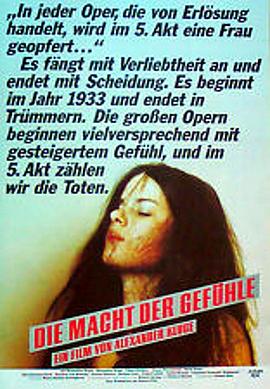
Die Macht der Gefühle
director:
亚历山大·克鲁格
actor:
汉娜洛蕾·赫格
/
Alexandra Kluge
…
other title:
情感的力量
/
Die Macht der Gefühle
…
The Power of Emotion explains that emotion isn't to be confused with sentimentality. Emotion is ancient and more powerful than any art form. The film looks at young couples who run into difficulties as they try to translate their experiences of love into clear decision-making. A woman who has shot her husband provides a judge with a puzzle. Those who love can bring the dead back to life by means of co-operation. That's the focus of the opera, "The Power Plant of Emotions" and the "Opera of the 20th Century" cinema.
Alexander Kluge: The Power of Feeling
When I started working on The Power of Feeling, I was not in a rational state. I did not say, I have a subject and now I will make a film about it. Instead I was spellbound and observed in my direct surroundings, for example, how feelings move. I have not really dealt with the theme of my mother's death and the fact that she was the one who taught me "how feelings move." Nor have I dealt with how she died. That was an entire palette of feelings: "All feelings believe in a happy end," and everyone believes tacitly that they will live forever: The entire palette is somehow optimistic, a positive attitude towards life having been put on the agendaas long as she was young, as long as her body held out, from one day to the next she collapsed. She just suddenly collapsed, like in an opera where disaster takes the stage in the fifth act. It felt as if I had observed an air raid or a disaster.
The film The Power of Feeling is not about feelings, but rather their organization: how they can be organized by chance, through outside factors, murder, destiny; how they are organized, how they encounter the fortune they are seeking.What is all this organization of feelings about? Generally feelings tend to be a dictatorship. It is a dictatorship of the moment. The strong feeling I am having right now suppresses the others. For thoughts this would not be the case. One thought attracts others like a magnet. People therefore need affirmation by other people to be sure about their own feelings (to counteract the acquisition of their feelings through outside forces). Through the interaction of many people, for example, in public, the various feelings also have a magnetic attraction to one another just like thoughts do. Feelings communicate through their manifestation in public.
The cinema is the public seat of feelings in the 20th century. The organization is set up thusly: Even sad feelings have a happy outcome in the cinema. It is about finding comfort: In the 19th century the opera house was the home to feelings. An overwhelming majority of operas had a tragic end. You observed a victim.
I am convinced that there is a more adventuresome combination: Feelings in both the opera and traditional cinema are powerless in the face of destiny's might. In the 20th century feelings barricaded themselves behind this comfort, in the 19th century they entrenched themselves in the validity of the lethal seriousness.
Alexander Kluge: The Power of Feeling
When I started working on The Power of Feeling, I was not in a rational state. I did not say, I have a subject and now I will make a film about it. Instead I was spellbound and observed in my direct surroundings, for example, how feelings move. I have not really dealt with the theme of my mother's death and the fact that she was the one who taught me "how feelings move." Nor have I dealt with how she died. That was an entire palette of feelings: "All feelings believe in a happy end," and everyone believes tacitly that they will live forever: The entire palette is somehow optimistic, a positive attitude towards life having been put on the agendaas long as she was young, as long as her body held out, from one day to the next she collapsed. She just suddenly collapsed, like in an opera where disaster takes the stage in the fifth act. It felt as if I had observed an air raid or a disaster.
The film The Power of Feeling is not about feelings, but rather their organization: how they can be organized by chance, through outside factors, murder, destiny; how they are organized, how they encounter the fortune they are seeking.What is all this organization of feelings about? Generally feelings tend to be a dictatorship. It is a dictatorship of the moment. The strong feeling I am having right now suppresses the others. For thoughts this would not be the case. One thought attracts others like a magnet. People therefore need affirmation by other people to be sure about their own feelings (to counteract the acquisition of their feelings through outside forces). Through the interaction of many people, for example, in public, the various feelings also have a magnetic attraction to one another just like thoughts do. Feelings communicate through their manifestation in public.
The cinema is the public seat of feelings in the 20th century. The organization is set up thusly: Even sad feelings have a happy outcome in the cinema. It is about finding comfort: In the 19th century the opera house was the home to feelings. An overwhelming majority of operas had a tragic end. You observed a victim.
I am convinced that there is a more adventuresome combination: Feelings in both the opera and traditional cinema are powerless in the face of destiny's might. In the 20th century feelings barricaded themselves behind this comfort, in the 19th century they entrenched themselves in the validity of the lethal seriousness.


The Patriot (1979) [Movie] Douban TMDB IMDb WikiData
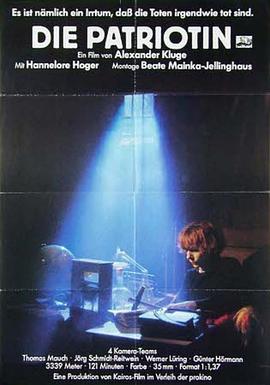
Die Patriotin
director:
Alexander Kluge
actor:
Hannelore Hoger
/
Dieter Mainka
…
other title:
女爱国者
/
Die Patriotin
…
The story of Gabi Teichert (played by Hannelore Hoger) who had already begun to dig around in search of the roots of German history in Germany in Autumn. In daily school life, at the party convention of the Social Democrats (SPD), on the Day of Penance and during Advent: She remains stalwart on her quest for a republic, for which the trouble is worth it.
Part-Time Work of a Domestic Slave (1973) [Movie] Douban IMDb TMDB WikiData
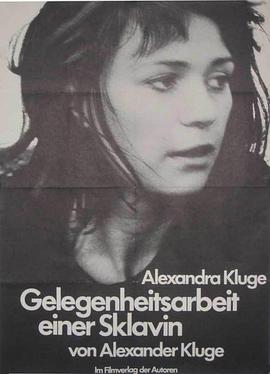
Gelegenheitsarbeit einer Sklavin
director:
亚历山大·克鲁格
actor:
Alexandra Kluge
/
Bion Steinborn
…
other title:
一个女奴的临时工作
/
Gelegenheitsarbeit einer Sklavin
…
This movie was intense and funny in its analysis of a restless gifted person. She was an abortionist. The very bizarre close examination of the work she did includes a jaw dropping opening that makes it appear that the film was shot during the events as they actually happened. She is keeping her family together but then loses interest and becomes a rabble rouser for workers in a chemistry plant. She helps them keep their jobs when the threat of moving the plant to Portugal comes to light, but of course, gets her husband fired when they identify her as the agitator.
In the end she opens a stand at the plant selling sausages wrapped in union pamphlets... Very funny, even the abortion clinic segment where she converts it into a veterinary clinic after she coaxes a dog to break through the police tape for her. Great basic film-making!
In the end she opens a stand at the plant selling sausages wrapped in union pamphlets... Very funny, even the abortion clinic segment where she converts it into a veterinary clinic after she coaxes a dog to break through the police tape for her. Great basic film-making!
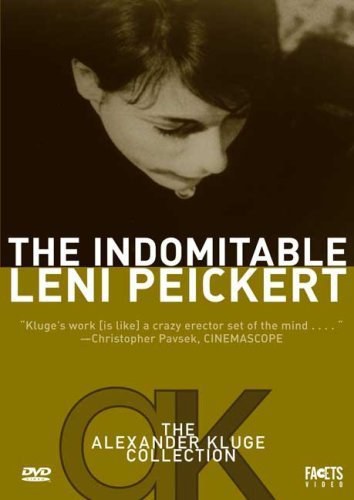
The Indomitable Leni Peickert (1970) [Movie] Douban
Die Unbezähmbare Leni Peickert
director:
Alexander Kluge
actor:
Hannelore Hoger
/
Bernd Hoeltz
…
other title:
锲而不舍的雷妮·派克特
/
Die Unbezähmbare Leni Peickert
A mini-sequel to German director Alexander Kluge's 1968 Golden Lion winner Artists Under the Big Top: Perplexed, The Indomitable Leni Peickert continues the slice-of-life tale of down-on-her-luck Peickert (Hannelore Hoger), who in that earlier film (many will remember) made the mistake of investing in a "socially relevant" circus that failed to draw crowds - and quickly found herself in financial hot water. In this particular outing, she begins by working on television, then gets fired for smuggling an explicit, uncensored film - and promptly returns to the circus, while remaining footloose and unsettled. Intriguingly, this film does not represent a sequel to Big Top per se, but actually works in material that Kluge originally intended for that earlier outing.
News from Ideological Antiquity: Marx – Eisenstein – The Capital (2008) [Movie] Douban TMDB
Nachrichten aus der ideologischen Antike. Marx–Eisenstein–Das Kapital
director:
亚历山大·克鲁格
actor:
Oksana Bulgakova
/
Dietmar Dath
…
other title:
Nachrichten aus der ideologischen Antike: Marx/Eisenstein/Das Kapital
/
资本论
…
Alexander Kluge’s News from Ideological Antiquity begins with Russian filmmaker Sergei Eisenstein’s ambitious but unrealized plan to combine Karl Marx’s Capital and James Joyce’s Ulysses. For over nine hours, the film expands in concentric circles as Kluge, his guests, interlocutors and monologists make associative links on a range of topics that starts from a filmic discussion of Eisenstein’s notes.
Miscellaneous News (1986) [Movie] Douban
Vermischte Nachrichten
director:
Alexander Kluge
actor:
Marita Breuer
/
Rosel Zech
…
other title:
综合新闻
/
Vermischte Nachrichten
Miscellaneous News are on the last page of the newspapers. With little oversight from editorial offices but with great emotional fuel.
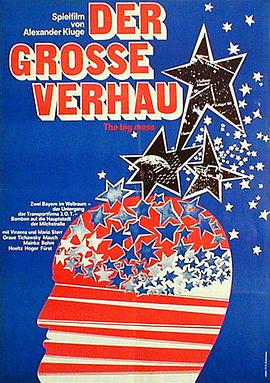
The Big Mess (1971) [Movie] Douban TMDB IMDb WikiData
Der große Verhau
director:
亚历山大·克鲁格
actor:
Vinzenz Sterr
/
Maria Sterr
…
other title:
大混乱
/
Der große Verhau
…
In the first century of the third millennium, a galactic civil war is raging between governments, industrial giants and space pirates. Run for your lives! The Big Mess features space captain Douglas, the pirate couple sterr, a space admiral and countless other characters trying to eke out a living in the cosmos. But whenever they get anywhere , they find they've been beaten to it by monopolist enterprises.
In Willi Tobler and the Decline of the 6th Fleet, Willi endeavours to survive in a world where annihilistic galactic battles rage, by taking a job at the centre of power. But it's wrong side that he takes in this civil war.
In Willi Tobler and the Decline of the 6th Fleet, Willi endeavours to survive in a world where annihilistic galactic battles rage, by taking a job at the centre of power. But it's wrong side that he takes in this civil war.
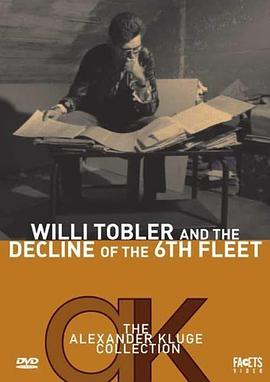
Willi Tobler and the Decline of the 6th Fleet (1972) [Movie] Douban
Willi Tobler und der Untergang der 6. Flotte
director:
Alexander Kluge
actor:
Alfred Edel
/
Kurt Jürgens
…
other title:
维利·陶普勒和第六舰队的灭亡
/
Willi Tobler und der Untergang der 6. Flotte
In the first century of the third millennium, a galactic civil war is raging between governments, industrial giants and space pirates. Run for your lives! The Big Mess features space captain Douglas, the pirate couple sterr, a space admiral and countless other characters trying to eke out a living in the cosmos. But whenever they get anywhere , they find they've been beaten to it by monopolist enterprises.
In Willi Tobler and the Decline of the 6th Fleet, Willi endeavours to survive in a world where annihilistic galactic battles rage, by taking a job at the centre of power. But it's wrong side that he takes in this civil war.
In Willi Tobler and the Decline of the 6th Fleet, Willi endeavours to survive in a world where annihilistic galactic battles rage, by taking a job at the centre of power. But it's wrong side that he takes in this civil war.

In Danger and Deep Distress, the Middleway Spells Certain Death (1974) [Movie] Douban
In Gefahr und größter Not bringt der Mittelweg den Tod
director:
亚历山大·克鲁格
/
爱德嘉·莱兹
actor:
Dagmar Bödderich
/
Jutta Winkelmann
…
other title:
危急时中道致死
/
In Gefahr und größter Not bringt der Mittelweg den Tod
一名妓女兼小偷同一名西德女间谍穿行于1974年的法兰克福。时值狂欢节。与此同时,警察正在暴力清赶强占空楼的学生。克鲁格:“电影名字‘危急时中道致死’取自我们当时在被强占空楼的地下室墙上的一处涂鸦。”
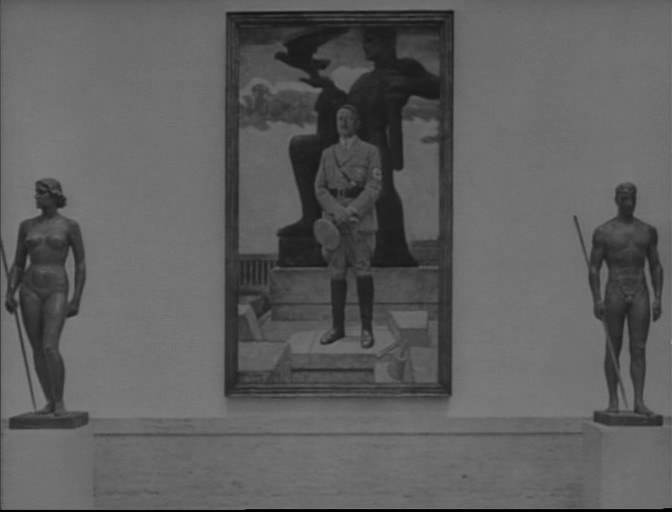
Brutality in Stone (1961) [Movie] Douban TMDB IMDb WikiData
Brutalität in Stein
director:
亚历山大·克鲁格
/
彼得·沙莫尼
actor:
汉斯·克拉林
/
Christian Marschall
other title:
石中的残暴
/
Brutalität in Stein
…
In his experimental short film "Brutalität in Stein" (Brutality in Stone), Alexander Kluge demonstrates how Nazi architecture used dimensions of inhuman and super-human scale to bolster the regime's politics of the same kind. Shots of huge neo-classical architectural structures from the Nazi period are confronted with equally anti-human national-socialist language as a voice-over.
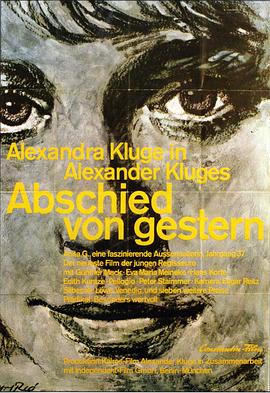
Yesterday Girl (1966) [Movie] Douban TMDB IMDb WikiData
Abschied von gestern
other title:
昨日女孩
/
Abschied von gestern
…
A young German woman searches for happiness, liberation, and independence in the illusive wake of a transformative national recovery.
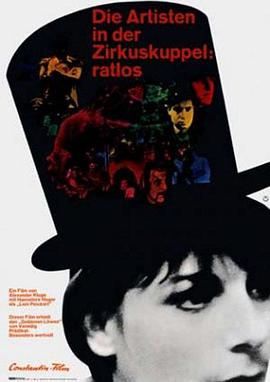
Artists Under the Big Top: Perplexed (1968) [Movie] Douban TMDB IMDb WikiData
Die Artisten in der Zirkuskuppel: Ratlos
director:
亚历山大·克鲁格
actor:
汉娜洛蕾·赫格
/
Sigi Graue
…
other title:
马戏院帐篷顶上的艺人
/
Die Artisten in der Zirkuskuppel: Ratlos
…
A young circus director ends up going into television after her father, a trapeze performer, dies in a circus accident.
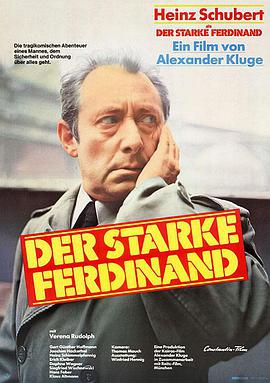
Strongman Ferdinand (1976) [Movie] Douban TMDB IMDb WikiData
Der Starke Ferdinand
director:
亚历山大·克鲁格
actor:
Heinz Schubert
/
韦雷妮丝·鲁道夫
…
other title:
强人费迪南
/
Der Starke Ferdinand
…
The clownish security chief of a West German business is obsessed with protecting his factory from fancied and real breaches, especially from groups such as The Red Army Faction. Ferdinand's paranoia and methods can't be contained by his company. The sympathetically-drawn Ferdinand's ludicrous actions recall those of the cynical, disastrous axis between fascism and big business in 1930's Europe: satire of the rise of private security.
The Assault of the Present on the Rest of Time (1985) [Movie] Douban
Der Angriff der Gegenwart auf die übrige Zeit
other title:
现在对剩余时间的攻击
/
Der Angriff der Gegenwart auf die übrige Zeit
…
The last films for cinema by Alexander Kluge. Both tell about a dozen stories which complement one another by creating a context. The Blind Director: A young doctor feels that she is redundant. People hurry around. A family sits in front of the computer as if it were a fire in the hearth. A kindergarten teacher is supposed to turn a child over to its legal guardians. The blind director. The present becomes inflammed. Without prior events, the future and particularly a sense of the possible, there is no reality.

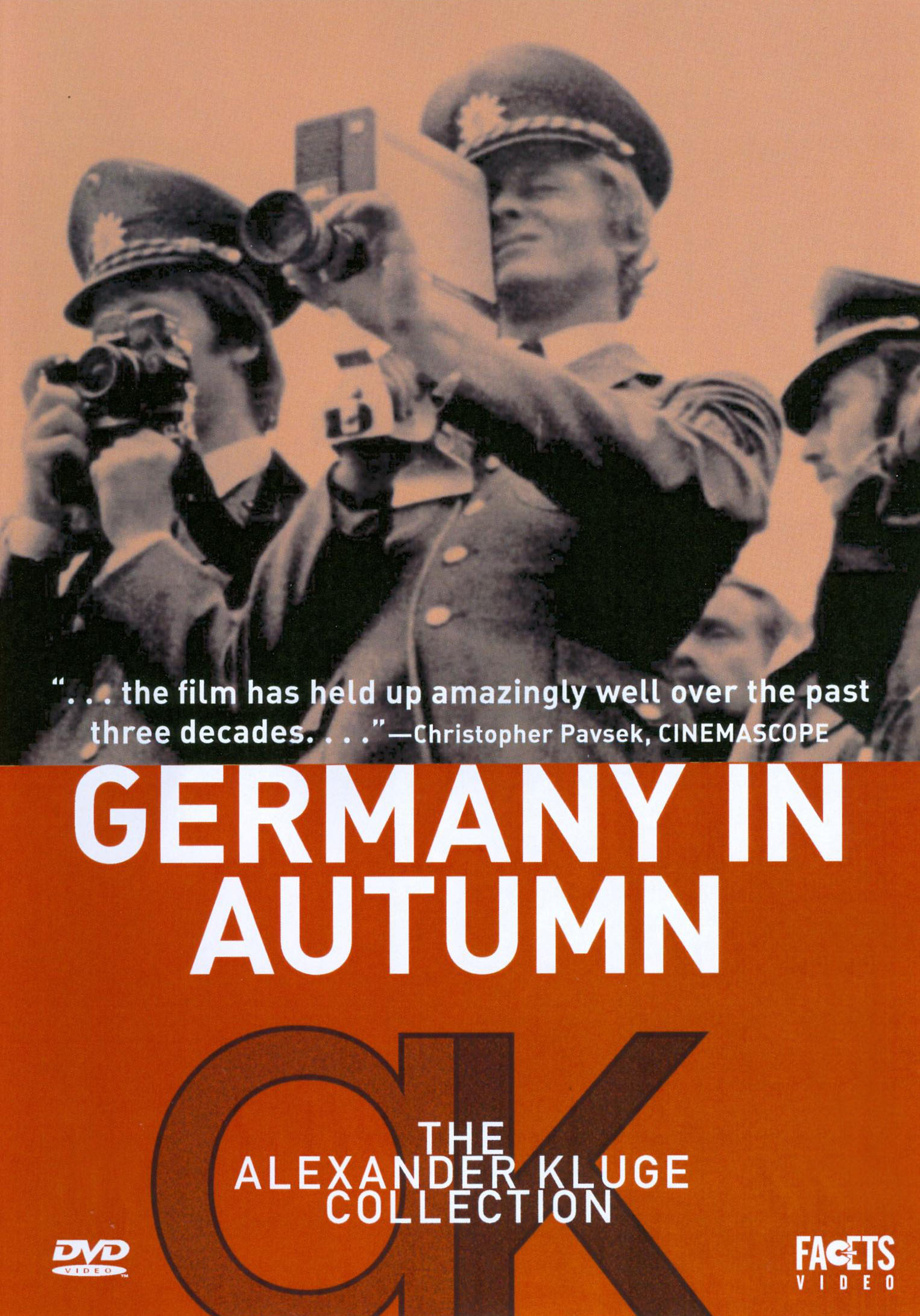
Germany in Autumn (1978) [Movie] Douban TMDB IMDb WikiData
Deutschland im Herbst
other title:
德国之秋
/
Deutschland im Herbst
…
Nine fictitious documentaries and films reflect the mood of late 1970s Germany, particularly the two-month period in 1977 when a businessman was kidnapped by the RAF (Red Army Faction). The kidnap had been made to orchestrate the release of the original leaders of the RAF, aka the Baader-Meinhof.