Richard Vernon — 演员 (11)
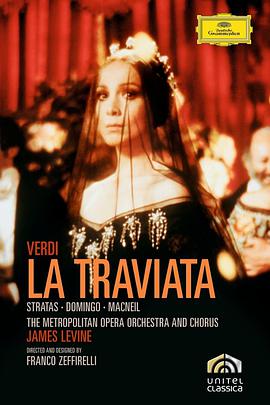
茶花女 (1982) [电影] 豆瓣
La Traviata
9.3 (6 个评分) 导演: 佛朗哥·泽菲雷里 演员: 特蕾萨·斯特拉塔斯 / 普拉西多·多明戈
其它标题: La Traviata
故事发生于19世纪40年代,阿尔方斯妮(特蕾萨·斯特拉塔斯 Teresa Stratas 饰)本是出生在穷乡僻壤的贫穷女孩,注定会过上默默无闻了此一生的生活。然而,上帝却将她指引向了繁华的大都市巴黎。在那里,阿尔方斯妮见识到了上流社会的奢靡生活。随着时间的推移,阿尔方斯妮凭借着自己的美貌和智慧渐渐打入了社交圈,最终成为了人人仰慕的交际花,那些对她垂涎三尺的男人们称她为茶花女。
一次偶然中,阿尔方斯妮邂逅了名为小仲马(普拉西多·多明戈 Plácido Domingo 饰)的作家,两人坠入了爱河。然而,当小仲马得知了阿尔方斯妮的真实身份后,愤怒的觉得后者欺骗了自己,于是选择了离开。
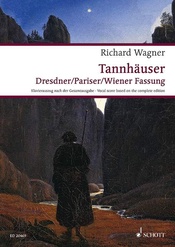
汤豪舍 (1982) [电影] 豆瓣
Tannhäuser
导演: Brian Large / Otto Schenk 演员: Richard Cassilly / Eva Marton
其它标题: Tannhäuser / 唐豪瑟
沙袋 (1978) [剧集] TMDB 维基数据 IMDb
The Sandbaggers
导演: Ian Mackintosh 演员: Roy Marsden / Richard Vernon
其它标题: The Sandbaggers / Sandbaggers
《沙袋》是一部英国电视剧,讲述了冷战前线上的男人和女人的故事。该剧与其在1978年和1980年在ITV上首播的时间相当,通过描绘英美情报专家的个人和职业生活,展示了间谍游戏对他们的影响。
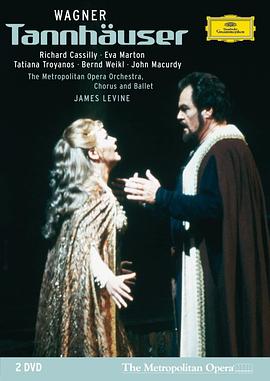
塔恩霍伊泽与瓦特堡歌唱大赛 1982年大都会歌剧团版 [演出] 豆瓣
所属 演出: 塔恩霍伊泽与瓦特堡歌唱大赛
语言: german 德语 剧团: Metropolitan Opera Orchestra 大都会歌剧团管弦乐团 ; Metropolitan Opera Chorus 大都会歌剧团合唱团 剧院: Metropolitan Opera House 大都会歌剧院 导演: Otto Schenk / Phebe Berkowitz
其它标题: 1982年大都会歌剧团版 编剧: Richard Wagner 作曲: Richard Wagner 演员: Richard Cassilly / Éva Marton
Background
Eisenach, Germany, in the early 13th century. The Landgraves of the Thuringian Valley ruled the area of Germany around the Wartburg. They were great patrons of the arts, and particularly music and poetry, holding contests between the minnesingers at the Wartburg. Across the valley towered the Venusberg, in whose interior, according to legend, dwelt Holda, the Goddess of Spring. In time, Holda became identified with Venus, the pagan Goddess of Love, whose grotto was the home of sirens and nymphs. It was said that the Goddess would lure the Wartburg minnesinger-knights to her lair where her beauty would captivate them. The minnesinger-knight Heinrich von Ofterdingen, known as Tannhäuser, left the court of the Landgrave of Thuringia a year ago after a disagreement with his fellow knights. Since then he has been held as a willing captive through his love for Venus, in her grotto in the Venusberg.
Overture
The substantial overture commences with the theme of the 'Pilgrim's Chorus' from Act 3, Scene 1, and also includes elements of the 'Venusberg' music from Act 1, Scene 1. The overture is frequently performed as a separate item in orchestral concerts, the first such performance having been given by Felix Mendelssohn conducting the Leipzig Gewandhaus Orchestra in February 1846. Wagner later gave the opinion that perhaps it would be better to cut the overture at opera performances to the Pilgrim's Chorus alone – "the remainder – in the fortunate event of its being understood – is, as a prelude to the drama, too much; in the opposite event, too little." In the original, "Dresden" version, the overture comes to a traditional concert close (the version heard in concert performances). For the "Paris" version the music leads directly into the first scene, without pausing.
Act 1
The Venusberg, (the Hörselberg of "Frau Holda" in Thuringia, in the vicinity of Eisenach), and a valley between the Venusberg and Wartburg
Scene 1. Wagner's stage directions state: "The stage represents the interior of the Venusberg...In the distant background is a bluish lake; in it one sees the bathing figures of naiads; on its elevated banks are sirens. In the extreme left foreground lies Venus bearing the head of the half kneeling Tannhäuser in her lap. The whole cave is illuminated by rosy light. – A group of dancing nymphs appears, joined gradually by members of loving couples from the cave. – A train of Bacchantes comes from the background in wild dance... – The ever-wilder dance answers as in echo the Chorus of Sirens": "Naht euch dem Strande" (Come to the shore). In the "Paris" version this orgiastic ballet is greatly extended.
Scene 2. Following the orgy of the ballet, Tannhäuser's desires are finally satiated, and he longs for freedom, spring and the sound of church bells. He takes up his harp and pays homage to the goddess in a passionate love song, "Dir töne Lob!" (Let your praises be heard), which he ends with an earnest plea to be allowed to depart, "Aus deinem Reiche, muss ich fliehn! O Königin! Göttin! Lass mich ziehn!" (From your kingdom must I flee! O Queen! O Goddess, set me free). Surprised, Venus offers him further charms, but eventually his repeated pleas arouse her fury and she curses his desire for salvation. (In the "Paris" version Venus's inveighing against Tannhäuser is significantly expanded). Eventually Tannhäuser declares: "Mein Heil ruht in Maria" (My salvation rests in Mary). These words break the unholy spell. Venus and the Venusberg disappear.
Scene 3. According to Wagner's stage directions, "Tannhäuser...finds himself a beautiful valley… To the left one sees the Hörselberg. To the right...a mountain path from the direction of the Wartburg ...; in the foreground, led to by a low promontory, an image of the Virgin Mary – From above left one hears the ringing of herder’s bells; on a high projection sits a young shepherd with pipes facing the valley". It is May. The shepherd sings an ode to the pagan goddess Holda, "Frau Holda kam aus dem Berg hervor" (Lady Holda, come forth from the hill). A hymn "Zu dir wall ich, mein Jesus Christ" (To thee I turn, my Jesus Christ) can be heard, as Pilgrims are seen approaching from the Wartburg, and the shepherd stops playing. The pilgrims pass Tannhäuser as he stands motionless, and then, praising God, ("Allmächt'ger, dir sei Preis!" (Almighty God, to you be praise!)) he sinks to his knees, overcome with gratitude. At that moment the sound of hunting-horns can be heard, drawing ever nearer.
Scene 4. The Landgrave's hunting party appears. The minnesingers (Wolfram, Walther, Biterolf, Reinmar, and Heinrich) recognise Tannhäuser, still deep in prayer, and greet him ("Heinrich! Heinrich! Seh ich recht?" (Heinrich! Heinrich! Do I see right?)) cautiously, recalling past feuds. They question him about his recent whereabouts, to which he gives vague answers. The minnesingers urge Tannhäuser to rejoin them, which he declines until Wolfram mentions Elisabeth, the Landgrave's niece, "Bleib bei Elisabeth!" (Stay, for Elisabeth!). Tannhäuser is visibly moved, "Elisabeth! O Macht des Himmels, rufst du den süsssen Namen mir?" (Elisabeth! O might of heaven, is it you that wakes me with that sweet name?). The minnesingers explain to Tannhäuser how he had enchanted Elisabeth, but when he had left she withdrew from their company and lost interest in music, expressing the hope that his return will also bring her back, "Auf's Neue leuchte uns ihr Stern!" (Let her star once more shine upon us). Tannhäuser begs them to lead him to her, "Zu ihr! Zu ihr!" (To her! To her!). The rest of the hunting party gathers, blowing horns.
Act 2
The minnesingers' hall in the Wartburg castle
Introduction – Scene 1. Elisabeth enters, joyfully. She sings, to the hall, of how she has been beset by sadness since Tannhäuser's departure but now lives in hope that his songs will revive both of them, "Dich, teure Halle, grüss ich wieder" (Dear hall, I greet thee once again). Wolfram leads Tannhäuser into the hall.
Scene 2. Tannhäuser flings himself at Elisabeth's feet. He exclaims "O Fürstin!" (O Princess!). At first, seemingly confused, she questions him about where he has been, which he avoids answering. She then greets him joyfully ("Ich preise dieses Wunder aus meines Herzens Tiefe!" (I praise this miracle from my heart's depths!)), and they join in a duet, "Gepriesen sei die Stunde" (Praise be to this hour). Tannhäuser then leaves with Wolfram.
Scene 3. The Landgrave enters, and he and Elisabeth embrace. The Landgrave sings of his joy, "Dich treff ich hier in dieser Halle" (Do I find you in this hall) at her recovery and announces the upcoming song contest, at which she will preside, "dass du des Festes Fürstin seist" (that you will be the Princess of the Festival).
Scene 4 and Sängerkrieg (Song Contest). Elisabeth and the Landgrave watch the guests arrive. The guests assemble greeting the Landgrave and singing "Freudig begrüssen wir edle Halle" (With joy we greet the noble hall), take their places in a semicircle, with Elisabeth and the Landgrave in the seats of honour in the foreground. The Landgrave announces the contest and the theme, which shall be "Könnt ihr der Liebe Wesen mir ergründen?" (Can you explain the nature of Love?), and that the prize will be whatever the winner asks of Elisabeth. The knights place their names in a cup from which Elisabeth draws the first singer, Wolfram. Wolfram sings a trite song of courtly love and is applauded, but Tannhäuser chides him for his lack of passion. There is consternation, and once again Elisabeth appears confused, torn between rapture and anxiety. Biterolf accuses him of blasphemy and speaks of "Frauenehr und hohe Tugend" (women's virtue and honour). The knights draw their swords as Tannhäuser mocks Biterolf, but the Landgrave intervenes to restore order. However, Tannhäuser, as if in a trance, rises to his feet and sings a song of ecstatic love to Venus, "Dir Göttin der Liebe, soll mein Lied ertönen" (To thee, Goddess of Love, will my song be raised). There is general horror as it is realised he has been in the Venusberg; the women, apart from Elisabeth, flee. She appears pale and shocked, while the knights and the Landgrave gather together and condemn Tannhäuser to death. Only Elisabeth, shielding him with her body, saves him, "Haltet ein!" (Stop!). She states that God's will is that a sinner shall achieve salvation through atonement. Tannhäuser collapses as all hail Elisabeth as an angel, "Ein Engel stieg aus lichtem Äther" (An angel comes to us from the realm of light). He promises to seek atonement, the Landgrave exiles him and orders him to join another younger band of pilgrims then assembling. All depart, crying Nach Rom! (To Rome!).
In the "Paris" version, the song contest is somewhat shortened, possibly because of the lack of suitable soloists for the Paris production.[citation needed]
Act 3
The valley of the Wartburg, in autumn. Elisabeth is kneeling, praying before the Virgin as Wolfram comes down the path and notices her
Scene 1. Orchestral music describes the pilgrimage of Tannhäuser. It is evening. Wolfram muses on Elisabeth's sorrow during Tannhäuser's second absence, "Wohl wusst' ich hier sie im Gebet zu finden" (I knew well I might find her here in prayer) and her longing for the return of the pilgrims, and expresses concerns that he may not have been absolved. As he does so he hears a pilgrims' prayer in the distance, "Beglückt darf nun dich, O Heimat, ich schauen" (Joyfully now my homeland I behold). Elisabeth rises and she and Wolfram listen to the hymn, watching the pilgrims approach and pass by. She anxiously searches the procession, but in vain, realising sorrowfully he is not amongst them, "Er kehret nicht züruck!" (He has not returned). She again kneels with a prayer to the Virgin that appears to foretell her death, "Allmächt'ge Jungfrau! Hör mein Flehen" (Almighty Virgin, hear my plea!). On rising she sees Wolfram but motions him not to speak. He offers to escort her back to the Wartburg, but she again motions him to be still, and gestures that she is grateful for his devotion but her path leads to heaven. She slowly makes her way up the path alone.
Scene 2. Wolfram, left alone as darkness draws on and the stars appear, begins to play and sings a hymn to the evening star that also hints at Elisabeth's approaching death, "Wie Todesahnung Dämmrung deckt die Lande...O du mein holder Abendstern" (Like a premonition of death the twilight shrouds the earth... O thou my fair evening star).
Scene 3. It is now night. Tannhäuser appears, ragged, pale and haggard, walking feebly leaning on his staff. Wolfram suddenly recognises Tannhäuser, and startled challenges him, since he is exiled. To Wolfram's horror, Tannhäuser explains he is once again seeking the company of Venus. Wolfram tries to restrain him, at the same time expressing compassion and begging him to tell the story of his pilgrimage. Tannhäuser urges Wolfram to listen to his story, "Nun denn, hör an! Du, Wolfram, du sollst es erfahren" (Now then, listen! You, Wolfram, shall learn all that has passed). Tannhäuser sings of his penitence and suffering, all the time thinking of Elisabeth's gesture and pain, "Inbrunst im Herzen, wie kein Büsser noch" (With a flame in my heart, such as no penitent has known). He explains how he reached Rome, and the "Heiligtumes Schwelle" (Holy shrine), and witnessed thousands of pilgrims being absolved. Finally he approaches "ihn, durch den sich Gott verkündigt'" (he, through whom God speaks) and tells his story. However, rather than finding absolution, he is cursed, "bist nun ewig du verdammt!" (you are forever damned!), and is told by the pope that "Wie dieser Stab in meiner Hand, nie mehr sich schmückt mit frischem Grün, kann aus der Hölle heissem Brand, Erlösung nimmer dir erblühn!" (As this staff in my hand, no more shall bear fresh leaves, from the hot fires of hell, salvation never shall bloom for thee). Whereupon, absolutely crushed, he fled, seeking his former source of bliss.
Having completed his tale, Tannhäuser calls out to Venus to take him back, "Zu dir, Frau Venus, kehr ich wieder" (To you, Lady Venus, I return). The two men struggle as a faint image of dancing becomes apparent. As Tannhäuser repeatedly calls on Venus, she suddenly appears and welcomes him back, "Willkommen, ungetreuer Mann!" (Welcome, faithless man!). As Venus continues to beckon, "Zu mir! Zu mir!" (To me!, To me!), in desperation, Wolfram suddenly remembers there is one word that can change Tannhäuser's heart, and exclaims "Elisabeth!" Tannhäuser, as if frozen in time, repeats the name. As he does so, torches are seen, and a funeral hymn is heard approaching, "Der Seele Heil, die nun entflohn" (Hail, the soul that now is flown). Wolfram realises it must be Elisabeth's body that is being borne, and that in her death lies Tannhäuser's redemption, "Heinrich, du bist erlöst!" (Heinrich, you are saved). Venus cries out, "Weh! Mir verloren" (Alas! Lost to me!) and vanishes with her kingdom. As dawn breaks the procession appears bearing Elisabeth's body on a bier. Wolfram beckons to them to set it down, and as Tannhäuser bends over the body uttering, "Heilige Elisabeth, bitte für mich!" (Holy Elisabeth!, pray for me!) he dies. As the growing light bathes the scene the younger pilgrims arrive bearing the pope's staff sprouting new leaves, and proclaiming a miracle, "Heil! Heil! Der Gnade Wunder Heil!" (Hail!, Hail! To this miracle of grace, Hail!). All then sing "Der Gnade Heil ist dem Büsser beschieden, er geht nun ein in der Seligen Frieden!" (The Holy Grace of God is to the penitent given, who now enters into the joy of Heaven!).

厄勒克特拉 1994年大都会歌剧团版 [演出] 豆瓣
所属 演出: 厄勒克特拉
语言: german 德语 剧团: Metropolitan Opera Orchestra 大都会歌剧团管弦乐团 ; Metropolitan Opera Chorus 大都会歌剧团合唱团 剧院: Metropolitan Opera House 大都会歌剧院 导演: Otto Schenk / Paul Mills
其它标题: 1994年大都会歌剧团版 编剧: Hugo von Hofmannsthal 作曲: Richard Strauss 演员: Hildegard Behrens / Deborah Voigt
Before the opera begins, Agamemnon has sacrificed Iphigenia on the ruse that she is to be married, and subsequently goes off to war against Troy. Iphigenia's mother Klytaemnestra has thus come to hate her husband. After his return, with the help of her paramour Aegisthus, she murders her husband and now is afraid that her crime will be avenged by her other children, Elektra, Chrysothemis and their banished brother Orest. Elektra has managed to send her brother away while remaining behind to keep her father's memory alive, but all the while, suffering the scorn of her mother and the entire court.
The action
"Wo bleibt Elektra?" ("Where is Elektra?")
Five servants try to wash the courtyard of the palace in Mycenae. While they do their work, they ask where can Elektra be, and she emerges from the shadows with a wild look on her face. The servants continue commenting how she came to be in that state and talk about how they taunt her only to receive insults from her. Only one servant shows sympathy for her, but she is taken away by the overseer to be flogged.
"Allein! Weh, ganz allein." ("Alone! Alas, all alone.")
Elektra comes back for her daily ritual in memory of her father, who upon his return from Troy was killed while bathing by Klytaemnestra and Aegisth and dragged out into the courtyard. Elektra now starts imagining the day when her father will be avenged and then of the ensuing celebration in which she will lead the triumphal dance.
"Elektra!"
Chrysothemis leaves the palace but, unlike Elektra, she is meek and accommodating, and has remained on good terms with Klytaemnestra and Aegisth; she enjoys the privileges that come with being a princess. She warns her sister that their mother plans to lock Elektra in a tower, but she is rebuffed.
"Ich kann nicht sitzen und ins Dunkel starren." ("I can not sit and stare into the darkness.")
Chrysothemis does not wish to go on living a half-death in her own house: she wants to leave, marry and raise children.
"Es geht ein Lärm los." ("What tumult is this?")
As loud sounds are heard inside, Elektra mocks her sister that it is her wedding party.
"Was willst du? Seht doch, dort!" ("What do you want? Behold, there!")
In reality, Klytaemnestra has yet again been awakened by her own nightmares of being killed by Orest. Chrysothemis begs Elektra to leave, wishing only to speak to her mother. Followed by her retinue, Klytaemnestra comes to make another sacrifice to appease the gods, but she stops at the sight of Elektra and wishes that she were not there to disturb her. She asks the gods for the reason for her burdens, but Elektra appeases her by telling her mother that she is a goddess herself.
"Ich will nichts Hören!" ("I will not listen!")
Despite the protests of the Trainbearer and Confidante, Klytaemnestra climbs down to talk to Elektra.
"Ich habe keine guten Nächte." ("I have no good nights.")
Klytaemnestra confides to her daughter that she has been suffering nightmares every night and that she still has not found the way to appease the gods. But, she claims, once that happens, she will be able to sleep again.
"Wenn Das rechte Blutopfer unterm Beile fällt." ("When the right blood under the hatchet flows.")
Elektra teases her mother with little pieces of information about the right victim that must be slain, but she changes the conversation to her brother and why he is not allowed back. To Elektra's horror, Klytaemnestra says that he has become mad and keeps company with animals. She responds that this is not true and that all the gold that her mother has sent was not being used to support her son but to have him killed.
"Was bluten muß? Dein eigenes Genick." ("Who must bleed? Your own throat.")
Then Elektra reveals who is to be the actual victim: it is Klytaemnestra herself. She goes on to describe how the gods must be appeased once and for all. She must be awakened and chased around the house just like an animal that is being hunted. Only when she wishes that all was over and after envying prisoners in their cells, she will come to realize that her prison is her own body. At that time, the axe with which she killed her husband and which will be handed to Orest by Elektra, will fall on her. Only then the dreams will stop.
"Lichter! Mehr Lichter" ("Lights! More lights!")
The Trainbearer and Confidante enter and whisper to her. Klytaemnestra laughs hysterically and, mocking Elektra, leaves. Elektra wonders what has made her mother laugh.
"Orest! Orest ist tot!" ("Orest! Orest is dead!")
Chrysothemis comes to tell her: two messengers have arrived with the news that Orest is dead, trampled by his own horses.
"Platz da! Wer lungert so vor einer Tür?" ("Give way! Who spies thus upon the threshold?")
As a young servant comes out of the house to fetch the master, he trips over Elektra and Chrysothemis.
"Nun muß es hier von uns geschehn." ("It is for us to act now.")
Elektra does not relent and a terrified Chrysothemis listens as her sister demands that she help her to avenge their father.
"Wie stark du bist." ("How strong you are.")
Elektra goes on to praise her sister and her beauty, promising that Elektra shall be her slave at her bridal chamber in exchange for the assistance in her task. Chrysothemis fights off her sister and flees. Elektra curses her.
"Nun denn, allein!" ("Well, alone!")
Determined to do it alone, she digs for the axe that killed her father, but is interrupted by a mysterious man who comes into the courtyard.
"Was willst du, fremder Mensch?" ("What do you want, stranger?")
She hears that he is expecting to be called from within the palace because he has a message for the lady of the house. He claims to be a friend of Orest, and says that he was with him at the time of his death.
"Wer bist denn du?" ("Who are you?")
Elektra grieves. The man first guesses that she must be a blood relative of Orest and Agamemnon, then, upon asking her name, discovers she is Elektra.
"Orest!"
Then, taken aback, she recognizes him: it is Orest who has come back in disguise. Elektra is initially ecstatic, but also ashamed of what she has become and how she has sacrificed her own royal state for the cause.
"Du wirst es tun? Allein? Du armes Kind?" ("You'll do it? Alone? Poor child?")
Orest's Tutor comes and interrupts the siblings; their task is dangerous and anything can jeopardize it. The Trainbearer and Confidante come out of the palace and lead Orest in.
"Ich habe ihm das Beil nicht geben können!" ("I could not give him the axe!")
A shriek is heard from within the palace, then a grim moan. Elektra smiles brightly, knowing that Orest has killed their mother.
"He! Lichter!" ("Torches there!")
Aegisth arrives. He is ecstatic to have heard that Orest is dead and wishes to speak with the messengers. Elektra happily ushers him inside the palace.
"Helft! Mörder!" ("Help! Murder!")
As Aegisth screams and calls for help, Elektra replies: "Agamemnon can hear you."
"Elektra! Schwester!" ("Elektra! Sister!")
Chrysothemis comes out of the palace stating that Orest is inside and that he has killed Klytaemnestra and Aegisth. A massacre has begun with Orest's followers killing those who supported Aegisth and the Queen.
"Ob ich nicht höre?" ("If I do not hear?")
Elektra is ecstatic and wants to lead the crowd to dance but at first cannot.
"Hörst du denn nicht." ("You do not hear because.")
Chrysothemis and Elektra praise their brother's feat.
"Schweig, und tanze." ("Be silent and dance.")
At last Elektra begins to dance. As she reaches the climax of her dance, she falls to the ground: Elektra is dead. Chrysothemis goes into the palace to be with her brother. Banging on the palace door, she calls for her brother. There is no answer.
The Hitch Hikers Guide to the Galaxy (1981) [电影] TMDB IMDb
The Hitch Hikers Guide to the Galaxy
导演: Alan J.W. Bell 演员: Peter Jones / 西蒙·琼斯
其它标题: 銀河ヒッチハイク・ガイド / Per Anhalter durch die Galaxis
An Earth Man and his alien friend escape an exploding Earth, and set forth on an odd adventure across the universe with a known fugitive.
西部女郎 1992年大都会歌剧团版 [演出] 豆瓣
所属 演出: 西部女郎
语言: italian 意大利语 剧团: Metropolitan Opera Orchestra 大都会歌剧团管弦乐团 ; Metropolitan Opera Chorus 大都会歌剧团合唱团 剧院: Metropolitan Opera House 大都会歌剧院 导演: Giancarlo del Monaco
其它标题: 1992年大都会歌剧团版 编剧: Guelfo Civinini / Carlo Zangarini 作曲: Giacomo Puccini 演员: Barbara Daniels / Plácido Domingo
Time:1849 to 1850
Place: A mining camp at the foot of the Cloudy Mountains, California
Act 1
Inside the Polka Saloon
A group of Gold Rush miners enter the "Polka" saloon after a day working at the mine ("Hello! Hello! Alla 'Polka'"). After a song by traveling minstrel Jake Wallace ("Che faranno i vecchi miei"), one of the miners, Jim Larkens, is homesick and the miners collect enough money for his fare home ("Jim, perchè piangi?").
A group of miners playing cards discover that Sid is cheating and want to attack him. Sheriff Jack Rance quiets the fight and pins two cards to Sid's jacket, as a sign of a cheat.
A Wells Fargo agent, Ashby, enters and announces that he is chasing the bandit Ramerrez and his gang of Mexicans. Rance toasts Minnie, the woman who owns the saloon, as his future wife, which makes Sonora jealous. The two men begin to fight. Rance draws his revolver but at that moment, a shot rings out and Minnie stands next to the bar with a rifle in her hands ("Hello, Minnie!"). She gives the miners a reading lesson from the Bible ("Dove eravamo?").
The Pony Express rider arrives ("La posta!") and delivers a telegram from Nina Micheltorena, offering to reveal Ramerrez's hideout. The sheriff tells Minnie that he loves her, but Minnie puts him off as she is waiting for the right man ("Ti voglio bene, Minnie").
A stranger enters the saloon and asks for a whisky and water. He introduces himself as Dick Johnson from Sacramento, whom Minnie had met earlier. Johnson invites Minnie to dance with him and she accepts. Angrily, Rance watches them.
Ashby returns with the captured Ramerrez gang member, Castro. Upon seeing his leader, Johnson, in the saloon, Castro agrees to lead Rance, Ashby and the miners in a search for Ramerrez, and the group then follows him on a false trail and in what turns out to be a wild goose chase. But before Castro leaves, he whispers to Johnson that somebody will whistle and Johnson must reply to confirm that the place is clear. A whistle is heard, but Johnson fails to reply.
Minnie shows Johnson the keg of gold that she and the miners take turns to guard at night and Johnson reassures her that the gold will be safe there. Before he leaves the saloon, he promises to visit her at her cabin. They confess their love for each other. Minnie begins to cry, and Johnson comforts her before he leaves.
Act 2
Minnie's dwelling, later that evening
Wowkle, a Native American woman who is Minnie's servant, her lover Billy Jackrabbit and their baby are present as Minnie enters, wanting to get ready for Johnson's visit. Johnson enters Minnie's cabin and she tells him all about her life. It begins to snow. They kiss and Minnie asks him to stay till morning. He denies knowing Nina Micheltorena. As Johnson hides, a posse enters looking for Ramerrez and reveal to Minnie that Johnson is the bandit Ramerrez himself. Angry, she orders Johnson to leave. After he leaves, Minnie hears a gunshot and she knows Johnson has been shot. Johnson staggers in and collapses, Minnie helps him by hiding him up in the loft. Rance enters Minnie's cabin looking for the bandit and is about to give up searching for Johnson when drops of blood fall on his hand. Rance forces Johnson to climb down. Minnie desperately makes Rance an offer: if she beats him at poker, he must let Johnson go free; if Rance wins, she will marry him. Hiding some cards in her stockings, Minnie cheats and wins. Rance honors the deal and Minnie throws herself on the unconscious Johnson on the floor.
Act 3
In the Great Californian Forest at dawn, sometime later
Johnson is again on the run from Ashby and the miners. Nick and Rance are discussing Johnson and wonder what Minnie sees in him when Ashby arrives in triumph: Johnson has been captured. Rance and the miners all want Johnson to be hanged. Johnson accepts the sentence and only asks the miners not to tell Minnie about his capture and his fate ("Ch'ella mi creda"). Minnie arrives, armed with a pistol, just before the execution and throws herself in front of Johnson to protect him. While Rance tries to proceed, she convinces the miners that they owe her too much to kill the man she loves, and asks them to forgive him ("Ah! Ah! E Minnie!"). One by one, the miners yield to her plea ("E anche tu lo vorrai, Joe"). Rance is not happy but finally he too gives in. Sonora unties Johnson and sets him free. The miners bid Minnie farewell ("Le tue parole sono di Dio"). Minnie and Johnson leave California to start a new life together.
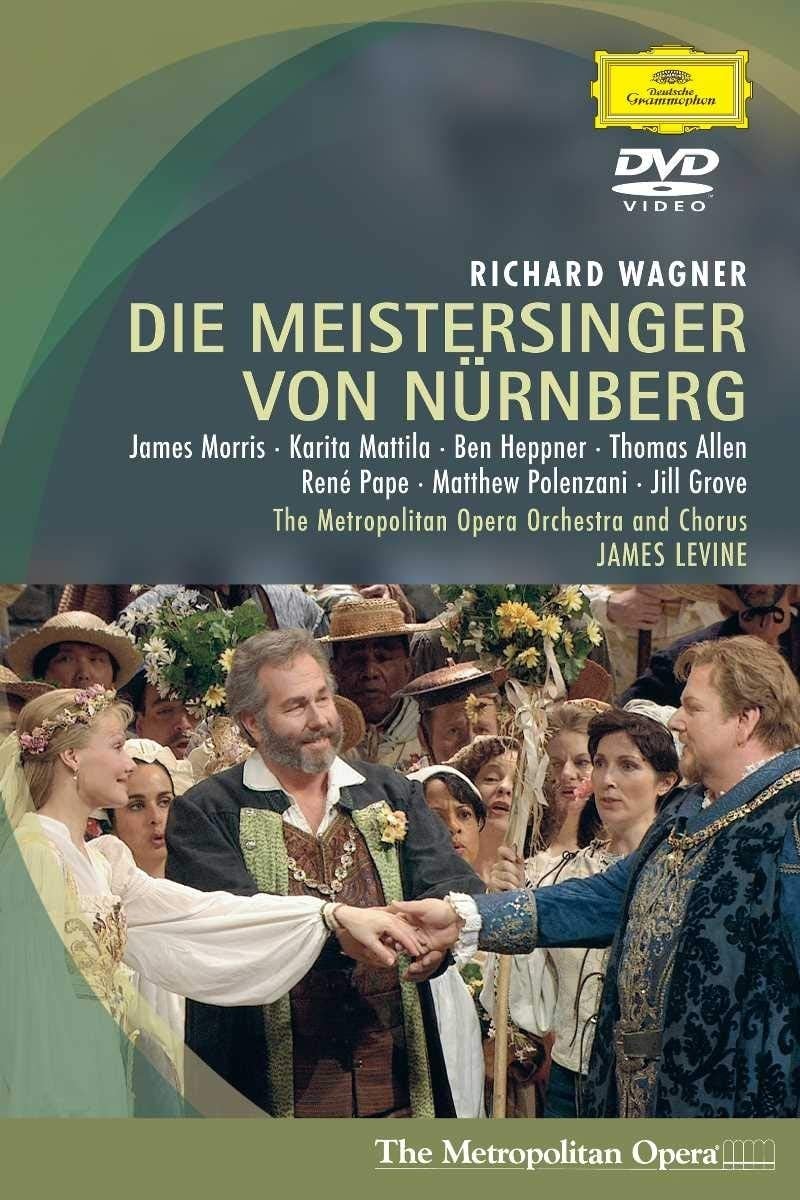
纽伦堡的名歌手 2001年大都会歌剧团版 [演出] 豆瓣
所属 演出: 纽伦堡的名歌手
语言: german 德语 剧团: Metropolitan Opera Orchestra 大都会歌剧团管弦乐团 ; Metropolitan Opera Chorus 大都会歌剧团合唱团 ; Metropolitan Opera Ballet 大都会歌剧团芭蕾舞团 剧院: Metropolitan Opera House 大都会歌剧院 导演: Otto Schenk / Peter McClintock
其它标题: 2001年大都会歌剧团版 编剧: Richard Wagner 作曲: Richard Wagner 演员: James Morris / Ben Heppner
Nuremberg, towards the middle of the sixteenth century.
Act 1
Prelude (Vorspiel), one of Wagner’s most familiar pieces of music.
Scene 1: Interior of Katharinenkirche (St. Catherine's Church)[notes 1] in Nuremberg, St John's Eve or Midsummer's Eve, June 23
After the prelude, a church service is just ending with a singing of Da zu dir der Heiland kam (When the Saviour came to thee), an impressive pastiche of a Lutheran chorale, as Walther von Stolzing, a young knight from Franconia, addresses Eva Pogner, whom he had met earlier, and asks her if she is engaged to anyone. Eva and Walther have fallen in love at first sight, but she informs him that her father, the goldsmith and mastersinger Veit Pogner, has arranged to give her hand in marriage to the winner of the guild's song contest on St. John's Day (Midsummer's Day), tomorrow. Eva's maid, Magdalena, gets David, Hans Sachs's apprentice, to tell Walther about the mastersingers' art. The hope is for Walther to qualify as a mastersinger during the guild meeting, traditionally held in the church after Mass, and thus earn a place in the song contest despite his utter ignorance of the master-guild's rules and conventions.
Scene 2
As the other apprentices set up the church for the meeting, David warns Walther that it is not easy to become a mastersinger; it takes many years of learning and practice. David gives a confusing lecture on the mastersingers' rules for composing and singing. (Many of the tunes he describes were real master-tunes from the period.) Walther is confused by the complicated rules, but is determined to try for a place in the guild anyway.
Scene 3
The first mastersingers file into the church, including Eva's wealthy father Veit Pogner and the town clerk Beckmesser. Beckmesser, a clever technical singer who was expecting to win the contest without opposition, is distressed to see that Walther is Pogner's guest and intends to enter the contest. Meanwhile, Pogner introduces Walther to the other mastersingers as they arrive. Fritz Kothner the baker, serving as chairman of this meeting, calls the roll. Pogner, addressing the assembly, announces his offer of his daughter's hand for the winner of the song contest. When Hans Sachs argues that Eva ought to have a say in the matter, Pogner agrees that Eva may refuse the winner of the contest, but she must still marry a mastersinger. Another suggestion by Sachs, that the townspeople, rather than the masters, should be called upon to judge the winner of the contest, is rejected by the other masters. Pogner formally introduces Walther as a candidate for admission into the masterguild. Questioned by Kothner about his background, Walther states that his teacher in poetry was Walther von der Vogelweide whose works he studied in his own private library in Franconia, and his teachers in music were the birds and nature itself. Reluctantly the masters agree to admit him, provided he can perform a master-song of his own composition. Walther chooses love as the topic for his song and therefore is to be judged by Beckmesser alone, the "Marker" of the guild for worldly matters. At the signal to begin (Fanget an!), Walther launches into a novel free-form tune (So rief der Lenz in den Wald), breaking all the mastersingers' rules, and his song is constantly interrupted by the scratch of Beckmesser's chalk on his chalkboard, maliciously noting one violation after another. When Beckmesser has completely covered the slate with symbols of Walther's errors, he interrupts the song and argues that there is no point in finishing it. Sachs tries to convince the masters to let Walther continue, but Beckmesser sarcastically tells Sachs to stop trying to set policy and instead, to finish making his (Beckmesser's) new shoes, which are overdue. Raising his voice over the masters' argument, Walther finishes his song, but the masters reject him and he rushes out of the church.
Act 2
Scene 1: Evening in a Nuremberg street, at the corner between Pogner's house and Hans Sachs's house, opposite. A lime tree stands outside Pogner's house, an elder outside Sachs's. The apprentices are closing the shutters
David informs Magdalena of Walther's failure. In her disappointment, Magdalena leaves without giving David the food she had brought for him. This arouses the derision of the other apprentices, and David is about to turn on them when Sachs arrives and hustles his apprentice into the workshop.
Scene 2
Pogner arrives with Eva, engaging in a roundabout conversation: Eva is hesitant to ask about the outcome of Walther's application, and Pogner has private doubts about whether it was wise to offer his daughter's hand in marriage for the song contest. As they enter their house, Magdalena appears and tells Eva about the rumours of Walther's failure. Eva decides to ask Sachs about the matter.
Scene 3
As twilight falls, Hans Sachs takes a seat in front of his house, to work on a new pair of shoes for Beckmesser. He muses on Walther's song, which has made a deep impression on him. ("Was duftet doch der Flieder", often called "the Fliedermonolog")
Scene 4
Eva approaches Sachs, and they discuss tomorrow's song contest. Eva is unenthusiastic about Beckmesser, who appears to be the only eligible contestant. She hints that she would not mind if Sachs, a widower, were to win the contest. Though touched, Sachs protests that he would be too old a husband for her. Upon further prompting, Sachs describes Walther's failure at the guild meeting. This causes Eva to storm off angrily, confirming Sachs's suspicion that she has fallen in love with Walther. Eva is intercepted by Magdalena, who informs her that Beckmesser is coming to serenade her. Eva, determined to search for Walther, tells Magdalena to pose as her (Eva) at the bedroom window.
Scene 5
Just as Eva is about to leave, Walther appears. He tells her that he has been rejected by the mastersingers, and the two prepare to elope. However, Sachs has overheard their plans. As they are passing by, he illuminates the street with his lantern, forcing them to hide in the shadow of Pogner's house. Walther makes up his mind to confront Sachs, but is interrupted by the arrival of Beckmesser.
Scene 6
As Eva and Walther retreat further into the shadows, Beckmesser begins his serenade. Sachs interrupts him by launching into a full-bellied cobbling song, and hammering the soles of the half-made shoes. Annoyed, Beckmesser tells Sachs to stop, but the cobbler replies that he has to finish tempering the soles of the shoes, whose lateness Beckmesser had publicly complained about in Act 1. Sachs offers a compromise: he will be quiet and let Beckmesser sing, but he (Sachs) will be Beckmesser's "marker", and mark each of Beckmesser's musical/poetical errors by striking one of the soles with his hammer. Beckmesser, who has spotted someone at Eva's window (Magdalena in disguise), has no time to argue. He tries to sing his serenade, but he makes so many mistakes (his tune repeatedly places accents on the wrong syllables of the words) that from the repeated knocks Sachs finishes the shoes. David wakes up and sees Beckmesser apparently serenading Magdalena. He attacks Beckmesser in a fit of jealous rage. The entire neighborhood is awakened by the noise. The other apprentices rush into the fray, and the situation degenerates into a full-blown riot. In the confusion, Walther tries to escape with Eva, but Sachs pushes Eva into her home and drags Walther into his own workshop. Quiet is restored as abruptly as it was broken. A lone figure walks through the street – the nightwatchman, calling out the hour.
Act 3, Scenes 1–4
Prelude (Vorspiel), a meditative orchestral introduction using music from two key episodes to be heard in Act 3: Sachs's Scene 1 monologue "Wahn! Wahn!" and the "Wittenburg Nightingale" quasi-chorale sung by the townspeople to greet Sachs in Scene 5.
Scene 1: Sachs's workshop
As morning dawns, Sachs is reading a large book. Lost in thought, he does not respond as David returns from delivering Beckmesser's shoes. David finally manages to attract his master's attention, and they discuss the upcoming festivities – it is St. John's day, Hans Sachs's name day. David recites his verses for Sachs, and leaves to prepare for the festival. Alone, Sachs ponders last night's riot. "Madness! Madness! Everywhere madness!" (Wahn! Wahn! Überall Wahn!) His attempt to prevent an elopement had ended in shocking violence. Nevertheless, he is resolved to make madness work for him today.
Scene 2
Sachs gives Walther an interactive lesson on the history and philosophy of music and mastersinging, and teaches him to moderate his singing according to the spirit (if not the strict letter) of the masters' rules. Walther demonstrates his understanding by composing two sections of a new Prize Song in a more acceptable style than his previous effort from act 1. Sachs writes down the new verses as Walther sings them. A final section remains to be composed, but Walther postpones the task. The two men leave the room to dress for the festival.
Scene 3
Beckmesser, still sore from his drubbing the night before, enters the workshop. He spots the verses of the Prize Song, written in Sachs's handwriting, and infers that Sachs is secretly planning to enter the contest for Eva's hand. The cobbler re-enters the room and Beckmesser confronts him with the verses and asks if he wrote them. Sachs confirms that the handwriting is his, but does not clarify that he was not the author but merely served as scribe. However, he goes on to say that he has no intention of wooing Eva or entering the contest, and he presents the manuscript to Beckmesser as a gift. He promises never to claim the song for his own, and warns Beckmesser that it is a very difficult song to interpret and sing. Beckmesser, his confidence restored by the prospect of using verses written by the famous Hans Sachs, ignores the warning and rushes off to prepare for the song contest. Sachs smiles at Beckmesser's foolishness but expresses hope that Beckmesser will learn to be better in the future.
Scene 4
Eva arrives at the workshop. She is looking for Walther, but pretends to have complaints about a shoe that Sachs made for her. Sachs realizes that the shoe is a perfect fit, but pretends to set about altering the stitching. As he works, he tells Eva that he has just heard a beautiful song, lacking only an ending. Eva cries out as Walther enters the room, splendidly attired for the festival, and sings the third and final section of the Prize Song. The couple are overwhelmed with gratitude for Sachs, and Eva asks Sachs to forgive her for having manipulated his feelings. The cobbler brushes them off with bantering complaints about his lot as a shoemaker, poet, and widower. At last, however, he admits to Eva that, despite his feelings for her, he is resolved to avoid the fate of King Marke (a reference to the subject of another Wagner opera, Tristan und Isolde, in which an old man tries to marry a much-younger woman), thus conferring his blessing upon the lovers. David and Magdalena appear. Sachs announces to the group that a new master-song has been born, which, following the rules of the mastersingers, is to be baptized. As an apprentice cannot serve as a witness for the baptism, he promotes David to the rank of journeyman with the traditional cuff on the ear (and by this also "promoting" him as a groom and Magdalena as a bride). He then christens the Prize Song the Morning Dream Song (Selige Morgentraumdeut-Weise). After celebrating their good fortune with an extended quintet (Selig, wie die Sonne meines Glückes lacht) — musically capping the first four scenes of Act III — the group departs for the festival.
Act 3, Scene 5
Almost an act in itself, this scene occupies about 45 minutes of the two hours of Act III and is separated from the preceding four scenes by a Verwandlungsmusik, a transforming Interlude. Meadow on the Pegnitz River. It is the Feast of St. John.
Various guilds enter boasting of their contributions to Nürnberg’s success as a city. Wagner depicts three: the Cobblers, whose chorus, Sankt Krispin, lobet ihn!, uses the signature cry streck! streck! streck!; the Tailors, who sing the chorus Als Nürnberg belagert war with the goat cry meck! meck! meck!; and the Bakers, who cut the tailors off with Hungersnot! Hungersnot!, or Famine, famine!, and its beck! beck! beck!, or bake, bake, bake!
This sequence leads into the well-known Tanz der Lehrbuben, or Dance of the Apprentices. The mastersingers themselves then arrive grandly in a section usually referred to as the “Procession of the Masters.” The crowd sings the praises of Hans Sachs, the most beloved and famous of the mastersingers. Here Wagner provides a rousing chorus, Wach’ auf, es nahet gen den Tag, using words written by the historical Sachs himself and musically relates it to the “Wittenberg Nightingale.”
The prize contest begins. Beckmesser attempts to sing the verses that he had obtained from Sachs. However, he garbles the words (Morgen ich leuchte) and fails to fit them to an appropriate melody, and ends up singing so clumsily that the crowd laughs him off. Before storming off in anger, he yells that the song was not even his: Hans Sachs tricked him into singing it. The crowd is confused. How could the great Hans Sachs have written such a bad song? Sachs tells them that the song is not his own, and also that it is in fact a beautiful song which the masters will love when they hear it sung correctly. To prove this, he calls a witness: Walther. The people are so curious about the song (correctly worded as Morgenlich leuchtend im rosigen Schein) that they allow Walther to sing it, and everyone is won over in spite of its novelty.
They declare Walther the winner, and the mastersingers want to make him a member of their guild on the spot. At first Walther is tempted to reject their offer, but Sachs intervenes once more and explains that art, even ground-breaking, contrary art like Walther’s, can only exist within a cultural tradition, which tradition the art sustains and improves. Walther is convinced; he agrees to join. Pogner places the symbolic master-hood medal around his neck, Eva takes his hand, and the people sing once more the praises of Hans Sachs, the beloved mastersinger of Nuremberg.
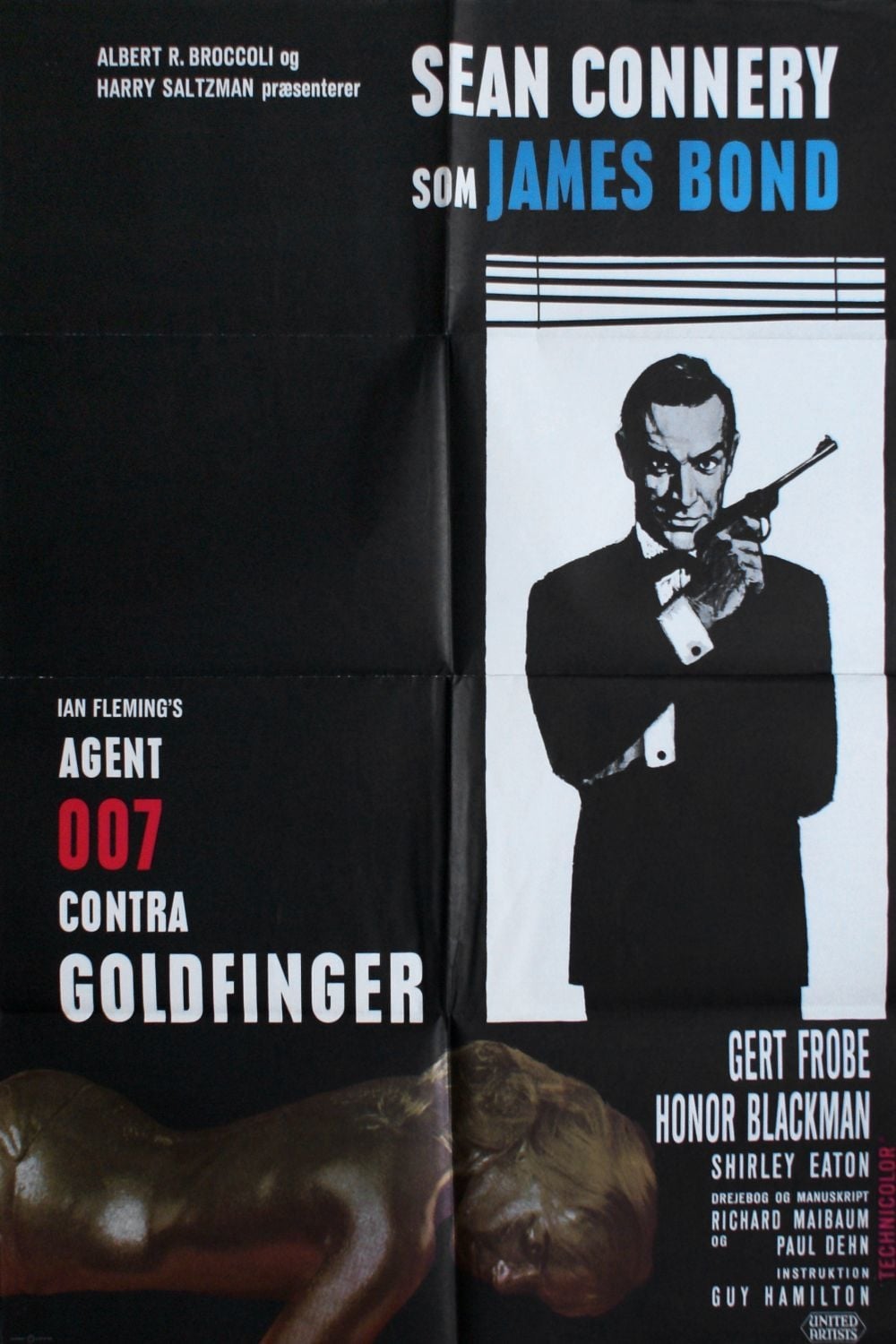
007:金手指 (1964) [电影] Min reol
Goldfinger
导演: Guy Hamilton 演员: Sean Connery / Gert Fröbe
其它标题: Goldfinger / James Bond 007 - Goldfinger
世界各国突然出现黄金大量流失的现象,而黄金的黑市交易却十分兴盛。英国情报部怀疑世界巨富金手指参与了黑市黄金交易,他在日内瓦拥有一座大银行,各国都有大量黄金储备在那里。为了调查金手指,007一路跟踪他到了日内瓦,发现了他往外运黄金的秘密:他通过用黄金造车身的方法重熔得到金块。007被金手指的手下发现了,他们抓住了007。007在意外中还得知了金手指即将实施的一个惊天计划:他策划用飞机撒播毒气使银行的驻军死亡,然后炸开银行,利用一枚小型核弹致使世界各国保存的黄金受到辐射污染而不能进入流通,这样黑市的黄金交易将获得十倍以上的巨额利润!007虽然得知了金手指的全盘计划,可是人在牢中,无法通知外界。最终金手指的阴谋能否得逞?
Die Meistersinger Von Nürnberg (2001) [电影] IMDb
Die Meistersinger Von Nürnberg
导演: Brian Large 演员: James Levine / James Morris
James Morris leads an all-star cast including Karita Mattila, Ben Heppner, Thomas Allen and René Pape, in this production of Wagner's comic opera, recorded live at New York's Metropolitan Opera in 2001. James Levine conducts.