Roberto Tagliavini — 演员 (7)
拉美莫尔的露琪亚 (2018) [电影] 豆瓣
Lucia di Lamermoor
导演: Raul Hernandez Garrido 演员: Lisette Oropesa / Javier Camarena
其它标题: Lucia di Lamermoor
Lucia di Lammermoor by Gaetano Donizetti is an opera seria in three acts. This bel canto piece marked the birth of the Italian Romantic Movement. The storyline of this opera is based on Walter Scott’s novel, The Bride of Lammermoor, written in 1819. Donizetti changed only a few of the characters’ names.
故事描述18世纪初,苏格兰拉美莫尔地区的领主亨利·阿斯顿勋爵与雷文斯伍德城的领主埃德加,世代为敌,他夺取了埃德加的财产,只留给埃德加一座荒废的要塞(在韦尔费拉格)。有一天亨利的妹妹露契亚受到公牛的袭击,被偶然经过这里的埃德加相救。因此,露契亚便爱上了他。
亨利·阿斯顿知道后百般阻挠,出于政治野心,他要妹妹放弃埃德加嫁给他的政治盟友阿瑟·巴克洛勋爵。遭到露契亚的极力反对。不久,即将出使法国的埃德加前来向露契亚告别,两人立誓终生相爱,永不变心。埃德加到法国后,写了很多封信给露契亚,但都被阿斯顿心腹诺尔曼截获。阿斯顿和诺尔曼还伪造埃德加的信件:“向露契亚表明他已另有新欢。”露契亚看后悲痛万分,阿斯顿则趁机为她与巴克洛勋爵安排婚礼。婚礼进行中,恰好埃德加回国赶到,闯进来大骂露契亚负心、背叛。露琪亚受不了刺激而发疯。当晚,露契亚疯狂地刺杀新郎巴克洛,自己亦自杀。埃德加闻讯,痛不欲生,也拔剑自刎。
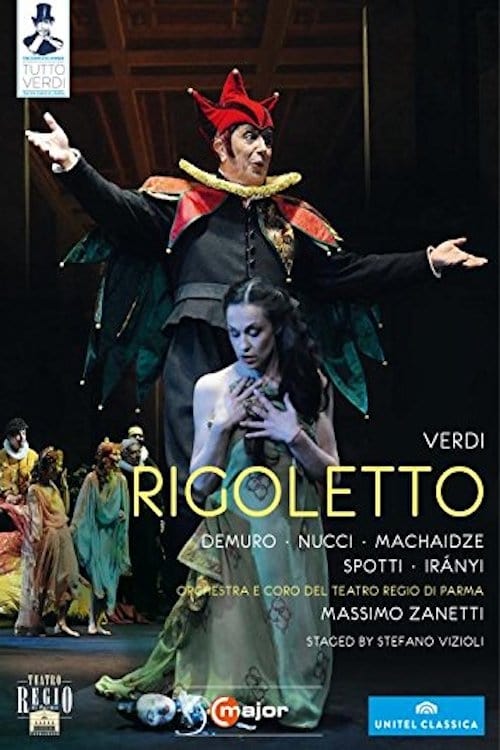
弄臣 2008年帕尔马皇家剧院版 [演出] 豆瓣
所属 演出: 弄臣
语言: italian 意大利语 剧团: Orchestra del Teatro Regio di Parma 帕尔马皇家剧院管弦乐团 ; Coro del Teatro Regio di Parma 帕尔马皇家剧院合唱团 剧院: Teatro Regio di Parma 帕尔马皇家剧院 导演: Stefano Vizioli
其它标题: 2008年帕尔马皇家剧院版 编剧: Francesco Maria Piave 作曲: Giuseppe Verdi 演员: Leo Nucci / Nino Machaidze
Place: Mantua
Time: the sixteenth century
Act 1
Scene 1: Mantua. A magnificent hall in the ducal palace. Doors at the back open into other rooms, splendidly lit up. A crowd of lords and ladies in grand costumes are seen walking about in the rear rooms; page boys come and go. The festivities are at their height. Music is heard from offstage. The Duke and Borsa enter from a door in the back.
At a ball in his palace, the Duke sings of a life of pleasure with as many women as possible, and mentions that he particularly enjoys cuckolding his courtiers: "Questa o quella" ("This woman or that"). He mentions to Borsa that he has seen an unknown beauty in church and desires to possess her, but he also wishes to seduce the Countess of Ceprano. Rigoletto, the Duke's hunchbacked court jester, mocks the husbands of the ladies to whom the Duke is paying attention, including the Count Ceprano, and advises the Duke to get rid of him by prison or death. The Duke laughs indulgently, but Ceprano is not amused. Marullo, one of the guests at the ball, informs the courtiers that Rigoletto has a "lover", which astonishes them. (Marullo is not aware that the "lover" is actually Rigoletto's daughter.) The courtiers, at Ceprano's suggestion, resolve to take vengeance on Rigoletto for making fun of them. The festivities are interrupted by the arrival of the elderly Count Monterone, whose daughter the Duke had seduced. Rigoletto provokes him further by making fun of his helplessness to avenge his daughter's honor. Monterone confronts the Duke, and is immediately arrested by the Duke's guards. Before being led off to prison, Monterone curses both the Duke for the attack on his daughter and Rigoletto for having mocked his righteous anger. The curse terrifies Rigoletto, who believes the popular superstition that an old man's curse has real power.
Scene 2: The end of a dead-end street. On the left, a house of discreet appearance with one small courtyard surrounded by walls. In the yard there is one tall tree and a marble seat; in the wall, a door that leads to the street; above the wall, a terrace supported by arches. The second floor door opens on to the said terrace, which can also be reached by a staircase in front. To the right of the street is the very high wall of the garden and a side of the Ceprano palace. It is night.
Preoccupied with the old man's curse, Rigoletto approaches the house where he is concealing his daughter from the world and is accosted by the hit-man Sparafucile, who walks up to him and offers his services. Rigoletto declines for the moment, but leaves open the possibility of hiring Sparafucile later, should the need arise. Sparafucile wanders off, after repeating his own name a few times. Rigoletto contemplates the similarities between the two of them: "Pari siamo!" ("We are alike!"); Sparafucile kills men with his sword, and Rigoletto uses "a tongue of malice" to stab his victims. Rigoletto opens a door in the wall and embraces his daughter Gilda. They greet each other warmly: "Figlia!" "Mio padre!" ("Daughter!" "My father!"). Rigoletto has been concealing his daughter from the Duke and the rest of the city, and she does not know her father's occupation. Since he has forbidden her to appear in public, she has been nowhere except to church and does not even know her own father's name.
When Rigoletto has gone, the Duke appears and overhears Gilda confess to her nurse Giovanna that she feels guilty for not having told her father about a young man she had met at the church. She says that she fell in love with him, but that she would love him even more if he were a student and poor. As she declares her love, the Duke enters, overjoyed. Gilda, alarmed, calls for Giovanna, unaware that the Duke had sent her away. Pretending to be a student, the Duke convinces Gilda of his love: "È il sol dell'anima" ("Love is the sunshine of the soul"). When she asks for his name, he hesitantly calls himself Gualtier Maldè. Hearing sounds and fearing that her father has returned, Gilda sends the Duke away after they quickly trade vows of love: "Addio, addio" ("Farewell, farewell"). Alone, Gilda meditates on her love for the Duke, whom she believes is a student: "Gualtier Maldè!... Caro nome che il mio cor" ("Dearest name").
Later, Rigoletto returns: "Riedo!... perché?" ("I've returned!... why?"), while the hostile courtiers outside the walled garden (believing Gilda to be the jester's mistress, unaware she is his daughter) get ready to abduct the helpless girl. They tell Rigoletto that they are actually abducting the Countess Ceprano. He sees that they are masked and asks for a mask for himself; while they are tying the mask onto his face, they also blindfold him. Blindfolded and deceived, he holds the ladder steady while they climb up to Gilda's room: Chorus: "Zitti, zitti" ("Softly, softly"). With her father's unknowing assistance Gilda is carried away by the courtiers. Left alone, Rigoletto removes his mask and blindfold, and realizes that it was in fact Gilda who was carried away. He collapses in despair, remembering the old man's curse.
Act 2
A room in the ducal palace. There are doors on both sides as well as a larger one at the far end by the sides of which hang full length portraits of the Duke and his wife. There is one high-backed chair at a table covered with velvet and other furnishings.
The Duke is concerned that Gilda has disappeared: "Ella mi fu rapita!" ("She was stolen from me!") and "Parmi veder le lagrime" ("I seem to see tears"). The courtiers then enter and inform him that they have captured Rigoletto's mistress: Chorus: "Scorrendo uniti" ("We went together at nightfall"). By their description, he recognizes it to be Gilda and rushes off to the room where she is held: "Possente amor mi chiama" ("Mighty love beckons me"). Rigoletto enters singing and feigning nonchalance, but also looking anxiously for any trace of Gilda, whom he fears may have fallen into the hands of the Duke. The courtiers pretend not to notice his anxiety, but quietly laugh at him with each other. A page boy arrives with a message from the Duke's wife - the Duchess wishes to speak to her husband - but the courtiers reply suggestively that the Duke cannot be disturbed at the moment. Rigoletto realizes this must mean that Gilda is with the Duke. To the courtiers' surprise, he reveals that Gilda is his daughter. He first demands, then tearfully pleads with the courtiers to return her to him: "Cortigiani, vil razza dannata" ("Accursed race of courtiers"). Rigoletto attempts to run into the room in which Gilda is being held, but the courtiers block his way. After a time, Gilda enters, and Rigoletto orders the courtiers to leave him alone with her. The courtiers leave the room, believing Rigoletto has gone mad. Gilda describes to her father what has happened to her in the palace: "Tutte le feste al tempio" ("On all the holy days") and he attempts to console her. Monterone is led across the room on the way to prison and pauses in front of the portrait of the Duke to regret that his curse on the libertine has had no effect. As the guards lead Monterone away, Rigoletto mutters that the old man is mistaken; he, Rigoletto, the dishonored buffoon, shall make thunder and lightning rain from heaven onto the offender's head. He repeats this vow as Gilda pleads for mercy for her lover the Duke: Duet:"Sì! Vendetta, tremenda vendetta!" ("Yes! Revenge, terrible revenge!").
Act 3
The right bank of the river Mincio. On the left is a two-story house, half ruined. Through a large arch on the ground floor a rustic tavern can be seen as well as a rough stone staircase that leads to an attic room with a small bed which is in full view as there are no shutters. In the wall downstairs that faces the street is a door that opens to the inside. The wall is so full of holes and cracks that everything that happens inside is easily seen from the exterior. At the back of the stage are deserted areas by the river which flows behind a parapet that has half collapsed into ruins. Beyond the river is Mantua. It is night. Gilda and Rigoletto, both uneasy, are standing in the road; Sparafucile is seated at a table in the tavern.
A portion of Sparafucile's house is seen, with two rooms open to the view of the audience. Rigoletto and Gilda arrive outside. The Duke's voice can be heard from inside, singing "La donna è mobile" ("Woman is fickle"). Sparafucile's sister, Maddalena, has lured him to the house. Rigoletto and Gilda listen from outside as the Duke flirts with Maddalena. Gilda laments that the Duke is unfaithful; Rigoletto assures her that he is arranging revenge: "Bella figlia dell’amore" ("Beautiful daughter of love").
Rigoletto orders Gilda to put on a man's clothes to prepare to leave for Verona and tells her that he plans to follow later. After she leaves, he completes his bargain with the assassin, who is ready to murder his guest for 20 scudi. Rigoletto then withdraws.
With falling darkness, a thunderstorm approaches and the Duke decides to spend the rest of the night in the house. Sparafucile directs him to the upstairs sleeping quarters, resolving to kill him in his sleep.
Gilda, who still loves the Duke despite knowing him to be unfaithful, returns dressed as a man and stands outside the house. Maddalena, who is smitten with the Duke, begs Sparafucile to spare his life: "È amabile invero cotal giovinotto/ Ah, più non ragiono!...". Sparafucile reluctantly promises her that if by midnight another victim can be found, he will kill the other instead of the Duke. Gilda, overhearing this exchange, resolves to sacrifice herself for the Duke, and enters the house: "Trio: Se pria ch’abbia il mezzo la notte toccato". Sparafucile stabs her and she collapses, mortally wounded.
At midnight, when Rigoletto arrives with money, he receives a corpse wrapped in a sack, and rejoices in his triumph. Weighting it with stones, he is about to cast the sack into the river when he hears the voice of the Duke, sleepily singing a reprise of his "La donna è mobile" aria. Bewildered, Rigoletto opens the sack and, to his despair, discovers his dying daughter. For a moment, she revives and declares she is glad to die for her beloved: "V'ho ingannato" ("Father, I deceived you"). She dies in his arms. Rigoletto cries out in horror: "La maledizione!" ("The curse!")
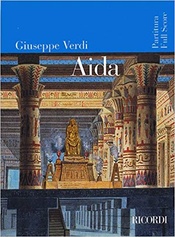
阿伊达 2017年萨尔茨堡艺术节版 [演出] 豆瓣
所属 演出: 阿伊达
语言: italian 意大利语 剧团: Wiener Philharmoniker 维也纳爱乐乐团 ; Konzertvereinigung Wiener Staatsopernchor 维也纳国家歌剧院合唱团音乐会协会 ; Angelika-Prokopp-Sommerakademie der Wiener Philharmoniker 维也纳爱乐乐团“安格莉卡-普罗科普”夏季学院 剧院: Großes Festspielhaus 萨尔茨堡艺术节大剧院 导演: Shirin Neshat
其它标题: 2017年萨尔茨堡艺术节版 编剧: Antonio Ghislanzoni 作曲: Giuseppe Verdi 演员: Anna Netrebko / Vittoria Yeo / Francesco Meli / Yusif Eyvazov
Backstory: The Egyptians have captured and enslaved Aida, an Ethiopian princess. An Egyptian military commander, Radamès, struggles to choose between his love for her and his loyalty to the King of Egypt. To complicate the story further, the King's daughter Amneris is in love with Radamès, although he does not return her feelings.
Act 1
Scene 1: A hall in the King's palace; through the rear gate the pyramids and temples of Memphis are visible
Ramfis, the high priest of Egypt, tells Radamès, the young warrior, that war with the Ethiopians seems inevitable, and Radamès hopes that he will be chosen as the Egyptian commander (Ramfis, Radamès: "Sì, corre voce l'Etiope ardisca" / Yes, it is rumored that Ethiopia dares once again to threaten our power).
Radamès dreams both of gaining victory on the battlefield and of Aida, an Ethiopian slave, with whom he is secretly in love (Radamès: "Se quel guerrier io fossi! ... Celeste Aida" / Heavenly Aida). Aida, who is also secretly in love with Radamès, is the captured daughter of the Ethiopian King Amonasro, but her Egyptian captors are unaware of her true identity. Her father has invaded Egypt to deliver her from servitude.
Amneris, the daughter of the Egyptian King, enters the hall. She too loves Radamès, but fears that his heart belongs to someone else (Radamès, Amneris: "Quale insolita gioia nel tuo sguardo" / In your looks I trace a joy unwonted).
Aida appears and, when Radamès sees her, Amneris notices that he looks disturbed. She suspects that Aida could be her rival, but is able to hide her jealousy and approach Aida (Amneris, Aida, Radamès: "Vieni, o diletta, appressati" / Come, O delight, come closer).
The King enters, along with the High Priest, Ramfis, and the whole palace court. A messenger announces that the Ethiopians, led by King Amonasro, are marching towards Thebes. The King declares war and proclaims that Radamès is the man chosen by the goddess Isis to be the leader of the army (The King, Messenger, Radamès, Aida, Amneris, Ramfis, chorus: "Alta cagion v'aduna .. Guerra, guerra, guerra!" / Oh fate o'er Egypt looming .. War, war, war!). Upon receiving this mandate from the King, Radamès proceeds to the temple of Vulcan to take up the sacred arms (The King, Radamès, Aida, Amneris, chorus: "Su! del Nilo al sacro lido" .. (reprise) "Guerra, guerra guerra!" / On! Of Nilus' sacred river, guard the shores .. (reprise) War, war, war!).
Alone in the hall, Aida feels torn between her love for her father, her country, and Radamès (Aida: "Ritorna vincitor" / Return a conqueror).
Scene 2: Inside the Temple of Vulcan
Solemn ceremonies and dances by the priestesses take place (High Priestess, chorus, Radamès: "Possente Ftha ... Tu che dal nulla" / O mighty Ptah). This is followed by the installation of Radamès to the office of commander-in-chief (High Priestess, chorus, Ramfis, Radamès: "Immenso Ftha .. Mortal, diletto ai Numi" / O mighty one, guard and protect!). All present in the temple pray fervently for the victory of Egypt and protection for their warriors ("Nume, custode e vindice"/ Hear us, O guardian deity).
Act 2
Scene 1: The chamber of Amneris
Dances and music to celebrate Radamès' victory take place (Chorus, Amneris: "Chi mai fra gli inni e i plausi" / Our songs his glory praising). However, Amneris is still in doubt about Radamès' love and wonders whether Aida is in love with him. She tries to forget her doubt, entertaining her worried heart with the dance of Moorish slaves (Chorus, Amneris: "Vieni: sul crin ti piovano" / Come bind your flowing tresses).
When Aida enters the chamber, Amneris asks everyone to leave. By falsely telling Aida that Radamès has died in the battle, she tricks her into professing her love for him. In grief, and shocked by the news, Aida confesses that her heart belongs to Radamès eternally (Amneris, Aida: "Fu la sorte dell'armi a' tuoi funesta" / The battle's outcome was cruel for your people).
This confession fires Amneris with rage, and she plans on taking revenge on Aida. Ignoring Aida's pleadings (Amneris, Aida, chorus: "Su! del Nilo al sacro lido" / Up! at the sacred shores of the Nile), Amneris leaves her alone in the chamber.
Scene 2: The grand gate of the city of Thebes
Radamès returns victorious and the troops march into the city (Chorus, Ramfis: "Gloria all'Egitto, ad Iside" / Glory to Egypt, [and] to Isis!).
The Egyptian king decrees that on this day the triumphant Radamès may have anything he wishes. The Ethiopian captives are led onstage in chains, Amonasro among them. Aida immediately rushes to her father, who whispers to her to conceal his true identity as King of Ethiopia from the Egyptians. Amonasro deceptively proclaims to the Egyptians that the Ethiopian king (referring to himself) has been slain in battle. Aida, Amonasro, and the captured Ethiopians plead with the Egyptian King for mercy, but Ramfis and the Egyptian priests call for their death (Aida, Amneris, Radamès, The King, Amonasro, chorus: "Che veggo! .. Egli? .. Mio padre! .. Anch'io pugnai .. Struggi, o Re, queste ciurme feroci" / What do I see?.. Is it he? My father? .. Destroy, O King, these ferocious creatures).
Claiming the reward promised by the King of Egypt, Radamès pleads with him to spare the lives of the prisoners and to set them free. The King grants Radamès' wish, and declares that he (Radamès) will be his (the King's) successor and will marry the King's daughter (Amneris). (Aida, Amneris, Radamès, Ramfis, The King, Amonasro, chorus: "O Re: pei sacri Numi! .. Gloria all'Egitto" / O King, by the sacred gods ... Glory to Egypt!). At Ramfis' suggestion to the King, Aida and Amonasro remain as hostages to ensure that the Ethiopians do not avenge their defeat.
Act 3
On the banks of the Nile, near the Temple of Isis
Prayers are said (Chorus, High Priestess, Ramfis, Amneris: "O tu che sei d'Osiride" / O thou who to Osiris art) on the eve of Amneris and Radamès' wedding in the Temple of Isis. Outside, Aida waits to meet with Radamès as they had planned (Aida: "Qui Radamès verra .. O patria mia" / Oh, my dear country!).
Amonasro appears and orders Aida to find out the location of the Egyptian army from Radamès. Aida, torn between her love for Radamès and her loyalty to her native land and to her father, reluctantly agrees. (Aida, Amonasro: "Ciel, mio padre! .. Rivedrai le foreste imbalsamate" / Once again shalt thou gaze). When Radamès arrives, Amonasro hides behind a rock and listens to their conversation.
Radamès affirms that he will marry Aida ("Pur ti riveggo, mia dolce Aida .. Nel fiero anelito"; "Fuggiam gli ardori inospiti .. Là, tra foreste vergini" / I see you again, my sweet Aida!), and Aida convinces him to flee to the desert with her.
In order to make their escape easier, Radamès proposes that they use a safe route without any fear of discovery and reveals the location where his army has chosen to attack. Upon hearing this, Amonasro comes out of hiding and reveals his identity. Radamès realizes, to his extreme dismay, that he has unwittingly revealed a crucial military secret to the enemy. At the same time, Amneris and Ramfis leave the temple and, seeing Radamès in conference with the enemy, call for the imperial guards. Amonasro draws a dagger, intending to kill Amneris and Ramfis before the guards can hear them, but Radamès disarms him, quickly orders him to flee with Aida, and surrenders himself to the imperial guards as Aida and Amonasro run off. The guards arrest him as a traitor.
Act 4
Scene 1: A hall in the Temple of Justice. To one side is the door leading to Radamès' prison cell
Amneris desires to save Radamès ("L'aborrita rivale a me sfuggia" / My hated rival has escaped me). She calls for the guard to bring him to her.
She asks Radamès to deny the accusations, but Radamès, who does not wish to live without Aida, refuses. He is relieved to know Aida is still alive and hopes she has reached her own country (Amneris, Radamès: "Già i Sacerdoti adunansi" / Already the priests are assembling).
Offstage, Ramfis recites the charges against Radamès and calls on him to defend himself, but he stands mute, and is condemned to death as a traitor. Amneris, who remains onstage, protests that he Radamès is innocent, and pleads with the priests to show mercy. The priests sentence him to be buried alive; Amneris weeps and curses the priests as he is taken away (Judgment scene, Amneris, Ramfis, and chorus: "Ahimè! .. morir mi sento .. Radamès, e deciso il tuo fato" / Alas .. I feel death .. Radamès, your fate is decided).
Scene 2: The lower portion of the stage shows the vault in the Temple of Vulcan; the upper portion represents the temple itself
Radamès has been taken into the lower floor of the temple and sealed up in a dark vault, where he thinks that he is alone. As he hopes that Aida is in a safer place, he hears a sigh and then sees Aida. She has hidden herself in the vault in order to die with Radamès (Radamès and Aida: "La fatal pietra sovra me si chiuse." / The fatal stone now closes over me). They accept their terrible fate (Radamès: "Morir! Si pura e bella" / To die! So pure and lovely!) and bid farewell to Earth and its sorrows. Above the vault in the temple of Vulcan, Amneris weeps and prays to the goddess Isis. In the vault below, Aida dies in Radamès' arms as the priests, offstage, pray to the god Ftha. (Chorus, Aida, Radamès, Amneris: "Immenso Ftha" / Almighty Ptah).
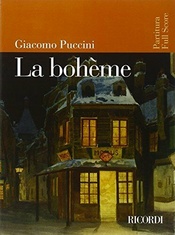
波希米亚人 2017年巴黎国家歌剧团版 [演出] 豆瓣
所属 演出: 波希米亚人
语言: italian 意大利语 剧团: Orchestre de l'Opéra national de Paris 巴黎国家歌剧团管弦乐团 ; Chœurs de l'Opéra national de Paris 巴黎国家歌剧团合唱团 ; Maîtrise des Hauts-de-Seine / Chœur d'enfants de l'Opéra national de Paris 上塞纳唱诗班 / 巴黎国家歌剧团儿童合唱团 剧院: Opéra Bastille 巴士底歌剧院 导演: Claus Guth
其它标题: 2017年巴黎国家歌剧团版 编剧: Giuseppe Giacosa / Luigi Illica 作曲: Giacomo Puccini 演员: Sonya Yoncheva / Nicole Car / Atalla Ayan / Benjamin Bernheim
Place: Paris
Time: Around 1830
Act 1
In the four bohemians' garret (Christmas Eve)
Marcello is painting while Rodolfo gazes out of the window. They complain of the cold. In order to keep warm, they burn the manuscript of Rodolfo's drama. Colline, the philosopher, enters shivering and disgruntled at not having been able to pawn some books. Schaunard, the musician of the group, arrives with food, wine and cigars. He explains the source of his riches: a job with an eccentric English gentleman, who ordered him to play his violin to a parrot until it died. The others hardly listen to his tale as they set up the table to eat and drink. Schaunard interrupts, telling them that they must save the food for the days ahead: tonight they will all celebrate his good fortune by dining at Cafe Momus, and he will pay.
The friends are interrupted by Benoît, the landlord, who arrives to collect the rent. They flatter him and ply him with wine. In his drunkenness, he begins to boast of his amorous adventures, but when he also reveals that he is married, they thrust him from the room—without the rent payment—in comic moral indignation. The rent money is divided for their evening out in the Quartier Latin.
Marcello, Schaunard and Colline go out, but Rodolfo remains alone for a moment in order to finish an article he is writing, promising to join his friends soon. There is a knock at the door. It is a girl who lives in another room in the building. Her candle has blown out, and she has no matches; she asks Rodolfo to light it. She is briefly overcome with faintness, and Rodolfo helps her to a chair and offers her a glass of wine. She thanks him. After a few minutes, she says that she is better and must go. But as she turns to leave, she realizes that she has lost her key.
Her candle goes out in the draught and Rodolfo's candle goes out too; the pair stumble in the dark. Rodolfo, eager to spend time with the girl, to whom he is already attracted, finds the key and pockets it, feigning innocence. He takes her cold hand (Che gelida manina—"What a cold little hand") and tells her of his life as a poet, then asks her to tell him more about her life. The girl says her name is Mimì (Sì, mi chiamano Mimì—"Yes, they call me Mimì"), and describes her simple life as an embroiderer. Impatiently, the waiting friends call Rodolfo. He answers and turns to see Mimì bathed in moonlight (duet, Rodolfo and Mimì: O soave fanciulla—"Oh lovely girl"). They realize that they have fallen in love. Rodolfo suggests remaining at home with Mimì, but she decides to accompany him to the Cafe Momus. As they leave, they sing of their newfound love.
Act 2
Quartier Latin (same evening)
A great crowd, including children, has gathered with street sellers announcing their wares (chorus: Aranci, datteri! Caldi i marroni!—"Oranges, dates! Hot chestnuts!"). The friends arrive; Rodolfo buys Mimì a bonnet from a vendor, while Colline buys a coat and Schaunard a horn. Parisians gossip with friends and bargain with the vendors; the children of the streets clamor to see the wares of Parpignol, the toy seller. The friends enter the Cafe Momus.
As the men and Mimì dine at the cafe, Musetta, formerly Marcello's sweetheart, arrives with her rich (and elderly) government minister admirer, Alcindoro, whom she is tormenting. It is clear she has tired of him. To the delight of the Parisians and the embarrassment of her patron, she sings a risqué song (Musetta's waltz: Quando m'en vo'—"When I go along"), hoping to reclaim Marcello's attention. The ploy works; at the same time, Mimì recognizes that Musetta truly loves Marcello. To be rid of Alcindoro for a bit, Musetta pretends to be suffering from a tight shoe and sends him to the shoemaker to get her shoe mended. Alcindoro leaves, and Musetta and Marcello fall rapturously into each other's arms.
The friends are presented with their bill. However, Schaunard's purse has gone missing and no one else has enough money to pay. The sly Musetta has the entire bill charged to Alcindoro. The sound of a military band is heard, and the friends leave. Alcindoro returns with the repaired shoe seeking Musetta. The waiter hands him the bill and, dumbfounded, Alcindoro sinks into a chair.
Act 3
At the toll gate at the Barrière d'Enfer (late February)
Peddlers pass through the barriers and enter the city. Mimì appears, coughing violently. She tries to find Marcello, who is currently living in a little tavern where he paints signs for the innkeeper. She tells him of her hard life with Rodolfo, who abandoned her the night before, and of Rodolfo's terrible jealousy (O buon Marcello, aiuto!—"Oh, good Marcello, help me!"). Marcello tells her that Rodolfo is asleep inside, and expresses concern about Mimì's cough. Rodolfo wakes up and comes out looking for Marcello. Mimì hides and overhears Rodolfo first telling Marcello that he left Mimì because of her coquettishness, but finally confessing that his jealousy is a sham: he fears she is slowly being consumed by a deadly illness (most likely tuberculosis, known by the catchall name "consumption" in the nineteenth century). Rodolfo, in his poverty, can do little to help Mimì and hopes that his pretended unkindness will inspire her to seek another, wealthier suitor (Marcello, finalmente—"Marcello, finally").
Out of kindness towards Mimì, Marcello tries to silence him, but she has already heard all. Her weeping and coughing reveal her presence, and Rodolfo hurries to her. Musetta's laughter is heard and Marcello goes to find out what has happened. Mimì tells Rodolfo that she is leaving him, and asks that they separate amicably (Mimì: Donde lieta uscì—"From here she happily left"); but their love for one another is too strong for the pair to part. As a compromise, they agree to remain together until the spring, when the world is coming to life again and no one feels truly alone. Meanwhile, Marcello has found Musetta, and the couple quarrel fiercely about Musetta's flirtatiousness: an antithetical counterpoint to the other pair's reconciliation (quartet: Mimì, Rodolfo, Musetta, Marcello: Addio dolce svegliare alla mattina!—"Goodbye, sweet awakening in the morning!").
Act 4
Back in the garret (some months later)
Marcello and Rodolfo are trying to work, though they are primarily talking about their girlfriends, who have left them and found wealthy lovers. Rodolfo has seen Musetta in a fine carriage and Marcello has seen Mimì dressed like a queen. The men both express their nostalgia (duet: O Mimì, tu più non torni—"O Mimì, will you not return?"). Schaunard and Colline arrive with a very frugal dinner and all parody eating a plentiful banquet, dance together and sing, before Schaunard and Colline engage in a mock duel.
Musetta suddenly appears; Mimì, who took up with a wealthy viscount after leaving Rodolfo in the spring, has left her patron. Musetta found her that day in the street, severely weakened by her illness, and Mimì begged Musetta to bring her to Rodolfo. Mimì, haggard and pale, is assisted onto a bed. Briefly, she feels as though she is recovering. Musetta and Marcello leave to sell Musetta's earrings in order to buy medicine, and Colline leaves to pawn his overcoat (Vecchia zimarra—"Old coat"). Schaunard leaves with Colline to give Mimì and Rodolfo some time together. Mimì tells Rodolfo that her love for him is her whole life (aria/duet, Mimì and Rodolfo: Sono andati?—"Have they gone?").
To Mimì's delight, Rodolfo presents her with the pink bonnet he bought her, which he has kept as a souvenir of their love. They remember past happiness and their first meeting—the candles, the lost key. Suddenly, Mimì is overwhelmed by a coughing fit. The others return, with a gift of a muff to warm Mimì's hands and some medicine. Mimì gently thanks Rodolfo for the muff, which she believes is a present from him, reassures him that she is better and falls asleep. Musetta prays. Schaunard discovers that Mimì has died. Rodolfo rushes to the bed, calling Mimì's name in anguish, weeping helplessly as the curtain falls.
霍夫曼的故事 2016年巴黎国家歌剧团版 [演出] 豆瓣
所属 演出: 霍夫曼的故事
语言: french 法语 剧团: Orchestre de l’Opéra national de Paris 巴黎国家歌剧团管弦乐团 ; Chœurs de l’Opéra national de Paris 巴黎国家歌剧团合唱团 剧院: Opéra Bastille 巴士底歌剧院 导演: Robert Carsen
其它标题: 2016年巴黎国家歌剧团版 编剧: Jules Barbier 作曲: Jacques Offenbach 演员: Ramón Vargas / Stefano Secco / Nadine Koutcher
Prologue
A tavern in Nuremberg: The Muse appears and reveals to the audience her purpose is to draw Hoffmann's attention, and make him abjure all other loves, so he can be devoted to her: poetry. She takes the appearance of Hoffmann's closest friend, Nicklausse. The prima donna Stella, performing Mozart's Don Giovanni, sends a letter to Hoffmann, requesting a meeting in her dressing room after the performance. The letter and the key to the room are intercepted by Councillor Lindorf ("Dans les rôles d'amoureux langoureux" – In the languid lovers' roles), the first of the opera's incarnations of evil, Hoffmann's nemesis. Lindorf intends to replace Hoffmann at the rendezvous. In the tavern, students wait for Hoffmann. He finally arrives, and entertains them with the legend of Kleinzach the dwarf ("Il était une fois à la cour d'Eisenach" – Once upon a time at the court of Eisenach). Lindorf coaxes Hoffmann into telling the audience about his three great loves.
Act 1 (Olympia)
This act is based on a portion of "Der Sandmann" (The Sandman).
Hoffmann's first love is Olympia, an automaton created by the scientist Spalanzani. Hoffmann falls in love with her, not knowing Olympia is a mechanical doll ("Allons! Courage et confiance...Ah! vivre deux!" – Come on! Courage and confidence ... Ah! to live!). To warn Hoffmann, Nicklausse, possessing the truth about Olympia, sings a story of a mechanical doll with the appearance of a human, but Hoffmann ignores him ("Une poupée aux yeux d'émail" – A doll with enamel eyes). Coppélius, Olympia's co-creator and this act's incarnation of Nemesis, sells Hoffmann magic glasses to make Olympia appear as a real woman ("J'ai des yeux" – I have eyes).
Olympia sings one of the opera's most-famous arias, "Les oiseaux dans la charmille" (The birds in the arbor, nicknamed "The Doll Song"), during which she runs-down and needs to be wound-up before she can continue. Hoffmann is tricked into believing his affections are returned, to the bemusement of Nicklausse, subtly attempting to warn his friend ("Voyez-la sous son éventail" – See her under her fan). While dancing with Olympia, Hoffmann falls on the ground and his glasses break. At the same time, Coppélius appears, tearing Olympia apart to retaliate against Spalanzani after cheating him of his fees. With the crowd ridiculing him, Hoffmann realizes he loved an automaton.
Act 2 (Antonia)
This act is based on "Rath Krespel".
After a long search, Hoffmann finds the house where Crespel and his daughter Antonia are hiding. Hoffmann and Antonia loved each other, but were separated after Crespel decided to hide his daughter from Hoffmann. Antonia inherited her mother's talent for singing, but her father forbids her to sing because of her mysterious illness. Antonia wishes her lover would return to her ("Elle a fui, la tourterelle" – "She fled, the dove"). Her father also forbids her to see Hoffmann, encourages Antonia in her musical career, and therefore, endangers her without knowing it. Crespel tells Frantz, his servant, to stay with his daughter, and after Crespel leaves, Frantz sings a comical song about his talents "Jour et nuit je me mets en quatre" – "Day and night, I quarter my mind."
After Crespel leaves his house, Hoffmann takes advantage of the occasion to sneak-in, and the lovers are re-united (love duet: "C'est une chanson d'amour" – "It's a love song"). After Crespel returns, he receives a visit from Dr Miracle, the act's Nemesis, forcing Crespel to let him heal her. Eavesdropping, Hoffmann learns Antonia may die if she sings too-much. He returns to her boudoir, and makes her promise to give-up her artistic-dreams. Antonia reluctantly accepts her lover's will. After she is alone, Dr Miracle enters Antonia's boudoir to persuade her to sing and follow her mother's path to glory, stating Hoffmann is sacrificing her to his brutishness, and loves her only for her beauty. With mystic powers, he raises a vision of Antonia's dead mother and induces Antonia to sing, causing her death. Crespel arrives just in time to witness his daughter's last breath. Hoffmann enters, and Crespel wants to kill him, thinking he is responsible for his daughter's death. Nicklausse saves his friend from the old man's vengeance.
Act 3 (Giulietta)
This act is loosely-based on Die Abenteuer der Silvester-Nacht (A New Year's Eve Adventure).
Venice. The act opens with the barcarolle "Belle nuit, ô nuit d'amour" – "Beautiful night, oh night of love". Hoffmann falls in love with the courtesan Giulietta, and thinks she returns his affections ("Amis, l'amour tendre et rêveur" – "Friends, tender and dreamy love"). Giulietta is not in love with Hoffmann, but seducing him under the orders of Captain Dapertutto, promising to give her a diamond if she steals Hoffmann's reflection from a mirror ("Scintille, diamant" – "Sparkle, diamond"). The jealous Schlemil (cf. Peter Schlemihl for a literary antecedent), a previous-victim of Giulietta and Dapertutto (he gave Giulietta his shadow), challenges the poet to a duel, but is killed. Nicklausse wants to take Hoffmann away from Venice, and goes looking for horses. Meanwhile, Hoffmann meets Giulietta, and cannot resist her ("O Dieu! de quelle ivresse" – "O God! of what intoxication"): he gives her his reflection, only to be abandoned by the courtesan, to Dapertutto's great pleasure. Hoffmann tells Dapertutto his friend Nicklausse will come and save him. Dapertutto prepares a poison to get rid of Nicklausse, but Giulietta drinks it by mistake, dropping dead in the poet's arms.
Epilogue
The tavern in Nuremberg: Hoffmann, drunk, swears he will never love again, and explains Olympia, Antonia, and Giulietta are three facets of the same person, Stella. They represent, respectively, the young girl's, the musician's, and the courtesan's side of the prima donna. After Hoffmann says he doesn't want to love any more, Nicklausse reveals she is the Muse and reclaims Hoffmann: "Be reborn a poet! I love you, Hoffmann! Be mine!" – "Renaîtra un poète! Je t'aime, Hoffmann! Sois à moi!" The magic of poetry reaches Hoffmann as he sings "O Dieu! de quelle ivresse – "O God! of what intoxication" once more, ending with "Muse, whom I love, I am yours!" – "Muse que j'aime, je suis à toi!" At this moment, Stella, tired of waiting for Hoffmann to come to her rendezvous, enters the tavern and finds him drunk. The poet tells her to leave ("Farewell, I will not follow you, phantom, spectre of the past" – "Adieu, je ne vais pas vous suivre, fantôme, spectre du passé"), and Lindorf, waiting in the shadows, comes forth. Nicklausse explains to Stella that Hoffmann does not love her anymore, but Councillor Lindorf is waiting for her. Some students enter the room for more drinking, while Stella and Lindorf leave together.
采珠人 2012年圣卡洛剧院版 [演出] 豆瓣
所属 演出: 采珠人
语言: french 法语 剧团: Orchestra del Teatro di San Carlo 圣卡洛剧院管弦乐团 ; Coro del Teatro di San Carlo 圣卡洛剧院合唱团 ; Balletto del Teatro di San Carlo 圣卡洛剧院芭蕾舞团 剧院: Teatro di San Carlo 圣卡洛剧院 导演: Fabio Sparvoli
其它标题: 2012年圣卡洛剧院版 编剧: Eugène Cormon / Michel Carré 作曲: Georges Bizet 演员: Patrizia Ciofi / Dmitry Korchak
Place: Ceylon
Time: Ancient times
Act 1
The scene is a desolate seashore, with the ruins of a Hindu temple in the background. A chorus of pearl fishermen sing of the dangerous tasks that lie ahead ("Sur la grève en feu"), and perform ritual dances to drive away evil spirits. They then elect one of their number, Zurga, as their leader, or "king". Nadir enters, and is hailed by Zurga as a long-lost friend. Left alone, the pair reminisce about their past in the city of Kandy, where their friendship was nearly destroyed by their mutual love of a young priestess whose beauty they had glimpsed briefly. They had each renounced their love for this stranger and had sworn to remain true to each other. Now, reunited, they affirm once again that they will be faithful until death ("Au fond du temple saint").
A boat draws up on the beach bearing the veiled figure of Leila, the virgin priestess whose prayers are required to ensure the safety of the fishermen. Although neither of them recognises her, she is the woman from Kandy with whom Nadir and Zurga had been in love. As Zurga is explaining her duties, she recognises Nadir, but she says nothing and shortly afterwards is led up to the temple by the high priest Nourabad. Zurga and the fishermen go down to the sea, leaving Nadir alone. In a troubled soliloquy before he sleeps he recalls how, in Kandy, he had broken his vows to Zurga and pursued his love for the veiled woman ("Je crois entendre encore"). It was the rumour that she might be found in this place that brought him here. Alone in the temple, Leila prays and sings. Nadir wakes and, recognising the voice of his long-desired lover, traces it to the temple. Leila briefly draws her veil aside, he sees it is she and the pair declare their renewed passion. On the beach, the fishermen plead with her to continue protecting them, but she tells Nadir she will sing for him alone ("O Dieu Brahma").
Act 2
In the temple with Nourabad, Leila expresses fear at being left alone, but Nourabad exhorts her to be brave and to fulfil her vows to Brahma on pain of her own death. She tells him of the courage she once displayed when, as a child, she had hidden a fugitive from his enemies and refused to give him up even when threatened with death ("J'étais encore enfant"). The fugitive had rewarded her with a necklace that he asked her always to wear. She had kept this promise, as she would her vows. On the priest's departure, Leila quietly muses on the former times when she and Nadir would meet together secretly ("Comme autrefois dans la nuit sombre"). Nadir then enters; in her fear of Nourabad's threats Leila begs him to leave, but he remains and the two declare their love in a passionate duet ("Léïla! Léïla!...Dieu puissant, le voilà!"). He goes, promising to return next night, but as he leaves he is captured by the fishermen and brought back to the temple. Zurga, as the fishermen's leader, at first resists the fishermen's calls for Nadir's execution and advocates mercy. However, after Nourabad removes Leila's veil, Zurga recognises her as his former love; consumed by jealousy and rage, he orders that both Nadir and Leila be put to death. A violent storm erupts, as the fishermen unite in singing a hymn to Brahma ("Brahma divin Brahma!").
Act 3
In his tent on the beach, Zurga notes that the storm has abated, as has his rage; he now feels remorse for his anger towards Nadir ("L'orage est calmé"). Leila is brought in; Zurga is captivated by her beauty as he listens to her pleas for Nadir's life, but his jealousy is rekindled. He confesses his love for her, but refuses mercy ("Je suis jaloux"). Nourabad and some of the fishermen enter to report that the funeral pyre is ready. As Leila is taken away, Zurga observes her giving one of the fishermen her necklace, asking for its return to her mother. With a shout, Zurga rushes out after the group and seizes the necklace.
Outside the temple, Nadir waits beside the funeral pyre as the crowd, singing and dancing, anticipates the dawn and the coming double execution ("Dès que le soleil"). He is joined by Leila; resigned now to their deaths, the pair sing of how their souls will soon be united in heaven. A glow appears in the sky, and Zurga rushes in to report that the fishermen's camp is ablaze. As the men hurry away to save their homes, Zurga frees Leila and Nadir. He returns the necklace to Leila, and reveals that he is the man she saved when she was a child. He recognises now that his love for her is in vain, and tells her and Nadir to flee. As the couple depart, singing of the life of love that awaits them, Zurga is left alone, to await the fishermen's return ("Plus de crainte...Rêves d'amour, adieu!").
(In the revised version of the ending introduced after the opera's 1886 revival, Nourabad witnesses Zurga's freeing of the prisoners and denounces him to the fishermen, one of whom stabs Zurga to death as the last notes sound of Leila and Nadir's farewell song. In some variations Zurga meets his death in other ways, and his body is consigned to the pyre.)