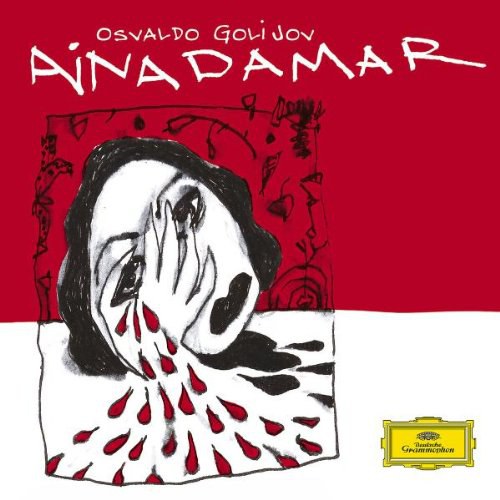
格里约夫-歌剧《泪之泉》 [音乐] 豆瓣
Dawn Upshaw
/
Kelley O'Connor
…
类型:
古典
发布日期 2006-09-01
出版发行:
Deutsche Grammophon
Ainadamar
Golijov's Deep Song
Ainadamar means "fountain of tears" in Arabic. It is the name of an ancient well near Granada, where, in August 1936, during the early stages of the Spanish Civil War, the poet Federico García Lorca was killed by Fascist Falangist forces. Osvaldo Golijov's opera Ainadamar is centered around the scene of the poet's murder, but its main character is the Catalan tragedian Margarita Xirgu, who collaborated with Lorca on several of his plays. The story begins in Uruguay, in 1969, as Xirgu is about to perform the lead role in Lorca's Mariana Pineda, the tale of a revolutionary martyr from another century. She is haunted by memories of Lorca, by the thought that she might have saved him. By the end, she has surrendered to the strange beauty of fate, and she bequeathes her longing for freedom to her students. The opera ends as it began, with the prophetic Ballad of Mariana Pineda: "How sad it was in Granada. / The stones began to cry."
Lorca was among the most musical of poets - an accomplished pianist, a part-time composer, something of a musicologist. He supplied countless cues for music in his writing; in one poem he compared the crescent moon to a fermata, a held note in the harmony of the night. In 1922 he worked with the composer Manuel de Falla to stage a festival of cante jondo, or "deep song", as the most substantial branch of flamenco is known. Of the siguiriya form of cante jondo, Lorca memorably wrote, "The melody begins, an undulant, endless melody. [It] loses itself horizontally, escapes from our hands as we see it withdraw from us toward a point of common longing and perfect passion." This is the mood to which Ainadamar aspires. Indeed, when Golijov was younger, he read those sentences in Lorca, and cherished them as a musical ideal.
Golijov grew up in Argentina, the son of Eastern European Jews. He has made his name with an arresting sequence of works which honor his multiple homelands; Yiddishbuk, for string quartet, combines avant-garde techniques with Hebraic motifs; the St. Mark Passion mobilizes an army of Latin-American styles; the song cycle Ayre, which Dawn Upshaw has also recorded for Deutsche Grammophon, weaves together Sephardic, Spanish and Arabic melodies. Ainadamar is properly saturated in Spanish music, particularly Lorca's beloved flamenco, but rival influences are felt throughout, just as Christian, Jewish and Muslim traditions once mingled on the Iberian peninsula.
The most striking aspect of Golijov's work is not what he assimilates but how he does it. Early in the 20th century, the likes of Falla, Janáèek, Bartók, Stravinsky and Villa-Lobos infused their music with folk material, bending their notation to make room for informal expression. Golijov goes a step farther; he routinely collaborates with folk and popular musicians, leaving room for improvisation in his scores, and he seeks out classical performers who are willing to roughen up their conservatory-trained techniques. His work hovers on the border between notated and oral traditions. It remains, however, a fiercely personal vision, the outward echoing of a solitary voice.
Ainadamar was given its premiere at the Tanglewood Music Festival in the summer of 2003. The score was bewitching throughout, but the dramatic effect was at times diffuse. Subsequently, Golijov worked with his librettist, the playwright David Henry Hwang, to make extensive revisions. Peter Sellars, who directed Ainadamar at the Santa Fe Opera in 2005, had a decisive impact on the final version. Most of the original score was retained, but the narrative was tightened. Before, Xirgu shared the stage with a younger version of herself; now she converses with her student Nuria, who resolves to carry on her work. Also, there is a new sequence in which Margarita tries to persuade Lorca to go with her to Cuba. Lorca's refusal is the turning point of the piece; he knowingly seals his doom. In the process of revision, a dreamlike, meditative piece took on political bite and fervor, as befits a Sellars production.
The opera begins with taped sounds of gurgling water, evoking Ainadamar. These give way to galloping hoofbeats, which recall the horse flight of the bride and her lover in Lorca's Blood Wedding. The trumpet plays a rising, trembling figure, which Sellars calls the "call of wounded freedom". Then, percussionists pick up the beat, a chorus of six girls cry out the Ballad from Mariana Pineda, Xirgu enters on a long held note (D natural against B flat minor), and a flamenco fury unfolds. Then, as Xirgu's mind drifts back to the opening night of the play, the orchestra falls into a languid rumba rhythm, and time suspends. Lorca, sung by a mezzo-soprano, is given stately, ornate music, reaching back to bel canto and the Baroque. The trance-like atmosphere is shattered by a thrilling, terrifying sound - Ruiz Alonso, the man who ordered Lorca's death, crying "Bring him to me!" ("Muerte a caballo"), in florid flamenco style. The great irony of Ainadamar is that the villain of the piece is the one most steeped in "deep song".
The central sequence, devoted to Lorca's arrest and death, begins with a frenzied, dissonant reprise of Mariana's Ballad. Xirgu's attempt to save Lorca takes the form of a lurid musical tourist brochure for Cuba, replete with mention of "naked black angels" and "the agony of impossible sex" (Lorca was homosexual). Over slashing strings, Lorca announces his intention to "stay among the dead, singing my immense song". After Ruiz Alonso resumes his fatal cantillation, Lorca goes to his death in muted, rapt tones. Golijov incorporates, to heart-stopping effect, his 2001 piece K'in Sventa Ch'ul Me'tik Kwadalupe; over a recording of indigenous Mexicans chanting to the Virgin of Guadalupe, strings and marimbas play a broken chorale, and the Falange's victims protest their innocence. The famous poet disappears into the anonymous crowd of the doomed. A brutal electronic fugue of repeating gunshots describes the murder itself.
At the start of the final section, despair hangs heavy, and the energy of the Ballad seems spent. But when Lorca rematerializes to absolve Xirgu, there is a telling harmonic change. Whenever Ruiz Alonzo enters in prior scenes, the bass line chillingly slips down from D to C sharp. Now, the assassin is undercut; the bass slides down to C, and over this pedal-tone the final episodes unfold. There are two great swells for orchestra, describing the delirium of sunset and the ragged march of liberty. The lead voices intertwine in ethereal trios. At the end, the chief motifs of the opera recur, floating in from another world: Mariana's crying ballad, the chords of Granada's weeping stones, the trumpet's wounded fanfare. Golijov strikes his point of common longing and perfect passion.
Alex Ross
Golijov's Deep Song
Ainadamar means "fountain of tears" in Arabic. It is the name of an ancient well near Granada, where, in August 1936, during the early stages of the Spanish Civil War, the poet Federico García Lorca was killed by Fascist Falangist forces. Osvaldo Golijov's opera Ainadamar is centered around the scene of the poet's murder, but its main character is the Catalan tragedian Margarita Xirgu, who collaborated with Lorca on several of his plays. The story begins in Uruguay, in 1969, as Xirgu is about to perform the lead role in Lorca's Mariana Pineda, the tale of a revolutionary martyr from another century. She is haunted by memories of Lorca, by the thought that she might have saved him. By the end, she has surrendered to the strange beauty of fate, and she bequeathes her longing for freedom to her students. The opera ends as it began, with the prophetic Ballad of Mariana Pineda: "How sad it was in Granada. / The stones began to cry."
Lorca was among the most musical of poets - an accomplished pianist, a part-time composer, something of a musicologist. He supplied countless cues for music in his writing; in one poem he compared the crescent moon to a fermata, a held note in the harmony of the night. In 1922 he worked with the composer Manuel de Falla to stage a festival of cante jondo, or "deep song", as the most substantial branch of flamenco is known. Of the siguiriya form of cante jondo, Lorca memorably wrote, "The melody begins, an undulant, endless melody. [It] loses itself horizontally, escapes from our hands as we see it withdraw from us toward a point of common longing and perfect passion." This is the mood to which Ainadamar aspires. Indeed, when Golijov was younger, he read those sentences in Lorca, and cherished them as a musical ideal.
Golijov grew up in Argentina, the son of Eastern European Jews. He has made his name with an arresting sequence of works which honor his multiple homelands; Yiddishbuk, for string quartet, combines avant-garde techniques with Hebraic motifs; the St. Mark Passion mobilizes an army of Latin-American styles; the song cycle Ayre, which Dawn Upshaw has also recorded for Deutsche Grammophon, weaves together Sephardic, Spanish and Arabic melodies. Ainadamar is properly saturated in Spanish music, particularly Lorca's beloved flamenco, but rival influences are felt throughout, just as Christian, Jewish and Muslim traditions once mingled on the Iberian peninsula.
The most striking aspect of Golijov's work is not what he assimilates but how he does it. Early in the 20th century, the likes of Falla, Janáèek, Bartók, Stravinsky and Villa-Lobos infused their music with folk material, bending their notation to make room for informal expression. Golijov goes a step farther; he routinely collaborates with folk and popular musicians, leaving room for improvisation in his scores, and he seeks out classical performers who are willing to roughen up their conservatory-trained techniques. His work hovers on the border between notated and oral traditions. It remains, however, a fiercely personal vision, the outward echoing of a solitary voice.
Ainadamar was given its premiere at the Tanglewood Music Festival in the summer of 2003. The score was bewitching throughout, but the dramatic effect was at times diffuse. Subsequently, Golijov worked with his librettist, the playwright David Henry Hwang, to make extensive revisions. Peter Sellars, who directed Ainadamar at the Santa Fe Opera in 2005, had a decisive impact on the final version. Most of the original score was retained, but the narrative was tightened. Before, Xirgu shared the stage with a younger version of herself; now she converses with her student Nuria, who resolves to carry on her work. Also, there is a new sequence in which Margarita tries to persuade Lorca to go with her to Cuba. Lorca's refusal is the turning point of the piece; he knowingly seals his doom. In the process of revision, a dreamlike, meditative piece took on political bite and fervor, as befits a Sellars production.
The opera begins with taped sounds of gurgling water, evoking Ainadamar. These give way to galloping hoofbeats, which recall the horse flight of the bride and her lover in Lorca's Blood Wedding. The trumpet plays a rising, trembling figure, which Sellars calls the "call of wounded freedom". Then, percussionists pick up the beat, a chorus of six girls cry out the Ballad from Mariana Pineda, Xirgu enters on a long held note (D natural against B flat minor), and a flamenco fury unfolds. Then, as Xirgu's mind drifts back to the opening night of the play, the orchestra falls into a languid rumba rhythm, and time suspends. Lorca, sung by a mezzo-soprano, is given stately, ornate music, reaching back to bel canto and the Baroque. The trance-like atmosphere is shattered by a thrilling, terrifying sound - Ruiz Alonso, the man who ordered Lorca's death, crying "Bring him to me!" ("Muerte a caballo"), in florid flamenco style. The great irony of Ainadamar is that the villain of the piece is the one most steeped in "deep song".
The central sequence, devoted to Lorca's arrest and death, begins with a frenzied, dissonant reprise of Mariana's Ballad. Xirgu's attempt to save Lorca takes the form of a lurid musical tourist brochure for Cuba, replete with mention of "naked black angels" and "the agony of impossible sex" (Lorca was homosexual). Over slashing strings, Lorca announces his intention to "stay among the dead, singing my immense song". After Ruiz Alonso resumes his fatal cantillation, Lorca goes to his death in muted, rapt tones. Golijov incorporates, to heart-stopping effect, his 2001 piece K'in Sventa Ch'ul Me'tik Kwadalupe; over a recording of indigenous Mexicans chanting to the Virgin of Guadalupe, strings and marimbas play a broken chorale, and the Falange's victims protest their innocence. The famous poet disappears into the anonymous crowd of the doomed. A brutal electronic fugue of repeating gunshots describes the murder itself.
At the start of the final section, despair hangs heavy, and the energy of the Ballad seems spent. But when Lorca rematerializes to absolve Xirgu, there is a telling harmonic change. Whenever Ruiz Alonzo enters in prior scenes, the bass line chillingly slips down from D to C sharp. Now, the assassin is undercut; the bass slides down to C, and over this pedal-tone the final episodes unfold. There are two great swells for orchestra, describing the delirium of sunset and the ragged march of liberty. The lead voices intertwine in ethereal trios. At the end, the chief motifs of the opera recur, floating in from another world: Mariana's crying ballad, the chords of Granada's weeping stones, the trumpet's wounded fanfare. Golijov strikes his point of common longing and perfect passion.
Alex Ross