Gwyneth Jones — 演员 (12)
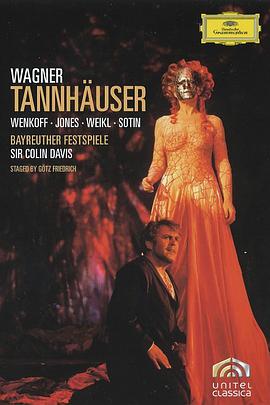
汤豪舍 (1978) [电影] 豆瓣
Tannhäuser
导演: Götz Friedrich / Thomas Oloffson 演员: Gwyneth Jones / Spas Wenkoff
其它标题: Tannhäuser / 唐豪瑟
Cast
Gwyneth Jones ... Elisabeth / Venus
Spas Wenkoff ... Tanhäuser
Hans Sotin ... Hermann
Bernd Weikl ... Wolfram von Eschenbach
Franz Mazura ... Biteroff
John Pickering ... Heinrich der Schreiber
Robert Schunk ... Walther von der Vogelweide
Heinz Feldhoff ... Reinmar von Zweter
.
Chor der Bayreuther Festspiele
Chorus Master: Norbert Balatsch
Orchester der Bayreuther Festspiele
Conductor: Sir Colin Davis
Stage director: Götz Friedrich
Choreographer: John Neumeier
Cinematography: Fritz Beckhoff, Kurt Bruckner
齐格弗里德 (1980) [电影] 豆瓣 TMDB
Siegfried
其它标题: Siegfried
齐格弗里德(Siegfried),德国音乐家瓦格纳著名的连篇乐剧《尼伯龙根的指环》中的第三联。第三联《齐格弗里德》――《尼伯龙根的指环》的第二联。由三幕构成,这部乐剧在《尼贝龙根的指环》全剧中是最具有英雄性格的,同时也最具有朴素抒情的牧歌风味,所以它的音乐洋溢着生机与活力。瓦格纳的管弦乐法在此以光辉的自然色彩描绘《指环》中比较轻松的层面,但有关米梅的场景、沃坦痛苦的心理挣扎以及布仑希尔德苏醒的描写,仍充满戏剧性的对比。
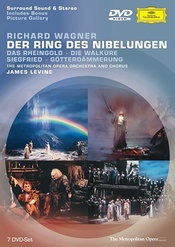
尼伯龙人的指环 1975年拜罗伊特音乐节版 [演出] 豆瓣
所属 演出: 尼伯龙人的指环
语言: 德语 german 剧团: Bayreuther Festspielorchester 拜罗伊特音乐节管弦乐团 ; Bayreuther Festspielchor 拜罗伊特音乐节合唱团 剧院: Bayreuther Festspielhaus 拜罗伊特音乐节剧院 导演: Wolfgang Wagner
其它标题: 1975年拜罗伊特音乐节版 编剧: Richard Wagner 作曲: Richard Wagner 演员: Gwyneth Jones / Jean Cox
The plot revolves around a magic ring that grants the power to rule the world, forged by the Nibelung dwarf Alberich from gold he stole from the Rhine maidens in the river Rhine. The Ring itself as described by Wagner is a Rune-magic taufr ("tine", or "talisman") intended to rule the feminine multiplicative power by a fearful magical act termed as 'denial of love' ("Liebesverzicht"). With the assistance of the god Loge, Wotan – the chief of the gods – steals the ring from Alberich, but is forced to hand it over to the giants, Fafner and Fasolt in payment for building the home of the gods, Valhalla, or they will take Freia, who provides the gods with the golden apples that keep them young. Wotan's schemes to regain the ring, spanning generations, drive much of the action in the story. His grandson, the mortal Siegfried, wins the ring by slaying Fafner (who slew Fasolt for the ring) – as Wotan intended – but is eventually betrayed and slain as a result of the intrigues of Alberich's son Hagen, who wants the ring for himself. Finally, the Valkyrie Brünnhilde – Siegfried's lover and Wotan's daughter who lost her immortality for defying her father in an attempt to save Siegfried's father Sigmund – returns the ring to the Rhine maidens as she commits suicide on Siegfried's funeral pyre. Hagen is drowned as he attempts to recover the ring. In the process, the gods and Valhalla are destroyed.
Details of the storylines can be found in the articles on each music drama.
Wagner created the story of the Ring by fusing elements from many German and Scandinavian myths and folk tales. The Old Norse Edda supplied much of the material for Das Rheingold, while Die Walküre was largely based on the Völsunga saga. Siegfried contains elements from the Eddur, the Völsunga saga and Thidrekssaga. The final Götterdämmerung, draws from the 12th-century German poem, the Nibelungenlied, which appears to have been the original inspiration for the Ring.
The Ring has been the subject of myriad interpretations. For example, George Bernard Shaw, in The Perfect Wagnerite, argues for a view of The Ring as an essentially socialist critique of industrial society and its abuses. Robert Donington in Wagner's Ring And Its Symbols interprets it in terms of Jungian psychology, as an account of the development of unconscious archetypes in the mind, leading towards individuation.
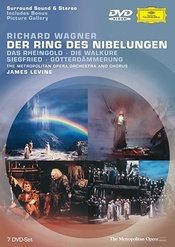
尼伯龙人的指环 1979-1980年拜罗伊特音乐节版 [演出] 豆瓣
所属 演出: 尼伯龙人的指环
语言: german 德语 剧团: Bayreuther Festspielorchester 拜罗伊特音乐节管弦乐团 ; Bayreuther Festspielchor 拜罗伊特音乐节合唱团 剧院: Bayreuther Festspielhaus 拜罗伊特音乐节剧院 导演: Patrice Chéreau
其它标题: 1979-1980年拜罗伊特音乐节版 编剧: Richard Wagner 作曲: Richard Wagner 演员: Gwyneth Jones / Manfred Jung
The plot revolves around a magic ring that grants the power to rule the world, forged by the Nibelung dwarf Alberich from gold he stole from the Rhine maidens in the river Rhine. The Ring itself as described by Wagner is a Rune-magic taufr ("tine", or "talisman") intended to rule the feminine multiplicative power by a fearful magical act termed as 'denial of love' ("Liebesverzicht"). With the assistance of the god Loge, Wotan – the chief of the gods – steals the ring from Alberich, but is forced to hand it over to the giants, Fafner and Fasolt in payment for building the home of the gods, Valhalla, or they will take Freia, who provides the gods with the golden apples that keep them young. Wotan's schemes to regain the ring, spanning generations, drive much of the action in the story. His grandson, the mortal Siegfried, wins the ring by slaying Fafner (who slew Fasolt for the ring) – as Wotan intended – but is eventually betrayed and slain as a result of the intrigues of Alberich's son Hagen, who wants the ring for himself. Finally, the Valkyrie Brünnhilde – Siegfried's lover and Wotan's daughter who lost her immortality for defying her father in an attempt to save Siegfried's father Sigmund – returns the ring to the Rhine maidens as she commits suicide on Siegfried's funeral pyre. Hagen is drowned as he attempts to recover the ring. In the process, the gods and Valhalla are destroyed.
Details of the storylines can be found in the articles on each music drama.
Wagner created the story of the Ring by fusing elements from many German and Scandinavian myths and folk tales. The Old Norse Edda supplied much of the material for Das Rheingold, while Die Walküre was largely based on the Völsunga saga. Siegfried contains elements from the Eddur, the Völsunga saga and Thidrekssaga. The final Götterdämmerung, draws from the 12th-century German poem, the Nibelungenlied, which appears to have been the original inspiration for the Ring.
The Ring has been the subject of myriad interpretations. For example, George Bernard Shaw, in The Perfect Wagnerite, argues for a view of The Ring as an essentially socialist critique of industrial society and its abuses. Robert Donington in Wagner's Ring And Its Symbols interprets it in terms of Jungian psychology, as an account of the development of unconscious archetypes in the mind, leading towards individuation.
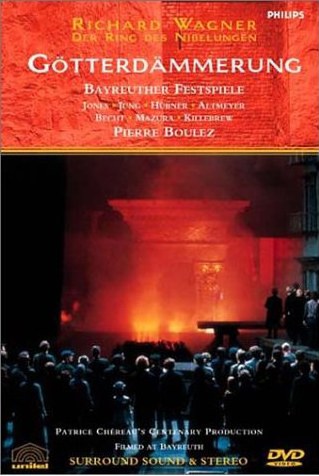
众神的黄昏 1979年拜罗伊特音乐节版 [演出] 豆瓣
所属 演出: 众神的黄昏
语言: german 德语 剧团: Bayreuther Festspielorchester 拜罗伊特音乐节管弦乐团 ; Bayreuther Festspielchor 拜罗伊特音乐节合唱团 剧院: Bayreuther Festspielhaus 拜罗伊特音乐节剧院 导演: Patrice Chéreau
其它标题: 1979年拜罗伊特音乐节版 编剧: Richard Wagner 作曲: Richard Wagner 演员: Gwyneth Jones / Manfred Jung
Prologue
The three Norns, daughters of Erda, gather beside Brünnhilde's rock, weaving the rope of Destiny. They sing of the past and the present, and of the future when Wotan will set fire to Valhalla to signal the end of the gods. Without warning, their rope breaks. Lamenting the loss of their wisdom, the Norns disappear.
As day breaks, Siegfried and Brünnhilde emerge from their cave, high on a mountaintop surrounded by magic fire. Brünnhilde sends Siegfried off to new adventures, urging him to keep their love in mind. As a pledge of fidelity, Siegfried gives her the ring of power that he took from Fafner's hoard. Bearing Brünnhilde's shield and mounting her horse Grane, Siegfried rides away as an orchestral interlude (Siegfried's Journey to the Rhine) starts.
Act 1
The act begins in the Hall of the Gibichungs, a population dwelling by the Rhine. Gunther, lord of the Gibichungs, sits enthroned. His half-brother and chief minister, Hagen, advises him to find a wife for himself and a husband for their sister Gutrune. He suggests Brünnhilde for Gunther's wife, and Siegfried for Gutrune's husband. He reminds Gutrune that he has given her a potion that she can use to make Siegfried forget Brünnhilde and fall in love with Gutrune; under its influence, Siegfried will win Brünnhilde for Gunther. Gunther and Gutrune agree enthusiastically with this plan.
Siegfried appears at Gibichung Hall, seeking to meet Gunther. Gunther extends his hospitality to the hero, and Gutrune offers him the love potion. Unaware of the deception, Siegfried toasts Brünnhilde and their love. Drinking the potion, he loses his memory of Brünnhilde and falls in love with Gutrune instead. In his drugged state, Siegfried offers to win a wife for Gunther, who tells him about Brünnhilde and the magic fire which only a fearless person can cross. They swear blood-brotherhood (Hagen holds the drinking horn in which they mix their blood, but he does not join in the oath) and leave for Brünnhilde's rock. Hagen, left on guard duty, gloats that his so-called masters are unwittingly bringing the ring to him (Monologue: Hagen's watch).
Meanwhile, Brünnhilde is visited by her Valkyrie sister Waltraute, who tells her that Wotan returned from his wanderings with his spear shattered. Wotan is dismayed at losing his spear, as it has all the treaties and bargains he has made—everything that gives him power—carved into its shaft. Wotan ordered branches of the World tree, to be piled around Valhalla; sent his magic ravens to spy on the world and bring him news; and currently waits in Valhalla for the end. Waltraute begs Brünnhilde to return the ring to the Rhinemaidens, since the ring's curse is now affecting their father, Wotan. However, Brünnhilde refuses to relinquish Siegfried's token of love, and Waltraute rides away in despair.
Siegfried arrives, disguised as Gunther by using the Tarnhelm, and claims Brünnhilde as his wife. Though Brünnhilde resists violently, Siegfried overpowers her, snatching the ring from her hand and placing it on his own.
Act 2
Hagen, waiting by the bank of the Rhine, is visited in his semi-waking sleep (sitting up, eyes open, but motionless) by his father, Alberich. On Alberich's urging, he swears to kill Siegfried and acquire the ring. Alberich exits as dawn breaks. Siegfried arrives via Tarnhelm-magic, having resumed his natural form and left Brünnhilde on the boat with Gunther. Hagen summons the Gibichung vassals to welcome Gunther and his bride. He does this by sounding the war-alarm. The vassals are surprised to learn that the occasion is not battle, but their master's wedding and party.
Gunther leads in a downcast Brünnhilde, who is astonished to see Siegfried. Noticing the ring on Siegfried's hand, she realizes she has been betrayed—that the man who conquered her was not Gunther, but Siegfried in disguise. She denounces Siegfried in front of Gunther's vassals and accuses Siegfried of having seduced her himself. Siegfried, who does not remember ever having been Brünhilde's lover, swears on Hagen's spear that her accusations are false. Brünnhilde seizes the tip of the spear and swears that they are true. Once again Hagen supervises silently as others take oaths to his advantage. But this time, since the oath is sworn on a weapon, the understanding is that if the oath is proven false, the weapon's owner should avenge it by killing the perjurer with that weapon. Siegfried then leads Gutrune and the bystanders off to the wedding feast, leaving Brünnhilde, Hagen, and Gunther alone by the shore. Deeply shamed by Brünnhilde's outburst, Gunther agrees to Hagen's suggestion that Siegfried must be killed in order for Gunther to regain his standing. Brünnhilde, seeking revenge for Siegfried's manifest treachery, joins the plot and tells Hagen that Siegfried would be vulnerable to a stab in the back. Hagen and Gunther decide to lure Siegfried on a hunting-trip and murder him. They sing a trio in which Brünnhilde and Gunther vow in the name of Wotan, "guardian of oaths", to kill Siegfried, while Hagen repeats his pledge to Alberich: to acquire the ring and rule the world through its power.
Act 3
In the woods by the bank of the Rhine, the Rhinemaidens mourn the lost Rhine gold. Siegfried happens by, separated from the hunting party. The Rhinemaidens urge him to return the ring and avoid its curse, but he laughs at them and says he prefers to die rather than bargain for his life. They swim away, predicting that Siegfried will die and that his heir, a lady, will treat them more fairly.
Siegfried rejoins the hunters, who include Gunther and Hagen. While resting, he tells them about the adventures of his youth. Hagen gives him another potion, which restores his memory, and he tells of discovering the sleeping Brünnhilde and awakening her with a kiss. Hagen stabs him in the back with his spear. The others look on in horror, and Hagen explains in three words ("Meineid rächt' ich!" – "I have avenged perjury!") that since Siegfried admitted loving Brünnhilde, the oath he swore on Hagen's spear was obviously false, therefore it was Hagen's duty to kill him with it. Hagen calmly walks away into the wood. Siegfried recollects his awakening of Brünnhilde and dies. His body is carried away in a solemn funeral procession (Siegfried's funeral march) that forms the interlude as the scene is changed and recapitulates many of the themes associated with Siegfried and the Wälsungs.
Back in the Gibichung Hall, Gutrune awaits Siegfried's return. Hagen arrives ahead of the funeral party. Gutrune is devastated when Siegfried's corpse is brought in. Gunther blames Siegfried's death on Hagen, who replies that Siegfried had incurred the penalty of his false oath, and further, claims the ring on Siegfried's finger by right of conquest. When Gunther objects, Hagen appeals to the vassals to support his claim. Gunther draws his sword but Hagen attacks and easily kills him. However, as Hagen moves to take the ring, Siegfried's hand rises threateningly. Hagen recoils in fear.
Brünnhilde makes her entrance and issues orders for a huge funeral pyre to be assembled by the river (the start of the Immolation Scene). She takes the ring and tells the Rhinemaidens to claim it from her ashes, once fire has cleansed it of its curse. Lighting the pyre with a firebrand, she sends Wotan's ravens home with "anxiously longed-for tidings", and to fly by the magic fire for Loge to fulfill his task. After an apostrophe to the dead hero, Brünnhilde mounts her horse Grane and rides into the flames.
A sequence of leitmotifs portray the fire flaring up, and the hall of the Gibichungs catching fire and collapsing. The Rhine overflows its banks, quenching the fire, and the Rhinemaidens swim in to claim the ring. Hagen tries to stop them but they drag him into the depths and drown him. As they celebrate the return of the ring and its gold to the river, a red glow is seen in the sky. As the Gibichungs watch, the interior of Valhalla is finally seen, with gods and heroes visible as described by Waltraute in Act 1. Flames flare up in the Hall of the Gods, hiding it and them from sight completely. As the gods are consumed in the flames, the curtain falls to the sound of the Erlösungsmotif—the redemption leitmotif.
齐格弗里德 1980年拜罗伊特音乐节版 [演出] 豆瓣
所属 演出: 齐格弗里德
语言: german 德语 剧团: Orchester der Bayreuther Festspiele 拜罗伊特音乐节管弦乐团 剧院: Bayreuther Festspielhaus 拜罗伊特音乐节剧院 导演: Patrice Chéreau
其它标题: 1980年拜罗伊特音乐节版 编剧: Richard Wagner 作曲: Richard Wagner 演员: Manfred Jung / Gwyneth Jones
Act 1
Scene 1
A cave in rocks in the forest. An orchestral introduction includes references to leitmotifs including themes relating to the original hoard plundered by the Nibelung Alberich, and one in B-flat minor associated with the Nibelungs themselves. As the curtain rises, Alberich's brother, the dwarf Mime, is forging a sword. Mime is plotting to obtain the ring of power originally created by his brother Alberich. He has raised the human boy Siegfried as a foster child, to kill Fafner, who obtained the ring and other treasures in the opera Das Rheingold and has since transformed himself from a giant to a dragon. Mime needs a sword for Siegfried to use, but the youth has contemptuously broken every sword Mime has made. Siegfried returns from his wanderings in the forest with a wild bear in tow, and immediately breaks the new sword. After a whining speech by Mime about ingratitude, and how Mime has brought him up from a mewling infant ("Als zullendes Kind"), Siegfried senses why he keeps coming back to Mime although he despises him: he wants to know his parentage. Mime is forced to explain how he took in Siegfried's mother, Sieglinde, who then died giving birth to Siegfried. He shows Siegfried the broken pieces of the sword Nothung, which Mime had obtained from her. Siegfried orders him to reforge the sword; Mime, however, is unable to accomplish this. Siegfried departs, leaving Mime in despair.
Scene 2
An old man (Wotan in disguise) arrives at the door and introduces himself as the Wanderer. In return for the hospitality due a guest, he wagers his head on answering any three questions of Mime. The dwarf asks the Wanderer to name the races that live beneath the ground, on the earth, and in the skies. These are the Nibelung, the Giants, and the Gods, as the Wanderer answers correctly. The Wanderer then induces Mime to wager his own head on three further riddles: the race most beloved of Wotan, but most harshly treated; the name of the sword that can destroy Fafner; and the person who can repair the sword. Mime answers the first two questions: the Wälsungs (Siegmund and Sieglinde whose tale is told in the opera Die Walküre) and Nothung. However, he cannot answer the last. Wotan spares Mime, telling him that only "he who does not know fear" can reforge Nothung, and leaves Mime's head forfeit to that person.
Scene 3
Mime despairs as he imagines the ferocity of the dragon Fafner, while "the orchestra paints a dazzling picture of flickering lights and roaring flames". Siegfried returns and is annoyed by Mime's lack of progress. Mime realizes that Siegfried is "the one who does not know fear" and that unless he can instill fear in him, Siegfried will kill him as the Wanderer foretold. He tells Siegfried that fear is an essential craft; Siegfried is eager to learn it, and Mime promises to teach him by taking him to Fafner. Since Mime was unable to forge Nothung, Siegfried decides to do it himself. He succeeds by shredding the metal, melting it, and casting it anew. In the meantime, Mime brews a poisoned drink to offer Siegfried after the youth has defeated the dragon. After he finishes forging the sword, Siegfried demonstrates its strength by chopping the anvil in half with it.
Act 2
Scene 1
Deep in the forest. The Wanderer arrives at the entrance to Fafner's cave, where Alberich is keeping vigil. The two enemies recognize each other. Alberich boasts of his plans to regain the ring and rule the world. Wotan states that he does not intend to interfere, only to observe. He even offers to awaken the dragon so that Alberich can bargain with him. Alberich warns the dragon that a hero is coming to kill him, and offers to prevent the fight in exchange for the ring. Fafner dismisses the threat, declines Alberich's offer, and returns to sleep. Wotan leaves and Alberich withdraws, muttering threats.
Scene 2
At daybreak, Siegfried and Mime arrive. After assuring Siegfried that the dragon will teach him what fear is, Mime withdraws. As Siegfried waits for the dragon to appear, he hears a woodbird singing. He attempts to mimic the bird's song using a reed pipe, but is unsuccessful. He then plays a tune on his horn, which brings Fafner out of his cave. After a short exchange, they fight; Siegfried stabs Fafner in the heart with Nothung. In his last moments, Fafner learns Siegfried's name, and tells him to beware of treachery. When Siegfried withdraws his sword from Fafner's body, his hands are burned by the dragon's blood and he puts his finger in his mouth. On tasting the blood, he finds that he can understand the woodbird's song. Following its instructions, he takes the ring and the magic helmet Tarnhelm from Fafner's hoard.
Scene 3
Outside the cave, Alberich and Mime quarrel over the treasure. Alberich hides as Siegfried comes out of the cave. Siegfried complains to Mime that he has still not learned the meaning of fear. Mime offers him the poisoned drink; however, the magic power of the dragon's blood allows Siegfried to read Mime's treacherous thoughts, and he stabs him to death. He throws Mime's body into the treasure cave and places Fafner's body in the cave entrance to block it. The woodbird now sings of a woman sleeping on a rock surrounded by magic fire. Siegfried, wondering if he can learn fear from this woman, follows the bird towards the rock.
Act 3
Scene 1
At the foot of Brünnhilde's rock. The Wanderer summons Erda, the earth goddess. Erda, appearing confused, is unable to offer any advice. Wotan informs her that he no longer fears the end of the gods; indeed, it is his desire. His heritage will be left to Siegfried the Wälsung, and Brünnhilde (Erda's and Wotan's child), who will "work the deed that redeems the World." Dismissed, Erda sinks back into the earth.
Scene 2
Siegfried arrives, and the Wanderer questions the youth. Siegfried, who does not recognize his grandfather, answers insolently and starts down the path toward Brünnhilde's rock. The Wanderer blocks his path, but Siegfried mocks him, laughing at his floppy hat and his missing eye, and breaks his spear (the symbol of Wotan's authority) with a blow from Nothung. Wotan calmly gathers up the pieces and vanishes.
Scene 3
Siegfried passes through the ring of fire, emerging on Brünnhilde's rock. At first, he thinks the sleeping armored figure is a man. However, when he removes the armor, he finds a woman beneath. At the sight of the first woman he has ever seen, Siegfried at last experiences fear. In desperation, he kisses Brünnhilde, waking her from her magic sleep. Hesitant at first, Brünnhilde is won over by Siegfried's love, and renounces the world of the gods. Together, they hail "light-bringing love, and laughing death."
女武神 1980年拜罗伊特音乐节版 [演出] 豆瓣
所属 演出: 女武神
语言: german 德语 剧团: Bayreuther Festspielorchester 拜罗伊特音乐节管弦乐团 剧院: Bayreuther Festspielhaus 拜罗伊特音乐节剧院 导演: Patrice Chéreau
其它标题: 1980年拜罗伊特音乐节版 编剧: Richard Wagner 作曲: Richard Wagner 演员: Gwyneth Jones / Peter Hofmann
Prior history
During the lengthy time that has passed since the gods entered Valhalla at the end of Das Rheingold, Fafner has used the Tarnhelm to assume the form of a dragon, and guards the gold and the ring in the depths of the forest. Wotan has visited Erda seeking wisdom, and by her has fathered a daughter, Brünnhilde; he has fathered eight other daughters, possibly also by Erda. These, with Brünnhilde, form the Valkyries, whose task is to recover heroes fallen in battle and bring them to Valhalla, where they will protect the fortress from Alberich's assault should the dwarf recover the ring. Wotan has also wandered the earth, and with a woman of the Völsung race has fathered the twins Siegmund and Sieglinde, who have grown up separately and unaware of each other. From the Volsungs Wotan hopes for a hero who, unencumbered by the gods' treaties, will obtain the ring from Fafner.
Act 1
As a storm rages, Siegmund finds shelter from his enemies in a large dwelling built around a massive ash-tree. Unarmed and wounded, he collapses with exhaustion. Sieglinde enters; she tells Siegmund that she is the wife of Hunding, and that he may rest here until Hunding's return. As they talk, they look at each other with growing interest and emotion. Siegmund gets ready to leave, telling Sieglinde that misfortune follows him and he does not want to bring it on her; she replies that misfortune dwells with her already.
Hunding returns, and questions Siegmund's presence. Calling himself Wehwalt ("woeful"), Siegmund explains that he grew up in the forest with his parents and twin sister. One day he found their home burned down, his mother killed and his sister gone. Recently he fought with the relatives of a girl being forced into marriage. His weapons were destroyed, the bride was killed, and he was forced to flee. Hunding reveals that he is one of Siegmund's pursuers; Siegmund may stay, he says, but they must fight in the morning. Before leaving, Sieglinde gives a meaningful glance to a particular spot on the tree in which, the firelight reveals, a sword is buried to the hilt.
Sieglinde returns, having drugged Hunding's drink. She reveals that she was forced into the marriage and that during their wedding feast, an old man appeared and plunged a sword into the trunk of the ash tree which neither Hunding nor any of his companions have been able to remove. She is longing for the hero who will draw the sword and save her. When Siegmund expresses his love for her, she reciprocates, and when he speaks the name of his father, Wälse, she recognises him as Siegmund, and realises that the sword was left for him. Siegmund then draws the sword from the tree. She reveals herself as Sieglinde, his twin sister. Siegmund names the sword "Nothung" and declares that it will be her protection. The two sing of their passionate love for each other, as the act ends.
Act 2
On a high mountain ridge, Wotan instructs Brünnhilde, his Valkyrie daughter, to protect Siegmund in his forthcoming battle with Hunding. Fricka arrives, and in her role as goddess of family values demands that Siegmund and Sieglinde be punished for their adultery and incest. She scorns Wotan's argument that he requires Siegmund as a "free hero", who can further his plans to recover the ring from Fafner, uninhibited by Wotan's contracts. She retorts that Siegmund is not free but is Wotan's pawn, whose every move the god seeks to direct. Defeated by Fricka's logic, Wotan reluctantly agrees that he will not protect Siegmund. After Fricka leaves, the troubled Wotan gives Brünnhilde the full backstory, and with great sorrow rescinds his earlier instruction; he orders her to give the victory to Hunding, and then departs.
Siegmund and Sieglinde now enter, and Sieglinde faints, consumed with guilt and exhaustion. Brünnhilde tells Siegmund of his impending death; he refuses to follow Brünnhilde to Valhalla when she tells him Sieglinde cannot accompany him. Siegmund still believes that his father's sword will assure him of victory over Hunding, but Brünnhilde tells him it has lost its power. Siegmund threatens to kill both Sieglinde and himself. Much moved, Brünnhilde decides to defy her father and grant victory to Siegmund.
Hunding's call is heard; he arrives, and attacks Siegmund. Under Brünnhilde's power Siegmund begins to overpower Hunding, but Wotan appears and shatters Siegmund's sword with his spear. Hunding then stabs him to death. Brünnhilde gathers up the fragments of the sword and flees on horseback with Sieglinde. Contemptuously, Wotan strikes Hunding dead, and swearing that Brünnhilde will be punished for her defiance, sets out in pursuit of her.
Act 3
The Valkyries congregate on the mountain-top, each carrying a dead hero and chattering excitedly. Brünnhilde arrives with Sieglinde, and begs her sisters for help, but they dare not defy Wotan. Sieglinde tells Brünnhilde that without Siegmund she no longer wishes to live. Brünnhilde informs her that she is pregnant by Siegmund, and urges her to remain alive for the child's sake, and to name the child Siegfried. Brünnhilde gives the fragments of the sword Nothung to Sieglinde, who thanks her for her loyalty and comfort, and resolves to save the child. As she departs, Wotan is heard approaching with great wrath.
When Wotan arrives, the Valkyries vainly try to hide Brünnhilde. He faces her and declares her punishment: she is to be stripped of her Valkyrie status and become a mortal woman, to be held in defenceless sleep on the mountain, prey to any man who finds her. The other Valkyries protest, but when Wotan threatens them with the same, they flee. In a long discourse with Wotan Brünnhilde explains that she decided to protect Siegmund knowing that this was Wotan's true desire. Wotan consents to her request that he surround her resting place with a circle of fire that will protect her from all but the bravest of heroes. He bids her a loving farewell and lays her sleeping form down on a rock. He then summons Loge, the demigod of fire, who creates a circle of flames around her. Before slowly departing, Wotan pronounces that anyone with fear shall never pass through the fire.
阿伊达 1973年维也纳国家歌剧院版 [演出] 豆瓣
所属 演出: 阿伊达
语言: italian 意大利语 剧团: Orchester der Wiener Staatsoper 维也纳国家歌剧院管弦乐团 ; Chor der Wiener Staatsoper 维也纳国家歌剧院合唱团 ; Ballett der Wiener Staatsoper 维也纳国家歌剧院芭蕾舞团 剧院: Wiener Staatsoper 维也纳国家歌剧院 导演: Nathaniel Merrill
其它标题: 1973年维也纳国家歌剧院版 编剧: Antonio Ghislanzoni 作曲: Giuseppe Verdi 演员: Gwyneth Jones / Plácido Domingo
Backstory: The Egyptians have captured and enslaved Aida, an Ethiopian princess. An Egyptian military commander, Radamès, struggles to choose between his love for her and his loyalty to the King of Egypt. To complicate the story further, the King's daughter Amneris is in love with Radamès, although he does not return her feelings.
Act 1
Scene 1: A hall in the King's palace; through the rear gate the pyramids and temples of Memphis are visible
Ramfis, the high priest of Egypt, tells Radamès, the young warrior, that war with the Ethiopians seems inevitable, and Radamès hopes that he will be chosen as the Egyptian commander (Ramfis, Radamès: "Sì, corre voce l'Etiope ardisca" / Yes, it is rumored that Ethiopia dares once again to threaten our power).
Radamès dreams both of gaining victory on the battlefield and of Aida, an Ethiopian slave, with whom he is secretly in love (Radamès: "Se quel guerrier io fossi! ... Celeste Aida" / Heavenly Aida). Aida, who is also secretly in love with Radamès, is the captured daughter of the Ethiopian King Amonasro, but her Egyptian captors are unaware of her true identity. Her father has invaded Egypt to deliver her from servitude.
Amneris, the daughter of the Egyptian King, enters the hall. She too loves Radamès, but fears that his heart belongs to someone else (Radamès, Amneris: "Quale insolita gioia nel tuo sguardo" / In your looks I trace a joy unwonted).
Aida appears and, when Radamès sees her, Amneris notices that he looks disturbed. She suspects that Aida could be her rival, but is able to hide her jealousy and approach Aida (Amneris, Aida, Radamès: "Vieni, o diletta, appressati" / Come, O delight, come closer).
The King enters, along with the High Priest, Ramfis, and the whole palace court. A messenger announces that the Ethiopians, led by King Amonasro, are marching towards Thebes. The King declares war and proclaims that Radamès is the man chosen by the goddess Isis to be the leader of the army (The King, Messenger, Radamès, Aida, Amneris, Ramfis, chorus: "Alta cagion v'aduna .. Guerra, guerra, guerra!" / Oh fate o'er Egypt looming .. War, war, war!). Upon receiving this mandate from the King, Radamès proceeds to the temple of Vulcan to take up the sacred arms (The King, Radamès, Aida, Amneris, chorus: "Su! del Nilo al sacro lido" .. (reprise) "Guerra, guerra guerra!" / On! Of Nilus' sacred river, guard the shores .. (reprise) War, war, war!).
Alone in the hall, Aida feels torn between her love for her father, her country, and Radamès (Aida: "Ritorna vincitor" / Return a conqueror).
Scene 2: Inside the Temple of Vulcan
Solemn ceremonies and dances by the priestesses take place (High Priestess, chorus, Radamès: "Possente Ftha ... Tu che dal nulla" / O mighty Ptah). This is followed by the installation of Radamès to the office of commander-in-chief (High Priestess, chorus, Ramfis, Radamès: "Immenso Ftha .. Mortal, diletto ai Numi" / O mighty one, guard and protect!). All present in the temple pray fervently for the victory of Egypt and protection for their warriors ("Nume, custode e vindice"/ Hear us, O guardian deity).
Act 2
Scene 1: The chamber of Amneris
Dances and music to celebrate Radamès' victory take place (Chorus, Amneris: "Chi mai fra gli inni e i plausi" / Our songs his glory praising). However, Amneris is still in doubt about Radamès' love and wonders whether Aida is in love with him. She tries to forget her doubt, entertaining her worried heart with the dance of Moorish slaves (Chorus, Amneris: "Vieni: sul crin ti piovano" / Come bind your flowing tresses).
When Aida enters the chamber, Amneris asks everyone to leave. By falsely telling Aida that Radamès has died in the battle, she tricks her into professing her love for him. In grief, and shocked by the news, Aida confesses that her heart belongs to Radamès eternally (Amneris, Aida: "Fu la sorte dell'armi a' tuoi funesta" / The battle's outcome was cruel for your people).
This confession fires Amneris with rage, and she plans on taking revenge on Aida. Ignoring Aida's pleadings (Amneris, Aida, chorus: "Su! del Nilo al sacro lido" / Up! at the sacred shores of the Nile), Amneris leaves her alone in the chamber.
Scene 2: The grand gate of the city of Thebes
Radamès returns victorious and the troops march into the city (Chorus, Ramfis: "Gloria all'Egitto, ad Iside" / Glory to Egypt, [and] to Isis!).
The Egyptian king decrees that on this day the triumphant Radamès may have anything he wishes. The Ethiopian captives are led onstage in chains, Amonasro among them. Aida immediately rushes to her father, who whispers to her to conceal his true identity as King of Ethiopia from the Egyptians. Amonasro deceptively proclaims to the Egyptians that the Ethiopian king (referring to himself) has been slain in battle. Aida, Amonasro, and the captured Ethiopians plead with the Egyptian King for mercy, but Ramfis and the Egyptian priests call for their death (Aida, Amneris, Radamès, The King, Amonasro, chorus: "Che veggo! .. Egli? .. Mio padre! .. Anch'io pugnai .. Struggi, o Re, queste ciurme feroci" / What do I see?.. Is it he? My father? .. Destroy, O King, these ferocious creatures).
Claiming the reward promised by the King of Egypt, Radamès pleads with him to spare the lives of the prisoners and to set them free. The King grants Radamès' wish, and declares that he (Radamès) will be his (the King's) successor and will marry the King's daughter (Amneris). (Aida, Amneris, Radamès, Ramfis, The King, Amonasro, chorus: "O Re: pei sacri Numi! .. Gloria all'Egitto" / O King, by the sacred gods ... Glory to Egypt!). At Ramfis' suggestion to the King, Aida and Amonasro remain as hostages to ensure that the Ethiopians do not avenge their defeat.
Act 3
On the banks of the Nile, near the Temple of Isis
Prayers are said (Chorus, High Priestess, Ramfis, Amneris: "O tu che sei d'Osiride" / O thou who to Osiris art) on the eve of Amneris and Radamès' wedding in the Temple of Isis. Outside, Aida waits to meet with Radamès as they had planned (Aida: "Qui Radamès verra .. O patria mia" / Oh, my dear country!).
Amonasro appears and orders Aida to find out the location of the Egyptian army from Radamès. Aida, torn between her love for Radamès and her loyalty to her native land and to her father, reluctantly agrees. (Aida, Amonasro: "Ciel, mio padre! .. Rivedrai le foreste imbalsamate" / Once again shalt thou gaze). When Radamès arrives, Amonasro hides behind a rock and listens to their conversation.
Radamès affirms that he will marry Aida ("Pur ti riveggo, mia dolce Aida .. Nel fiero anelito"; "Fuggiam gli ardori inospiti .. Là, tra foreste vergini" / I see you again, my sweet Aida!), and Aida convinces him to flee to the desert with her.
In order to make their escape easier, Radamès proposes that they use a safe route without any fear of discovery and reveals the location where his army has chosen to attack. Upon hearing this, Amonasro comes out of hiding and reveals his identity. Radamès realizes, to his extreme dismay, that he has unwittingly revealed a crucial military secret to the enemy. At the same time, Amneris and Ramfis leave the temple and, seeing Radamès in conference with the enemy, call for the imperial guards. Amonasro draws a dagger, intending to kill Amneris and Ramfis before the guards can hear them, but Radamès disarms him, quickly orders him to flee with Aida, and surrenders himself to the imperial guards as Aida and Amonasro run off. The guards arrest him as a traitor.
Act 4
Scene 1: A hall in the Temple of Justice. To one side is the door leading to Radamès' prison cell
Amneris desires to save Radamès ("L'aborrita rivale a me sfuggia" / My hated rival has escaped me). She calls for the guard to bring him to her.
She asks Radamès to deny the accusations, but Radamès, who does not wish to live without Aida, refuses. He is relieved to know Aida is still alive and hopes she has reached her own country (Amneris, Radamès: "Già i Sacerdoti adunansi" / Already the priests are assembling).
Offstage, Ramfis recites the charges against Radamès and calls on him to defend himself, but he stands mute, and is condemned to death as a traitor. Amneris, who remains onstage, protests that he Radamès is innocent, and pleads with the priests to show mercy. The priests sentence him to be buried alive; Amneris weeps and curses the priests as he is taken away (Judgment scene, Amneris, Ramfis, and chorus: "Ahimè! .. morir mi sento .. Radamès, e deciso il tuo fato" / Alas .. I feel death .. Radamès, your fate is decided).
Scene 2: The lower portion of the stage shows the vault in the Temple of Vulcan; the upper portion represents the temple itself
Radamès has been taken into the lower floor of the temple and sealed up in a dark vault, where he thinks that he is alone. As he hopes that Aida is in a safer place, he hears a sigh and then sees Aida. She has hidden herself in the vault in order to die with Radamès (Radamès and Aida: "La fatal pietra sovra me si chiuse." / The fatal stone now closes over me). They accept their terrible fate (Radamès: "Morir! Si pura e bella" / To die! So pure and lovely!) and bid farewell to Earth and its sorrows. Above the vault in the temple of Vulcan, Amneris weeps and prays to the goddess Isis. In the vault below, Aida dies in Radamès' arms as the priests, offstage, pray to the god Ftha. (Chorus, Aida, Radamès, Amneris: "Immenso Ftha" / Almighty Ptah).
玫瑰骑士 1979年巴伐利亚国家歌剧团版 [演出] 豆瓣
所属 演出: 玫瑰骑士
语言: german 德语 剧团: Bayerisches Staatsorchester 巴伐利亚国家管弦乐团 ; Bayerische Staatsopernchor 巴伐利亚国家歌剧团合唱团 剧院: Nationaltheater München 慕尼黑民族剧院 导演: Otto Schenk
其它标题: 1979年巴伐利亚国家歌剧团版 编剧: Hugo von Hofmannsthal 作曲: Richard Strauss 演员: Brigitte Fassbaender / Gwyneth Jones
Time: 1740s, in the first years of the reign of Empress Maria Theresa
Place: Vienna
Act 1
Hogarth's The Countess's Morning Levee (ca. 1744), the inspiration for the Marschallin's morning reception
The Marschallin's bedroom
Princess Marie Therese von Werdenberg (known as the Marschallin, the title given to a Field Marshal's wife) and her much younger lover, Count Octavian Rofrano, are lounging in bed together just before daybreak ("Wie du warst! Wie du bist"). Loud voices are soon heard outside, and the Marschallin has Octavian hide, believing that her husband has returned early from a hunting trip. Octavian emerges in a skirt and bonnet ("Befehl'n fürstli' Gnad'n, i bin halt noch nit recht...") and tries to sneak away, but the Marschallin's country cousin, Baron Ochs auf Lerchenau, bursts in through the same door.
The Baron is newly engaged to Sophie Faninal ("Selbstverständlich empfängt mich Ihro Gnaden"), the daughter of a wealthy merchant, though this does not keep him from making lewd comments at the disguised Octavian. Ochs has come to ask two favors: he wants to borrow his cousin's notary to write the marriage contract, and he wants her recommendation of a young nobleman to serve as his Rosenkavalier ("Knight of the Rose"), who will deliver the traditional silver engagement rose to Sophie. The Marschallin instructs "Mariandel" to fetch Octavian's miniature portrait and present it to the Baron. Ochs easily accepts Octavian as his Rosenkavalier, deciding that the "maid" must be that young count's "bastard sister", then insists that the Marschallin allow "Mariandel" to come and work for his new bride. She refuses as politely as possible and finally dismisses the "maid".
A busy reception scene ensues as the room fills with vendors and supplicants to the Marschallin ("Drei arme adelige Waisen"), who ignores the former and aids the latter. A tenor sent by the Portuguese ambassador serenades her ("Di rigori armato") while Ochs sits down with the notary. Two Italian intriguers, Valzacchi and Annina, present scandal sheets for sale, which the Marschallin coldly declines. Ochs tries to stipulate a gift from Sophie's family consisting of all their properties, free from mortgages, and quickly loses patience with the notary's attempts to explain that this is illegal. Amidst all the activity, the Marschallin remarks to her hairdresser: "My dear Hippolyte, today you have made me look like an old woman." ("Mein lieber Hippolyte"). This so disturbs her that she orders the room to be emptied. As the people file out, Valzacchi and Annina offer Baron Ochs their spying services. He asks whether they know anything about "Mariandel"; they promptly lie and claim to know all about her.
The Marschallin, now alone, ponders her waning youth and the unhappiness of her forced marriage, perceiving the same in store for Sophie Faninal ("Da geht er hin..."). Octavian returns, dressed again in men's clothes ("Ach, du bist wieder da"). When he sees that the Marschallin is out of sorts, he assumes it is from her earlier fear that he might have been discovered. But she is still thinking of the passage of time (a clock is heard chiming thirteen times) and tells him that, very soon, he will leave her for someone younger and prettier. Octavian reacts with frustration, and the Marschallin turns him away. Too late, she realizes that she has neglected to kiss him goodbye. With nothing else to be done, she summons her young page, Mohammed, to take the silver rose to Octavian, then stares pensively into her hand mirror (or similar) as the curtain falls.
Act 2
The von Faninals' palace
The next day, Herr von Faninal and Sophie exultantly await the arrival of the Rosenkavalier ("Ein ernster Tag, ein grosser Tag!"). Following tradition, Faninal departs before the Knight appears, saying that he will return with the bridegroom. Sophie prays to keep her sense of humility through all the rapid changes happening in her life, but she is repeatedly interrupted by her duenna, Marianne, who reports from the window on the Rosenkavalier's elaborate entourage ("In dieser feierlichen Stunde der Prüfung"). Octavian arrives with great pomp, dressed all in silver, and presents the silver rose to Sophie ("Mir ist die Ehre widerfahren..."). She smells it, saying it is as sweet as a greeting from Heaven itself. Octavian, instantly smitten, joins her avowal that they will remember this moment until death.
They settle into a chaperoned conversation. Sophie reveals that she already knows Octavian's full name – Octavian Maria Ehrenreich Bonaventura Fernand Hyacinth Rofrano – from studying the catalogue of Austrian nobility to prepare for her marriage. She even knows his nickname: Quinquin, which only intimate friends (including the Marschallin) call him. She adds that she likes him very much. Ochs then enters with Faninal ("Jetzt aber kommt mein Herr Zukünftiger") and wastes no time revealing his character to the bride, loudly examining Sophie's body and comparing her to "an unbroken filly" when she protests. Once he leaves the room with Faninal to finalize the marriage contract, Sophie and Octavian quickly agree that she will not marry the Baron under any circumstances.
The young lovers' rapturous duet ("Mit Ihren Augen voll Tränen") is soon interrupted by Valzacchi and Annina, who surprise them and call for Ochs. Octavian challenges the Baron to a duel. Ochs runs forward, scratches his arm on the point of Octavian's drawn sword, and screams so that Faninal and the rest of the household come rushing in. Sophie begs her father to call off the wedding, to no avail: Octavian is asked to leave, and Sophie is sent to her room. Ochs is left on the divan, his arm in a sling, nursing a bottle of port and fantasies of revenge against Octavian. But Annina brings him something that raises his spirits much more quickly: a letter signed by "Mariandel," the "chambermaid" from Act 1, asking for a tryst. At this, Ochs forgets his sling and waltzes across the stage, ignoring Annina's hints for a tip - and missing her quiet promise to get even ("Da lieg' ich!").
Act 3
A private room in a shabby inn
Valzacchi and Annina, fed up with the Baron, help Octavian prepare a trap the following evening. Elaborate preparations are seen in pantomime before Ochs arrives with "Mariandel," ready for a cozy dinner at a table set for two.
In spite of himself, Ochs is disturbed by "Mariandel's" uncanny resemblance to his nemesis Octavian, and he keeps catching glimpses of strange apparitions in the room. A disguised Annina bursts in, calling Ochs her husband and the father of her (numerous) children, who crowd around him crying "Papa! Papa!" The Baron calls for the police; to his unpleasant surprise, the vice squad treats him with suspicion, and Valzacchi is suddenly claiming not to know him. The police inspector asks about the "woman" accompanying him, and Ochs lies that "she" is his fiancée, Sophie Faninal - just in time for Herr von Faninal to arrive, demanding to know why Ochs' messenger (presumably Valzacchi) has summoned him to this disreputable place. When asked if "Mariandel" is his daughter, Faninal retorts in a rage that his daughter is outside. The real Sophie enters and announces once and for all that she does not consider Baron Ochs her bridegroom. Her apoplectic father staggers out, leaning on her shoulder.
"Mariandel" now offers to make a statement in private, and retires behind a screen with the Police Inspector. Soon Ochs sees articles of women's clothing coming into view. He rages against the vice squad, but is interrupted by the arrival of the Marschallin. The Police Inspector greets her before clearing the room, and she explains to the Baron that he has been had. Sophie returns, and Octavian emerges, to confirm that they set up a "masquerade" together to break his engagement. Ochs, glancing back and forth between Octavian and the Marschallin, now grasps the nature of their relationship and asks for hush money. But he is cowed by the Marschallin's force of will (if not the sight of Octavian's sword) and ingloriously departs, pursued by children and bill collectors.
Farewell of Marschallin in act 3, with Mojca Erdmann, Sophie Koch and Krassimira Stoyanova (from left to right), Salzburg Festival 2014
The Marschallin, Sophie, and Octavian are left alone, and Octavian does not know what to do. The Marschallin introduces herself to Sophie, recognizing that the day she feared has come (Trio: "Marie Theres'!" / "Hab' mir's gelobt"), and releases Octavian to be with the woman he truly loves. She then withdraws, with a promise to Sophie that she will offer Faninal a face-saving ride home in her carriage. As soon as she is gone, Sophie and Octavian run to each other's arms. Faninal and the Marschallin return to find them locked in an embrace. With a last, bittersweet look toward her lost lover, the Marschallin heads for the carriage with Faninal. Sophie and Octavian follow after another brief but ecstatic love duet ("Ist ein Traum" / "Spür' nur dich"). The opera ends with little Mohammed trotting in to retrieve Sophie's dropped handkerchief, then racing out again after the others.