迈克尔·曼 — 作者 (19)
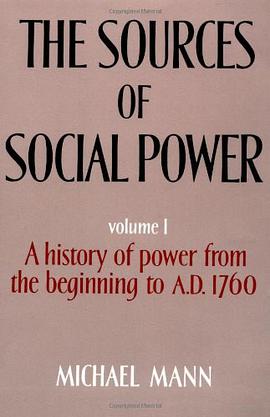
The Sources of Social Power [图书] 豆瓣
作者: Michael Mann 出版社: Cambridge University Press 1986 - 4
This is the first part of a three-volume work on the nature of power in human societies. In it, Michael Mann identifies the four principal 'sources' of power as being control over economic, ideological, military, and political resources. He examines the interrelations between these in a narrative history of power from Neolithic times, through ancient Near Eastern civilisations, the classical Mediterranean age, and medieval Europe, up to just before the Industrial Revolution in England. Rejecting the conventional monolithic concept of a 'society', Dr. Mann's model is instead one of a series of overlapping, intersecting power networks. He makes this model operational by focusing on the logistics of power - how the flow of information, manpower, and goods is controlled over social and geographical space-thereby clarifying many of the 'great debates' in sociological theory. The present volume offers explanations of the emergence of the state and social stratification.
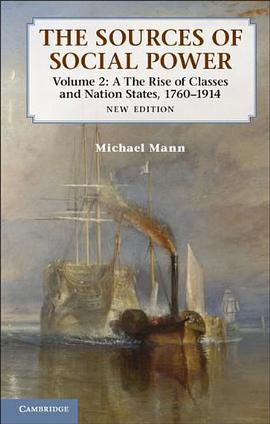
The Sources of Social Power, Vol. 2 [图书] 豆瓣
作者: Michael Mann 出版社: Cambridge University Press 1993 - 9
This second volume of Michael Mann's analytical history of social power deals with power relations between the Industrial Revolution and the First World War, focusing on France, Great Britain, Hapsburg Austria, Prussia/Germany and the United States. Based on considerable empirical research it provides original theories of the rise of nations and nationalism, of class conflict, of the modern state and of modern militarism. While not afraid to generalise, it also stresses social and historical complexity. The author sees human society as 'a patterned mess' and attempts to provide a sociological theory appropriate to this. This theory culminates in the final chapter, an original explanation of the causes of the First World War.
The Sources of Social Power [图书] 豆瓣
作者: Michael Mann 出版社: Cambridge University Press 1986 - 4
This is the first part of a three-volume work on the nature of power in human societies. In it, Michael Mann identifies the four principal 'sources' of power as being control over economic, ideological, military, and political resources. He examines the interrelations between these in a narrative history of power from Neolithic times, through ancient Near Eastern civilisations, the classical Mediterranean age, and medieval Europe, up to just before the Industrial Revolution in England. Rejecting the conventional monolithic concept of a 'society', Dr. Mann's model is instead one of a series of overlapping, intersecting power networks. He makes this model operational by focusing on the logistics of power - how the flow of information, manpower, and goods is controlled over social and geographical space-thereby clarifying many of the 'great debates' in sociological theory. The present volume offers explanations of the emergence of the state and social stratification.
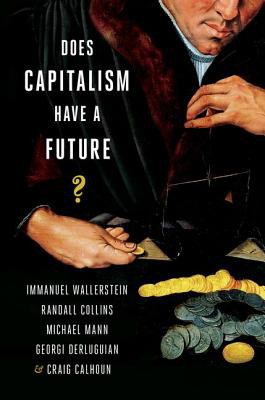
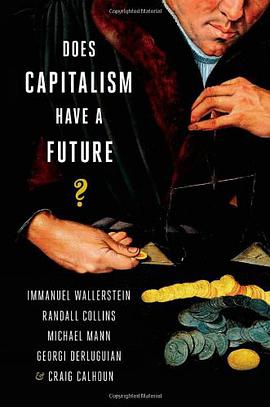
Does Capitalism Have a Future? [图书] 豆瓣
作者: Immanuel Wallerstein / Randall Collins 出版社: Oxford University Press, USA 2013 - 11
The Great Recession has prompted a reassessment of the specific mode of capitalist accumulation that achieved dominance in the era of globalization. Yet just about all of this literature has focused on one of two issues: why things went wrong, and what we need to do in order to return the system to stability. Outside of a contingent of radical socialists on the fringes of the debate, virtually no one questioned whether capitalism could continue. In Does Capitalism Have a Future?, the prominent theorist Georgi Derleugian has gathered together a quintet of eminent macrosociologists to assess whether the capitalist system can survive.
The prevalent common wisdom, for all its current gloom, nevertheless safely assumes that capitalism cannot break down permanently because there is no alternative. The authors shatter this assumption, arguing that this generalization is not supported by theory but is rather an outgrowth of the optimistic nineteenth-century claim that human history ascends through stages to an enlightened equilibrium of liberal capitalism. Yet as they point out, just about all major historical systems have broken down in the end (e.g., the Roman empire). In the modern epoch there have been several cataclysmic events-notably the French revolution, World War I, and the collapse of the Soviet bloc-that came to pass mainly because contemporary political elites had spectacularly failed to calculate the consequences of the processes they presumed to govern. At present, none of our governing elites and very few of our intellectuals can fathom an ending to our current reigning system. Considering whether a collapse is possible is the task that the quintet-Derleugian, Michael Mann, Randall Collins, Craig Calhoun, and Immanuel Wallerstein-sets out to explore. While all of the contributors arrive at different conclusions, they are in constant dialogue with each other and therefore able to construct relatively seamless-if open-ended-whole. For instance, Wallerstein (who accurately predicted the collapse of the Soviet system in 1979) and Collins, identify fatal structural faults in twenty-first century capitalism. Mann, on the other hand, does not think that there is any serious alternative to the market dynamic, but he does identify other serious threats to the system, including environmental degradation. Calhoun and Derluguian are more circumspect and focus on the role of politics in steering the system toward either revival or collapse.
This most ambitious of books, written by the highest caliber of sociologists, asks the biggest of questions: are we on the cusp of a radical world historical shift or not?
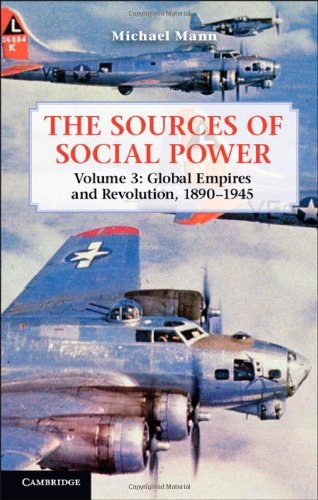
The Sources of Social Power [图书] 豆瓣
作者: Michael Mann 出版社: Cambridge University Press 2012 - 9
Distinguishing four sources of power - ideological, economic, military and political - this series traces their interrelations throughout human history. This third volume of Michael Mann's analytical history of social power begins with nineteenth-century global empires and continues with a global history of the twentieth century up to 1945. Mann focuses on the interrelated development of capitalism, nation-states and empires. Volume 3 discusses the 'Great Divergence' between the fortunes of the West and the rest of the world; the self-destruction of European and Japanese power in two world wars; the Great Depression; the rise of American and Soviet power; the rivalry between capitalism, socialism and fascism; and the triumph of a reformed and democratic capitalism.
Does Capitalism Have a Future? [图书] 豆瓣
作者: Immanuel Wallerstein / Georgi Derluguian 出版社: Oxford University Press 2013 - 11
The Great Recession has prompted a reassessment of the specific mode of capitalist accumulation that achieved dominance in the era of globalization. Yet just about all of this literature has focused on one of two issues: why things went wrong, and what we need to do in order to return the system to stability. Outside of a contingent of radical socialists on the fringes of the debate, virtually no one questioned whether capitalism could continue. In Does Capitalism Have a Future?, the prominent theorist Georgi Derleugian has gathered together a quintet of eminent macrosociologists to assess whether the capitalist system can survive.
The prevalent common wisdom, for all its current gloom, nevertheless safely assumes that capitalism cannot break down permanently because there is no alternative. The authors shatter this assumption, arguing that this generalization is not supported by theory but is rather an outgrowth of the optimistic nineteenth-century claim that human history ascends through stages to an enlightened equilibrium of liberal capitalism. Yet as they point out, just about all major historical systems have broken down in the end (e.g., the Roman empire). In the modern epoch there have been several cataclysmic events-notably the French revolution, World War I, and the collapse of the Soviet bloc—that came to pass mainly because contemporary political elites had spectacularly failed to calculate the consequences of the processes they presumed to govern. At present, none of our governing elites and very few of our intellectuals can fathom an ending to our current reigning system. Considering whether a collapse is possible is the task that the quintet—Derleugian, Michael Mann, Randall Collins, Craig Calhoun, and Immanuel Wallerstein—sets out to explore. While all of the contributors arrive at different conclusions, they are in constant dialogue with each other and therefore able to construct relatively seamless—if open-ended—whole. For instance, Wallerstein (who accurately predicted the collapse of the Soviet system in 1979) and Collins, identify fatal structural faults in twenty-first century capitalism. Mann, on the other hand, does not think that there is any serious alternative to the market dynamic, but he does identify other serious threats to the system, including environmental degradation. Calhoun and Derluguian are more circumspect and focus on the role of politics in steering the system toward either revival or collapse.
This most ambitious of books, written by the highest caliber of sociologists, asks the biggest of questions: are we on the cusp of a radical world historical shift or not?
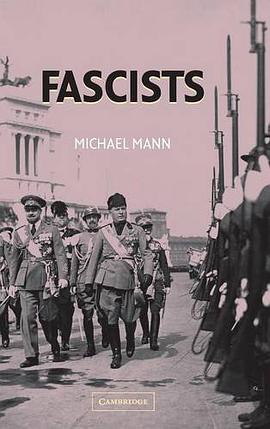
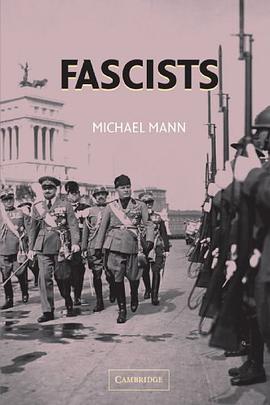
Fascists [图书] 豆瓣
作者: Michael Mann 出版社: Cambridge University Press 2004 - 5
Fascists presents a theory of fascism based on intensive analysis of the men and women who became fascists. It covers the six European countries in which fascism became most dominant - Italy, Germany, Austria, Hungary, Romania and Spain. It is a comprehensive analysis of who fascists actually were, what beliefs they held and what actions they committed. The book suggests that fascism was essentially a product of post World War I conditions in Europe and is unlikely to re-appear in its classic garb in the future. Nonetheless, elements of its ideology remain relevant to modern conditions and are now re-appearing, though mainly in different parts of the world.
The Sources of Social Power [图书] 豆瓣
作者: Michael Mann 出版社: Cambridge University Press 2012 - 9
Distinguishing four sources of power in human societies - ideological, economic, military and political - The Sources of Social Power traces their interrelations throughout human history. This second volume deals with power relations between the Industrial Revolution and the First World War, focusing on France, Great Britain, Hapsburg Austria, Prussia/Germany and the United States. Based on considerable empirical research, it provides original theories of the rise of nations and nationalism, of class conflict, of the modern state and of modern militarism. While not afraid to generalize, it also stresses social and historical complexity. Michael Mann sees human society as 'a patterned mess' and attempts to provide a sociological theory appropriate to this, his final chapter giving an original explanation of the causes of the First World War. First published in 1993, this new edition of Volume 2 includes a new preface by the author examining the impact and legacy of the work.
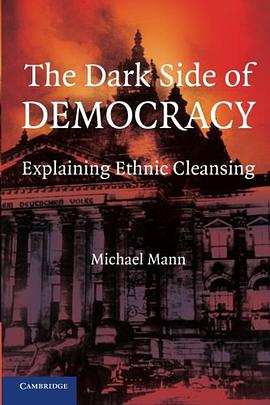
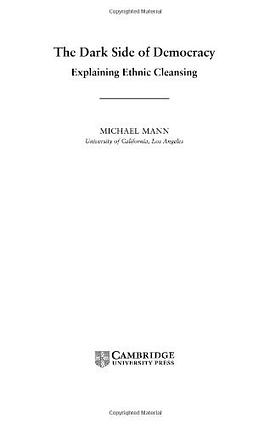
The Dark Side of Democracy [图书] 豆瓣
作者: Michael Mann 出版社: Cambridge University Press 2004 - 10
A new theory of ethnic cleansing based on the most terrible cases (colonial genocides, Armenia, the Nazi Holocaust, Cambodia, Yugoslavia, Rwanda) and cases of lesser violence (early modern Europe, contemporary India, and Indonesia). Murderous cleansing is modern, 'the dark side of democracy'. It results where the demos (democracy) is confused with the ethnos (the ethnic group). Danger arises where two rival ethno-national movements each claims 'its own' state over the same territory. Conflict escalates where either the weaker side fights because of aid from outside, or the stronger side believes it can deploy sudden, overwhelming force. Escalation is not simply the work of 'evil elites' or 'primitive peoples'. It results from complex interactions between leaders, militants, and 'core constituencies' of ethno-nationalism. Understanding this complex process helps us devise policies to avoid ethnic cleansing in the future.
Fascists [图书] 豆瓣
作者: Michael Mann 出版社: Cambridge University Press 2004 - 5
Fascists presents a theory of fascism based on intensive analysis of the men and women who became fascists. It covers the six European countries in which fascism became most dominant - Italy, Germany, Austria, Hungary, Romania and Spain. It is a comprehensive analysis of who fascists actually were, what beliefs they held and what actions they committed. The book suggests that fascism was essentially a product of post World War I conditions in Europe and is unlikely to re-appear in its classic garb in the future. Nonetheless, elements of its ideology remain relevant to modern conditions and are now re-appearing, though mainly in different parts of the world.
The Sources of Social Power [图书] 豆瓣
作者: Michael Mann 出版社: Cambridge University Press 2013 - 1
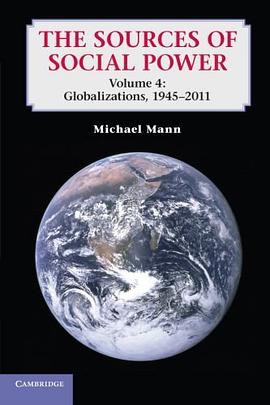
Distinguishing four sources of power - ideological, economic, military and political - this series traces their interrelations throughout human history. This fourth volume covers the period from 1945 to the present, focusing on the three major pillars of post-war global order: capitalism, the nation-state system and the sole remaining empire of the world, the United States. In the course of this period, capitalism, nation-states and empires interacted with one another and were transformed. Mann's key argument is that globalization is not just a single process, because there are globalizations of all four sources of social power, each of which has a different rhythm of development. Topics include the rise and beginnings of decline of the American Empire, the fall or transformation of communism (respectively, the Soviet Union and China), the shift from neo-Keynesianism to neoliberalism, and the three great crises emerging in this period - nuclear weapons, the great recession and climate change.
The Dark Side of Democracy [图书] 豆瓣
作者: Michael Mann 出版社: Cambridge University Press 2004 - 11
From Publishers Weekly
In addressing the origins of ethnic cleansing, UCLA sociologist Mann (Fascism) locates differing stages of political participation as a major factor. He begins with stable authoritarian regimes (e.g., Tito's Yugoslavia) that exclude participation; when such regimes break down, there is a period of everybody scrambling for power and trying to exclude somebody else with the "else" usually defined on ethnic lines. Other examples include Armenia, the Holocaust and Rwanda, as well as India (the Sikhs and Muslims) and Indonesia (the Chinese). Eventually, the author's somewhat optimistic scenario argues, we arrive at stable participatory societies, with everybody somewhat included and limits set on what can be done to exclude groups (the Voting Rights Act of 1964 in the U.S.). Free from sociological jargon and abundant in historical data, this study sufficiently allows lay readers access. It can be difficult at moments to tell if Mann's prediction of the high body count in the Third World's coming century or so of ethnic cleansing is Eurocentric, callous or grimly realistic, but such moments always resolve into that last choice. Mann proposes some feasible remedies and scales of intervention.
Copyright © Reed Business Information, a division of Reed Elsevier Inc. All rights reserved. --This text refers to the Hardcover edition.
Review
'The Dark Side of Democracy ... is a formidable and in some ways successful attempt to produce a sociological grand theory to explain these terrible events. ... Mann's work represents contemporary historical sociology at its best - well informed, relevant, well evidenced and interesting - and all readers must have great respect for his conclusions ...' Times Higher Education Supplement 'Mann's volume provides a valuable contribution to the study of murderous ethnic cleansing. The ability to gather such a wide range of perspectives and experience makes his effort both worthwhile and timely, and it will therefore be very useful for anyone working and dealing with ethnic conflicts. An additional merit is that Mann has written this book at a level that is going to satisfy the inquisitiveness of both his peers and students, which ensures (and inspires) additional enquiries into its topic.' Southeast European Politics 'The Dark Side's theses are enormously suggestive, clearly have considerable purchase on the cases and inform rich interpretations that set new standards of analytical complexity in historical sociology.' Sociology 'This is a very important book ... Mann has provided a powerful analysis which will give much food for thought. ... This book should be read by everybody with a concern for the ethnic cleansing that now forms a staple part of our media diet.' British Society of Criminology 'Michael Mann's impressive The Dark Side of Democracy makes a giant step toward specifying the concrete social studies and circumstances that produce such results ... It is a major achievement.' New Left Review
The Sources of Social Power [图书] 豆瓣
作者: Michael Mann 出版社: Cambridge University Press 2013 - 3
Distinguishing four sources of power – ideological, economic, military and political – this series traces their interrelations throughout human history. This fourth volume covers the period from 1945 to the present, focusing on the three major pillars of post-war global order: capitalism, the nation-state system and the sole remaining empire of the world, the United States. In the course of this period, capitalism, nation-states and empires interacted with one another and were transformed. Mann's key argument is that globalization is not just a single process, because there are globalizations of all four sources of social power, each of which has a different rhythm of development. Topics include the rise and beginnings of decline of the American Empire, the fall or transformation of communism (respectively, the Soviet Union and China), the shift from neo-Keynesianism to neoliberalism, and the three great crises emerging in this period – nuclear weapons, the great recession and climate change.
Power in the 21st Century [图书] 豆瓣
作者: Michael Mann 出版社: Polity 2011 - 6
Michael Mann is one of the most influential sociologists writing today. His three-volume work The Sources of Social Power, the third volume of which has just been completed, has transformed our way of thinking about power and has rewritten the history of human societies. No one interested in understanding how the modern world was shaped, how we got to where we are today and where we’re likely to be heading, can afford to ignore this modern classic. Michael Mann is, as John Hall aptly describes him, ‘a Max Weber for our times.’
Conducted in the form of an extended dialogue with John Hall, this concise and accessible book is the ideal introduction to the work and thought of one of the most original social scientists in the world today. Students and scholars will find the book invaluable, and general readers will find in this book a clear, insightful and masterful guide to the key challenges we face in the years and decades ahead.
The Sources of Social Power [图书] 豆瓣
作者: Michael Mann 出版社: Cambridge University Press 2012 - 9
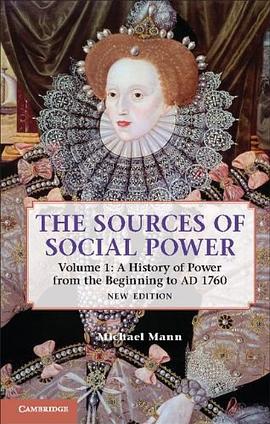
Distinguishing four sources of power in human societies - ideological, economic, military and political - The Sources of Social Power traces their interrelations throughout human history. In this first volume, Michael Mann examines interrelations between these elements from neolithic times, through ancient Near Eastern civilizations, the classical Mediterranean age and medieval Europe, up to just before the Industrial Revolution in England. It offers explanations of the emergence of the state and social stratification; of city-states, militaristic empires and the persistent interaction between them; of the world salvation religions; and of the particular dynamism of medieval and early modern Europe. It ends by generalizing about the nature of overall social development, the varying forms of social cohesion and the role of classes and class struggle in history. First published in 1986, this new edition of Volume 1 includes a new preface by the author examining the impact and legacy of the work.
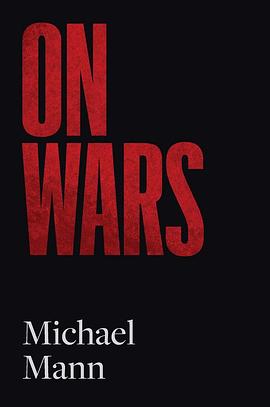
On Wars [图书] 豆瓣
作者: Michael Mann 出版社: Yale University Press 2023 - 8
Benjamin Franklin once said, “There never was a good war or a bad peace.” But what determines whether war or peace is chosen? Award-winning sociologist Michael Mann concludes that it is a handful of political leaders—people with emotions and ideologies, and constrained by inherited culture and institutions—who undertake such decisions, usually irrationally choosing war and seldom achieving their desired results.
Mann examines the history of war through the ages and across the globe—from ancient Rome to Ukraine, from imperial China to the Middle East, from Japan and Europe to Latin and North America. He explores the reasons groups go to war, the different forms of wars, how warfare has changed and how it has stayed the same, and the surprising ways in which seemingly powerful countries lose wars. In masterfully combining ideological, economic, political, and military analysis, Mann offers new insight into the many consequences of choosing war.