
Entering my 53rd year. 53 is the 16th prime, and is also the number of bits used for the significand in IEEE 754 double-precision (binary64) numbers.<br><br><a href="/tags/birthday/" rel="tag">#birthday</a> <a href="/tags/math/" rel="tag">#math</a> <a href="/tags/computerscience/" rel="tag">#ComputerScience</a><br>
computerscience

<p><a href="/tags/lispygopherclimate/" rel="tag">#lispyGopherClimate</a> Sunday morning in Europe with <a href="/tags/lisp/" rel="tag">#lisp</a> # live <span class="h-card"><a href="https://climatejustice.social/@kentpitman" class="u-url mention" rel="nofollow noopener noreferrer" target="_blank">@<span>kentpitman</span></a></span> </p><p>Going over proto <a href="/tags/emacs/" rel="tag">#emacs</a>, <a href="/tags/cref/" rel="tag">#cref</a>, <a href="/tags/lispm/" rel="tag">#lispm</a> <a href="/tags/computerscience/" rel="tag">#computerScience</a> <a href="/tags/softwareengineering/" rel="tag">#softwareEngineering</a> <a href="/tags/gui/" rel="tag">#GUI</a> history ! Ask questions in <a href="/tags/lisp/" rel="tag">#lisp</a> on <a href="/tags/irc/" rel="tag">#irc</a> now please !</p><p><a href="https://toobnix.org/w/gXLXQqxf5MYg1NDF2Ua6oA" rel="nofollow" class="ellipsis" title="toobnix.org/w/gXLXQqxf5MYg1NDF2Ua6oA"><span class="invisible">https://</span><span class="ellipsis">toobnix.org/w/gXLXQqxf5MYg1NDF</span><span class="invisible">2Ua6oA</span></a> 15 minutes to live.</p><p><a href="/tags/archive/" rel="tag">#Archive</a>: <a href="https://toobnix.org/w/jWdWsrBLCFkFQYrfzbzCR8" rel="nofollow" class="ellipsis" title="toobnix.org/w/jWdWsrBLCFkFQYrfzbzCR8"><span class="invisible">https://</span><span class="ellipsis">toobnix.org/w/jWdWsrBLCFkFQYrf</span><span class="invisible">zbzCR8</span></a></p>

Edited 288d ago

<p>Finally, an updated <a href="/tags/introduction/" rel="tag">#introduction</a>: Hello! From <a href="/tags/shanghai/" rel="tag">#Shanghai</a> to <a href="/tags/montreal/" rel="tag">#Montreal</a>, now in <a href="/tags/newyorkcity/" rel="tag">#NewYorkCity</a>. Master <a href="/tags/student/" rel="tag">#student</a> in <a href="/tags/computerscience/" rel="tag">#ComputerScience</a> at <a href="/tags/nyu/" rel="tag">#NYU</a> Tandon, still struggling to figure out what I gonna do next. Gained notoriety for making Barinsta, now I hang out in <a href="/tags/matrix/" rel="tag">#Matrix</a> and ActivityPub circles and code stuff once in a while. Am a <a href="/tags/fediadmin/" rel="tag">#FediAdmin</a>. Fervent user of <a href="/tags/publictransport/" rel="tag">#PublicTransport</a>. Knows too little of too many things. Posts are <a href="/tags/sliceoflife/" rel="tag">#SliceOfLife</a> + minor commentaries. Happy to have an IRL <a href="/tags/meetup/" rel="tag">#meetup</a> with y'all!</p>

<p>Lewis & Clark College in Portland, Oregon will be hiring adjuncts to teach Data Structures (in Python) (fall '25) and CS0 (spring '26). You must be in person and have a Master's degree.</p><p>If you happen to be interested, DM me.</p><p><a href="/tags/computerscienceeducation/" rel="tag">#ComputerScienceEducation</a> <a href="/tags/csed/" rel="tag">#CSEd</a> <a href="/tags/hiring/" rel="tag">#hiring</a> <a href="/tags/computerscience/" rel="tag">#ComputerScience</a> <a href="/tags/education/" rel="tag">#education</a> <a href="/tags/pdx/" rel="tag">#pdx</a> <a href="/tags/portland/" rel="tag">#portland</a></p>
Massive compute power applied to massive data sets can produce outcomes that are worse at the task they’re (ostensibly) intended for than much simpler, easier to understand, less wasteful, and less intrusive data-light methods. It requires an extreme form of bias to believe that big compute + big data is always better.<br><br><a href="/tags/ai/" rel="tag">#AI</a> <a href="/tags/genai/" rel="tag">#GenAI</a> <a href="/tags/generativeai/" rel="tag">#GenerativeAI</a> <a href="/tags/llms/" rel="tag">#LLMs</a> <a href="/tags/tech/" rel="tag">#tech</a> <a href="/tags/dev/" rel="tag">#dev</a> <a href="/tags/datascience/" rel="tag">#DataScience</a> <a href="/tags/science/" rel="tag">#science</a> <a href="/tags/computerscience/" rel="tag">#ComputerScience</a> <a href="/tags/ecologicalrationality/" rel="tag">#EcologicalRationality</a><br>
Edited 275d ago
I'm thinking I'll get myself a copy of Samuel Butler's Erewhon. It's on <a href="https://www.gutenberg.org/ebooks/1906" rel="nofollow">Project Gutenberg</a> but lately I've been acquiring paper books and this seems like a good one to have in hard copy. I feel vaguely embarrassed that I've never read it, given how closely it relates to what I've researched in computer science (evolutionary algorithms and artificial life) and what I spend my time thinking about these days (clarifying why I believe machines cannot be alive or intelligent in the way we usually mean these words).<br><br>Apparently Giles Deleuze and Felix Guatarri were influenced by this book and Butler's other writings on machine life. The Butlerian Jihad of Dune is possibly named after him (so far haven't found a definitive statement of this, though a very similar event happens in Erewhon). Even Alan Turing references it. Butler, in turn, was heavily influenced by Darwin's On the Origin of Species. So there is a fascinating confluence around this book.<br><br>Without spoiling it, does anyone have thoughts about Erewhon?<br><br><a href="/tags/erewhon/" rel="tag">#Erewhon</a> <a href="/tags/butler/" rel="tag">#Butler</a> <a href="/tags/fiction/" rel="tag">#fiction</a> <a href="/tags/scifi/" rel="tag">#SciFi</a> <a href="/tags/sciencefiction/" rel="tag">#ScienceFiction</a> <a href="/tags/evolution/" rel="tag">#evolution</a> <a href="/tags/machineintelligence/" rel="tag">#MachineIntelligence</a> <a href="/tags/ai/" rel="tag">#AI</a> <a href="/tags/artificiallife/" rel="tag">#ArtificialLife</a> <a href="/tags/computerscience/" rel="tag">#ComputerScience</a> <a href="/tags/evolutionarybiology/" rel="tag">#EvolutionaryBiology</a><br>
Edited 260d ago
A few inchoate thoughts on Gas Town, since I think this example has more to it than “it’s just a meth binge/crypto scam/one-shot AI poisoning”. Part of the reason I think this is that some of the rhetoric it deploys dovetails perfectly with broader trends and phenomena, and I think it's worth pulling those out.<br><br>1. Economists from the physiocrats (18th century) onward promised society freedom from material deprivation and hard physical labor in exchange for submitting to an economic arrangement of society<br>2. In a country like the US, material deprivation and hard physical labor have been significantly reduced since then:<br><p>Though too many clearly still suffer too much, a large proportion of people live free from fear of starvation or lack of shelter<br>The US has deindustralized, meaning hard physical labor is not the reality for a lot of people. For a lot of people labor is emotional or symbolic (“knowledge work”)<br>In other words, for lots of people the economic promise has been fulfilled</p>3. Having to think hard is one of the service economy’s analogs for hard physical labor. If the promise of economics is to be continually pursued--meaning it maintains the promise that if we collectively submit to it, in exchange we will enjoy a freedom--a natural target of the promise is providing freedom from the need to think hard<br><p>It is not coincidental that “Gas Town”’s announcement post mentioned Towers of Hanoi, an undergraduate CS student homework problem that for most students requires thinking hard. It’s designed to encourage a kind of “eureka” moment where recursion as a computer programming technique becomes more clear. GT claims to fulfill the promise of not having to think hard like this anymore: the LLMs will do that thinking for you<br>It is not coincidental that Gas Town is described as being very expensive. Economic power in the form of asset accumulation is what earns you freedom in this way of conceiving things. If you want the freedom from having to think hard, you’d better accumulate assets<br>Since the promise is greater collective freedom, endeavoring to accumulate assets is, in this view, a collective good<br>This differs from effective altruism and other “do good by doing well” conceptions. Rather, the very mechanism of economics produces collective wealth, so the story goes, which means the more active one is as an economic agent, the more collective good one produces (“wealth” and “good” being conflated)<br>Accumulation of assets is the scorecard, so to speak, of such enhanced economic activity, and the individual reward can then be freedom from having to think hard</p>4. Expending significant resources is viewed as a good in itself from a (naive) evolutionary perspective<br><p>Lotka’s maximum power principle (supposedly) dictates that those entities that transform the most power into useful organization are most fit from an evolutionary standpoint<br>Ernst Juenger’s notion of “total mobilization” brings this principle to politics/political economy/geopolitics: those nations that “totally” mobilize their national resources are the ones that will dominate geopolitically<br>See, for instance, the RAND Corporation’s <a href="https://www.rand.org/nsrd/projects/NDS-commission.html" rel="nofollow">Commission on the National Defense Strategy</a>: “The Commission finds that the U.S. military lacks both the capabilities and the capacity required to be confident it can deter and prevail in combat. It needs to do a better job of incorporating new technology at scale; field more and higher-capability platforms, software, and munitions; and deploy innovative operational concepts to employ them together better.” (emphasis mine). In summary: the US is about to be outcompeted (lacks fitness); in response, it should go big (“at scale”, “more”) in an organized way (“deploy innovative operational concepts”, “employ them together better”)<br>The rhetoric around LLM-based AI includes similar language, exemplified in the GT post: burn through as much infrastructural resources as possible to produce organized outputs “at scale”, while avoiding having human beings think too hard to produce those outputs, an indication that the power was burned to produce useful organization<br>LLM-based AI plays a prominent role in US federal government strategy, particularly military strategy, with language about dominance serving to justify its use<br>It is not coincidental that Gas Town uses many orders of magnitude more resources to solve the Towers of Hanoi problem (“Burn All The Gas” Town). This rhetoric dovetails perfectly with the “total mobilization” concept</p><a href="/tags/computerscience/" rel="tag">#ComputerScience</a> <a href="/tags/ai/" rel="tag">#AI</a> <a href="/tags/genai/" rel="tag">#GenAI</a> <a href="/tags/generativeai/" rel="tag">#GenerativeAI</a> <a href="/tags/llm/" rel="tag">#LLM</a> <a href="/tags/gastown/" rel="tag">#GasTown</a> <a href="/tags/economics/" rel="tag">#economics</a> <a href="/tags/eugenics/" rel="tag">#eugenics</a> <a href="/tags/maximumpowerprinciple/" rel="tag">#MaximumPowerPrinciple</a> <a href="/tags/evolution/" rel="tag">#evolution</a> <a href="/tags/evolutionarytheory/" rel="tag">#EvolutionaryTheory</a> <a href="/tags/darwinism/" rel="tag">#Darwinism</a> <a href="/tags/uspol/" rel="tag">#USPol</a> <a href="/tags/us/" rel="tag">#US</a><br>
Edited 216d ago
<p>Perhaps the most (in)famous and illustrious American computer scientist and acknowledged principal pioneer of the discipline now known as artificial intelligence (AI), Professor Marvin Minsky of MIT, once pronounced—a belief he still holds—that ‘‘the brain is merely a meat machine.’’ It is significant that the English language distinguishes between ‘‘flesh’’ on the one hand, and ‘‘meat’’ on the other. The latter is dead and may be eaten, thrown in the garbage, fed to pigs, and so on. Flesh, on the other hand, is living matter and, as such, deserves the respect and dignity for life of which, among others, Albert Schweitzer spoke eloquently. The word ‘‘merely’’ in Minsky’s sentence means essentially ‘‘nothing but,’’ that is, also not deserving unusual respect. His statement is a clear reflection of a profound contempt for life that, as I see it, is shared explicitly by important sectors of the AI community, the artificial intelligentsia, as well as many scientists, engineers, and ordinary people. Daniel C. Dennett, an important American philosopher, once said that we must give up our awe of life if we are to make further progress in AI.<br></p>From Weizenbaum, Joseph (2007). Social and Political Impact of the Long-term History of Computing<br><br><a href="/tags/ai/" rel="tag">#AI</a> <a href="/tags/computerscience/" rel="tag">#ComputerScience</a> <a href="/tags/life/" rel="tag">#life</a> <a href="/tags/brain/" rel="tag">#brain</a> <a href="/tags/mind/" rel="tag">#mind</a><br>
I guess we shouldn't be surprised, but no way:<br><br>AAAI Launches AI-Powered Peer Review Assessment System<br><br><a href="https://aaai.org/aaai-launches-ai-powered-peer-review-assessment-system/" rel="nofollow" class="ellipsis" title="aaai.org/aaai-launches-ai-powered-peer-review-assessment-system/"><span class="invisible">https://</span><span class="ellipsis">aaai.org/aaai-launches-ai-powe</span><span class="invisible">red-peer-review-assessment-system/</span></a><br><br>No.<br><br>Speaking as someone who has co-organized an AAAI symposium and among other things did a bunch of editorial work.<br><br><a href="/tags/noai/" rel="tag">#NoAI</a> <a href="/tags/ai/" rel="tag">#AI</a> <a href="/tags/genai/" rel="tag">#GenAI</a> <a href="/tags/generativeai/" rel="tag">#GenerativeAI</a> <a href="/tags/llms/" rel="tag">#LLMs</a> <a href="/tags/aioutofscience/" rel="tag">#aIOutOfScience</a> <a href="/tags/science/" rel="tag">#science</a> <a href="/tags/computerscience/" rel="tag">#ComputerScience</a> <a href="/tags/peerreview/" rel="tag">#PeerReview</a><br>
Re: <a href="https://lipn.info/@mevenlennonbertrand/116997917683191056" rel="nofollow" class="ellipsis" title="lipn.info/@mevenlennonbertrand/116997917683191056"><span class="invisible">https://</span><span class="ellipsis">lipn.info/@mevenlennonbertrand</span><span class="invisible">/116997917683191056</span></a><br><br>To riff on this a bit from a very different field at a very different scale, as a pretext to share an anecdote:<br><br>When I was a graduate student I spent a fair amount of time (an embarrassing amount of time) trying to get a computer to learn how to play Tic-Tac-Toe (naughts and crosses) by self play, given minimal help. Why? Because it turns out to be significantly harder than you might think based on the simplicity of the game, and I was curious why. It's not that hard in the grand scheme of things, but it's weirdly harder than you'd (well, I'd) expect (1). So, I went about coding up a Tic-Tac-Toe implementation that could play as quickly as possible, since gameplay would be the inner loop of a search algorithm, tested it some, and set a self-play-based search I was working on loose. Before too long my search was logging data that suggested it had found at least one optimal player. I was excited because I had opinions about how to use self-play to guide strategy search and it seemed like I might have some data supporting those opinions (calling them "hypotheses" would be giving my past self too much credit).<br><br>After quite a bit of testing, I discovered that my Tic-Tac-Toe implementation had a bug: in a small set of configurations of the board, my code would flag two in a row as a win instead of three in a row. My "optimal players" turned out to exploit this fact, choosing moves to drive the game into that set of configurations, then "winning" with two in a row. Oops. (2)<br><br>I noticed the problem because some of my discovered players were beating a minimax player during post hoc testing, which I knew to be impossible. I was able to sort out why because Tic-Tac-Toe is small enough to exhaustively test: you can enumerate the < 6,000 board configurations (3), run a function or strategy on all of them, and analyze the output in a reasonable amount of time and without too much trouble. I was able to spot by eye what was wrong.<br><br>One might ask: why didn't you have unit tests to do this sort of thing? Well, after that experience I did do more routine testing. However, speaking more generally now, there's an infinite regress when it comes to checking whether or not an implementation of a set of rules is faithful to the intention of that set of rules. Barring some kind of theoretical guarantee you'd need some other implementation of the rules to perform that sort of test. How can you be certain that implementation is comprehensive and also doesn't have a bug? You sometimes can't, practically speaking, and sometimes you can't theoretically speaking either. When the domain becomes large and complicated enough that both the above features about Tic-Tac-Toe I took advantage of---a sure indicator grounded in theory, and the ability to comprehensively and satisfactorily test---fail to hold, you're a bit adrift. (4)<br><br>I'm not very familiar with Lean, but I do know a bit about type theory, and modern type checkers tend to be Turing complete. Formal verification of a Turing complete programming language is not easy. I understand that practical type systems are designed to make type judgments of interest decidable, but that does not mean they're easy nor that the rules are easy to implement faithfully or test. It seems to me to be a tough problem, which is one of many reasons why I've taken the claims about LLMs doing this or that math thing with a big grain of salt. (5) I've expected to see the analog of my two-in-a-row "optimal" Tic-Tac-Toe players emerge to much fanfare for awhile now, and I expect to see many more.<br><br><a href="/tags/ai/" rel="tag">#AI</a> <a href="/tags/llm/" rel="tag">#LLM</a> <a href="/tags/formalizedmath/" rel="tag">#FormalizedMath</a> <a href="/tags/math/" rel="tag">#math</a> <a href="/tags/lean/" rel="tag">#Lean</a> <a href="/tags/computerscience/" rel="tag">#ComputerScience</a> <a href="/tags/learningbyselfplay/" rel="tag">#LearningBySelfPlay</a> <a href="/tags/selfplay/" rel="tag">#SelfPlay</a> <a href="/tags/tictactoe/" rel="tag">#TicTacToe</a><br><br><br>(1) Donald Michie reported his MENACE system, which was a rudimentary form of reinforcement learning, could learn a decent game of Tic-Tac-Toe within a few hundred games. Christopher Rosin reported his coevolution-based Tic-Tac-Toe learner, a variant of learning by self play, required tens of billions of games to achieve less competence. Arthur Samuel's system learned master-level checkers by self play faster than this.<br><br>(2) Debugging a system by wrapping a search or optimization algorithm around it is an underappreciated technique I've used many times. It's a bit like fuzzing with an incentive to cause trouble.<br><br>(3) When I said "given minimal help", I meant it: I didn't give the players knowledge of the board symmetries.<br><br>(4) Personally I think it's incumbent on computer science professionals to flag when this is the case, since that's something we're educated to know (at least in principle).<br><br>(5) "Under the assumption that the implementation of system Y is correct, a human-written formalization of problem X in system Y produced output that a team of humans verified could be adapted into a proof of theorem Z" would grab fewer headlines than "AI proves Z", though.<br>
Edited 34d ago
<p>Computer theorists thus form a neo-mechanistic school of philosophy. Their tenacious defense of some grossly exaggerated claims of what computers can and will do is more understandable if we realize that they represent a school of metaphysics.<br></p>Epistemology, the Mind and the Computer, Henryk Skolimowski, 1972<br><br><a href="/tags/ai/" rel="tag">#AI</a> <a href="/tags/computerscience/" rel="tag">#ComputerScience</a> <a href="/tags/cognitivescience/" rel="tag">#CognitiveScience</a> <a href="/tags/mind/" rel="tag">#mind</a> <a href="/tags/philosophyofmind/" rel="tag">#PhilosophyOfMind</a><br>
Weird thought of the day: the revolution lies in imperative programming.<br><br><a href="/tags/computerscience/" rel="tag">#ComputerScience</a> <a href="/tags/softwaredevelopment/" rel="tag">#SoftwareDevelopment</a> <a href="/tags/tech/" rel="tag">#tech</a> <a href="/tags/dev/" rel="tag">#dev</a> <a href="/tags/politics/" rel="tag">#politics</a><br>
There are physical systems with the following property: depending on how you choose to measure the system and how you choose to process your measurements, the system can appear to be any computational system you like.<br><br>Even a particularly simple system such as a spinning disk that is painted half white ("1") and half black ("0"), where what we observe is a string of 0's and 1's corresponding to the colors, can have this property.<br><br><a href="/tags/computerscience/" rel="tag">#ComputerScience</a> <a href="/tags/systems/" rel="tag">#systems</a> <a href="/tags/complexsystems/" rel="tag">#ComplexSystems</a> <a href="/tags/observability/" rel="tag">#observability</a> <a href="/tags/computationalism/" rel="tag">#computationalism</a><br>

<p>The archivist preserving decaying floppy disks</p><p>It's a race against time (and magnetic decay) to preserve decades of cultural history stored on obsolete hardware.</p><p>by Mack DeGeurin</p><p><a href="https://www.popsci.com/technology/floppy-disk-archivist-project/?utm_source=nautilus.beehiiv.com&utm_medium=newsletter&utm_campaign=where-to-see-the-total-lunar-eclipse&_bhlid=52ff749846d631cfc15924ca032510c3a9e130dd" rel="nofollow" class="ellipsis" title="www.popsci.com/technology/floppy-disk-archivist-project/?utm_source=nautilus.beehiiv.com&utm_medium=newsletter&utm_campaign=where-to-see-the-total-lunar-eclipse&_bhlid=52ff749846d631cfc15924ca032510c3a9e130dd"><span class="invisible">https://</span><span class="ellipsis">www.popsci.com/technology/flop</span><span class="invisible">py-disk-archivist-project/?utm_source=nautilus.beehiiv.com&utm_medium=newsletter&utm_campaign=where-to-see-the-total-lunar-eclipse&_bhlid=52ff749846d631cfc15924ca032510c3a9e130dd</span></a></p><p><a href="/tags/computerscience/" rel="tag">#computerscience</a> <a href="/tags/publicdomain/" rel="tag">#publicdomain</a></p>


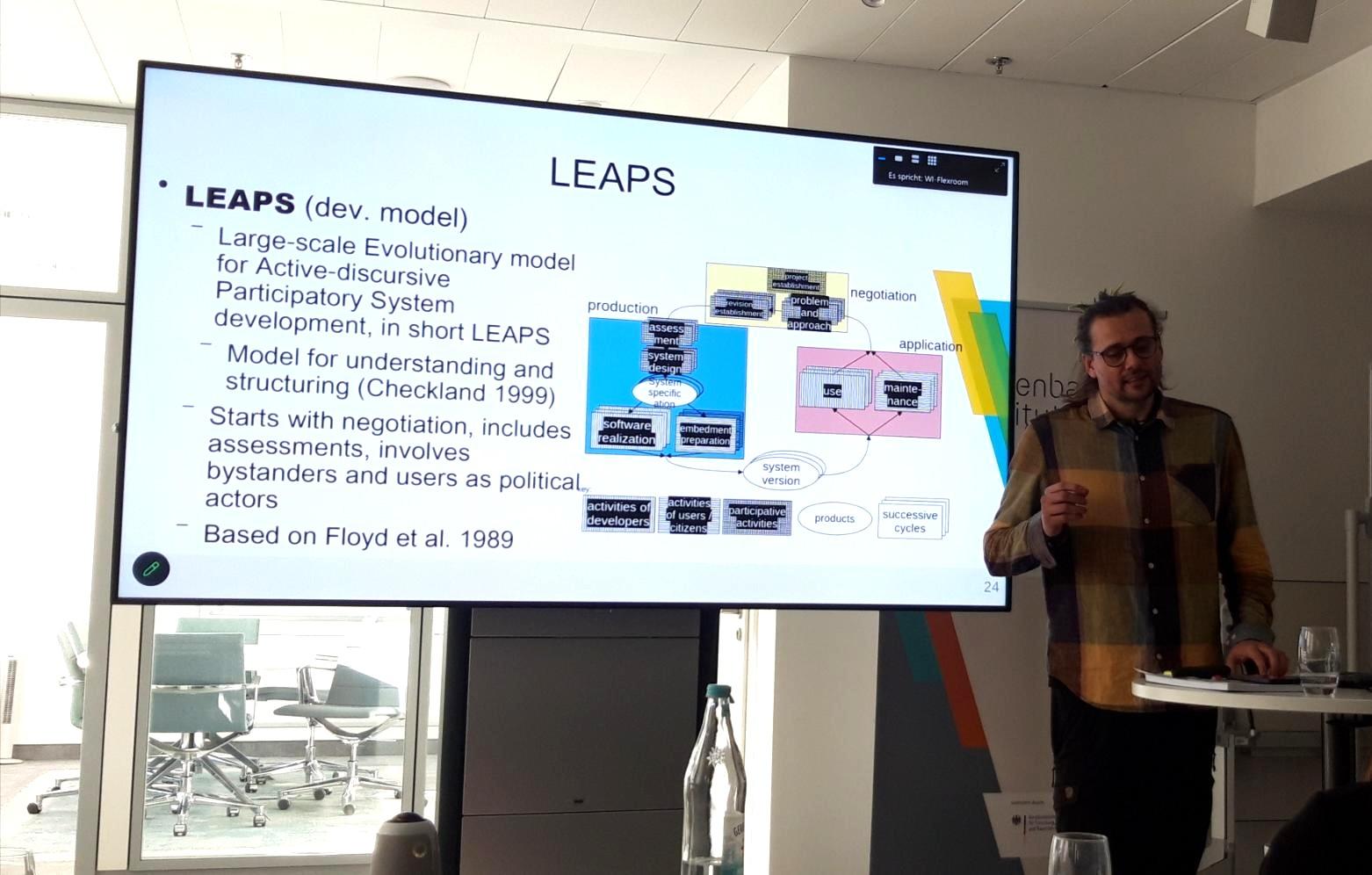
<p>FWIW and for sharing the joy: I have just successfully defended my <a href="/tags/dissertation/" rel="tag">#dissertation</a>. 🥰 It is titled:</p><p>”Societal IT systems development. Towards a discursive process-oriented multi-perspective approach to co-designing, -operating, -assessing, and -regulating societally relevant IT systems” 😅</p><p>So many wonderful people were supporting me all along the way, it's always teamwork, thank you so much. 🙏</p><p>The <a href="/tags/summary/" rel="tag">#summary</a> can be found here: <a href="https://rainer-rehak.eu/files/dissertation-summary/" rel="nofollow" class="ellipsis" title="rainer-rehak.eu/files/dissertation-summary/"><span class="invisible">https://</span><span class="ellipsis">rainer-rehak.eu/files/disserta</span><span class="invisible">tion-summary/</span></a> and after some revisions, corrections, editing etc. it will of course be freely available. <a href="/tags/ccby/" rel="tag">#CCBY</a> <a href="/tags/oa/" rel="tag">#OA</a> <a href="/tags/computerscience/" rel="tag">#computerscience</a> <span class="h-card"><a href="https://wisskomm.social/@tuberlin" class="u-url mention" rel="nofollow noopener noreferrer" target="_blank">@<span>tuberlin</span></a></span> <span class="h-card"><a href="https://social.bund.de/@Weizenbaum_Institut" class="u-url mention" rel="nofollow noopener noreferrer" target="_blank">@<span>Weizenbaum_Institut</span></a></span></p>
Edited 163d ago
Re: <a href="https://social.wildeboer.net/users/jwildeboer/statuses/116860157329810170" rel="nofollow" class="ellipsis" title="social.wildeboer.net/users/jwildeboer/statuses/116860157329810170"><span class="invisible">https://</span><span class="ellipsis">social.wildeboer.net/users/jwi</span><span class="invisible">ldeboer/statuses/116860157329810170</span></a><br><br>I realize this is beside the point, but personally I view the fact that code review is not considered interesting as a serious failure of computer science education. I'm invested in the latter, so it stands out for me.<br><br>On the whole writers tend to love to read. I think they love it in part because their education led them to realize that learning to read well is both a good in itself and helps you become a better writer. Programming languages were designed to be human readable so that humans could read them. Yet we have a couple generations of people writing code most of whom were never explicitly taught how to read it, let alone learn to love reading it.<br><br><a href="/tags/tech/" rel="tag">#tech</a> <a href="/tags/dev/" rel="tag">#dev</a> <a href="/tags/software/" rel="tag">#software</a> <a href="/tags/softwaredevelopment/" rel="tag">#SoftwareDevelopment</a> <a href="/tags/computerprogramming/" rel="tag">#ComputerProgramming</a> <a href="/tags/computerscience/" rel="tag">#ComputerScience</a> <a href="/tags/computerscienceeducation/" rel="tag">#ComputerScienceEducation</a><br>
Edited 57d ago