I feel like people have been sold the idea that #GenerativeAI must provide productivity gains, and many don't bother to examine whether it really does.
#AI #GenAI #hype
The apparatus of a large language model really is remarkable. It takes in billions of pages of writing and figures out the configuration of words that will delight me just enough to feed it another prompt. There’s nothing else like it.
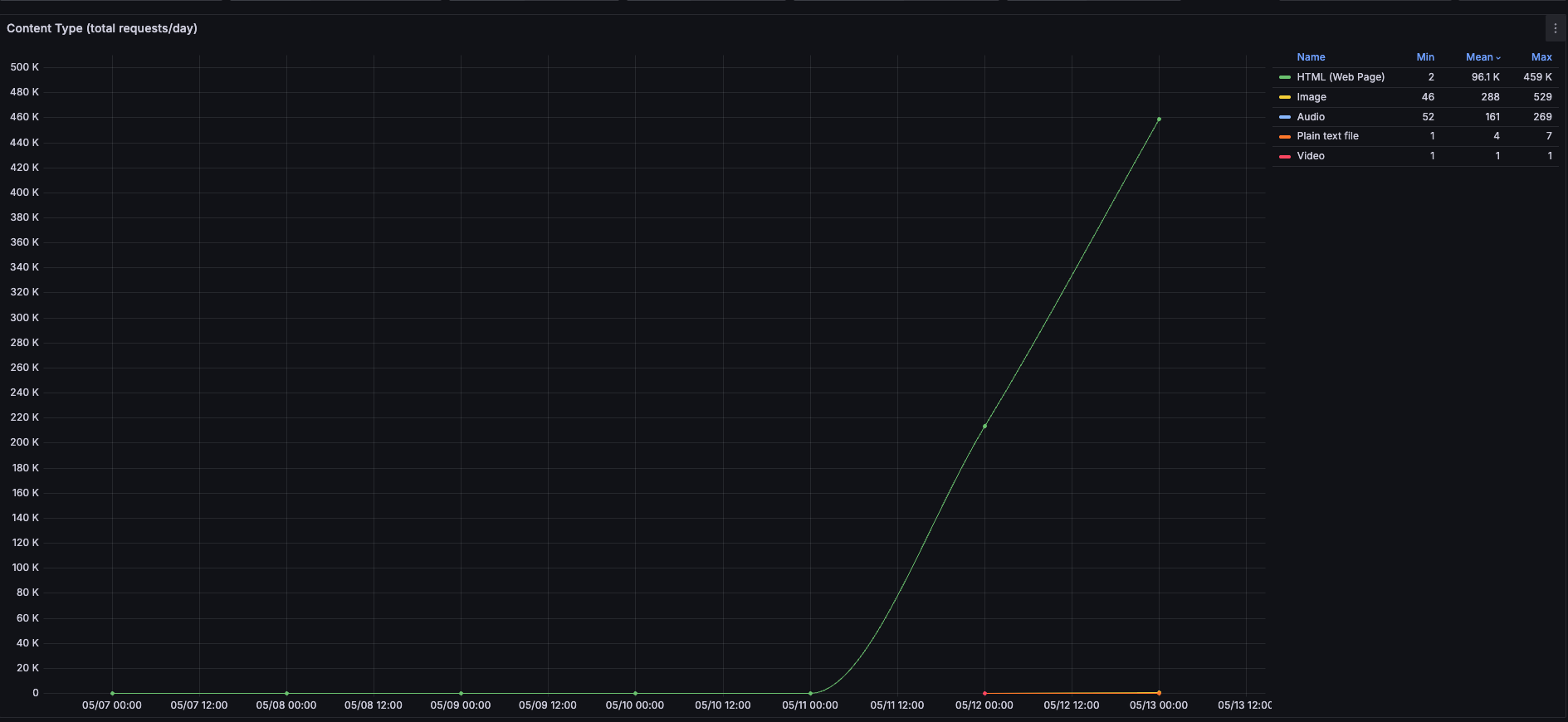
As part of a time-limited trial, yesterday we removed the www.bbc.co.uk & www.bbc.com robots.txt "block" on *one* GenAI crawler.
Here's a graph of total daily requests from that 1 GenAI crawler by content-type. You'll note, they've retrieved ~460k web pages in ~16 hours, so a mean of ~28,750 web pages per hour. They'll likely pull ~690k pages today, ~32GB egress.
Whilst this is a drop in the ocean versus our other traffic, I can easily see how this could sink a smaller website.
Grâce au photographe Stephen Voss, nous avons des images de la contruction du Datacenter Stargate d'OpenAI, à Abilene, au Texas.
Programming properly should be regarded as an activity by which the programmers form or achieve a certain kind of insight, a theory, of the matters at hand. This suggestion is in contrast to what appears to be a more common notion, that programming should be regarded as a production of a program and certain other texts.
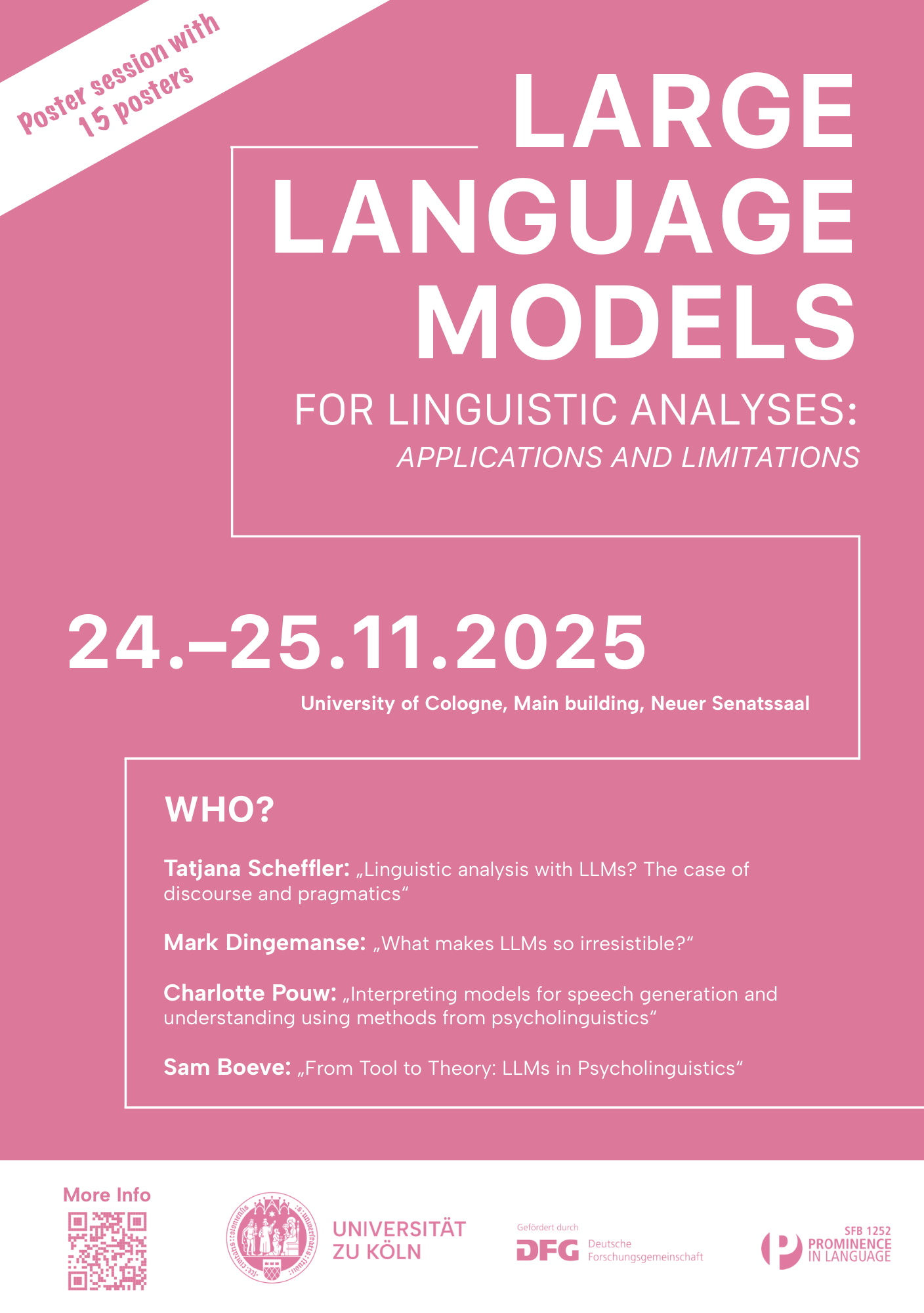
Today and tomorrow colleagues and I are organising a two-day workshop on the use of LLMs for linguistics research at @UniKoeln: https://sfb1252.github.io/llm-workshop/. This was originally intended as a small, university-internal event, but we have found that there is a lot of interest from colleagues and students about this topic so we are delighted to have 15 poster presentations, in addition to four brilliant keynote speakers, and a concluding panel discussion. 1/🧵
Let’s start with some very recent history. CoreWeave is a data center company that pivoted in 2022 from crypto. (In 2021, CoreWeave made its money by… mining Ethereum.) Essentially, CoreWeave is a landlord for compute: companies pay for the use of its server racks for AI projects.
CoreWeave chief executive officer Michael Intrator, a former hedge fund manager,
“They have to continue to borrow to pay interest on the last loan.”
CoreWeave isn’t alone in its complex finances. Meta took on debt, using a SPV, for its own data centers. Unlike CoreWeave’s SPVs, the Meta SPV stays off its balance sheet. Elon Musk’s xAI is reportedly pursuing its own SPV deal.
It is perhaps time to discuss the enormous stock sales from CoreWeave’s management team. Before the company even went public, its founders sold almost half a billion dollars in shares. Then, insiders sold over $1 billion more immediately after the IPO lockup ended.
“It’s noteworthy that people who have a good view on that business are cashing out,” says Leevi Saari, a fellow at the AI Now Institute.
It makes a certain kind of cynical sense to view CoreWeave itself as, effectively, a special purpose vehicle for Nvidia.
Anthropic, the company that made one of the most popular AI writing assistants in the world, requires job applicants to agree that they won’t use an AI assistant to help write their application.
“We want to understand your personal interest in Anthropic without mediation through an AI system, and we also want to evaluate your non-AI-assisted communication skills. Please indicate 'Yes' if you have read and agree.”
A $1.5 billion AI company backed by Microsoft has shuttered after its ‘neural network’ was discovered to actually be hundreds of computer engineers based in India.
LinkedIn accused of using private messages to train AI
https://www.bbc.com/news/articles/cdxevpzy3yko
Abstract: This paper will look at the various predictions that have been made about AI and propose decomposition schemas for analyzing them. It will propose a variety of theoretical tools for analyzing, judging, and improving these predictions. Focusing specifically on timeline predictions (dates given by which we should expect the creation of AI), it will show that there are strong theoretical grounds to expect predictions to be quite poor in this area. Using a database of 95 AI timeline predictions, it will show that these expectations are borne out in practice: expert predictions contradict each other considerably, and are indistinguishable from non-expert predictions and past failed predictions. Predictions that AI lie 15 to 25 years in the future are the most common, from experts and non-experts alike.
DeepSeek launched a free, open-source large-language model in late December, claiming it was developed in just two months at a cost of under $6 million — a much smaller expense than the one called for by Western counterparts.
These developments have stoked concerns about the amount of money big tech companies have been investing in AI models and data centers, and raised alarm that the U.S. is not leading the sector as much as previously believed.
[NEW PAPER ALERT!] Our grantees
@A__W______O
new paper puts forward a vision for balancing the benefits and risks of #opensource #GenAI (funded by
@DigInfFund
). Drafted by NickBotton
& Mathias Vermeulen
- a short thread on #boundariesofopenness #digitalinfrastructure