人工神經網絡
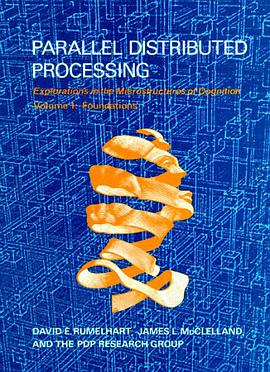
Parallel Distributed Processing, Vol. 1 豆瓣
作者: David E. Rumelhart / James L. McClelland 出版社: A Bradford Book 1987 - 7
What makes people smarter than computers? These volumes by a pioneering neurocomputing group suggest that the answer lies in the massively parallel architecture of the human mind. They describe a new theory of cognition called connectionism that is challenging the idea of symbolic computation that has traditionally been at the center of debate in theoretical discussions about the mind. The authors' theory assumes the mind is composed of a great number of elementary units connected in a neural network. Mental processes are interactions between these units which excite and inhibit each other in parallel rather than sequential operations. In this context, knowledge can no longer be thought of as stored in localized structures; instead, it consists of the connections between pairs of units that are distributed throughout the network. Volume 1 lays the foundations of this exciting theory of parallel distributed processing, while Volume 2 applies it to a number of specific issues in cognitive science and neuroscience, with chapters describing models of aspects of perception, memory, language, and thought.
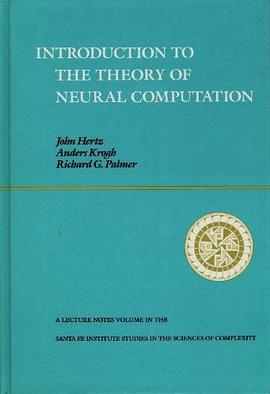
Introduction To The Theory Of Neural Computation, Volume I 豆瓣
作者: John A. Hertz 出版社: Westview Press 1991 - 6
This book comprehensively discusses the neural network models from a statistical mechanics perspective. It starts with one of the most influential developments in the theory of neural networks: Hopfield's analysis of networks with symmetric connections using the spin system approach and using the notion of an energy function from physics. Introduction to the Theory of Neural Computation uses these powerful tools to analyze neural networks as associative memory stores and solvers of optimization problems. A detailed analysis of multi-layer networks and recurrent networks follow. The book ends with chapters on unsupervised learning and a formal treatment of the relationship between statistical mechanics and neural networks. Little information is provided about applications and implementations, and the treatment of the material reflects the background of the authors as physicists. However the book is essential for a solid understanding of the computational potential of neural networks. Introduction to the Theory of Neural Computation assumes that the reader is familiar with undergraduate level mathematics, but does not have any background in physics. All of the necessary tools are introduced in the book.