人类进化
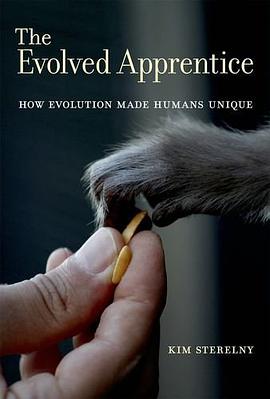
The Evolved Apprentice 豆瓣
作者: Kim Sterelny 出版社: The MIT Press 2012 - 1
Over the last three million years or so, our lineage has diverged sharply from those of our great ape relatives. Change has been rapid (in evolutionary terms) and pervasive. Morphology, life history, social life, sexual behavior, and foraging patterns have all shifted sharply away from other great apes. No other great ape lineage--including those of chimpanzees and gorillas--seems to have undergone such a profound transformation. In The Evolved Apprentice, Kim Sterelny argues that the divergence stems from the fact that humans gradually came to enrich the learning environment of the next generation. Humans came to cooperate in sharing information, and to cooperate ecologically and reproductively as well, and these changes initiated positive feedback loops that drove us further from other great apes.
Sterelny develops a new theory of the evolution of human cognition and human social life that emphasizes the gradual evolution of information sharing practices across generations and how information sharing transformed human minds and social lives. Sterelny proposes that humans developed a new form of ecological interaction with their environment, cooperative foraging, which led to positive feedback linking ecological cooperation, cultural learning, and environmental change. The ability to cope with the immense variety of human ancestral environments and social forms, he argues, depended not just on adapted minds but also on adapted developmental environments.
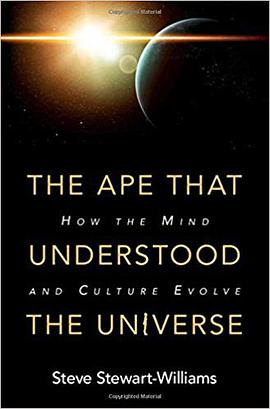
The Ape that Understood the Universe 豆瓣
作者: Steve Stewart-Williams 出版社: Cambridge University Press 2018 - 9
The Ape that Understood the Universe is the story of the strangest animal in the world: the human animal. It opens with a question: How would an alien scientist view our species? What would it make of our sex differences, our sexual behavior, our child-rearing patterns, our moral codes, our religions, our languages, and science? The book tackles these issues by drawing on ideas from two major schools of thought: evolutionary psychology and cultural evolutionary theory. The guiding assumption is that humans are animals, and that like all animals, we evolved to pass on our genes. At some point, however, we also evolved the capacity for culture - and from that moment, culture began evolving in its own right. This transformed us from a mere ape into an ape capable of reshaping the planet, travelling to other worlds, and understanding the vast universe of which we're but a tiny, fleeting fragment.
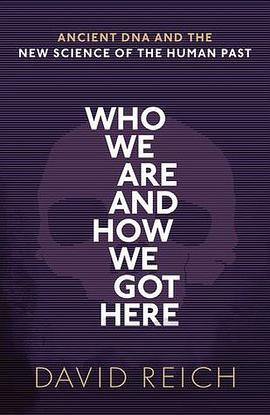
Who We Are and How We Got Here 豆瓣
作者: David Reich 出版社: OUP Oxford 2018 - 3
A groundbreaking book about how ancient DNA has profoundly changed our understanding of human history.
Geneticists like David Reich have made astounding advances in the field of genomics, which is proving to be as important as archeology, linguistics, and written records as a means to understand our ancestry.
In Who We Are and How We Got Here, Reich allows readers to discover how the human genome provides not only all the information a human embryo needs to develop but also the hidden story of our species. Reich delves into how the genomic revolution is transforming our understanding of modern humans and how DNA studies reveal deep inequalities among different populations, between the sexes, and among individuals. Provocatively, Reich’s book suggests that there might very well be biological differences among human populations but that these differences are unlikely to conform to common stereotypes.
Drawing upon revolutionary findings and unparalleled scientific studies, Who We Are and How We Got Here is a captivating glimpse into humankind—where we came from and what that says about our lives today.
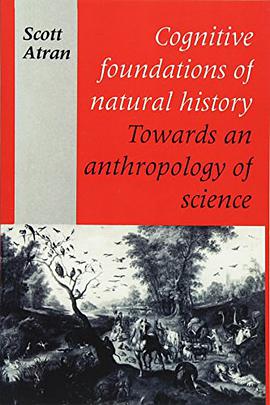
Cognitive Foundations of Natural History: Towards an Anthropology of Science Goodreads 豆瓣
作者: Scott Atran 出版社: Cambridge University Press 1993 - 4 其它标题: Cognitive Foundations of Natural History
What is it about human nature that makes our species capable of thinking scientifically? Inspired by a debate between Noam Chomsky and Jean Piaget, Scott Atran traces the development of natural history from Aristotle to Darwin, and demonstrates how the science of plants and animals has emerged from the common conceptions of folkbiology. The author proceeds not only from the more traditional philosophical, historical or sociological perspectives, but from a point of view he considers more basic and necessary to all of that of cognition.
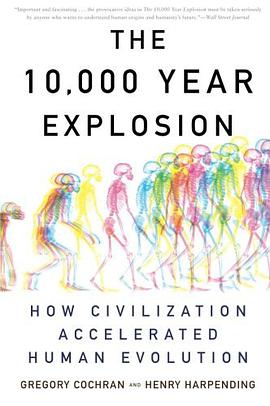
The 10,000 Year Explosion 豆瓣
作者: Gregory Cochran / Henry Harpending 出版社: Basic Books 2010 - 10
A manifesto for and an example of a new kind of history, a biological history, and not just of the prehistoric era Scientists have long believed that the 'great leap forward' that occurred some 40,000 to 50,000 years ago in Europe marked the end of significant biological evolution in humans. In this stunning account of our evolutionary history, top scholars Gregory Cochran and Henry Harpending reject this conventional wisdom and reveal that the human species has undergone a storm of genetic change much more recently. Human evolution in fact accelerated after civilisation arose, they contend, and these ongoing changes have played a pivotal role in human history. They argue that biology explains the expansion of the Indo-Europeans, the European conquest of the Americas, and European Jews' rise to intellectual prominence. In each of these cases, the key was recent genetic change: adult milk tolerance in the early Indo-Europeans that allowed for a new way of life, increased disease resistance among the Europeans settling America, and new versions of neurological genes among European Jews. Ranging across subjects as diverse as human domestication, Neanderthal hybridization, and IQ tests, Cochran and Harpending's analysis demonstrates convincingly that human genetics have changed and can continue to change much more rapidly than scientists have previously believed. A provocative and fascinating look at human evolution, "The 10,000 Year Explosion" reveals the ongoing interplay between culture and biology in the making of the human race.
黎明之前 豆瓣
Before the Dawn: Recovering the Lost History of Our Ancestors
作者: [美]尼古拉斯·韦德(Nicholas Wade) 译者: 陈华 出版社: 电子工业出版社 2015 - 3
《黎明之前:基因技术颠覆人类进化史》作者通过基因图谱从遗传学、生物学、历史及社会科学等视角,追述人类在史前五万年中的演化,其中关于语言、基因和种族进化的阐述,突破了传统专业叙述方法,通过跨学科领域的思考,阐述人类之所以成为现在的样子的内在根源。内容横跨多学科,是一本可读性较强的社科人文科普书。
2017年1月22日 已读
最后一章漂变怎么都写成飘变了。另外本书的研究事例就值回票钱。作者以前是nature的副主编,接触到的新研究还是挺多的。本书的主角工具是DNA。
2015 kara 人文社科 人类 人类学
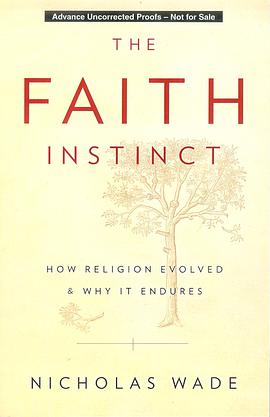
The Faith Instinct 豆瓣
作者: Nicholas Wade 出版社: The Penguin Press 2009
For at least the last fifty thousand years, and probably much longer, people have practiced religion. Yet little attention has been given, either by believers or atheists, to the question of whether this universal human behavior might have an evolutionary basis. Did religion evolve, in other words, because it helped people in early societies survive?
In this original and controversial book, Nicholas Wade, a longtime reporter for the New York Times's Science section, gathers new evidence showing why religion became so essential in the course of human evolution and how an instinct for faith has been hardwired into human nature. This startling thesis is sure to catch the attention of both believers and nonbelievers. People of faith may not warm to the view that the mind's receptivity to religion has been shaped by evolution. Atheists may not embrace the idea that religious expression evolved because it conferred essential benefits on ancient societies and their successors. As The Faith Instinct argues, however, both groups must address the fact, little understood before now, that religious behavior is an evolved part of human nature.
How did we evolve to believe? Wade shows that the instinct for religious behavior is wired into our neural circuits much like our ability to learn a language. Religion provided the earliest human societies with the equivalents of law and government, giving these societies an edge in the struggle for survival. As a force that binds people together and coordinates social behavior, religion supported another significant set of social behaviors: aggression and warfare. Religious behavior, both good and ill will remain an indelible component of human nature so long as human societies need the security and cohesion that belief provides.
Social scientists once predicted that religion would progressively fade away as societies advanced in wealth and education. They were wrong. The first objective and nonpolemical book of its kind, The Faith Instinct reveals that to understand the persistence of faith, one must first acknowledge that religious behavior is embedded in human nature.