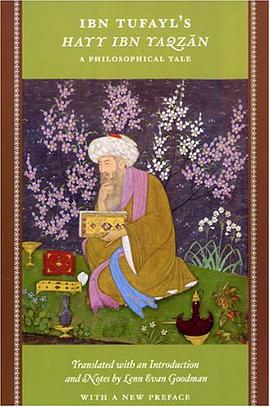
Ibn Tufayl's Hayy Ibn Yaqzan 豆瓣
作者:
Ibn Tufayl
译者:
Lenn Evan Goodman
出版社:
University Of Chicago Press
2009
- 11
The Arabic philosophical fable "Hayy Ibn Yaqzan" is a classic of medieval Islamic philosophy. Ibn Tufayl (d. 1185), an Andalusian philosopher, tells of a happy child raised by a doe on an equatorial island who grows up to discover the truth about the world and his own place in it, unaided - but also unimpeded - by society, language, or tradition. Hayy's discoveries about God, nature, and man challenge the values of the culture in which the tale was written as well as those of every contemporary society. Translator Lenn E. Goodman's commentary places "Hayy Ibn Yaqzan" in its historical and philosophical context. The volume features a new preface and index, as well as an updated bibliography.