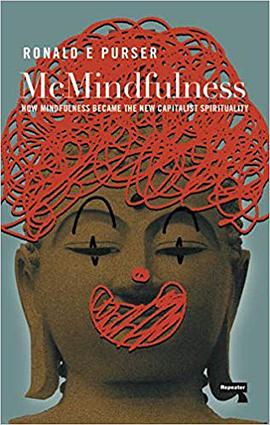
McMindfulness 豆瓣
作者:
Ronald Purser
出版社:
Repeater Books
2019
- 7
Review
In this insightful book, Ron Purser has evaluated the strengths and weakness of the mindfulness movement, while clearly showing the way to cultivate authentic mindfulness that liberates us from the true causes of individual and collective suffering.”
- B. Alan Wallace, President, Santa Barbara Institute for Consciousness Studies
“Far from being either a harmless form of New Age self-indulgence or meditation dressed up as a medicalized antidote to the ubiquitous stresses of modern life, Ron Purser sees the mindfulness movement as epitomizing a malignant trend of contemporary Western individualism, one that is blinding us to the social problems of inherent in neoliberalism and capitalism, providing an anodyne where what is needed is rigorous analysis and political action.”
- Barry Magid, author of What’s Wrong With Mindfulness
“McMindfulness makes an important critique of self-centered mindfulness and points us towards a new vision for real social change.”
- Christopher Titmuss, author of The Political Buddha
“Ron Purser cuts through the comforting New Age jargon used to promote mindfulness, enabling us to distinguish between the practice and its marketing.”
- Richard Payne, Institute of Buddhist Studies
"Timely and incisive... Purser reveals how mindfulness became a vast industry, promising to cure us of a growing range of psychological ailments, and simultaneously propping up the political and economic system that generates them.”
— William Davies, author of Nervous States and The Happiness Industry
“If you are wondering about whether mindfulness is really a panacea for all our problems, this is the book to read.” — David Loy, author of Money, Sex, War and Karma
"Provocatively illustrates how mindfulness has been hijacked by corporate interests, turned into an opiate of the masses, and how we can radically rethink the meaning of mindfulness in contemporary life.”
— Dr. Steven Stanley, School of Social Sciences, Cardiff University
"Spiky, witty, meticulously researched and thoroughly engaging, McMindfulness is the best assessment of ‘Mindfulness’ to date."
— Manu Bazzano, author of Zen and Therapy: Heretical Perspectives and editor of After Mindfulness: new Perspectives on Psychology and Meditation
"A much needed wake-up call to the dark side of mindfulness-based practices... a must-read.”
– Richard King, Professor of Buddhist and Asian Studies, University of Kent.
"Just the right book at just the right time... May it help turn the tide of western ‘spirituality’ toward a genuine model of personal and social health.”
— Glenn Wallis, author of A Critique of Western Buddhism and Director of Insight Seminars
In this insightful book, Ron Purser has evaluated the strengths and weakness of the mindfulness movement, while clearly showing the way to cultivate authentic mindfulness that liberates us from the true causes of individual and collective suffering.”
- B. Alan Wallace, President, Santa Barbara Institute for Consciousness Studies
“Far from being either a harmless form of New Age self-indulgence or meditation dressed up as a medicalized antidote to the ubiquitous stresses of modern life, Ron Purser sees the mindfulness movement as epitomizing a malignant trend of contemporary Western individualism, one that is blinding us to the social problems of inherent in neoliberalism and capitalism, providing an anodyne where what is needed is rigorous analysis and political action.”
- Barry Magid, author of What’s Wrong With Mindfulness
“McMindfulness makes an important critique of self-centered mindfulness and points us towards a new vision for real social change.”
- Christopher Titmuss, author of The Political Buddha
“Ron Purser cuts through the comforting New Age jargon used to promote mindfulness, enabling us to distinguish between the practice and its marketing.”
- Richard Payne, Institute of Buddhist Studies
"Timely and incisive... Purser reveals how mindfulness became a vast industry, promising to cure us of a growing range of psychological ailments, and simultaneously propping up the political and economic system that generates them.”
— William Davies, author of Nervous States and The Happiness Industry
“If you are wondering about whether mindfulness is really a panacea for all our problems, this is the book to read.” — David Loy, author of Money, Sex, War and Karma
"Provocatively illustrates how mindfulness has been hijacked by corporate interests, turned into an opiate of the masses, and how we can radically rethink the meaning of mindfulness in contemporary life.”
— Dr. Steven Stanley, School of Social Sciences, Cardiff University
"Spiky, witty, meticulously researched and thoroughly engaging, McMindfulness is the best assessment of ‘Mindfulness’ to date."
— Manu Bazzano, author of Zen and Therapy: Heretical Perspectives and editor of After Mindfulness: new Perspectives on Psychology and Meditation
"A much needed wake-up call to the dark side of mindfulness-based practices... a must-read.”
– Richard King, Professor of Buddhist and Asian Studies, University of Kent.
"Just the right book at just the right time... May it help turn the tide of western ‘spirituality’ toward a genuine model of personal and social health.”
— Glenn Wallis, author of A Critique of Western Buddhism and Director of Insight Seminars