列斐伏尔
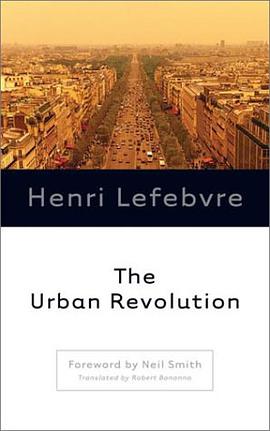
The Urban Revolution 豆瓣 Goodreads
La Révolution Urbaine
作者: Henri Lefebvre 译者: Robert Bononno 出版社: Univ Of Minnesota Press 2003 - 2
Originally published in 1970, The Urban Revolution marked Henri Lefebvre's first sustained critique of urban society, a work in which he pioneered the use of semiotic, structuralist, and poststructuralist methodologies in analyzing the development of the urban environment. Although it is widely considered a foundational book in contemporary thinking about the city, The Urban Revolution has never been translated into English-until now. This first English edition, deftly translated by Robert Bononno, makes available to a broad audience Lefebvre's sophisticated insights into the urban dimensions of ???.
The Production of Space 豆瓣
9.6 (5 个评分) 作者: Henri Lefebvre 译者: Donald Nicholson-Smith 出版社: Wiley-Blackwell 1992 - 4
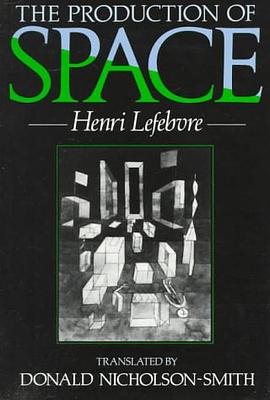
Henri Lefebvre has considerable claims to be the greatest living philosopher. His work spans some sixty years and includes original work on a diverse range of subjects, from dialectical materialism to architecture, urbanism and the experience of everyday life. The Production of Space is his major philosophical work and its translation has been long awaited by scholars in many different fields.
The book is a search for a reconciliation between mental space (the space of the philosophers) and real space (the physical and social spheres in which we all live). In the course of his exploration, Henri Lefebvre moves from metaphysical and ideological considerations of the meaning of space to its experience in the everyday life of home and city. He seeks, in other words, to bridge the gap between the realms of theory and practice, between the mental and the social, and between philosophy and reality. In doing so, he ranges through art, literature, architecture and economics, and further provides a powerful antidote to the sterile and obfuscatory methods and theories characteristic of much recent continental philosophy.
This is a work of great vision and incisiveness. It is also characterized by its author's wit and by anecdote, as well as by a deftness of style which Donald Nicholson-Smith's sensitive translation precisely captures.