
印刷術
The Printing Revolution in Early Modern Europe 豆瓣
作者: Elizabeth L. Eisenstein 出版社: Cambridge University Press 2005 - 9
Although the importance of the advent of printing for the Western world has long been recognized, it was Elizabeth Eisenstein, in her monumental, two-volume work, The Printing Revolution in Early Modern Europe, who provided the first full-scale treatment of the subject. This illustrated and abridged edition gives a stimulating survey of the communications revolution of the fifteenth century. After summarizing the initial changes introduced by the establishment of printing shops, it goes on to discuss how printing affected three major cultural movements: the Renaissance, the Reformation, and the rise of modern science. This new edition includes a new essay discussing recent controversies provoked by the first edition and reaffirms the thesis that the advent of printing entailed a communications revolution. Fully-illustrated and annotated, the book argues that the cumulative processes set in motion with the advent of printing are likely to persist despite the recent development of new communications technologies.
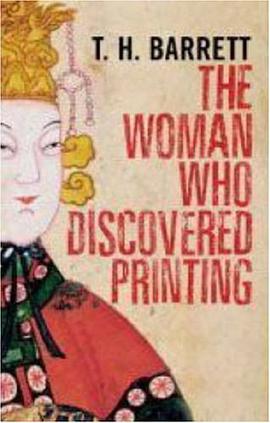
The Woman Who Discovered Printing 豆瓣
作者: T H Barrett 出版社: Yale University Press 2008 - 6
This beguiling book asks a set of unusual and fascinating questions—why is early Chinese printing so little acknowledged, despite anticipating Gutenberg by centuries? Why are the religious elements of all early printing overlooked? And why did printing in China not have the immediate obvious impact it did in Europe?
T. H. Barrett, a leading scholar of medieval China, brings us the answers through the intriguing story of Empress Wu (AD 625–705) and the revolution in printing that occurred during her rule. Linking Asian and European history with substantial new research into Chinese sources, Barrett identifies methods of transmitting texts before printing and explains the historical context of seventh-century China. He explores the dynastic reasons behind Empress Wu’s specific interest in printing and the motivating role of her private religious beliefs. He also deduces from eighth- and ninth-century Chinese records an explanation for the lesser impact of the introduction of printing in China than in Europe. As Renaissance Europe was later astonished to learn of China’s achievement, so today’s reader will be fascinated by this engaging perspective on the history of printing and the technological superiority of Empress Wu’s China.