古典文献学

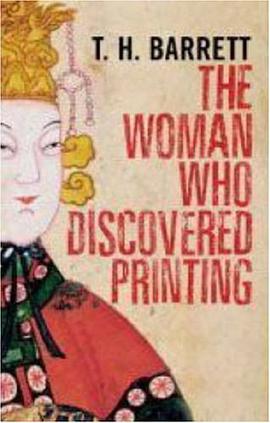
The Woman Who Discovered Printing Douban
author:
T H Barrett
publishing house:
Yale University Press
2008
- 6
This beguiling book asks a set of unusual and fascinating questions—why is early Chinese printing so little acknowledged, despite anticipating Gutenberg by centuries? Why are the religious elements of all early printing overlooked? And why did printing in China not have the immediate obvious impact it did in Europe?
T. H. Barrett, a leading scholar of medieval China, brings us the answers through the intriguing story of Empress Wu (AD 625–705) and the revolution in printing that occurred during her rule. Linking Asian and European history with substantial new research into Chinese sources, Barrett identifies methods of transmitting texts before printing and explains the historical context of seventh-century China. He explores the dynastic reasons behind Empress Wu’s specific interest in printing and the motivating role of her private religious beliefs. He also deduces from eighth- and ninth-century Chinese records an explanation for the lesser impact of the introduction of printing in China than in Europe. As Renaissance Europe was later astonished to learn of China’s achievement, so today’s reader will be fascinated by this engaging perspective on the history of printing and the technological superiority of Empress Wu’s China.
T. H. Barrett, a leading scholar of medieval China, brings us the answers through the intriguing story of Empress Wu (AD 625–705) and the revolution in printing that occurred during her rule. Linking Asian and European history with substantial new research into Chinese sources, Barrett identifies methods of transmitting texts before printing and explains the historical context of seventh-century China. He explores the dynastic reasons behind Empress Wu’s specific interest in printing and the motivating role of her private religious beliefs. He also deduces from eighth- and ninth-century Chinese records an explanation for the lesser impact of the introduction of printing in China than in Europe. As Renaissance Europe was later astonished to learn of China’s achievement, so today’s reader will be fascinated by this engaging perspective on the history of printing and the technological superiority of Empress Wu’s China.

目录学发微 古书通例 Douban
9.9 (17 ratings)
author:
余嘉锡
publishing house:
中华书局
2007
- 10
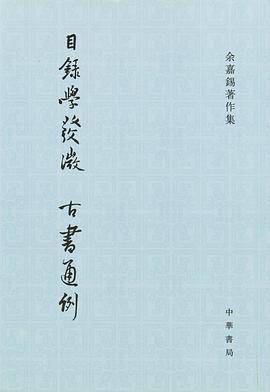
《目录学发微》是著一九三二至一九四八年间在北京各大学主讲目录学课程时的讲义,本书以“辨章学术”为核心,建立了自己的目录学体系。对目录书的体制、目录学的源流、历代目录书的类例沿革阐述甚详,举出目录学的体制有四种类型:一为篇目,考一书之源流;二为叙录,考一人之源流;三为小序,考一家之源流;四为版本序跋,考一书之源流。此次出版,重排根据的版本是中华书局1963年本。《古书通例》(是一部从宏观角度研究古籍的专著,对于汉魏以前的古书,经过探微索隐,详加考证,分析归纳以阐明古书的通例。全书分四卷:一为案著录,二为明体例,三为论编次,四为辨附益,由此指出了研究阅读古籍的门径。本次出版,重排依据的版本是上海古籍出版社一九八五年《古书通例》。