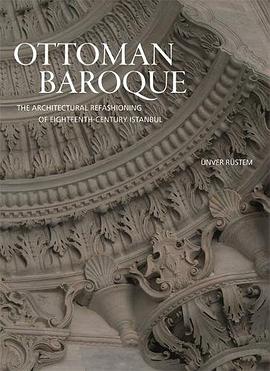
Ottoman Baroque Douban
author:
Unver Rustem
publishing house:
Princeton University Press
2019
- 3
A new approach to late Ottoman visual culture and its place in the world
With its idiosyncratic yet unmistakable adaptation of European Baroque models, the eighteenth-century architecture of Istanbul has frequently been dismissed by modern observers as inauthentic and derivative, a view reflecting broader unease with notions of Western influence on Islamic cultures. In Ottoman Baroque—the first English-language book on the topic—Ünver Rüstem provides a compelling reassessment of this building style and shows how between 1740 and 1800 the Ottomans consciously coopted European forms to craft a new, politically charged, and globally resonant image for their empire’s capital.
Rüstem reclaims the label “Ottoman Baroque” as a productive framework for exploring the connectedness of Istanbul’s eighteenth-century buildings to other traditions of the period. Using a wealth of primary sources, he demonstrates that this architecture was in its own day lauded by Ottomans and foreigners alike for its fresh, cosmopolitan effect. Purposefully and creatively assimilated, the style’s cross-cultural borrowings were combined with Byzantine references that asserted the Ottomans’ entitlement to the Classical artistic heritage of Europe. Such aesthetic rebranding was part of a larger endeavor to reaffirm the empire’s power at a time of intensified East-West contact, taking its boldest shape in a series of imperial mosques built across the city as landmarks of a state-sponsored idiom.
Copiously illustrated and drawing on previously unpublished documents, Ottoman Baroque breaks new ground in our understanding of Islamic visual culture in the modern era and offers a persuasive counterpoint to Eurocentric accounts of global art history.
With its idiosyncratic yet unmistakable adaptation of European Baroque models, the eighteenth-century architecture of Istanbul has frequently been dismissed by modern observers as inauthentic and derivative, a view reflecting broader unease with notions of Western influence on Islamic cultures. In Ottoman Baroque—the first English-language book on the topic—Ünver Rüstem provides a compelling reassessment of this building style and shows how between 1740 and 1800 the Ottomans consciously coopted European forms to craft a new, politically charged, and globally resonant image for their empire’s capital.
Rüstem reclaims the label “Ottoman Baroque” as a productive framework for exploring the connectedness of Istanbul’s eighteenth-century buildings to other traditions of the period. Using a wealth of primary sources, he demonstrates that this architecture was in its own day lauded by Ottomans and foreigners alike for its fresh, cosmopolitan effect. Purposefully and creatively assimilated, the style’s cross-cultural borrowings were combined with Byzantine references that asserted the Ottomans’ entitlement to the Classical artistic heritage of Europe. Such aesthetic rebranding was part of a larger endeavor to reaffirm the empire’s power at a time of intensified East-West contact, taking its boldest shape in a series of imperial mosques built across the city as landmarks of a state-sponsored idiom.
Copiously illustrated and drawing on previously unpublished documents, Ottoman Baroque breaks new ground in our understanding of Islamic visual culture in the modern era and offers a persuasive counterpoint to Eurocentric accounts of global art history.