学术写作
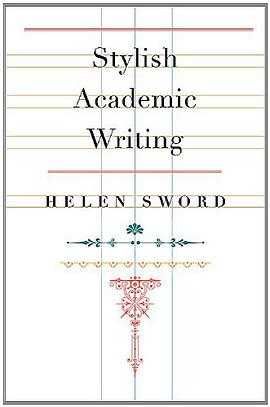
Stylish Academic Writing 豆瓣 Goodreads
作者: Helen Sword 出版社: Harvard University Press 2012 - 4
Elegant data and ideas deserve elegant expression, argues Helen Sword in this lively guide to academic writing. For scholars frustrated with disciplinary conventions, and for specialists who want to write for a larger audience but are unsure where to begin, here are imaginative, practical, witty pointers that show how to make articles and books a pleasure to read - and to write. Dispelling the myth that you cannot get published without writing wordy, impersonal prose, Sword shows how much journal editors and readers welcome work that avoids excessive jargon and abstraction. Sword's analysis of more than a thousand peer-reviewed articles across a wide range of fields documents a startling gap between how academics typically describe good writing and the turgid prose they regularly produce. "Stylish Academic Writing" showcases a range of scholars from the sciences, humanities, and social sciences who write with vividness and panache. Individual chapters take up specific elements of style, such as titles and headings, chapter openings, and structure, and close with examples of transferable techniques that any writer can master.
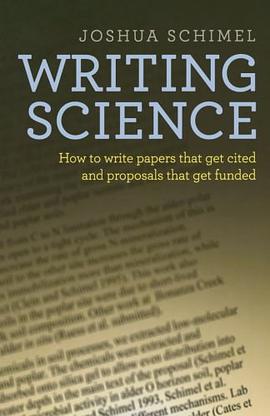
Writing Science 豆瓣
9.8 (10 个评分) 作者: Joshua Schimel 出版社: Oxford University Press 2011 - 11
As a scientist, you are a professional writer: your career is built on successful proposals and papers. Success isn't defined by getting papers into print, but by getting them into the reader's consciousness. Writing Science is built upon the idea that successful science writing tells a story. It uses that insight to discuss how to write more effectively. Integrating lessons from other genres of writing with those from the author's years of experience as author, reviewer, and editor, the book shows scientists and students how to present their research in a way that is clear and that will maximize reader comprehension. The book takes an integrated approach, using the principles of story structure to discuss every aspect of successful science writing, from the overall structure of a paper or proposal to individual sections, paragraphs, sentences, and words. It begins by building core arguments, analyzing why some stories are engaging and memorable while others are quickly forgotten, and proceeds to the elements of story structure, showing how the structures scientists and researchers use in papers and proposals fit into classical models. The book targets the internal structure of a paper, explaining how to write clear and professional sections, paragraphs, and sentences in a way that is clear and compelling. The ideas within a paper should flow seamlessly, drawing readers along. The final section of the book deals with special challenges, such as how to discuss research limitations and how to write for the public. Writing Science is a much-needed guide to succeeding in modern science. Its insights and strategies will equip science students, scientists, and professionals across a wide range of scientific and technical fields with the tools needed to communicate effectively.
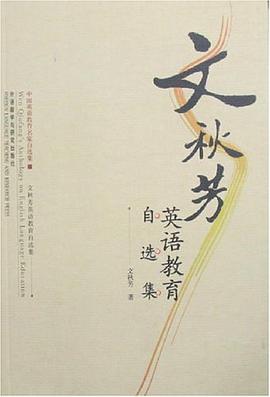
文秋芳英语教育自选集 豆瓣
作者: 文秋芳 译者: 文秀芳 2008 - 1
《中国英语教名家自选集•文秋芳英语教育自选集》为文秀芳教授有关外语教育和教学方面的研究论文的精选。《中国英语教名家自选集•文秋芳英语教育自选集》凝聚了他从教四十余年的治学心得,体现了他对我国外语教育事业的热爱,以及为推动英语教学与科研所做的不懈努力。 本丛书收录了我国知名英语教育家的学术论文,以填补两方面的空白:1.以英语教育名家为主线的自选集;2.以英语教育为主题的系列丛书。本丛书读者对象为英语教师、英语专业研究生、师范院校英语本科生等,可作为其从事科研、撰写论文的参考文献。入选文章多散见于国内外学术期刊,且时间跨度很大,读者不易寻得。自选集展示了作者在英语教育方面的研究脉络,汇集成丛书,是我国英语教育史上不可多得的资料。
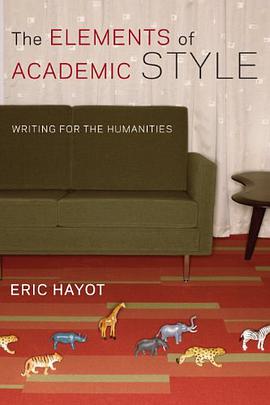
The Elements of Academic Style 豆瓣
作者: Eric Hayot 出版社: Columbia University Press 2014 - 8
Eric Hayot teaches graduate students and faculty in literary and cultural studies how to think and write like a professional scholar. From granular concerns, such as sentence structure and grammar, to big-picture issues, such as adhering to genre patterns for successful research and publishing and developing productive and rewarding writing habits, Hayot helps ambitious students, newly minted Ph.D.'s, and established professors shape their work and develop their voices.
Hayot does more than explain the techniques of academic writing. He aims to adjust the writer's perspective, encouraging scholars to think of themselves as makers and doers of important work. Scholarly writing can be frustrating and exhausting, yet also satisfying and crucial, and Hayot weaves these experiences, including his own trials and tribulations, into an ethos for scholars to draw on as they write. Combining psychological support with practical suggestions for composing introductions and conclusions, developing a schedule for writing, using notes and citations, and structuring paragraphs and essays, this guide to the elements of academic style does its part to rejuvenate scholarship and writing in the humanities.