帝国史
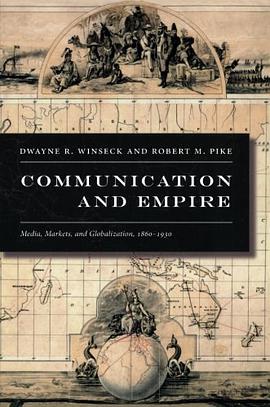
Communication and Empire 豆瓣
作者: Dwayne R. Winseck / Robert M. Pike 出版社: Duke University Press Books 2007 - 7
Filling in a key chapter in communications history, Dwayne R. Winseck and Robert M. Pike offer an in-depth examination of the rise of the "global media" between 1860 and 1930. They analyze the connections between the development of a global communication infrastructure, the creation of national telegraph and wireless systems, and news agencies and the content they provided. Conventional histories suggest that the growth of global communications correlated with imperial expansion: an increasing number of cables were laid as colonial powers competed for control of resources. Winseck and Pike argue that the role of the imperial contest, while significant, has been exaggerated. They emphasize how much of the global media system was in place before the high tide of imperialism in the early twentieth century, and they point to other factors that drove the proliferation of global media links, including economic booms and busts, initial steps toward multilateralism and international law, and the formation of corporate cartels. Drawing on extensive research in corporate and government archives, Winseck and Pike illuminate the actions of companies and cartels during the late nineteenth century and early twentieth, in many different parts of the globe, including Africa, Asia, and Central and South America as well as Europe and North America. The complex history they relate shows how cable companies exploited or transcended national policies in the creation of the global cable network, how private corporations and government agencies interacted, and how individual reformers fought to eliminate cartels and harmonize the regulation of world communications. In Communication and Empire, the multinational conglomerates, regulations, and the politics of imperialism and anti-imperialism as well as the cries for reform of the late nineteenth century and early twentieth emerge as the obvious forerunners of today's global media.
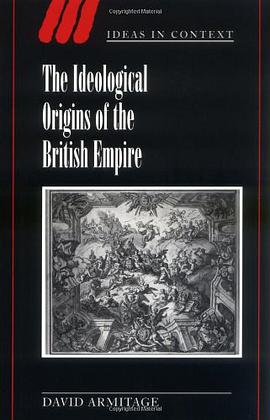
The Ideological Origins of the British Empire 豆瓣
作者: David Armitage 出版社: Cambridge University Press 2000 - 9
The Ideological Origins of the British Empire presents a comprehensive history of British conceptions of empire for more than half a century. David Armitage traces the emergence of British imperial identity from the mid-sixteenth to the mid-eighteenth centuries, using a full range of manuscript and printed sources. By linking the histories of England, Scotland and Ireland with the history of the British Empire, he demonstrates the importance of ideology as an essential linking between the processes of state-formation and empire-building. This book sheds light on major British political thinkers, from Sir Thomas Smith to David Hume, by providing fascinating accounts of the 'British problem' in the early modern period, of the relationship between Protestantism and empire, of theories of property, liberty and political economy in imperial perspective, and of the imperial contribution to the emergence of British 'identities' in the Atlantic world.
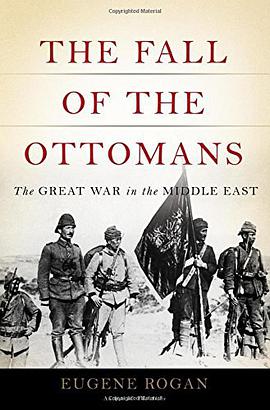
The Fall of the Ottomans 豆瓣
作者: Eugene Rogan 出版社: Basic Books 2015 - 3
In 1914 the Ottoman Empire was depleted of men and resources after years of war against Balkan nationalist and Italian forces. But in the aftermath of the assassination in Sarajevo, the powers of Europe were sliding inexorably toward war, and not even the Middle East could escape the vast and enduring consequences of one of the most destructive conflicts in human history. The Great War spelled the end of the Ottomans, unleashing powerful forces that would forever change the face of the Middle East.
In The Fall of the Ottomans, award-winning historian Eugene Rogan brings the First World War and its immediate aftermath in the Middle East to vivid life, uncovering the often ignored story of the region’s crucial role in the conflict. Bolstered by German money, arms, and military advisors, the Ottomans took on the Russian, British, and French forces, and tried to provoke Jihad against the Allies in their Muslim colonies. Unlike the static killing fields of the Western Front, the war in the Middle East was fast-moving and unpredictable, with the Turks inflicting decisive defeats on the Entente in Gallipoli, Mesopotamia, and Gaza before the tide of battle turned in the Allies’ favor. The great cities of Baghdad, Jerusalem, and, finally, Damascus fell to invading armies before the Ottomans agreed to an armistice in 1918.
The postwar settlement led to the partition of Ottoman lands between the victorious powers, and laid the groundwork for the ongoing conflicts that continue to plague the modern Arab world. A sweeping narrative of battles and political intrigue from Gallipoli to Arabia, The Fall of the Ottomans is essential reading for anyone seeking to understand the Great War and the making of the modern Middle East.