林奈
Linnaeus 豆瓣
作者: Lisbet Koerner 出版社: Harvard University Press 2001 - 4
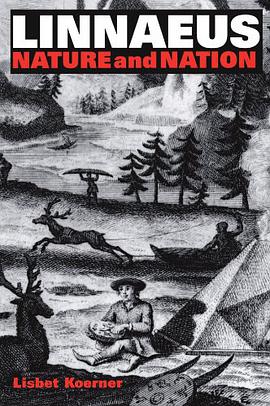
Drawing on letters, poems, notebooks, and secret diaries, Lisbet Koemer tells the moving story of one of the most famous naturalists who ever lived, the Swedish-born botanist and systematizer, Carl Linnaeus. The first scholarly biography of this great Enlightenment scientist in almost one hundred years, this book also recounts for the first time Linnaeus' grand and bizarre economic project to "teach" tea, saffron, and rice to grow on the Arctic tundra and to domesticate buffaloes, guinea pigs, and elks as Swedish farm animals. Linnaeus hoped to reproduce the economy of empire and colony within the borders of his family home by growing cash crops in northern Europe. The author shows us the often surprising ways he embarked on this project. Her narrative goes against the grain of Linnaean scholarship old and new by analyzing not how modern Linnaeus was, but how he understood science in his time. At the same time, his attempts to organize a state economy according to principles of science prefigured an idea that has become one of the defining features of modernity. This book should be of interest to historians of the Enlightenment, historians of science and by general readers as well.
林奈传 豆瓣
The Compleat Naturalist:A Life of Linnaeus
作者: [英] 维尔弗里德·布兰特 译者: 徐保军 出版社: 商务印书馆 2017 - 11
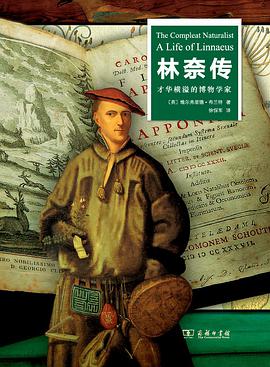
现代生物分类学之父林奈的第一部中文传记。卡尔•林奈(1707-1778)因发明“双名法”,用拉丁语组成的属种名作为动植物学名而闻名于世,双名法成为现代动植物命名的基础。在瑞典,人们称这位伟大的博物学家为“花之王子”。林奈一生经历了几个多姿多彩的时期:从早期游学考察的穷学生,到乌普萨拉有名的医药学教授,再到瑞典皇家科学院的创始人之一。作为一位敏锐的旅行家、科学家、采集者、画家和地理学家,他将其一生的热情投入到植物学中,命名并分类了9000多种植物、828种贝类、2100种昆虫和477种鱼。这本书用通俗易懂的文字,鲜活再现了林奈的一生:他在拉普兰的探险经历、他的家庭生活、他和学生的交往,以及他在科学史上的伟大成就。书中结合大量经典文献,再现了包括林奈手稿在内的精美原始图片。
Sex, Botany, and Empire 豆瓣
作者: Patricia Fara 出版社: Columbia University Press 2004 - 9
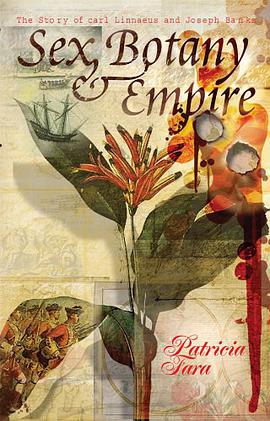
Enlightenment botany was replete with sexual symbolism -- to the extent that many botanical textbooks were widely considered pornographic. Carl Linnaeus's controversial new system for classifying plants based on their sexual characteristics, as well as his use of language resonating with erotic allusions, provoked intense public debate over the morality of botanical study. And the renowned Tahitian exploits of Joseph Banks -- whose trousers were reportedly stolen while he was inside the tent of Queen Oberea of Tahiti -- reinforced scandalous associations with the field. Yet Linnaeus and Banks became powerful political and scientific figures who were able to promote botanical exploration alongside the exploitation of territories, peoples, and natural resources. Sex, Botany, and Empire explores the entwined destinies of these two men and how their influence served both science and imperialism. Patricia Fara reveals how Enlightenment botany, under the veil of rationality, manifested a drive to conquer, subdue, and deflower -- all in the name of British empire. Linnaeus trained his traveling disciples in a double mission -- to bring back specimens for the benefit of the Swedish economy and to spread the gospel of Linnaean taxonomy. Based in London at the hub of an international exchange and correspondence network, Banks ensured that Linnaeus's ideas became established throughout the world. As the president of the Royal Society for more than forty years, Banks revolutionized British science, and his innovations placed science at the heart of trade and politics. He made it a policy to collect and control resources not only for the sake of knowledge but also for the advancement of the empire. Although Linnaeus is often celebrated as modern botany's true founder, Banks has had a greater long-term impact. It was Banks who ensured that science and imperialism flourished together, and it was he who first forged the interdependent relationship between scientific inquiry and the state that endures to this day.