
沙皇
死屋 豆瓣 谷歌图书
The House of the Dead: Siberian Exile Under the Tsars
9.1 (41 个评分) 作者: [英]丹尼尔·比尔 译者: 孔俐颖 出版社: 后浪丨四川文艺出版社 2019 - 6
《古拉格群岛》前传,俄国流放制度的溯源之作!
☉编辑推荐
☆本书作者丹尼尔·比尔运用19世纪的新闻报道、官方报告和俄国小说,为读者呈现出了西伯利亚流放制度的残酷性及其囚犯悲剧性又鼓舞人心的命运。
☆近代俄国史上诸多大人物如陀思妥耶夫斯基、列宁都有流放西伯利亚经历,流放制度如何塑造近代俄罗斯民族的心灵以及影响俄国历史的命运?
☆2017年英国坎迪尔历史奖大奖作品,入围2017年沃尔夫森历史奖、2017年普希金俄语图书奖和2017年朗曼-今日历史图书奖,被评为《泰晤士报》、《旁观者》、《BBC历史》和《泰晤士报文学增刊》年度图书。
⊙内容简介
西伯利亚被称为“没有屋顶的大监狱”。从19世纪初到俄国革命,沙皇政权将超过100万名囚犯及其家人流放到乌拉尔山以东的西伯利亚。本书生动刻画了普通罪犯和政治激进分子、农奴制和村庄政治的受害者、追随丈夫和父亲的妻子与孩子的历史,以及逃犯和赏金猎人的历史。
本书启用了俄罗斯欧洲部分和西伯利亚档案馆中大量此前不为人知的一手资料,讲述了沙皇俄国奋力管理其可怕的刑罚殖民地的故事,以及西伯利亚对现代世界的政治力量的重大影响。
⊙媒体&名人推荐
☆表述精湛,扣人心弦……全书生动描述了种种关于罪与罚、赎罪、爱和可怖暴力的惊人与悲伤故事。书中人物包括专制者、杀人者、卖淫者、英雄。这是一部绝妙的佳作。
——西蒙·塞巴格·蒙蒂菲奥里
☆我们很难去想象这个在沙皇统治时期地狱般的西伯利亚刑罚殖民地。这部历史著作描绘了一幅生动、恐怖的图景……该书极其引人入胜,富于真实事例和逸闻轶事。
——大卫·阿罗诺维奇,《泰晤士报》
☆关于沙皇统治时期西伯利亚流放制度的杰出新历史著作……令人信服地将西伯利亚置于19世纪俄国乃至欧洲历史的中心。
——《经济学人》
☆采用了大量资料……这些丰富的材料,造就了这部有着细微细节的历史著作……它把“西伯利亚”这个名字的可怕之处变得如此生动、如此清晰。
——《纽约时报书评》
2019年7月16日 已读
西伯利亚一直让我感到荒凉寒冷,但近来我却越发捉摸不透其复杂。单一个库页岛,在日本文献里是一个叙事,在中国这边又是一个叙事,而在本书中又近于契诃夫笔下的世界。可能在本书中农民、原住民只是背景,宗教、战争只是点缀,但到了别处西伯利亚的流放者也可能只被一笔带过。在同一片土地上历史是个多面体,大家各自瞻仰着它的侧面。本书描述式的笔法可以给不谙俄文的读者一个细密的鸟瞰。由于几乎每个段落都设了注释,所以也可以给研究性读者提供索引,作者多用Siberia and the Exile System,转写的俄文文献是干货。读完较注意的是俄国沙皇的家长制以及西伯利亚恶劣环境和流放制度下男女扭曲的世界观和行事。当然作者整体行文框架下,俄国沙皇对殖民与流放手段利用的失败以及道德的反噬可能更会使威权政府下的人民长思。
0.历史 2019 世界史 俄国 俄国史
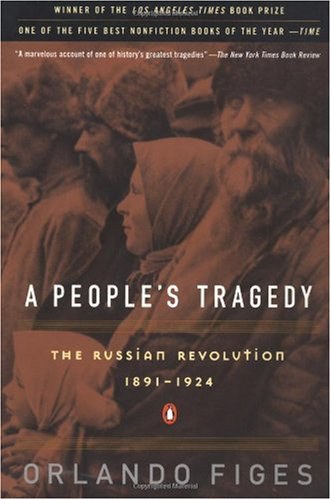
A People's Tragedy Goodreads 豆瓣
作者: Orlando Figes 出版社: Penguin Books 1998 - 3
Amazon.com Review
Written in a narrative style that captures both the scope and detail of the Russian revolution, Orlando Figes's history is certain to become one of the most important contemporary studies of Russia as it was at the beginning of the 20th century. With an almost cinematic eye, Figes captures the broad movements of war and revolution, never losing sight of the individuals whose lives make up his subject. He makes use of personal papers and personal histories to illustrate the effects the revolution wrought on a human scale, while providing a convincing and detailed understanding of the role of workers, peasants, and soldiers in the revolution. He moves deftly from topics such as the grand social forces and mass movements that made up the revolution to profiles of key personalities and representative characters.
Figes's themes of the Russian revolution as a tragedy for the Russian people as a whole and for the millions of individuals who lost their lives to the brutal forces it unleashed make sense of events for a new generation of students of Russian history. Sympathy for the charismatic leaders and ideological theorizing regarding Hegelian dialectics and Marxist economics--two hallmarks of much earlier writing on the Russian revolution--are banished from these clear-eyed, fair-minded pages of A People's Tragedy. The author's sympathy is squarely with the Russian people. That commitment, together with the benefit of historical hindsight, provides a standpoint Figes take full advantage of in this masterful history. --This text refers to an out of print or unavailable edition of this title.
From Publishers Weekly
Packed with vivid human detail and incident, British historian Figes's monumental social and political history spans Russia's entire revolutionary period, from the czarist government's floundering during the famine of 1891 to Lenin's death in 1924, by which time all the basic institutions of the Soviet dictatorship?a privileged ruling elite, random terror, secret police, torture, mass executions, concentration camps?were in place. Figes dismantles any number of myths surrounding the Bolshevik Revolution of October 1917, a military coup rammed through at Lenin's insistence ("hardly any of the Bolshevik leaders had wanted it to happen until a few hours before it began"). Using diaries, letters, memoirs and archival documents, Cambridge don Figes provides masterful portraits of cynical, power-hungry Lenin, driven by an absolute faith in his mission; Alexander Kerensky, weak-willed, vain democratic leader, the self-styled savior of Russia; writer Maxim Gorky, plagued by the fear?and later by the terrible realization?that the "people's revolution" was a descent into barbarism; Tolstoyan peasant reformer Sergei Semenov; and dozens of lesser-known figures. In this vibrant magnum opus, Figes illumines the manifold sources of Russia's failure to take a democratic path. Illustrations not seen by PW.
Copyright 1996 Reed Business Information, Inc. --This text refers to an out of print or unavailable edition of this title.