
烧脑


The Trading Floor (2018) Douban
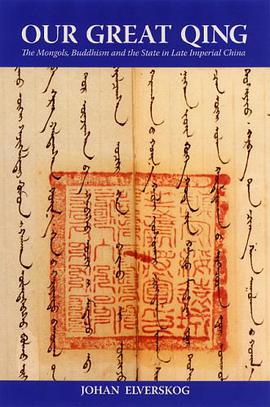
Our Great Qing Douban
author:
Johan Elverskog
publishing house:
University of Hawaii Press
2006
- 7
"In a sweeping overview of four centuries of Mongolian history that draws on previously untapped sources, Johan Elverskog opens up totally new perspectives on some of the most urgent questions historians have recently raised about the role of Buddhism in the constitution of the Qing empire. Theoretically informed and strongly comparative in approach, Elverskog’s work tells a fascinating and important story that will interest all scholars working at the intersection of religion and politics." —Mark Elliott, Harvard University
"Johan Elverskog has rewritten the political and intellectual history of Mongolia from the bottom up, telling a convincing story that clarifies for the first time the revolutions which Mongolian concepts of community, rule, and religion underwent from 1500 to 1900. His account of Qing rule in Mongolia doesn’t just tell us what images the Qing emperors wished to project, but also what images the Mongols accepted themselves, and how these changed over the centuries. In the scope of time it covers, the originality of the views advanced, and the accuracy of the scholarship upon which it is based, Our Great Qing seems destined to mark a watershed in Mongolian studies. It will be essential reading for specialists in Mongolian studies and will make an important contribution and riposte to the ‘new Qing history’ now changing the face of late imperial Chinese history. Specialists in Tibetan Buddhism and Buddhism’s interaction with the political realm will also find in this work challenging and thought-provoking." —ChristopherAtwood, Indiana University
Although it is generally believed that the Manchus controlled the Mongols through their patronage of Tibetan Buddhism, scant attention has been paid to the Mongol view of the Qing imperial project. In contrast to other accounts of Manchu rule, Our Great Qing focuses not only on what images the metropole wished to project into Mongolia, but also on what images the Mongols acknowledged themselves. Rather than accepting the Manchu’s use of Buddhism, Johan Elverskog begins by questioning the static, unhistorical, and hegemonic view of political life implicit in the Buddhist explanation. By stressing instead the fluidity of identity and Buddhist practice as processes continually developing in relation to state formations, this work explores how Qing policies were understood by Mongols and how they came to see themselves as Qing subjects.
In his investigation of Mongol society on the eve of the Manchu conquest, Elverskog reveals the distinctive political theory of decentralization that fostered the civil war among the Mongols. He explains how it was that the Manchu Great Enterprise was not to win over "Mongolia" but was instead to create a unified Mongol community of which the disparate preexisting communities would merely be component parts.
A key element fostering this change was the Qing court’s promotion of Gelukpa orthodoxy, which not only transformed Mongol historical narratives and rituals but also displaced the earlier vernacular Mongolian Buddhism. Finally, Elverskog demonstrates how this eighteenth-century conception of a Mongol community, ruled by an aristocracy and nourished by a Buddhist emperor, gave way to a pan-Qing solidarity of all Buddhist peoples against Muslims and Christians and to local identities that united for the first time aristocrats with commoners in a new Mongol Buddhist identity on the eve of the twentieth century.
"Johan Elverskog has rewritten the political and intellectual history of Mongolia from the bottom up, telling a convincing story that clarifies for the first time the revolutions which Mongolian concepts of community, rule, and religion underwent from 1500 to 1900. His account of Qing rule in Mongolia doesn’t just tell us what images the Qing emperors wished to project, but also what images the Mongols accepted themselves, and how these changed over the centuries. In the scope of time it covers, the originality of the views advanced, and the accuracy of the scholarship upon which it is based, Our Great Qing seems destined to mark a watershed in Mongolian studies. It will be essential reading for specialists in Mongolian studies and will make an important contribution and riposte to the ‘new Qing history’ now changing the face of late imperial Chinese history. Specialists in Tibetan Buddhism and Buddhism’s interaction with the political realm will also find in this work challenging and thought-provoking." —ChristopherAtwood, Indiana University
Although it is generally believed that the Manchus controlled the Mongols through their patronage of Tibetan Buddhism, scant attention has been paid to the Mongol view of the Qing imperial project. In contrast to other accounts of Manchu rule, Our Great Qing focuses not only on what images the metropole wished to project into Mongolia, but also on what images the Mongols acknowledged themselves. Rather than accepting the Manchu’s use of Buddhism, Johan Elverskog begins by questioning the static, unhistorical, and hegemonic view of political life implicit in the Buddhist explanation. By stressing instead the fluidity of identity and Buddhist practice as processes continually developing in relation to state formations, this work explores how Qing policies were understood by Mongols and how they came to see themselves as Qing subjects.
In his investigation of Mongol society on the eve of the Manchu conquest, Elverskog reveals the distinctive political theory of decentralization that fostered the civil war among the Mongols. He explains how it was that the Manchu Great Enterprise was not to win over "Mongolia" but was instead to create a unified Mongol community of which the disparate preexisting communities would merely be component parts.
A key element fostering this change was the Qing court’s promotion of Gelukpa orthodoxy, which not only transformed Mongol historical narratives and rituals but also displaced the earlier vernacular Mongolian Buddhism. Finally, Elverskog demonstrates how this eighteenth-century conception of a Mongol community, ruled by an aristocracy and nourished by a Buddhist emperor, gave way to a pan-Qing solidarity of all Buddhist peoples against Muslims and Christians and to local identities that united for the first time aristocrats with commoners in a new Mongol Buddhist identity on the eve of the twentieth century.


方向 Douban
Sens
8.5 (150 ratings)
author:
[法] 马克-安托万·马修
translator:
后浪漫(编译)
publishing house:
北京联合出版公司
2017
- 4
欧洲艺术漫画奇才马修全新烧脑神作
图像小说内容和形式上的双重突破
智力与想象力的乐趣背后,是深刻的哲学探讨
...................
※编辑推荐※
《画的秘密》作者马克-安托万·马修烧脑神作之二,是一次挑战漫画极限的艺术实验。
马修以极简的画面语言构建了一 个庞大无比的迷宫,一个无名的人在其中跟随着莫名其妙的箭头,从一维跨到多维,从微观转到宏观……
《方向》即便在马修的作品中也算得最独特的:不着一字,尽得风流。原作本无一字,标题只是一个→,出版时才加了个书名Sens——既可以指“方向”,也可以指“意义”。
《方向》没有“字”,但有自己的语言——请读者在尽情释放想象力和独立思考之余,破解作者的密码,听听作者对荒诞的看法。
...................
※内容简介※
一个无名的人在一片空茫茫的世界里跟随箭头前进、前进……他要去哪里?不知道。意义是什么?不知道。
好了,面对这样一本奇书,每一个字的介绍都是多余的。聪明的你,跟紧了→
...................
※媒体推荐※
当代西西弗在荒诞的迷宫里随着存在中的偶然不断游走。
——布鲁塞尔专题画展介绍辞
跟卡夫卡、博尔赫斯、贝克特和佩索阿的结合体最接近的一部漫画。
——法国《世界报》
一部了不起的风格尝试之作,带我们跳出时间和日常生活,摆脱物质的纠缠。
——ActuaBD
马修的聪明之处在于将深刻的底色掩盖在机巧的形式之下:大胆的表象底下藏着腼腆的人道主义。
——Esprit BD
图像小说内容和形式上的双重突破
智力与想象力的乐趣背后,是深刻的哲学探讨
...................
※编辑推荐※
《画的秘密》作者马克-安托万·马修烧脑神作之二,是一次挑战漫画极限的艺术实验。
马修以极简的画面语言构建了一 个庞大无比的迷宫,一个无名的人在其中跟随着莫名其妙的箭头,从一维跨到多维,从微观转到宏观……
《方向》即便在马修的作品中也算得最独特的:不着一字,尽得风流。原作本无一字,标题只是一个→,出版时才加了个书名Sens——既可以指“方向”,也可以指“意义”。
《方向》没有“字”,但有自己的语言——请读者在尽情释放想象力和独立思考之余,破解作者的密码,听听作者对荒诞的看法。
...................
※内容简介※
一个无名的人在一片空茫茫的世界里跟随箭头前进、前进……他要去哪里?不知道。意义是什么?不知道。
好了,面对这样一本奇书,每一个字的介绍都是多余的。聪明的你,跟紧了→
...................
※媒体推荐※
当代西西弗在荒诞的迷宫里随着存在中的偶然不断游走。
——布鲁塞尔专题画展介绍辞
跟卡夫卡、博尔赫斯、贝克特和佩索阿的结合体最接近的一部漫画。
——法国《世界报》
一部了不起的风格尝试之作,带我们跳出时间和日常生活,摆脱物质的纠缠。
——ActuaBD
马修的聪明之处在于将深刻的底色掩盖在机巧的形式之下:大胆的表象底下藏着腼腆的人道主义。
——Esprit BD