秩序
求索秩序 豆瓣
Order and History (Volume 5): In Search of Order
作者: [美] 埃里克·沃格林(Eric Voegelin) 译者: 徐志跃 出版社: 译林出版社 2018 - 8
作为《秩序与历史》系列终章的《求索秩序》,通过对柏拉图、赫西俄德和黑格尔的深刻分析,集中阐明了前几卷中关于超越的经验。沃格林致力于在此书中完成“在众多现代科学的视域下重述人性”的目标,并借此抵挡当下时代让人的生存产生畸变的各种力量。
由于沃格林的突然离世,《求索秩序》的论述未能充分展开,但是理论框架已基本完成。这本总结性的作品,在很大程度上确立了沃格林作为20世纪重要哲学家的地位;同时,它也为读者自己对秩序的求索提供了一种典范。
★ 五卷本《秩序与历史》终章,沃格林的绝笔之作
★ 直指现代混乱的哲学求索,反思性批判的学术典范
当代最为重要的政治哲学家并不是哈贝马斯和罗尔斯,而是沃格林和施特劳斯。——詹姆斯•罗兹
思想者的真诚首先在于,随时准备推翻自己的定见从头开始!出生于自由思想之家的沃格林的“史稿”,不同样(且首先)在冲击西方学界近两百年来的启蒙传统观念吗?——列奥•施特劳斯
现在所谓的社会科学中的解释学转向,沃格林从开始学术工作起就已经在践行了。——于尔根•格布哈特
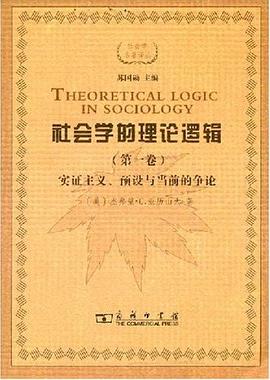
社会学的理论逻辑(第一卷) 豆瓣
The Oretical Logic in Sociology
作者: [美国]杰弗里·C.亚历山大 译者: 于晓 / 唐省杰 出版社: 商务印书馆 2008 - 6
《社会学的理论逻辑》是一部具有重大影响的社会学理论史著作,也是作者建立其新功能主义研究纲领的开端。此第一卷从总体上梳理了社会学理论发展史上的实证主义及其相关思想的发展脉络,同时论证了一般化理论逻辑对于社会学发展的重要性。作者提出,在社会学研究中,一般性的理论逻辑与实验性的经验逻辑可能并且应该相互结合。
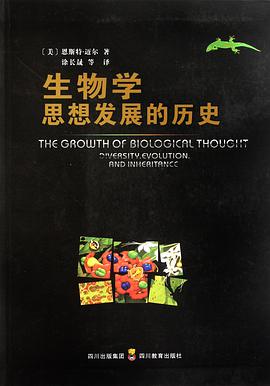
生物学思想发展的历史 豆瓣
作者: 恩斯特·迈尔 译者: 涂长晟 等 出版社: 四川教育出版社 2010
《生物学思想发展的历史》成书于1982年,是有“二十世纪的达尔文”之称的进化生物学家恩斯特·迈尔的重要著作。进化生物学思想自创立至今已200余年,其间颇受争议。和任何一种科学思想所需要面对的问题一样,进化生物学同样需要面对厘清她发展的历程以及这一历程中与其他学派、思想之间关系的任务,从而梳理出思想发展的脉络,完善理论架构,回应质疑。无疑,恩斯特·迈尔的著作为这一工作作出了巨大的贡献。
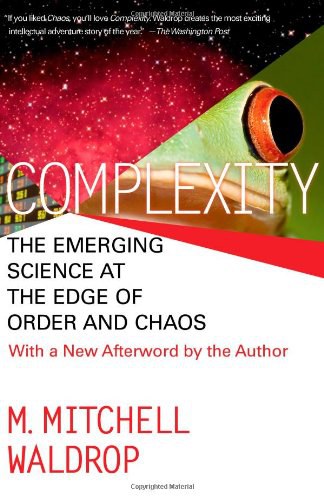
Complexity 豆瓣
作者: Mitchell M. Waldrop 出版社: Simon & Schuster 1992 - 1
In a rented convent in Santa Fe, a revolution has been brewing. The activists are not anarchists, but rather Nobel Laureates in physics and economics such as Murray Gell-Mann and Kenneth Arrow, and pony-tailed graduate students, mathematicians, and computer scientists down from Los Alamos. They've formed an iconoclastic think tank called the Santa Fe Institute, and their radical idea is to create a new science called complexity. These mavericks from academe share a deep impatience with the kind of linear, reductionist thinking that has dominated science since the time of Newton. Instead, they are gathering novel ideas about interconnectedness, coevolution, chaos, structure, and order - and they're forging them into an entirely new, unified way of thinking about nature, human social behavior, life, and the universe itself. They want to know how a primordial soup of simple molecules managed to turn itself into the first living cell - and what the origin of life some four billion years ago can tell us about the process of technological innovation today. They want to know why ancient ecosystems often remained stable for millions of years, only to vanish in a geological instant - and what such events have to do with the sudden collapse of Soviet communism in the late 1980s. They want to know why the economy can behave in unpredictable ways that economists can't explain - and how the random process of Darwinian natural selection managed to produce such wonderfully intricate structures as the eye and the kidney. Above all, they want to know how the universe manages to bring forth complex structures such as galaxies, stars, planets, bacteria, plants, animals, and brains. There are commonthreads in all of these queries, and these Santa Fe scientists seek to understand them. Complexity is their story: the messy, funny, human story of how science really happens. Here is the tale of Brian Arthur, the Belfast-born economist who stubbornly pushed his theories of economic ch