组织社会学

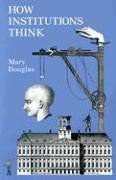
How Institutions Think 豆瓣 Goodreads
How Institutions Think (Frank W. Abrams Lectures)
作者:
Mary Douglas
出版社:
Syracuse University Press
1986
- 7
Do institutions think? If so, how do they do it? Do they have minds of their own? If so, what thoughts occupy these suprapersonal minds? Mary Douglas delves into these questions as she lays the groundwork for a theory of institutions. Usually the human reasoning process is explained with a focus on the individual mind; her focus is on culture. Using the works of Emile Durkheim and Ludwik Fleck as a foundation, "How Institutions Think" clarifies the extent to which thinking itself is dependent upon institutions. Different kinds of institutions allow individuals to think different kinds of thoughts and to respond to different emotions. It is just as difficult to explain how individuals come to share the categories of their thought as to explain how they ever manage to sink their private interests for a common good. Douglas forewarns us that institutions do not think independently, nor do they have purposes, nor can they build themselves. As we construct our institutions, we are squeezing each other's ideas into a common shape in order to prove their legitimacy by sheer numbers. She admonishes us not to take comfort in the thought that primitives may think through institutions, but moderrjs decide on important issues individually. Our legitimated institutions make major decisions, and these decisions always involve ethical principles.
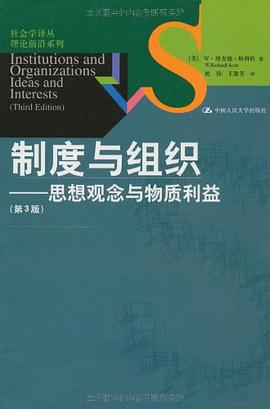
制度与组织 豆瓣
作者:
W·理查德·斯科特
译者:
姚伟
/
王黎芳
出版社:
中国人民大学出版社
2010
- 3
《制度与组织:思想观念与物质利益(第3版)》讨论了各种制度理论之间的异同,评述了关于组织的制度研究的历史以及最新进展.并明确了其将来的研究方向。《制度与组织:思想观念与物质利益(第3版)》所提出的分析框架阐述了制度的三大基础要素以及制度与社会系统之间的相互作用,评述了经济学,社会学与组织分析的新制度主义,探讨了符号、关系、惯例、人工器物等对各种制度安排的传播。讨论了组织场域理论及其实践意义。《制度与组织:思想观念与物质利益(第3版)》的适用对象主要为制度理论、组织理论、组织社会学与公共行政管理等领域的研究者。