罗森
分析的限度 豆瓣
The Limits of Analysis
作者: [美]罗森(Stanley Rosen) 译者: 夏代云 出版社: 华东师范大学出版社 2016 - 9
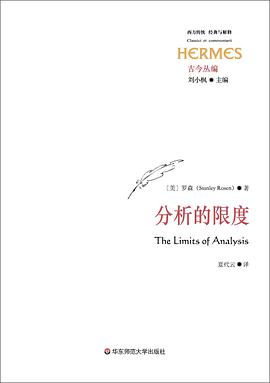
《分析的限度》是美国思想家斯坦利•罗森(Stanley Rosen)与西方占主流地位的分析哲学对话的力作。
分析哲学在科学、数学、语言学等当代启蒙理性的大道上高歌猛进,这个学派赞赏严密和清晰,却无视其自身频出的问题,且不愿意展开自我批评。通过运用数学的或准数学的技巧来处理哲学的传统问题,分析哲学宣称传统哲学问题大多产生于错觉,“却没有想到自身对这些问题产生了错觉”。
在《分析的限度》中,罗森以柏拉图、亚里士多德、康德和尼采为例,证明分析哲学并未真正理解传统哲学的问题。分析哲学以清除哲学偏见为自己的目的,自身却变成了一种哲学偏见;分析哲学希望给哲学思考划定语言的限度和语境,却忘了给自己划定语言的限度和语境。
柏拉图的《会饮》 豆瓣
Plato's Symposium
作者: 罗森 译者: 杨俊杰 出版社: 华东师范大学出版社 2011 - 5
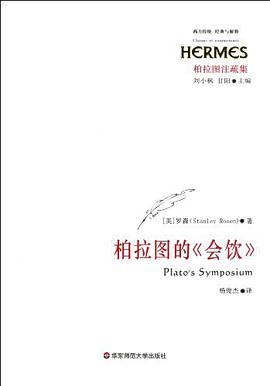
《柏拉图的<会饮>》为英语世界细致通解柏拉图《会饮》的第一部作品,首次采用戏剧形式来对待柏拉图的对话,探讨被柏拉图具象化了的人类性欲的哲学含义。《柏拉图的<会饮>》初版于20世纪60年代分析哲学和古典语文学诡异结合之际,当时大起争议,而今不但为各派学者接受,其关于男同性恋性行为的理论含义的分析,亦被视为人之存在的柏拉图戏剧现象学的关键所在。作者罗森锐气逼人,分析细腻,笔力雄健,虽有争雄施特劳斯之心,亦尽得乃师真传。
Piano Notes 豆瓣
作者: 查尔斯·罗森 出版社: Free Press 2004 - 2
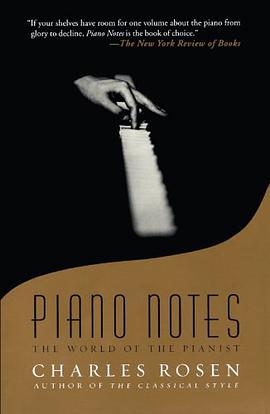
Among the world's instruments, the piano stands out as the most versatile, powerful, and misunderstood -- even by those who have spent much of their lives learning to play. In Piano Notes, a finalist for a 2003 National Book Critics Circle Award, Charles Rosen, one of the world's most talented pianists, distills a lifetime of wisdom and lore into an unforgettable tour of the hidden world of piano playing. You'll read about how a note is produced, why a chord can move us, why the piano -- "hero and villain" of tonality -- has shaped the course of Western music, and why it is growing obsolete. Rosen explains what it means that Beethoven composed in his head whereas Mozart would never dream of doing so, why there are no fortissimos in the works of Ravel, and why a piano player's acrobatics have an important dramatic effect but nothing more. Ending on a contemplative note, Piano Notes offers an elegant argument that piano music "is not just sound or even significant sound" but a mechanical, physical, and fetishistic experience that faces new challenges in an era of recorded music. Rosen ponders whether piano playing will ever again be the same, and his insights astonish.
The Romantic Generation 豆瓣 Goodreads
The Romantic Generation
作者: 查尔斯·罗森 出版社: Harvard University Press 1998 - 9
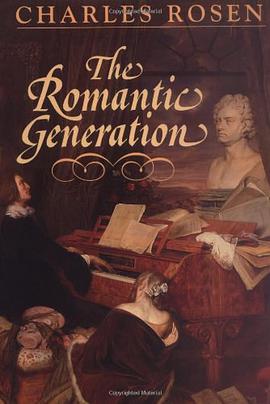
What Charles Rosen's celebrated book "The Classical Style" did for music of the Classical period, this new, much-awaited volume brilliantly does for the Romantic era. An exhilarating exploration of the musical language, forms, and styles of the Romantic period, it captures the spirit that enlivened a generation of composers and musicians, and in doing so it conveys the very sense of Romantic music. In readings uniquely informed by his performing experience, Rosen offers consistently acute and thoroughly engaging analyses of works by Schubert, Schumann, Mendelssohn, Bellini, Liszt, and Berlioz, and he presents a new view of Chopin as a master of polyphony and large-scale form. He adeptly integrates his observations on the music with reflections on the art, literature, drama, and philosophy of the time, and thus shows us the major figures of Romantic music within their intellectual and cultural context. Rosen covers a remarkably broad range of music history and considers the importance to nineteenth-century music of other cultural developments: the art of landscape, a changed approach to the sacred, the literary fragment as a Romantic art form. He sheds new light on the musical sensibilities of each composer, studies the important genres from nocturnes and songs to symphonies and operas, explains musical principles such as the relation between a musical idea and its realization in sound and the interplay between music and text, and traces the origins of musical ideas prevalent in the Romantic period. Rich with striking descriptions and telling analogies, Rosen's overview of Romantic music is an accomplishment without parallel in the literature, a consummate performance by a master pianist and music historian.