英语学术类书籍
The Economic History of China 豆瓣
作者: Richard von Glahn 出版社: Cambridge University Press 2016 - 3
China's extraordinary rise as an economic powerhouse in the past two decades poses a challenge to many long-held assumptions about the relationship between political institutions and economic development. Economic prosperity also was vitally important to the longevity of the Chinese Empire throughout the preindustrial era. Before the eighteenth century, China's economy shared some of the features, such as highly productive agriculture and sophisticated markets, found in the most advanced regions of Europe. But in many respects, from the central importance of irrigated rice farming to family structure, property rights, the status of merchants, the monetary system, and the imperial state's fiscal and economic policies, China's preindustrial economy diverged from the Western path of development. In this comprehensive but accessible study, Richard von Glahn examines the institutional foundations, continuities and discontinuities in China's economic development over three millennia, from the Bronze Age to the early twentieth century.
The Politics of Language in Chinese Education, 1895-1919 豆瓣
作者: Elisabeth Kaske 出版社: Brill Academic Pub 2007
The study examines the origins of the “literary revolution” proclaimed in 1917 which laid the foundation for the replacement of the classical language by the vernacular as China’s national language and medium of national literature. A unique, multifaceted approach is used to explain the political significance of the classical/vernacular divide against the backdrop of social change that followed the Sino-Japanese War of 1894-5. Seeing education as the central battleground for all debates on language, the study in six thoroughly documented chapters investigates the language policy of the Qing and Republican governments, vernacular journalism of the revolutionaries, the activities of urban script reformers, the linguistic thought of the national essence advocates, and the emergence of a scholarly interest in the vernacular in academic circles.
Qing Travelers to the Far West 豆瓣
作者: Jenny Huangfu Day 出版社: Cambridge University Press 2018
Prior to the nineteenth century, the West occupied an anomalous space in the Chinese imagination, populated by untamable barbarians and unearthly immortals. First-hand accounts and correspondence from Qing envoys and diplomats to Europe unraveled that perception. In this path-breaking study, Jenny Huangfu Day interweaves the history of Qing legation-building with the personal stories of China's first official travelers, envoys and diplomats to Europe. She explores how diplomat-travelers navigated the conceptual and physical space of a land virtually unmapped in the Chinese intellectual tradition and created a new information order. This study reveals the fluidity, heterogeneity, and ambivalence of their experience, and the layers of tension between thinking, writing, and publishing about the West. By integrating diplomatic and intellectual history with literary analysis and communication studies, Day offers a fundamentally new interpretation of the Qing's engagement with the West.
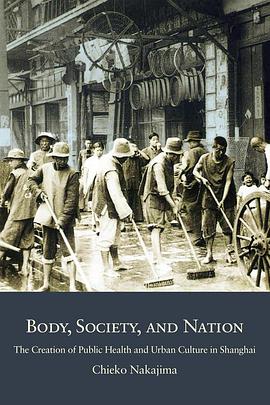
Body, Society, and Nation 豆瓣
作者: Chieko Nakajima 出版社: Harvard University Press 2018 - 8
Body, Society, and Nation tells the story of China’s unfolding modernity by exploring the changing ideas, practices, and systems related to health and body in late nineteenth- and twentieth-century Shanghai. The pursuit of good health loomed large in Chinese political, social, and economic life. Yet, “good health” had a range of associations beyond individual well-being. It was also an integral part of Chinese nation-building, a goal of charitable activities, a notable outcome of Western medical science, a marker of modern civilization, and a commercial catchphrase. With the advent of Western powers, Chinese notions about personal hygiene and the body gradually expanded. This transformation was complicated by indigenous medical ideas, preexisting institutions and social groups, and local cultures and customs.
This study explores the many ways that members of the various strata of Shanghai society experienced and understood multiple meanings of health and body within their everyday lives. Chieko Nakajima traces the institutions they established, the regulations they implemented, and the practices they brought to the city as part of efforts to promote health. In doing so, she explains how local practices and customs fashioned and constrained public health and, in turn, how hygienic modernity helped shape and develop local cultures and influenced people’s behavior.
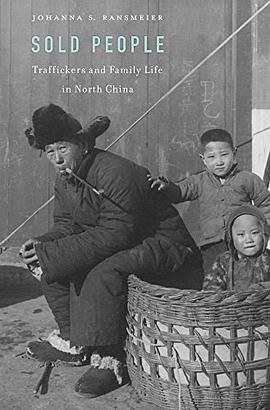
Sold People 豆瓣 Goodreads
作者: Johanna S. Ransmeier 出版社: Harvard University Press 2017 - 3
A robust trade in human lives thrived throughout North China during the late Qing and Republican periods. Whether to acquire servants, slaves, concubines, or children—or dispose of unwanted household members—families at all levels of society addressed various domestic needs by participating in this market. Sold People brings into focus the complicit dynamic of human trafficking, including the social and legal networks that sustained it. Johanna Ransmeier reveals the extent to which the structure of the Chinese family not only influenced but encouraged the buying and selling of men, women, and children.
For centuries, human trafficking had an ambiguous status in Chinese society. Prohibited in principle during the Qing period, it was nevertheless widely accepted as part of family life, despite the frequent involvement of criminals. In 1910, Qing reformers, hoping to usher China into the community of modern nations, officially abolished the trade. But police and other judicial officials found the new law extremely difficult to enforce. Industrialization, urbanization, and the development of modern transportation systems created a breeding ground for continued commerce in people. The Republican government that came to power after the 1911 revolution similarly struggled to root out the entrenched practice.
Ransmeier draws from untapped archival sources to recreate the lived experience of human trafficking in turn-of-the-century North China. Not always a measure of last resort reserved for times of extreme hardship, the sale of people was a commonplace transaction that built and restructured families as often as it broke them apart.
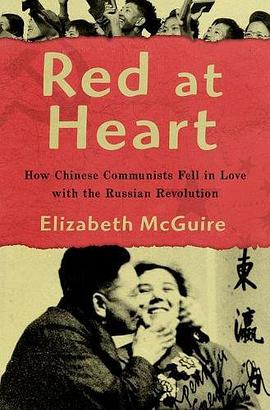
Red at Heart 豆瓣
作者: Elizabeth McGuire 出版社: Oxford University Press 2017 - 11
Beginning in the 1920s thousands of Chinese revolutionaries set out for Soviet Russia. Once there, they studied Russian language and experienced Soviet communism, but many also fell in love, got married, or had children. In this they were similar to other people from all over the world who were enchanted by the Russian Revolution and lured to Moscow by it.
The Chinese who traveled to live and study in Moscow in a steady stream over the course of decades were a key human interface between the two revolutions, and their stories show the emotional investment backing ideological, economic, and political change. They embodied an attraction strong enough to be felt by young people in their provincial hometowns, strong enough to pull them across Siberia to a place that had previously held no interest at all. After the Revolution, the Chinese went home, fought a war, and then, in the 1950s, carried out a revolution that was and still is the Soviet Union's most geopolitically significant legacy. They also sent their children to study in Moscow and passed on their affinities to millions of Chinese, who read Russia's novels, watched its movies, and learned its songs. Russian culture was woven into the memories of an entire generation that came of age in the 1950s - a connection that has outlasted not just the Chinese Cultural Revolution and the collapse of the Soviet Union, but also the subsequent erosion of socialist values and practices. This multi-generational personal experience has given China's relationship with Russia an emotional complexity and cultural depth that were lacking before the advent of twentieth century communism - and have survived its demise. If the Chinese eventually helped to lead a revolution that resembled Russia's in remarkable ways, it was not only because class struggle intensified in China due to international imperialism as Lenin had predicted it would, or because Bolsheviks arrived in China to ensure that it did. It was also because as young people, they had been captivated by the potential of the Russian Revolution to help them to become new people and to create a new China.
This richly crafted and narrated book uses the metaphor of a life-long romance to tell a new story about the relationship between Russia and China. These lives were marked by an emotional engagement that often took the form of a romance: love affairs, marriages, divorces, and
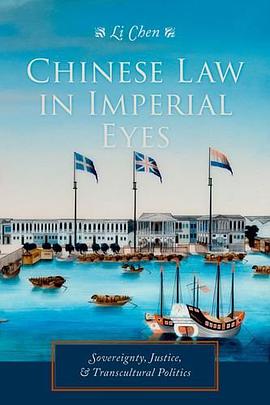
Chinese Law in Imperial Eyes 豆瓣
作者: Li Chen 出版社: Columbia University Press 2015
How did American schoolchildren, French philosophers, Russian Sinologists, Dutch merchants, and British lawyers imagine China and Chinese law? What happened when agents of presumably dominant Western empires had to endure the humiliations and anxieties of maintaining a profitable but precarious relationship with China? In Chinese Law in Imperial Eyes, Li Chen provides a richly textured analysis of these related issues and their intersection with law, culture, and politics in the eighteenth and nineteenth centuries.
Using a wide array of sources, Chen's study focuses on the power dynamics of Sino-Western relations during the formative century before the First Opium War (1839-1842). He highlights the centrality of law to modern imperial ideology and politics and brings new insight to the origins of comparative Chinese law in the West, the First Opium War, and foreign extraterritoriality in China. The shifting balance of economic and political power formed and transformed knowledge of China and Chinese law in different contact zones. Chen argues that recovering the variegated and contradictory roles of Chinese law in Western "modernization" helps provincialize the subsequent Euro-Americentric discourse of global modernity.
Chen draws attention to important yet underanalyzed sites in which imperial sovereignty, national identity, cultural tradition, or international law and order were defined and restructured. His valuable case studies show how constructed differences between societies were hardened into cultural or racial boundaries and then politicized to rationalize international conflicts and hierarchy.
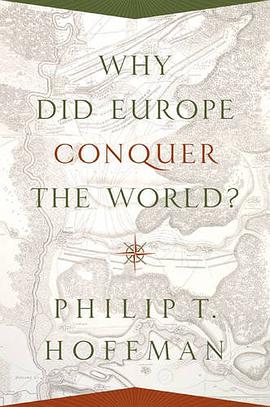
Why Did Europe Conquer the World? 豆瓣
作者: Philip T. Hoffman 出版社: Princeton University Press 2015 - 6
Between 1492 and 1914, Europeans conquered 84 percent of the globe. But why did Europe rise to the top, when for centuries the Chinese, Japanese, Ottomans, and South Asians were far more advanced? Why didn't these powers establish global dominance? In Why Did Europe Conquer the World?, distinguished economic historian Philip Hoffman demonstrates that conventional responses--such as geography, epidemic disease, and the Industrial Revolution--fail to provide answers. Arguing instead for the pivotal role of economic and political history, Hoffman shows that if variables had been at all different, Europe would not have achieved critical military innovations, and another power could have become master of the world.
In vivid detail, Hoffman sheds light on the two millennia of economic, political, and historical changes that set European states on a distinctive path of development and military rivalry. Compared to their counterparts in China, Japan, South Asia, and the Middle East, European leaders--whether chiefs, lords, kings, emperors, or prime ministers--had radically different incentives, which drove them to make war. These incentives, which Hoffman explores using an economic model of political costs and financial resources, resulted in astonishingly rapid growth in Europe's military sector from the Middle Ages on, and produced an insurmountable lead in gunpowder technology. The consequences determined which states established colonial empires or ran the slave trade, and even which economies were the first to industrialize.
Debunking traditional arguments, Why Did Europe Conquer the World? reveals the startling reasons behind Europe's historic global supremacy.