記憶-歷史書寫
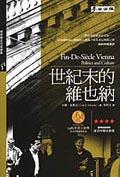
世紀末的維也納 豆瓣
作者: 卡爾.休斯克 译者: 黃煜文 出版社: 麥田出版社 2002 - 11
十九世紀末的維也納,空氣中瀰漫著對於社會與政治將形解體的震顫,時下的思想創新者——表現在音樂與哲學上、經濟學與建築上,當然還包括了精神分析——都想與那些曾培育他們成長的十九世紀自由主義文化劃清界線。
本書作者卡爾•休斯克運用佛洛伊德的精神分析來析論十九世紀末維也納的文學家、建築師、畫家、音樂家從童年到成年的成長經驗,研究他們的作品(詩、小說、建築、畫作、音樂)中所透露的感傷與期望。休斯克發現,十九世紀末的維也納知識分子呈現出一種驚人的同質性,他們都在「反叛父親」。反映在政治上,是反對資產階級自由主義秩序;在文化上,則是反對資產階級庸俗的文化。他們從政治界退縮,轉而投入於藝術面來寄託自己的靈魂。
休斯克就是想從這些人轉變時所呈現出的「共同特質」,來看出一個「歷史趨勢」,那就是從十九世紀中葉到二十世紀初,整個奧匈帝國的政治氣候與文化氣氛。
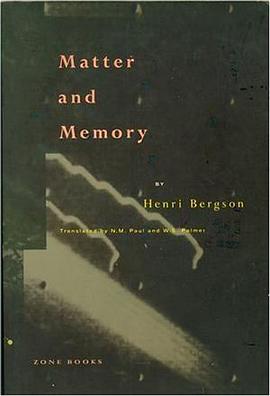
Matter and Memory 豆瓣 Goodreads
作者: Henri Bergson 出版社: Zone Books 1990 - 11
One of the major works of an important modem philosopher, Matter and Memory investigates the autonomous yet interconnected planes formed by matter and perception on the one hand and memory and time on the other.<br /> <br /> Henry Bergson (1859-1941) was awarded the Nobel Prize in 1927. His works include Time and Free Will, An Introduction to Metaphysics, Creative Evolution, and The Creative Mind.
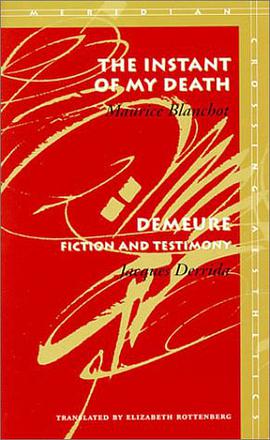
The Instant of My Death 豆瓣
作者: Maurice Blanchot / Jacques Derrida 译者: Elizabeth Rottenberg 出版社: Stanford University Press 2000
This volume records a remarkable encounter in critical and philosophical thinking: a meeting of two of the great pioneers in contemporary thought, Maurice Blanchot and Jacques Derrida, who are also bound together by friendship and a complex relation to their own pasts. More than a literary text with critical commentary, it constitutes an event of central significance for contemporary philosophical, literary, and political concerns.
The book consists of The Instant of My Death, a powerful short prose piece by Blanchot, and an extended essay by Derrida that reads it in the context of questions of literature and of bearing witness. Blanchot’s narrative concerns a moment when a young man is brought before a firing squad during World War II and then suddenly finds himself released from his near death. The incident, written in the third person, is suggestively autobiographical—from the title, several remarks in the text, and a letter Blanchot wrote about a similar incident in his own life—but only insofar as it raises questions for Blanchot about what such an experience might mean. The accident of near death becomes, in the instant the man is released, the accident of a life he no longer possesses. The text raises the question of what it means to write about a (non)experience one cannot claim as one’s own, and as such is a text of testimony or witness.
Derrida’s reading of Blanchot links the problem of testimony to the problem of the secret and to the notion of the instant. It thereby provides the elements of a more expansive reassessment of literature, testimony, and truth. In addressing the complex relation between writing and history, Derrida also implicitly reflects on questions concerning the relation between European intellectuals and World War II.