语言类型学
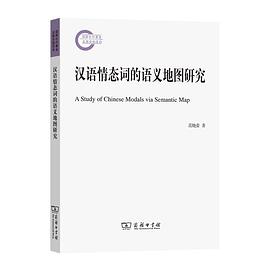
汉语情态词的语义地图研究 豆瓣
作者: 范晓蕾 出版社: 商务印书馆 2020
本书基于汉语方言语料,逐步构建出一个完整的情态语义地图,同时探讨情态范畴和语义地图模型的具体理论问题,并对普通话的特定情态词做语法分析。既有跨方言比较,也有普通话的内部分析。全书在章节安排上遵照循序渐进、环环相扣的模式,共十章。研究兼具“共时分析”和“历时构拟”两个维度。书稿的很多内容来自作者已发表的八篇期刊论文,此次成书在几个观点上做了一些改进,新增了几个特定情态词的详细分析,代表作者在情态方面的最新研究成果。
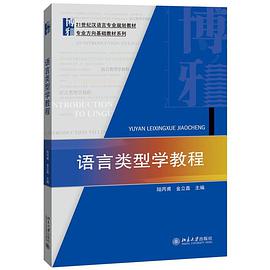
语言类型学教程 豆瓣
作者: 陆丙甫 / 金立鑫 出版社: 北京大学出版社 2015 - 8
本书由南昌大学语言类型学研究所陆丙甫教授和上海外国语大学语言研究院金立鑫教授担纲,组织国内类型学研究领域的一些优秀学者合作编写而成,是国内首部类型学教材。教材参考国内外语言类型学领域的主要成果,又紧扣汉语语言学,分析大量丰富的语言样本。它依据中国读者的习惯,构建了与传统教科书结构一致的框架体系,将知识点化零散为系统。书中介绍的实证研究方法,内容详细、步骤清晰,具备极强的可操作性,为读者描写语言、开展基础研究提供了极大的便利。
2020年8月25日 已读
3.5 多人合撰的话到这个程度还差点意思,做二道贩子还不够到位,不够细,完全可以写厚一点,有些范畴还没讲,有些真是蜻蜓点水,不知道是不是怕国内学生吃不消所以写低配了。很多章节就是引介洋教材和几个系列,因为犄角旮旯的那些个语言的语例和洋教材是一致的,一看也不是自己研究的,其实不如直接翻译洋教材了,不过说是编写还是实诚的。
H0语言学 bought 工具书 汉语 汉语相关
Basic Linguistic Theory Volume 2 豆瓣
作者: R. M. W. Dixon 出版社: Oxford University Press, USA 2009
In Basic Linguistic Theory R. M. W. Dixon provides a new and fundamental characterization of the nature of human languages and a comprehensive guide to their description and analysis. In three clearly written and accessible volumes, he describes how best to go about doing linguistics, the most satisfactory and profitable ways to work, and the pitfalls to avoid. In the first volume he addresses the methodology for recording, analysing, and comparing languages. He argues that grammatical structures and rules should be worked out inductively on the basis of evidence, explaining in detail the steps by which an attested grammar and lexicon can built up from observed utterances. He shows how the grammars and words of one language may be compared to others of the same or different families, explains the methods involved in cross-linguistic parametric analyses, and describes how to interpret the results. Volume 2 and volume 3 (to be published in 2011) offer in-depth tours of underlying principles of grammatical organization, as well as many of the facts of grammatical variation. 'The task of the linguist,' Professor Dixon writes, 'is to explain the nature of human languages - each viewed as an integrated system - together with an explanation of why each language is the way it is, allied to the further scientific pursuits of prediction and evaluation.' Basic Linguistic Theory is the triumphant outcome of a lifetime's thinking about every aspect and manifestation of language and immersion in linguistic fieldwork. It is a one-stop text for undergraduate and graduate students of linguistics, as well as for those in neighbouring disciplines, such as psychology and anthropology.
Basic Linguistic Theory, Volume 1 豆瓣
作者: R. M. W. Dixon 出版社: Oxford University Press, USA 2009
In Basic Linguistic Theory R. M. W. Dixon provides a new and fundamental characterization of the nature of human languages and a comprehensive guide to their description and analysis. In three clearly written and accessible volumes, he describes how best to go about doing linguistics, the most satisfactory and profitable ways to work, and the pitfalls to avoid. In the first volume he addresses the methodology for recording, analysing, and comparing languages. He argues that grammatical structures and rules should be worked out inductively on the basis of evidence, explaining in detail the steps by which an attested grammar and lexicon can build up from observed utterances. He shows how the grammars and words of one language may be compared to others of the same or different families, explains the methods involved in cross-linguistic parametric analyses, and describes how to interpret the results. Volume 2 and volume 3 (to be published in 2011) offer in-depth tours of underlying principles of grammatical organization, as well as many of the facts of grammatical variation. 'The task of the linguist,' Professor Dixon writes, 'is to explain the nature of human languages - each viewed as an integrated system - together with an explanation of why each language is the way it is, allied to the further scientific pursuits of prediction and evaluation.' Basic Linguistic Theory is the triumphant outcome of a lifetime's thinking about every aspect and manifestation of language and immersion in linguistic fieldwork. It is a one-stop text for undergraduate and graduate students of linguistics, as well as for those in neighbouring disciplines, such as psychology and anthropology.
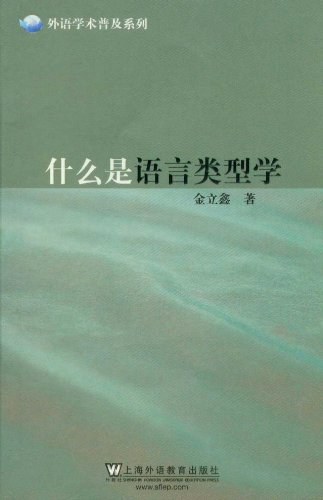
什么是语言类型学 豆瓣
作者: 金立鑫 出版社: 上海外语教育出版社 2011 - 6
语言类型学研究什么?要回答这个问题,先要回答“语言学研究什么”这个问题。简单来说,语言学是研究人类语言中的要素和规则的。语言中的要素都是客观存在的,例如语音和词汇单位。语言中的规则也是客观存在的,例如构词法、句法、篇章构成的方法等等。
由金立鑫编著的《外语学术普及系列:什么是语言类型学》以问答的彤式,较为全面地介绍了语言类烈学的研究所史,现状和发展方向以及研究范嘲、研究内容、研究方法,与其他语畜学研究的关系等。
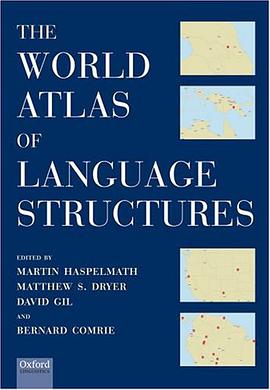
The World Atlas of Language Structures 豆瓣
作者: Martin Haspelmath / Matthew S. Dryer 出版社: OUP Oxford 2005 - 7
"The World Atlas of Language Structures" is a book and CD combination displaying the structural properties of the world's languages. 142 world maps and numerous regional maps - all in colour - display the geographical distribution of features of pronunciation and grammar, such as number of vowels, tone systems, gender, plurals, tense, word order, and body part terminology. Each world map shows an average of 400 languages and is accompanied by a fully referenced description of the structural feature in question. The CD provides an interactive electronic version of the database, which allows the reader to zoom in on or customize the maps, to display bibliographical sources, and to establish correlations between features. The book and the CD together provide an indispensable source of information for linguists and others seeking to understand human languages. The Atlas will be especially valuable for linguistic typologists, grammatical theorists, historical and comparative linguists, and for those studying a region such as Africa, Southeast Asia, North America, Australia, and Europe. It will also interest anthropologists and geographers. More than fifty authors from many different countries have collaborated to produce a work that sets new standards in comparative linguistics. No institution involved in language research can afford to be without it.
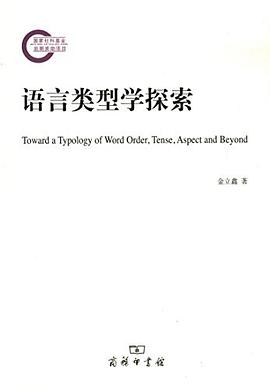
语言类型学探索 豆瓣
作者: 金立鑫 出版社: 商务印书馆 2017 - 3
本书在语言类型学研究领域做了一些探索性的工作。将人类语言的体从类型上分为两大类:事件界限体,时间进程体;讨论了语序类型学中最为基本的一些问题;用语序参数测量了汉语普通话,认为汉语普通话是较为典型的VO和OV混合语序;探讨了动词或句法结构中的时、体范畴。
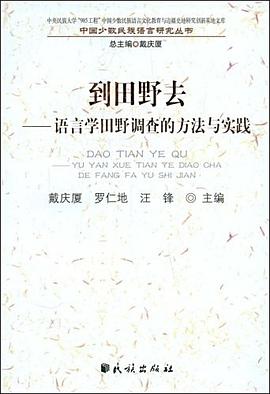
到田野去 豆瓣
作者: 戴庆厦 等编 出版社: 民族出版社 2008
《到田野去:语言学田野调查的方法与实践》讲述了:在中国广袤的土地上,生活着丰富多彩、文化各异的族群,他们灿烂的思想和珍贵的文明遗产都凝聚于他们的语言之中。异彩纷呈的鲜活语言在中国的山川田野中无处不在。一方面,这些丰富的共时语言矿藏显示着他们在世界语言之林的独特地位;另一方面也与中国数千年汇聚而来的浩瀚文献相映成辉。活生生的语言展示着人类思维表达之精巧,也与数千年的语言传统相衔接。但我们不能不关注的是,中国的语言多样性同样在流失。一些弱势语言在经济、文化的巨大压力下已经开始濒危、消亡,这是一个令人痛心的严峻形势。
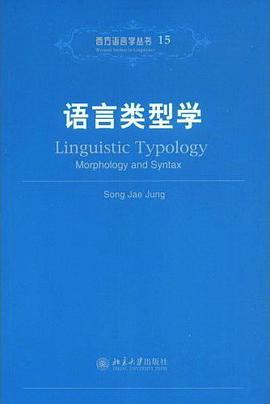
语言类型学 豆瓣
作者: [韩]宋在晶 出版社: 北京大学出版社 2008
《语言类型学》作者在大量不同语言的资料和例证的基础上,对语言类型学作了全新和深入的介绍。《语言类型学》的特色是着重对此领域中的主要问题,如基本语序、格标记、关系从句、致使构式等进行了具体而详细的研究,通过具体案例研究,揭示了如何发现和解释语言类型的系统模式,以及这些模式所受的限制。另外,《语言类型学》还讨论了一些实用的问题和方法,如语料的采集和语言样本的制作,最后《语言类型学》探讨了语言类型学在历时语言学、语言习得等其他领域中的应用问题。
对于研究兴趣在语言类型和语言共性、语言比较、历时语言学、语言习得、语言认知等领域的读者而言,《语言类型学》都是一部有价值的著作。
-------
目录
给中国读者的前言
Preface
导读
Abbreviario掰
Acknowledgements
1 Introducing linguistic typology
1.1 What do linguistic typologists study?
1.2 Typological analysis
13 Typology of language universals
1.4 Language universals and linguistic typology
1.5 Assumptions and problems in typological analysis
1.5.1 Cross-linguistic comparability
1.5.2 The Principle of Uniformitarianism
1.5.3 Approaches to language sampling
1.5.4 Determining language sample sizes
1.5.5 Problems with data
1.6 Partial typology VS.holistic typology
1.7 Organization ofthe rest ofthe book
2 Basic WOrd Order
2.1What is basic word order?
2.2 Early research on basic word order
2.2.1 The inception of word order typology
2.2.2 The OV-VO typology
2.2.3 Making language universals exceptionless
2.3 Explaining the distribution of the basic clausal word orders
2.4 Back to the OV-VO typology:the Branching Direction Theory
2.5 Seeking a global explanation:the Early Immediate Constituents Theory
2.6 From word order to morpheme order:the suffixing preference
2.7 Closing remarks
3 Case marking
3.1 Introduction
3.2 AS and P, and types of case marking
3.2.1 Nominative-accusative system
3.2.2 Ergative-absolutive system
3.2.3 Tripartite system
3.2.4 AP/S system
3.2.5 Neutral system
3.3 More types of case marking
3.3.1 Split-ergative system
3.3.2 Active-stative system
3.3.3 Direct-inverse system
3.4 Distribution of the case marking systems
3.5 The discriminatory view of case marking
3.6 The indexing view of case marking
3.7 The discriminatory view vs. the indexing view
3.8 The Nominal Hierarchy and the split-ergative system
3.9 Towards a unified explanation: attention flow and viewpoint
3.10 Ergativity from discourse to grammar
3.11 Case marking in altered or non-basic constructions
3.11.1 Passive
3.11.2 Antipassive
3.11.3 Noun incorporation
3.11.4 Advancement of obliques to P
3.12 Syntactic ergativity
3.13 Head marking vs. dependent marking
3.14 Case marking type and word order type
4 Relative clauses
4.1 Introduction
4.2 The position of the head noun vis-a-vis the restricting clause
4.3 Expression of the head noun
4.3.1 The obliteration strategy
4.3.2 The pronoun-retention strategy
4.3.3 The relative-pronoun strategy
4.3.4 Language-internal distribution of the relativization strategies
4.4 Accessibility Hierarchy: accessibility to relativization
4.5 Conspiracy in relativization
4.6 Correlations between RC-related properties
4.7 The head noun in the main clause
4.8 Subject primacy vs. discourse preferences in relativization
4.9 RC type and word order type
4.10 The role of processing in the distribution of RC types
4.11 The All and structural complexity
5 Causatives
5.1 Introduction
5.2 The morphologically based typology of causative constructions
5.3 The syntax of the causee NP: the Case Hierarchy
5.4 Conspiracy in causativization
5.5 Doubling: coding vs. grammatical relation
5.6 Causation types and causative types
5.7 The case marking of the causee NP
5.8 The conceptual integration of the causee in the causative event
5.9 Towards a typology of causative constructions
6 The application of linguistic typology
6.1 Introduction
6.2 Linguistic typology and historical linguistics
6.2.1 Early attempts at word order reconstruction
6.2.2 Linguistic typology as a control on, and a tool in,reconstruction
6.2.3 Linguistic typology and linguistic prehistory
6.3 Linguistic typology and language acquisition
6.3.1 Accessibility to relativization in FLA
6.3.2 Accessibility to relativization in SLA
6.3.3 Two potential FLA/SLA areas of application
6.3.4 Closing remarks
7 European approaches to linguistic typology
7.1 Introduction
7.2 The Leningrad Typology Group
7.3 The Cologne UNITYP Group
7.4 The Prague School Typology
7.5 Epilogue
Bibliography
Author Index
Language Index
Subject Index
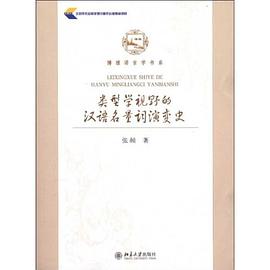
类型学视野的汉语名量词演变史 豆瓣
作者: 张赪 出版社: 北京大学出版社 2012 - 8
《博雅语言学书系:类型学视野的汉语名量词演变史》从类型学视野考察了汉语名量词的演变历史,详细描写并分析了汉语分类词产生、形成初期的情况,形状、功用、生物属性等各类量词的形成历史和规律,各时期量名搭配、名量搭配的变化,量词在非数量表达结构中的运用等。重点讨论了汉语名量词的产生动因、“反响型量词”以及通用量词在汉语量词发展史上的地位、量词这一语法范畴如何在汉语中扩散、指示代词与量词结合的历史、通用量词“个”是否泛化等问题。书中基于类型学的研究成果和大量的汉语史事实,提出了对这些问题的意见。既发现和概括了以往仅从汉语看汉语演变所不能看到的演变规律,又以汉语得天独厚的完整而丰富的历史材料补充了类型学分类词研究某些方面的欠缺。
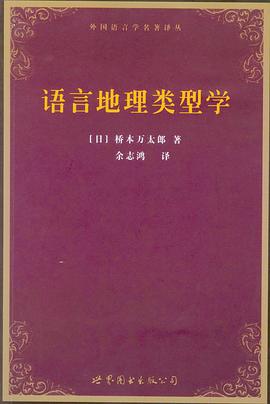
语言地理类型学 豆瓣
作者: 桥本万太郎 译者: 余志鸿 出版社: 世界图书出版公司 2008
“语言地理类型学”是日本已故学者桥本万太郎立足于东亚大陆语言事实的研究而创建的新理论。本书把语言在地理上表现出来的类型推移,看作是语言历史演变各层次的投影,从而把“横”的区域考察跟“纵”的历史比较有机地结合起来。全书理论精邃,内容翔实,论证严密,涉及面广泛,由语言学家余志鸿精心翻译,著名语言学家朱德熙为之作序,是研究东亚诸语言的重要参考书,对普通语言学研究也具有指导意义。原译作于1985年出版,曾影响了我国一代学者,该理论日益为国内学界所接受,该书已成为各大学语言学本科生和研究生的必读专著。
全书主要由五部分组成:开章“语言的发展”为基本理论框架,后分别从句法结构、基本词汇、音韵结构三方面谈论语言的推移,最后一章为结论。
语序类型学与介词理论 豆瓣
作者: 刘丹青 出版社: 商务印书馆 2003 - 10
《语序类型学与介词理论》介绍了目前国际语言学界有关语言类型学的最新理论及研究成果,并运用这些理论和成果对汉语和吴语进行了分析与研究。内容有:语言类型学述要、语序类型学的发展、语序类型学中的介词和连词参项、介词语义学与语法化理论等。
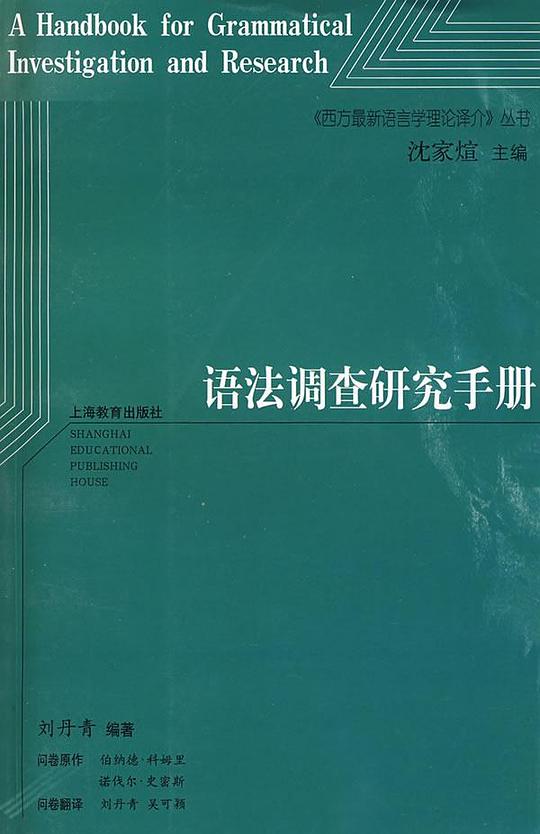
语法调查研究手册 豆瓣
作者: 刘丹青 出版社: 上海教育出版社 2008 - 11
关于该问卷的宗旨、特色、使用方式等,原作者的“引言”已作了解释。关于该问卷出版的学术背景,以及在国内引进此问卷的意义,在“引言”后的说明部分也作了介绍。简而言之,问卷为各地人类语言的调查描写提供了一个尽量客观、全面和包容性强的语法框架,让调查研究者可以尽可能摆脱语种局限和学派成见,调查到尽可能多的语法事实。这正是主要习惯于汉语眼光的国内语法学界所非常需要的。
本手册以科姆里(Bernard Comrie)和史密斯(Norval Smith)所编制的《Lingua版语言描写性研究问卷》(1977,刘丹青、吴可颖译)为提纲,对问卷的内容进行详尽的注释、例示、补充和分析,包括对不足之处或不适合中国语言之处的评述。总篇幅约相当于问卷的十倍。该问卷的翻译和出版得到了科姆里和史密斯两位教授的授权和鼓励。问卷的主体是语法项目,本书的说明也主要围绕语法项目,因而书名为《语法调查研究手册》。
-------
目录
序(沈家煊)
卷首语
Lingua版语言描写性研究问卷引言
[引言说明]
1 句法
1.1 一般问题
1.1.1 句类
1.1.1.1 直接引语和间接引语
1.1.1.2 疑问句:是非问句|疑问代词问句(特指问)|回声问句
1.1.2 从属句关系(从句关系)
1.1.2.1 从句标志手段:语序|助词|动词修饰|其他
1.1.2.2 名词从句(补足语从句):标记手段|与主句的位置关系|从句次类|限定与非限定
1.1.2.3 形容词从句(关系从句):标记手段|限制性和非限制性|核心名词的位置|无核关系从句|可关系化的范围|非限定式
1.1.2.4 状语从句:标记手段|语序|类别:时间、方式、目的、原因、条件、结果、程度|非限定式
1.1.2.5 时态呼应链
1.2 结构问题
1.2.1 句子的内部结构
1.2.1.1 系词句:名词性表语句|形容词补足语句|副词性补足语句|系词隐去的条件}系词的不同类型
1.2.1.2 动词句:傀儡主语旬|无宾动词|间接宾语|其他动词论元|主语、直接宾语和其他论元的组合关系|
动词、主语、直接宾语的语序
1.2.1.3 状语:类别:副词、前/后置词短语、格、从句|语序
1.2.2 形容词短语
1.2.2.1 形容词短语的操作性定义
1.2.2.2 形容词带论元问题:用于无主句|带直接宾语的形容词|带间接宾语的形容词|其他论元|可能的论元组合|论元组合的语序
1.2.2.3 修饰形容词的状语种类:副词状语|前/后置词短语|格|状语从句|语序
1.2.2.4 形容词、论元和状语同现时的语序
1.2.3 状语短语
1.2.3.1—1.2.3.4 操作性定义|修饰状语的状语|语序|状语修饰状语的种类限制
1.2.4 前置词/后置词短语及其论元
1.2.4.1 前/后置词短语的操作性定义
1.2.4.2 前/后置词短语与其论元的关系:前/后置词论元(宾语)的隐现|与多个论元同现|与非名词短语的论元同现|
前/后置词的悬空
1.2.4.3 修饰前/后置词的成分:副词|前/后置词短语|格|状语从句|语序
1.2.4.4 支配不止一种格的前/后置词:格的选择的决定因素
1.2.5 名词短语(名词性成分)
1.2.5.1 名词短语的操作性定义
1.2.5.2 修饰语种类:形容词|关系从句|领属“形容词”|冠词|指示“形容词”|量化词|副词性成分|强调代词
……
2 形态
3 音系
4 象声词
5 词汇
引用文献
汉语书面语料文献版本目录
语种索引
后记