賽博
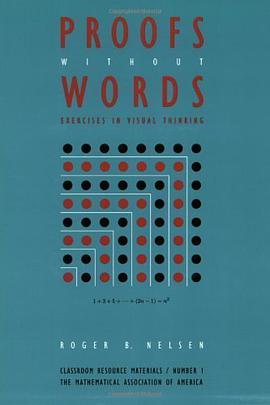
Proofs without Words 豆瓣
作者: Roger B. Nelsen 出版社: The Mathematical Association of America 1993 - 10
Proofs without words are generally pictures or diagrams that help the reader see why a particular mathematical statement may be true, and how one could begin to go about proving it. While in some proofs without words an equation or two may appear to help guide that process, the emphasis is clearly on providing visual clues to stimulate mathematical thought. The proofs in this collection are arranged by topic into five chapters: Geometry and algebra; Trigonometry, calculus and analytic geometry; Inequalities; Integer sums; and Sequences and series. Teachers will find that many of the proofs in this collection are well suited for classroom discussion and for helping students to think visually in mathematics.
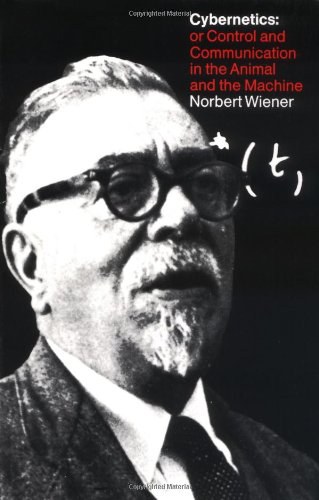
Cybernetics (2/e) 豆瓣 Goodreads
作者: Norbert Wiener 出版社: The MIT Press 1965 - 3
Acclaimed one of the "seminal books...comparable in ultimate importance to...Galileo or Malthus or Rousseau or Mill", Cybernetics was judged by twenty-seven historians, economists, educators, and philosophers to be one of those books published during the "past four decades," which may have a substantial impact on public thought and action in the years ahead." -- Saturday Review
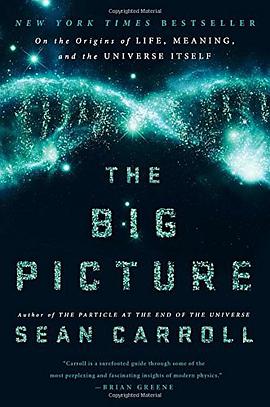
The Big Picture: On the Origins of Life, Meaning, and the Universe Itself 豆瓣 Goodreads
作者: Sean Carroll 出版社: Dutton 2016 - 5 其它标题: The Big Picture
Already internationally acclaimed for his elegant, lucid writing on the most challenging notions in modern physics, Sean Carroll is emerging as one of the greatest humanist thinkers of his generation as he brings his extraordinary intellect to bear not only on Higgs bosons and extra dimensions but now also on our deepest personal questions.  Where are we? Who are we? Are our emotions, our beliefs, and our hopes and dreams ultimately meaningless out there in the void? Does human purpose and meaning fit into a scientific worldview?

In short chapters filled with intriguing historical anecdotes, personal asides, and rigorous exposition, readers learn the difference between how the world works at the quantum level, the cosmic level, and the human level--and then how each connects to the other.  Carroll's presentation of the principles that have guided the scientific revolution from Darwin and Einstein to the origins of life, consciousness, and the universe is dazzlingly unique.

Carroll shows how an avalanche of discoveries in the past few hundred years has changed our world and what really matters to us. Our lives are dwarfed like never before by the immensity of space and time, but they are redeemed by our capacity to comprehend it and give it meaning.

The Big Picture is an unprecedented scientific worldview, a tour de force that will sit on shelves alongside the works of Stephen Hawking, Carl Sagan, Daniel Dennett, and E. O. Wilson for years to come.