=亚欧
The Lost World of Old Europe 豆瓣
作者: David W. Anthony 出版社: Princeton University Press 2009 - 11
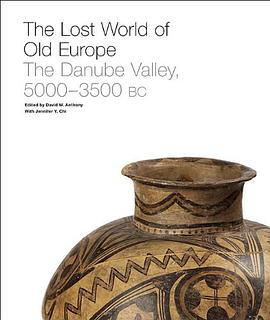
In the prehistoric Copper Age, long before cities, writing, or the invention of the wheel, Old Europe was among the most culturally rich regions in the world. Its inhabitants lived in prosperous agricultural towns. The ubiquitous goddess figurines found in their houses and shrines have triggered intense debates about women's roles. "The Lost World of Old Europe" is the accompanying catalog for an exhibition at New York University's Institute for the Study of the Ancient World. This superb volume features essays by leading archaeologists as well as breathtaking color photographs cataloguing the objects, some illustrated here for the first time. The heart of Old Europe was in the lower Danube valley, in contemporary Bulgaria and Romania. Old European coppersmiths were the most advanced metal artisans in the world. Their intense interest in acquiring copper, Aegean shells, and other rare valuables gave rise to far-reaching trading networks. In their graves, the bodies of Old European chieftains were adorned with pounds of gold and copper ornaments. Their funerals were without parallel in the Near East or Egypt. The exhibition represents the first time these rare objects have appeared in the United States. An unparalleled introduction to Old Europe's cultural, technological, and artistic legacy, "The Lost World of Old Europe" includes essays by Douglass Bailey, John Chapman, Cornelia-Magda Lazarovici, Ioan Opris and Catalin Bem, Ernst Pernicka, Dragomir Nicolae Popovici, Michel Seferiades, and Vladimir Slavchev.
Ancient Buddhist Scrolls from Gandhara 豆瓣
作者: Richard Salomon 出版社: University of Washington Press 1999 - 5
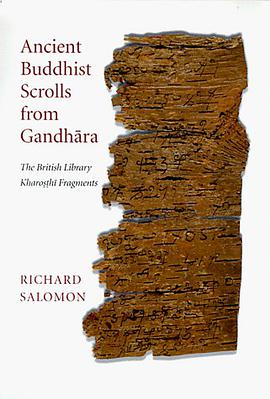
As the Dead Sea scrolls have changed our understanding of Judaism and early Christianity, so a set of twenty-nine scrolls recently acquired by the British Library promise to provide a window into a crucial phase of the history of Buddhism in India. The fragmentary birch bark scrolls, which were found inside one of a set of inscribed clay pots, are written in the Gandhari Prakrit language and in Kharosthi script. Dating from around the beginning of the Christian era, the scrolls are probably the oldest Buddhist manuscripts ever discovered.
The manuscripts and pots come from a region known in ancient times as Gandhara, corresponding to modern northern Pakistan and eastern Afghanistan. At the peak of its influence, Gandhara was the capital of a series of wealthy and powerful dynasties and became one of the world's most important centers of Buddhism and the gateway through which Buddhism was transmitted from India to China and other parts of Asia. Gandhara was also a principal point of contact between India and the Western world. Despite abundant archeological evidence of Gandhara's thriving culture, until now there has been virtually no documentary evidence of its literary and religious canon.
This volume introduces a groundbreaking project to decipher and interpret the Gandhäran texts. It provides a detailed description of the manuscripts and a survey of their contents, along with a preliminary evaluation of their significance. Also included are representative samples of texts and translations.
This discovery sheds new light on the regional character of early Indian Buddhist traditions, the process of the formation of standardized written canons, and the transmission of Buddhism into central and east Asia. Ancient Buddhist Scrolls from Gandhara will appeal to a broad audience with interests in Buddhism, comparative religion, and Asian languages.