A山外山
Mi Fu 豆瓣
作者: Peter Charles Sturman 出版社: Yale University Press 1997 - 5
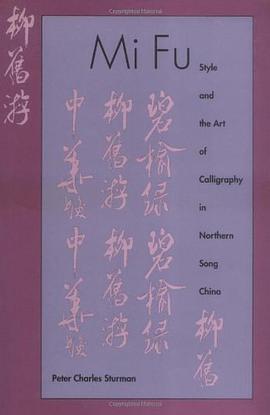
Mi Fu, one of the most celebrated figures in the history of Chinese art, was a prominent calligrapher in eleventh-century China. A member of the educated elite, or literati, he also contributed a great deal to discussions of theoretical issues of function and style in calligraphy, the primary means of graphic expression for the literati. In this book Peter Sturman examines Mi Fu's calligraphy within the framework of the artist's fascinating life, the Northern Song culture in which he lived, and the literati theory of art he helped to formulate. The book is both chronological and topical, following Mi Fu's efforts to develop styles of calligraphy that would communicate his social and personal ideals as they changed according to his place in Song society: as connoisseur of the arts, responsible official, man among mountains and streams, and Daoist talent in the service of the emperor. Sturman's detailed analyses, which consider the content as well as the style of the writing, firmly set Mi Fu's calligraphy in the fabric of Northern Song history. At the same time, Sturman shows how Mi Fu's relationship with the history of calligraphy both before and after him illuminates this most Chinese of arts.

Ancient Buddhist Scrolls from Gandhara 豆瓣
作者: Richard Salomon 出版社: University of Washington Press 1999 - 5
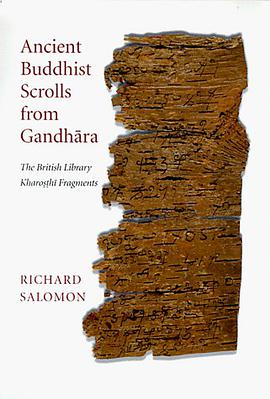
As the Dead Sea scrolls have changed our understanding of Judaism and early Christianity, so a set of twenty-nine scrolls recently acquired by the British Library promise to provide a window into a crucial phase of the history of Buddhism in India. The fragmentary birch bark scrolls, which were found inside one of a set of inscribed clay pots, are written in the Gandhari Prakrit language and in Kharosthi script. Dating from around the beginning of the Christian era, the scrolls are probably the oldest Buddhist manuscripts ever discovered.
The manuscripts and pots come from a region known in ancient times as Gandhara, corresponding to modern northern Pakistan and eastern Afghanistan. At the peak of its influence, Gandhara was the capital of a series of wealthy and powerful dynasties and became one of the world's most important centers of Buddhism and the gateway through which Buddhism was transmitted from India to China and other parts of Asia. Gandhara was also a principal point of contact between India and the Western world. Despite abundant archeological evidence of Gandhara's thriving culture, until now there has been virtually no documentary evidence of its literary and religious canon.
This volume introduces a groundbreaking project to decipher and interpret the Gandhäran texts. It provides a detailed description of the manuscripts and a survey of their contents, along with a preliminary evaluation of their significance. Also included are representative samples of texts and translations.
This discovery sheds new light on the regional character of early Indian Buddhist traditions, the process of the formation of standardized written canons, and the transmission of Buddhism into central and east Asia. Ancient Buddhist Scrolls from Gandhara will appeal to a broad audience with interests in Buddhism, comparative religion, and Asian languages.