Climate
International Relations and Global Climate Change 豆瓣
作者: Luterbacher, Urs (EDT)/ Sprinz, Detlef F. (EDT) 出版社: The MIT Press 2001 - 10
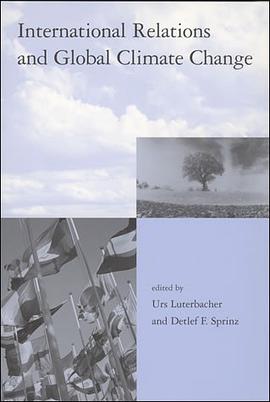
This book surveys current conceptual, theoretical, and methodological approaches to global climate change and international relations. Although it focuses on the role of states, it also examines the role of nonstate actors and international organizations whenever state-centric explanations are insufficient.The book begins with a discussion of environmental constraints on human activities, the environmental consequences of human activities, and the history of global climate change cooperation. It then moves to an analysis of the global climate regime from various conceptual and theoretical perspectives. These include realism and neorealism, historical materialism, neoliberal institutionalism and regime theory, and epistemic community and cognitive approaches. Stressing the role of nonstate actors, the book looks at the importance of the domestic-international relationship in negotiations on climate change. It then looks at game-theoretical and simulation approaches to the politics of global climate change. It emphasizes questions of equity and the legal difficulties of implementing the UN Framework Convention on Climate Change and the Kyoto Protocol. It concludes with a discussion of global climate change and other aspects of international relations, including other global environmental accords and world trade. The book also contains Internet references to major relevant documents.
Climate in Motion 豆瓣
作者: Deborah R. Coen 出版社: University of Chicago Press 2018 - 8
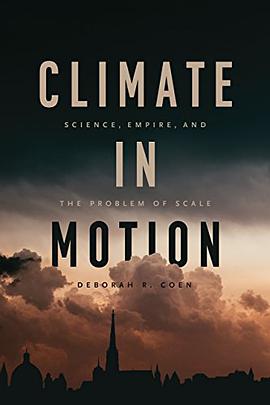
Today, predicting the impact of human activities on the earth’s climate hinges on tracking interactions among phenomena of radically different dimensions, from the molecular to the planetary. Climate in Motion shows that this multiscalar, multicausal framework emerged well before computers and satellites. Extending the history of modern climate science back into the nineteenth century, Deborah R. Coen uncovers its roots in the politics of empire-building in central and eastern Europe. She argues that essential elements of the modern understanding of climate arose as a means of thinking across scales in a state—the multinational Habsburg Monarchy, a patchwork of medieval kingdoms and modern laws—where such thinking was a political imperative. Led by Julius Hann in Vienna, Habsburg scientists were the first to investigate precisely how local winds and storms might be related to the general circulation of the earth’s atmosphere as a whole. Linking Habsburg climatology to the political and artistic experiments of late imperial Austria, Coen grounds the seemingly esoteric science of the atmosphere in the everyday experiences of an earlier era of globalization. Climate in Motion presents the history of modern climate science as a history of “scaling”—that is, the embodied work of moving between different frameworks for measuring the world. In this way, it offers a critical historical perspective on the concepts of scale that structure thinking about the climate crisis today and the range of possibilities for responding to it.