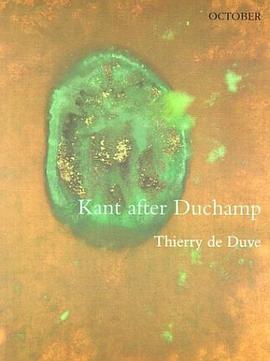
Kant after Duchamp brings together eight essays around a central thesis with many implications for the history of avant-gardes. Although Duchamp's readymades broke with all previously known styles, de Duve observes that he made the logic of modernist art practice the subject matter of his work, a shift in aesthetic judgment that replaced the classical "this is beautiful" with "this is art." De Duve employs this shift (replacing the word "beauty" by the word "art") in a rereading of Kant's Critique of Judgment that reveals the hidden links between the radical experiments of Duchamp and the Dadaists and mainstream pictorial modernism.Part I of the book revolves around Duchamp's famous/infamous Fountain. Part II explores his passage from painting to the readymades, from art in particular to art in general. Part III looks at the aesthetic and ethical consequences of the replacement of "beauty" with "art" in Kant's Third Critique. Finally, part IV attempts to reconstruct an "archaeology" of modernism that paves the way for a renewed understanding of our postmodern condition.The essays : Art Was a Proper Name. Given the Richard Mutt Case. The Readymade and the Tube of Paint. The Monochrome and the Blank Canvas. Kant after Duchamp. Do Whatever. Archaeology of Pure Modernism. Archaeology of Practical Modernism.