MathematicalBiology
How Nature Works 豆瓣
作者: Per Bak 出版社: Copernicus 1996 - 6
This is a science book, intended for the general reader who is interested in science. The author is a physicist who is well-known for his development of the property called "self-organized Criticality", a property or phenomenon that lies at the heart of large dynamical systems. It can be used to analyse systems that are complicated, and which are part of the new science of complexity. It is a unifying concept that can be used to study phenomena in fields as diverse as economics, astronomy, the earth sciences, and physics. The author discusses his discovery of self-organized criticality; its relation to the world of classical physics; computer simulations and experiments which aid scientist's understanding of the property; and the relation of the subject to popular areas such as fractal geometry and power laws; cellular automata, and a wide range of practical applications. The book is readable without a science background--below the level of Scientific American.
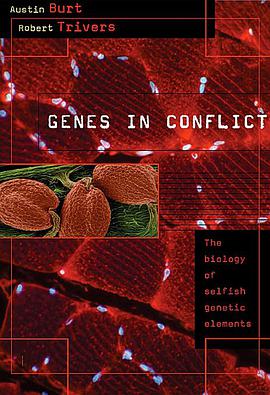
Genes in Conflict 豆瓣
作者: Austin Burt / Robert Trivers 出版社: Belknap Press of Harvard University Press 2008 - 3
In evolution, most genes survive and spread within populations because they increase the ability of their hosts (or their close relatives) to survive and reproduce. But some genes spread in spite of being harmful to the host organism—by distorting their own transmission to the next generation, or by changing how the host behaves toward relatives. As a consequence, different genes in a single organism can have diametrically opposed interests and adaptations.
Covering all species from yeast to humans, Genes in Conflict is the first book to tell the story of selfish genetic elements, those continually appearing stretches of DNA that act narrowly to advance their own replication at the expense of the larger organism. As Austin Burt and Robert Trivers show, these selfish genes are a universal feature of life with pervasive effects, including numerous counter-adaptations. Their spread has created a whole world of socio-genetic interactions within individuals, usually completely hidden from sight.
Genes in Conflict introduces the subject of selfish genetic elements in all its aspects, from molecular and genetic to behavioral and evolutionary. Burt and Trivers give us access for the first time to a crucial area of research—now developing at an explosive rate—that is cohering as a unitary whole, with its own logic and interconnected questions, a subject certain to be of enduring importance to our understanding of genetics and evolution.
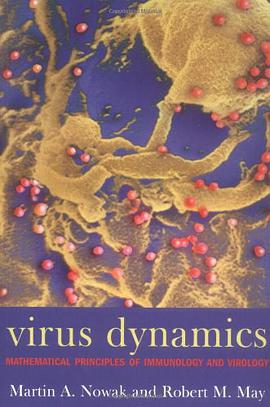
Virus dynamics 豆瓣
作者: Martin A. Nowak / Robert May 出版社: Oxford University Press 2001 - 1
We know, down to the tiniest details, the molecular structure of the human immunodeficiency virus (HIV). Yet despite this tremendous accomplishment, and despite other remarkable advances in our understanding of individual viruses and cells of the immune system, we still have no agreed understanding of the ultimate course and variability of the pathogenesis of AIDS. Gaps in our understanding like these impede our efforts towards developing effective therapies and preventive vaccines. Martin Nowak and Robert M May describe the emerging field of theoretical immunology in this accessible and well- written text. Using mathematical modelling techniques, the authors set out their ideas about how populations of viruses and populations of immune system cells may interact in various circumstances, and how infectious diseases spread within patients. They explain how this approach to understanding infectious diseases can reveal insights into the dynamics of viral and other infections, and the interactions between infectious agents and immune responses. The book is structured around the examples of HIV/AIDS and Hepatitis B virus, although the approaches described will be more widely applicable. The authors use mathematical tools to uncover the detailed dynamics of the infection and the effects of antiviral therapy. Models are developed to describe the emergence of drug resistance, and the dynamics of immune responses, viral evolution, and mutation. The practical implications of this work for optimisation of the design of therapy and vaccines are discussed. The book concludes with a glance towards the future of this fascinating, and potentially highly useful, field of study.
Evolution, Games, and God Goodreads 豆瓣
作者: Martin A. Nowak / Sarah Coakley 出版社: Harvard University Press 2013 - 5
According to the reigning competition-driven model of evolution, selfish behaviors that maximize an organism’s reproductive potential offer a fitness advantage over self-sacrificing behaviors—rendering unselfish behavior for the sake of others a mystery that requires extra explanation. Evolution, Games, and God addresses this conundrum by exploring how cooperation, working alongside mutation and natural selection, plays a critical role in populations from microbes to human societies. Inheriting a tendency to cooperate, argue the contributors to this book, may be as beneficial as the self-preserving instincts usually thought to be decisive in evolutionary dynamics.
Assembling experts in mathematical biology, history of science, psychology, philosophy, and theology, Martin Nowak and Sarah Coakley take an interdisciplinary approach to the terms “cooperation” and “altruism.” Using game theory, the authors elucidate mechanisms by which cooperation—a form of working together in which one individual benefits at the cost of another—arises through natural selection. They then examine altruism—cooperation which includes the sometimes conscious choice to act sacrificially for the collective good—as a key concept in scientific attempts to explain the origins of morality. Discoveries in cooperation go beyond the spread of genes in a population to include the spread of cultural transformations such as languages, ethics, and religious systems of meaning.
The authors resist the presumption that theology and evolutionary theory are inevitably at odds. Rather, in rationally presenting a number of theological interpretations of the phenomena of cooperation and altruism, they find evolutionary explanation and theology to be strongly compatible.
Stability and Complexity in Model Ecosystems 豆瓣
作者: Robert M. May 出版社: Princeton University Press 2001 - 4
What makes populations stabilize? What makes them fluctuate? Are populations in complex ecosystems more stable than populations in simple ecosystems? In 1973. Robert May addressed these questions in this classic book. May investigated the mathematical roots of population dynamics and argued - counter to most current biological thinking - that complex ecosystems in themselves do not lead to population stability. Stability and Complexity in Model Ecosystems played a key role in introducing nonlinear mathematical models and the study of deterministic chaos into ecology, a role chronicled in James Gleick's book Chaos. In the quarter century since its first publication, the book's message has grown in power. Nonlinear models are now at the center of ecological thinking, and current threats to biodiversity have made questions about the role of ecosystem complexity more crucial than ever. In a new introduction, the author addresses some of the changes that have swept biology and the biological world since the book's first publication.