Modernity
Bach's Dialogue With Modernity 豆瓣
作者: John Butt 出版社: Cambridge University Press 2010 - 3
Providing a detailed analysis of Bach's Passions, this 2010 book represents an important contribution to the debate about the culture of 'classical music', its origins, priorities and survival. The angles from which each chapter proceeds differ from those of a traditional music guide, by examining the Passions in the light of the mindsets of modernity, and their interplay with earlier models of thought and belief. While the historical details of Bach's composition, performance and theological context remain crucial, the foremost concern of this study is to relate these works to a historical context that may, in some threads at least, still be relevant today. The central claim of the book is that the interplay of traditional imperatives and those of early modernity renders Bach's Passions particularly fascinating as artefacts that both reflect and constitute some of the priorities and conditions of the western world.
Modernity and the Holocaust 豆瓣 Goodreads
Modernity and the Holocaust
作者: Zygmunt Bauman 出版社: Cornell University Press 2001 - 2
Attempting to provide a sociological explanation of the Holocaust, the main theme of this work is the demonstration that the Holocaust has to be understood as deeply involved with the nature of modernity - neither a single event nor a simple outpouring of barbarism. The author discusses what sociology can teach us about the Holocaust, but more particularly concentrates upon the lesson which the Holocaust has for sociology. There are two ways, he points out, in which the significance of the Holocaust can be side-stepped in our understanding of modernity. One way is to present the Holocaust as something which happened to the Jews, as an event in Jewish history. A second way is to regard the Holocaust as representing loathsome aspects of social life which the progress of modernity will increasingly overcome. Neither of these views stand up to scrutiny, according to the author.
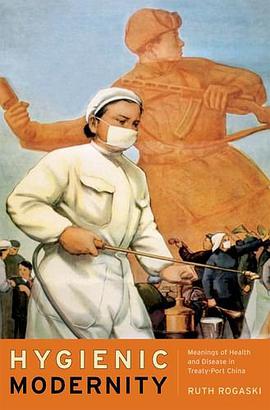
Hygienic Modernity 豆瓣
9.5 (6 个评分) 作者: Ruth Rogaski 出版社: University of California Press 2004 - 11
Placing meanings of health and disease at the center of modern Chinese consciousness, Ruth Rogaski reveals how hygiene became a crucial element in the formulation of Chinese modernity in the nineteenth and twentieth centuries. Rogaski focuses on multiple manifestations across time of a single Chinese concept, weisheng—which has been rendered into English as "hygiene," "sanitary," "health," or "public health"—as it emerged in the complex treaty-port environment of Tianjin. Before the late nineteenth century, weisheng was associated with diverse regimens of diet, meditation, and self-medication. Hygienic Modernity reveals how meanings of weisheng, with the arrival of violent imperialism, shifted from Chinese cosmology to encompass such ideas as national sovereignty, laboratory knowledge, the cleanliness of bodies, and the fitness of races: categories in which the Chinese were often deemed lacking by foreign observers and Chinese elites alike.