Non-fiction
Gulp 豆瓣
作者: Roach, Mary 出版社: W. W. Norton & Company 2013 - 4
"America's funniest science writer" (Washington Post) takes us down the hatch on an unforgettable tour. The alimentary canal is classic Mary Roach terrain: the questions explored in Gulp are as taboo, in their way, as the cadavers in Stiff and every bit as surreal as the universe of zero gravity explored in Packing for Mars. Why is crunchy food so appealing? Why is it so hard to find words for flavors and smells? Why doesn't the stomach digest itself? How much can you eat before your stomach bursts? Can constipation kill you? Did it kill Elvis? In Gulp we meet scientists who tackle the questions no one else thinks of--or has the courage to ask. We go on location to a pet-food taste-test lab, a fecal transplant, and into a live stomach to observe the fate of a meal. With Roach at our side, we travel the world, meeting murderers and mad scientists, Eskimos and exorcists (who have occasionally administered holy water rectally), rabbis and terrorists--who, it turns out, for practical reasons do not conceal bombs in their digestive tracts. Like all of Roach's books, Gulp is as much about human beings as it is about human bodies.
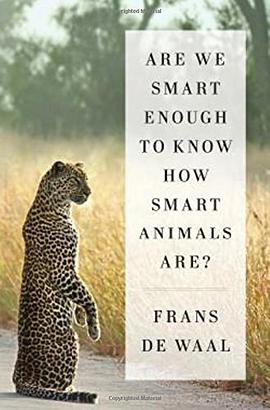
Are We Smart Enough to Know How Smart Animals Are? 豆瓣
作者: Frans de Waal 出版社: W. W. Norton & Company 2016 - 4
What separates your mind from an animal's? Maybe you think it's your ability to design tools, your sense of self, or your grasp of past and future – all traits that have helped us define ourselves as the planet's preeminent species. But in recent decades, these claims have been eroded, or even disproven, by a revolution in the study of animal cognition: take the octopuses that use coconut shells as tools; the elephants that classify humans by age, gender, and language; or Ayumu, the young male chimpanzee at Kyoto University whose flash memory puts that of humans to shame. Based on research involving crows, dolphins, parrots, sheep, wasps, bats, whales, and of course chimpanzees and bonobos, Frans de Waal demonstrates that we have grossly underestimated both the scope and the depth of animal intelligence. He offers a firsthand account of how science has stood traditional behaviorism on its head by revealing how smart animals really are.
The Rebel 豆瓣 Goodreads
L'Homme révolté
作者: Albert Camus 译者: Anthony Bower 出版社: Vintage 1991 - 1
The Rebel is an essay on artistic, historical, and metaphysical rebellion, in which he lays out the difference between revolution and revolt.
Camus sees revolt as a peaceful, evolutionary process that requires leadership but not violence. He criticizes Hegel's work, accusing it of glorifying power and the state over social morality and ethics, and he accuses Marx of co-opting Hegelian philosophy to allow "any means to an end". Camus prefers Mediterranean humanism, a philosophy grounded in nature and moderation, to the violence and historicism he sees as part and parcel to what he calls the "Absolutist" philosophies. The attacks on Hegel, Marxism and nihilism in The Rebel had a profound effect on Camus' peers.
The book was described as intellectual treason by leftist critics, and a review by Francis Jeanson in Les Temps Modernes accused Camus of being a traitor to the left. After Camus attempted to defend himself in a letter to the publication, Jean-Paul Sartre, the editor of Les Temps Modernes at the time, published an open letter in response that tallied 19 pages. The letter included personal attacks, and marked the end of the two philosophers' friendship.
The Unfolding of Language 豆瓣
作者: Deutscher, Guy 出版社: Holt Paperbacks 2006 - 5
Blending the spirit of "Eats, Shoots and Leaves" with the science of "The Language Instinct," an original inquiry into the development of that most essential-and mysterious-of human creations: Language Language is mankind's greatest invention-except, of course, that it was never invented." So begins linguist Guy Deutscher's enthralling investigation into the genesis and evolution of language. If we started off with rudimentary utterances on the level of "man throw spear," how did we end up with sophisticated grammars, enormous vocabularies, and intricately nuanced degrees of meaning? Drawing on recent groundbreaking discoveries in modern linguistics, Deutscher exposes the elusive forces of creation at work in human communication, giving us fresh insight into how language emerges, evolves, and decays. He traces the evolution of linguistic complexity from an early "Me Tarzan" stage to such elaborate single-word constructions as the Turkish "sehirlilestiremediklerimizdensiniz" ("you are one of those whom we couldn't turn into a town dweller"). Arguing that destruction and creation in language are intimately entwined, Deutscher shows how these processes are continuously in operation, generating new words, new structures, and new meanings. As entertaining as it is erudite, "The Unfolding of Language" moves nimbly from ancient Babylonian to American idiom, from the central role of metaphor to the staggering triumph of design that is the Semitic verb, to tell the dramatic story and explain the genius behind a uniquely human faculty.
Emotional Intelligence 豆瓣
作者: Daniel Goleman 出版社: Bantam 1997 - 6
Everyone knows that high IQ is no guarantee of success, happiness, or virtue, but until Emotional Intelligence, we could only guess why. Daniel Goleman's brilliant report from the frontiers of psychology and neuroscience offers startling new insight into our "two minds"--the rational and the emotional--and how they together shape our destiny.
Through vivid examples, Goleman delineates the five crucial skills of emotional intelligence, and shows how they determine our success in relationships, work, and even our physical well-being. What emerges is an entirely new way to talk about being smart.
The best news is that "emotional literacy" is not fixed early in life. Every parent, every teacher, every business leader, and everyone interested in a more civil society, has a stake in this compelling vision of human possibility.