cs
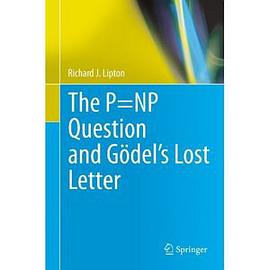
The P=NP Question and Gödels Lost Letter Douban
author:
Richard J. Lipton
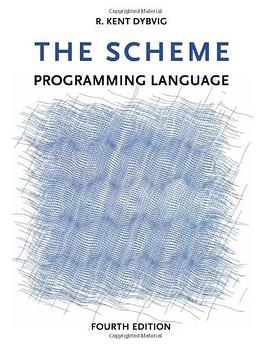
The Scheme Programming Language, 4th Edition Douban
author:
R. Kent Dybvig
publishing house:
The MIT Press
2009
- 7
Scheme is a general-purpose programming language, descended from Algol and Lisp, widely used in computing education and research and a broad range of industrial applications. This thoroughly updated edition of The Scheme Programming Language provides an introduction to Scheme and a definitive reference for standard Scheme, presented in a clear and concise manner. Written for professionals and students with some prior programming experience, it begins by leading the programmer gently through the basics of Scheme and continues with an introduction to some of the more advanced features of the language.
The fourth edition has been substantially revised and expanded to bring the content up to date with the current Scheme standard, the Revised6 Report on Scheme. All parts of the book were updated and three new chapters were added, covering the language's new library, exception handling, and record-definition features.
The book offers three chapters of introductory material with numerous examples, eight chapters of reference material, and one chapter of extended examples and additional exercises. All of the examples can be entered directly from the keyboard into an interactive Scheme session. Answers to many of the exercises, a complete formal syntax of Scheme, and a summary of forms and procedures are provided in appendixes.
The Scheme Programming Language is the only book available that serves both as an introductory text in a variety of courses and as an essential reference for Scheme programmers.
The fourth edition has been substantially revised and expanded to bring the content up to date with the current Scheme standard, the Revised6 Report on Scheme. All parts of the book were updated and three new chapters were added, covering the language's new library, exception handling, and record-definition features.
The book offers three chapters of introductory material with numerous examples, eight chapters of reference material, and one chapter of extended examples and additional exercises. All of the examples can be entered directly from the keyboard into an interactive Scheme session. Answers to many of the exercises, a complete formal syntax of Scheme, and a summary of forms and procedures are provided in appendixes.
The Scheme Programming Language is the only book available that serves both as an introductory text in a variety of courses and as an essential reference for Scheme programmers.
How to Design Programs Douban
author:
Matthias Felleisen
/
Robert Bruce Findler
…
publishing house:
The MIT Press
2001
- 2
This introduction to programming places computer science in the core of a liberal arts education. Unlike other introductory books, it focuses on the program design process. This approach fosters a variety of skills--critical reading, analytical thinking, creative synthesis, and attention to detail--that are important for everyone, not just future computer programmers.
The book exposes readers to two fundamentally new ideas. First, it presents program design guidelines that show the reader how to analyze a problem statement; how to formulate concise goals; how to make up examples; how to develop an outline of the solution, based on the analysis; how to finish the program; and how to test. Each step produces a well-defined intermediate product. Second, the book comes with a novel programming environment, the first one explicitly designed for beginners. The environment grows with the readers as they master the material in the book until it supports a full-fledged language for the whole spectrum of programming tasks.
All the book's support materials are available for free on the Web. The Web site includes the environment, teacher guides, exercises for all levels, solutions, and additional projects.
-- amazon.com
The book exposes readers to two fundamentally new ideas. First, it presents program design guidelines that show the reader how to analyze a problem statement; how to formulate concise goals; how to make up examples; how to develop an outline of the solution, based on the analysis; how to finish the program; and how to test. Each step produces a well-defined intermediate product. Second, the book comes with a novel programming environment, the first one explicitly designed for beginners. The environment grows with the readers as they master the material in the book until it supports a full-fledged language for the whole spectrum of programming tasks.
All the book's support materials are available for free on the Web. The Web site includes the environment, teacher guides, exercises for all levels, solutions, and additional projects.
-- amazon.com
Parsing Techniques Douban
author:
Dick Grune
/
Ceriel J.H. Jacobs
publishing house:
Springer
2010
- 2
This second edition of Grune and Jacobs' brilliant work presents new developments and discoveries that have been made in the field. Parsing, also referred to as syntax analysis, has been and continues to be an essential part of computer science and linguistics. Parsing techniques have grown considerably in importance, both in computer science, ie. advanced compilers often use general CF parsers, and computational linguistics where such parsers are the only option. They are used in a variety of software products including Web browsers, interpreters in computer devices, and data compression programs; and they are used extensively in linguistics.