economics
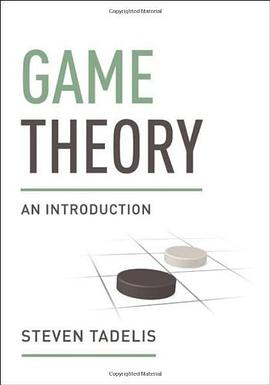
Game Theory 豆瓣
作者: Steven Tadelis 出版社: Princeton University Press 2013 - 1
This comprehensive textbook introduces readers to the principal ideas and applications of game theory, in a style that combines rigor with accessibility. Steven Tadelis begins with a concise description of rational decision making, and goes on to discuss strategic and extensive form games with complete information, Bayesian games, and extensive form games with imperfect information. He covers a host of topics, including multistage and repeated games, bargaining theory, auctions, rent-seeking games, mechanism design, signaling games, reputation building, and information transmission games. Unlike other books on game theory, this one begins with the idea of rationality and explores its implications for multiperson decision problems through concepts like dominated strategies and rationalizability. Only then does it present the subject of Nash equilibrium and its derivatives. "Game Theory" is the ideal textbook for advanced undergraduate and beginning graduate students. Throughout, concepts and methods are explained using real-world examples backed by precise analytic material. The book features many important applications to economics and political science, as well as numerous exercises that focus on how to formalize informal situations and then analyze them. It introduces the core ideas and applications of game theory. It covers static and dynamic games, with complete and incomplete information. It features a variety of examples, applications, and exercises. Topics include repeated games, bargaining, auctions, signaling, reputation, and information transmission. It is ideal for advanced undergraduate and beginning graduate students. Complete solutions available to teachers and selected solutions available to students.
Two's Company, Three Is Complexity 豆瓣
作者: Neil F. Johnson 出版社: Oneworld Publications 2007
Preface
It is 2050, and you are watching Who Wants to be a Billionaire? The contestant is one question away from the jackpot. Up comes his
question: “What is the name of the theory that scientists started developing at the beginning of the twenty-first century, and
which helped the world overcome traffic congestion, financial market crashes, terrorist attacks, pandemic viruses, and cancer?” The contestant cannot believe his luck. What an easy question! But he is so nervous that his mind temporarily goes blank. He starts to consider option A: “They are all still unsolved problems” – but then quickly realizes that this is a dumb answer. Instead, he uses his last lifeline to ask the audience. The audience responds unanimously and instantaneously with option B: “The Theory of Complexity”. Without hesitation, he goes with option B. The host hands him the cheque, and the world has yet another billionaire.
Pure fantasy? Maybe not.
In this book, we will go on a journey to the heart of Complexity, an emerging science which looks set to trigger the next great wave of advances in everything from medicine and biology through to economics and sociology. Complexity Science also comes with the
prospect of solving a wide range of important problems which face us as individuals and as a Society. Consequently, it is set to permeate through every aspect of our lives.
There is, however, one problem. We don’t yet have a fullyfledged “theory” of Complexity. Instead, I will use this book to assemble all the likely ingredients of such a theory within a common framework, and then analyze a wide range of real-world applications within this same common framework. It will then require someone from the future – perhaps one of the younger readers of this book – to finally put all these pieces into place.
Complexity Science is a double-edged sword in the best possible sense. It is truly “big science” in that it embodies some of the hardest, most fundamental and most challenging open problems in academia. Yet it also manages to encapsulate the major practical issues which face us every day from our personal lives and health, through to global security. Making a pizza is complicated, but not complex. The same holds for filling out your tax return, or mending a bicycle puncture. Just follow the instructions step by step, and you will eventually be able to go from start to finish without too much trouble. But imagine trying to do all three at the same time. Worse still, suppose that the sequence of steps that you follow in one task actually depends on how things are progressing with the other two. Difficult? Well, you now have an indication of what Complexity is all about. With that in mind, now substitute those three interconnected tasks for a situation in which three interconnected people each try to follow their own instincts and strategies while reacting to the actions of the others. This then gives an idea of just how Complexity
might arise all around us in our daily lives.
While I was writing this book, I had the following “wish-list” in my head concerning its goals:
1. To provide a book which a wide cross-section of people would want to read and would enjoy reading – regardless of age,
background or level of scientific knowledge.
2. To introduce readers to the exciting range of real-world scenarios in which Complexity Science can prove its worth.
3. To provide the book on Complexity that “I never had but always needed”. In other words, to provide an easily readable yet thorough guide to this important scientific revolution.
4. To provide a book that my kids could read – or rather, a book that they would actually choose to read all by themselves. This is a very important goal, since Complexity will likely become the science of interest for future generations.
5. To provide a book which is just as readable on a plane or bus as in a library. As such, it should also make sense when read in short chunks.
6. To provide a book which provides professional scientists,economists, and policy-makers with a new perspective on
open problems in their field, and to help stimulate new Complexity-based interdisciplinary research projects.
However, as I finish the book and offer it up to potential readers,I realize that the above wish-list can essentially be reduced to just
one item: I would wish that you enjoy reading this book, and that it might provide you with fresh thoughts and insights for dealing
with the complex world in which we live, and which our children will inherit.
There are some practicalities concerning the book’s content and layout which I would like to explain. The language, examples and
analogies are kept simple since the focus of the book is to explain what Complexity Science is all about, and why it is so important for
us all. I therefore avoid delving into too much detail in the main text. Instead, the Appendix describes how to access the technical
research papers upon which the discussions in the book are based, and gives a list of Internet websites containing additional information about Complexity research around the world. Having said this, I won’t pull any punches in the sense that I tackle all the topics
which I believe to be relevant. Part 1 of the book takes us through the theoretical underpinnings of Complexity, while Part 2
delves into its real-world applications. Some of the territory is only just beginning to be explored, with very few answers available
for the questions being posed. From the perspective of other scientific revolutions throughout history this might seem to be par
for the course. However we are not talking about history here –instead, we are looking at work which is emerging at the forefront
of a new discipline. For this reason we will be highlighting where such research is heading, rather than where it has been.
But why should you believe what I write about Complexity? This is a crucially important question given that Complexity Science is still being developed and its potential applications explored. Unfortunately many accounts of Complexity in the popular press are second-hand, i.e. they are typically written by people who have done little, if any, research on Complexity themselves and are instead reporting on their interpretation of
other people’s work. Given the relatively immature nature of the field, I believe that such indirect interpretations are potentially
dangerous. For this reason, I will base the book’s content around my own research group’s experience in Complexity. This has
various advantages: (i) it reflects my own understanding of the Complexity field; (ii) it represents what I believe to be the most
relevant and important topics; (iii) it will hopefully give the reader a sense of what it is like to be at the “pit-face” in such a
challenging area of research; and (iv) it ensures that any reader can challenge me directly on any claims that I make, and can
demand an informed answer. To facilitate this process of public scrutiny, a complete list of the relevant scientific research reports
is presented in the latter part of the Appendix. I also encourage any readers who wish to email me with questions, to do so at
n.johnson@physics.ox.ac.uk
实践与理论 豆瓣
作者: [美] 黄宗智 出版社: 法律出版社 2015 - 9
这是一本黄宗智先生谈论“方法论”的集子,主要包括了农村经济史研究方法、法律史研究方法、关怀现实的学术研究方法以及社会科学和自然科学研究方法的区别,是黄宗智先生研究方法论文的总集成。
理论是清晰的、抽象的和符合逻辑的,其目标是跨时空和普适的,而实践则常是模糊的、具体的和不符合逻辑的,是在某一特定时空中的特殊行为。两者之间可能是相符的,但也可能是背离和互动的,或充满张力和矛盾的。虽然如此,在人们的认知过程中,抽象概念/理论和具体经验/实践明显都是不可或缺的一个方面。我们需要集中研究的不是两者之间的任何单一方面,而是两者之间的如何连接问题。
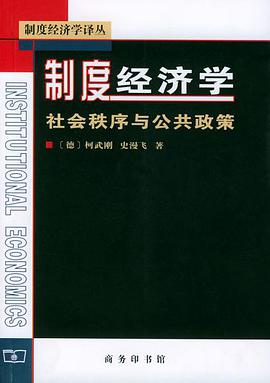
制度经济学 豆瓣
作者: (德)柯武刚 / 史漫飞 译者: 韩朝华 出版社: 商务印书馆 2000 - 11
近年来,制度经济学这门学科声誉目隆。因为标准的经济学解释往往不能把握当代许多重大的政策问题,如在发展国家中进行的经济改革、在社会主义指令经济中发生的转变、新兴工业经济中的控管问题。制度经济学家指出,规则体系在解释这些问题上至关重要,而要想在这些问题上找到能经得起考验的解决办法,关键在于制度创新。制度必须为日趋复杂的人际交往奠定坚实的基础,因为人们的交往和合作有赖于纤细脆弱的信任链条。
这本重要的著作为尚在发展的制度经济学方法和有关私人产权及其竞争性应用的核心问题提供了一份易于理解的引论。本书将根据有关人类认识和动机的基本前提展开论题。它包括下列具有政策取向讨论:
●制度的逻辑基础以及制度的重要性:
●为国内市场和国际贸易奠定基础的各种制度安排;
●奠定商务组织基础的各种制度安排;
●政府的职能、私人选择和公共选择相对优点,以及对机会主义地运用政治权力的行为施加控制的办法
●在深爱政府管制却必须应储新竞争者挑战的成熟经济中所能实施的改革;
●社会主义制度体系问题的原因;
●在第三世界国家的现代化进程中,全球化对制度发展的影响。
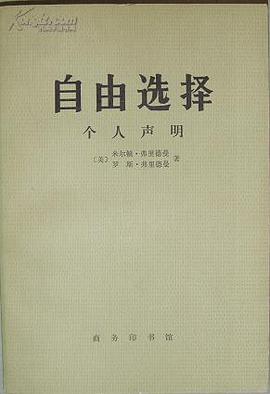
自由选择 豆瓣
Free to Choose: A Personal Statement
作者: [美] 米尔顿·弗里德曼 / 罗斯·弗里德曼 译者: 胡骑 / 席学媛 出版社: 商务印书馆 1982 - 5
1980年的时候,美国公共广播公司连续十个星期播放了一套电视节目,名字叫做“自由选择”。本书的内容同这个节目所涉及到的一样。不同之处在于,电视节目限于时间不得不删除或只一笔代过,本书的论述却比较系统和透彻。
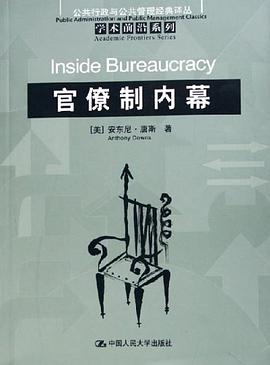
官僚制内幕 豆瓣
作者: 安东尼·唐斯 出版社: 中国人民大学出版社 2006 - 1
在这部分析官员行为动机与官僚组织运行机制的经典之作中,作者用简明的语言为我们展现了一部美国版的《官场现形记》,让我们洞悉官员的心理与行为,把握官僚组织的决策机制,从而加深对官员和官僚组织的理解。
本书是剖析官员与官僚组织行为、透视官僚制内幕的经典力作。本书构建了一种有用的决策理论,该理论通过对官员动机、行为模式等方面的分析来帮助人们认识官僚组织的行为,从而提高决策质量。作者将官员分为权力攀登者、保守者、狂热者、倡导者、政治家等五种类型,在此基础上,分析官员的动机、目标和行为对官僚组织决策的影响,探讨官僚组织所承担的社会职能及其所处的环境对其结构、行为和决策的影响。
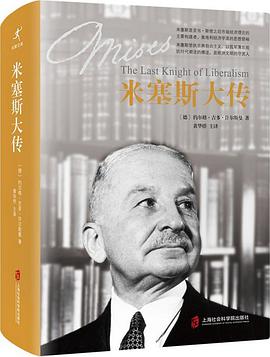
米塞斯大传 豆瓣
Mises: The Last Knight of Liberalism
作者: [德]约尔格·吉多·许尔斯曼 译者: 黄华侨 / 出版社: 上海社会科学院出版社 2016 - 8
米塞斯(Ludwig von Mises,1881-1973),20世纪重要的经济学家、思想家,亚当·斯密之后对市场经济理论贡献最大的人。他的思想不合潮流,却是矫正时代前进方向的指南。
《米塞斯大传》详细描述了米塞斯漫长坎坷的一生,揭示出他的思想发展轨迹,以及与时代的碰撞。同时本书叙述了以米塞斯为中心的奥地利经济学派的发展历程、欧洲和美国的经济思想史,也生动呈现了米塞斯所经历的时代的风云变幻。可以从中窥见那个时代最显耀的人物——门格尔、庞巴维克、维塞尔、熊彼特、罗宾斯、哈耶克、凯恩斯等杰出人物之间的思想交锋和充满戏剧性的人际交往。
伟大的生命成就精彩的传记。本书学术性与可读性俱佳,是目前最详实,最受好评的米塞斯传记。
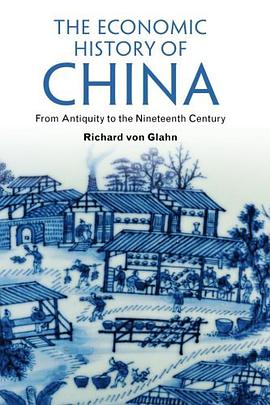
The Economic History of China 豆瓣
作者: Richard von Glahn 出版社: Cambridge University Press 2016 - 3
China's extraordinary rise as an economic powerhouse in the past two decades poses a challenge to many long-held assumptions about the relationship between political institutions and economic development. Economic prosperity also was vitally important to the longevity of the Chinese Empire throughout the preindustrial era. Before the eighteenth century, China's economy shared some of the features, such as highly productive agriculture and sophisticated markets, found in the most advanced regions of Europe. But in many respects, from the central importance of irrigated rice farming to family structure, property rights, the status of merchants, the monetary system, and the imperial state's fiscal and economic policies, China's preindustrial economy diverged from the Western path of development. In this comprehensive but accessible study, Richard von Glahn examines the institutional foundations, continuities and discontinuities in China's economic development over three millennia, from the Bronze Age to the early twentieth century.
The Oxford Encyclopedia of Economic History 豆瓣
作者: Mokyr, Joel 编 出版社: Oxford University Press, USA 2003 - 10
It is difficult to understand history or the conditions of modern society without a strong grasp of the economic past. Time and again, historic change is wrought by an underlying economic dynamic. For instance, what were the economic roots of modern industrialism? Were resource scarcities a positive element in stimulating technological change through the ages? Why were the Malthusian predictions of overpopulation and starvation in the early nineteenth century confounded? Were labor unions ever effective in raising workers' living standards? Did high levels of taxation in the past normally lead to economic decline? What were the roots of economic imperialism and what effect did it have on today's underdeveloped world? What were the effects of the poor law reforms in Britain in the 1830s? These and similar questions profoundly inform a wide range of intertwined social issues whose complexity, scope, and depth will become fully evident in this encyclopedic treatment of the subject. The encyclopedia contain the following types of articles: - Country and regional essays. Examples: France, Genoa, New England, Ohio River, the Ruhr. These articles may range from relatively exhaustive essays of 10,000 words to 500 words. * Major essays on abstract concepts. Examples: Industrial Revolution, Feudalism, Invention, Malthusian models, Famine, Accumulation. Essays between 5,000 and 8,000 words. * Major essays on institutions, phenomena, and historical processes. Examples: Investment banks, cotton, steel, trading routes, real wages, business cycles, slavery, canals. Essays between 3,000 and 8,000 words. * Shorter essays on abstract concepts. Examples: productivity change, Engel's Law, cartels, gold standard. Essays between 1,000 and 5,000 words. * Shorter essays on concrete facts, institutions, events, and phenomena. Examples: guilds, enclosures, free banking, Great German Inflation, homestead farming, New Deal, I. G. Farben. Essays between 500 and 5,000 words. * Important names from both technology and business, along with economic historians of note. Examples: Richard Arkwright, Johann Gutenberg, Benjamin Franklin, John D. Rockefeller, Hjalmar Schacht, Karl Marx. Essays between 500 and 2,000 words. Because of the interdisciplinary complexity of the field, the encyclopedia is divided not only by chronological and geographic boundaries, but by related subfields such as agricultural history, demographic history, business history, and the history of technology. Smaller categories include financial and corporate history, the history of migration, and transportation history. Each article is followed by a bibliography, and each article is signed with its contributor's name. This title is available both in print and as an e-reference text from Oxford's Digital Reference Shelf. A directory of contributors, a synoptic outline of contents, and an index are included. The editorial board and contributors include scholars from Europe, Latin America, Africa, and Asia; it is intended that the project's scope be truly international. There exists no comparable work.
产业经济学 豆瓣
作者: [英] 阿尔弗雷德·马歇尔 / [英] 玛丽·佩利·马歇尔 译者: 肖卫东 出版社: 商务印书馆 2015 - 11
《产业经济学》是阿尔弗雷德·马歇尔的第一部经济学著作,本书沿着约翰·斯图亚特穆勒在《政治经济学原理》中的研究关于土地、劳动和资本的理论线索与内容,构建、呈现了一个有关价值、工资和利润理论的框架。全书包括三篇内容:关于土地、劳动和资本的理论,关于正常价值的理论,关于市场价值的理论。
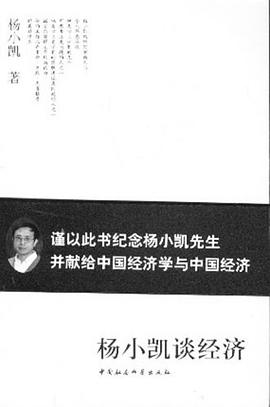
杨小凯谈经济 豆瓣 谷歌图书
作者: 杨小凯 出版社: 中国社会科学出版社 2004 - 9
本书是开创新兴古典经济学与超边际分析学派的一代宗师――杨小凯先生的绝笔之作。虽然他自称为非主流经济学派者,但正如诺贝尔将获得者布坎南等人所宣称的:在中国,杨小凯是真正最好的经济学家,他对发展经济学的贡献是不可抹杀的。本书融汇了杨教授诸多开拓性理论的分析精华,再现了他处于学术之巅的风采。如今,杨先生已撒手西去,留下了亟待发展的学派,就让我们以本书作为对先生毕生致力于学术研究的追思与悼念,去继续先生未竞的事业。
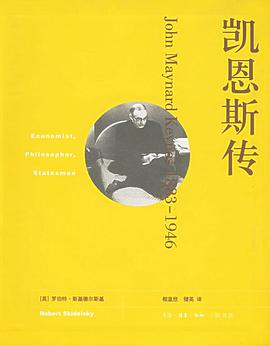
凯恩斯传 豆瓣
John Maynard Keynes
作者: 罗伯特·斯基德尔斯基 译者: 相蓝欣 / 储英 出版社: 生活·读书·新知三联书店 2006 - 5
本书详细记录了20世纪最著名的经济学家凯恩斯的一生。他在逝去的历史上写下浓重的一页。在今天,不论是赞成者,还是反对者,都承认他对西方经济学造成的巨大冲击力和影响力,他的创新精神和敬业精神,他思想中的某些科学成分将激励后人不断前进。
哈罗德所写的传记对凯恩斯的生平作了广泛的描述。虽然重点是介绍凯恩斯的公共生活,即他对经济学和在公职工作中的贡献,但也以很大篇幅描述了凯恩斯的个人生活,包括他的家庭生活,朋友同他的关系、他们的共同兴趣、他的抱负和兴趣以及他的人生哲学。在哈罗德的平实而又生动的描写下,作为一个典型的英国资产阶级知识界代表人物的凯恩斯的人格跃然纸上。
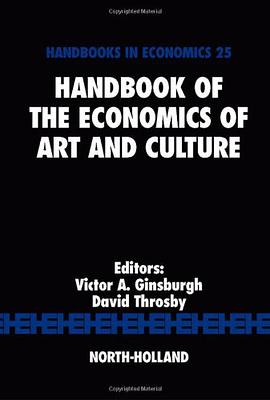
Handbook of the Economics of Art and Culture, Volume 1 豆瓣
作者: Ginsburgh, Victor A. (EDT)/ Throsby, David (EDT) 出版社: Elsevier Science Ltd 2006 - 11
Over the last 30 or 40 years a substantial literature has grown up in which the tools of economic theory and analysis have been applied to problems in the arts and culture. Economists who have surveyed the field generally locate the origins of contemporary cultural economics as being in 1966, the year of publication of the first major work in modern times dedicated specifically to the economics of the arts. It was a book by Baumol and Bowen which showed that economic analysis could illuminate the supply of and demand for artistic services, the contribution of the arts sector to the economy, and the role of public policy. Following the appearance of the Baumol and Bowen work, interest in the economics of the arts grew steadily, embracing areas such as demand for the arts, the economic functions of artists, the role of the nonprofit sector, and other areas. Cultural economics also expanded to include the cultural or entertainment industries (the media, movies, the publishing industry, popular music), as well as heritage and museum management, property right questions (in particular copyright) and the role of new communication technologies such as the internet.
The field is therefore located at the crossroads of several disciplines: economics and management, but also art history, art philosophy, sociology and law. The Handbook is placed firmly in economics, but it also builds bridges across these various disciplines and will thus be of interest to researchers in all these different fields, as well as to those who are engaged in cultural policy issues and the role of culture in the development of our societies.
*Presents an overview of the history of art markets
*Addresses the value of art and consumer behavior toward acquiring art
*Examines the effect of art on economies of developed and developing countries around the world
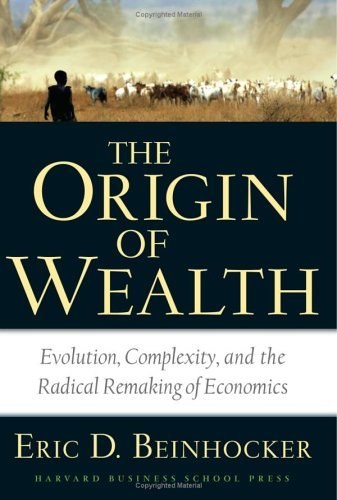
The Origin of Wealth 豆瓣 Goodreads
作者: Eric D. Beinhocker 出版社: Harvard Business School Press 2006 - 6
In the Origin of Wealth, Eric Beinhocker offers a thorough and convincing new way to think about economic growth and business management. The author begins by exploring the roots of modern economic theory and ultimately declares it outmoded and wrong. Instead, he suggests, markets and growth can best be explained by drawing on the emerging field of complexity economics: the study of markets and social systems as complex adaptive systems. Although biological metaphors in business have become familiar (i.e., organizations are living organisms), Beinhocker moves beyond metaphor to explain the revolutions in science that will inevitably change the way we think about economics, competition, and business. The Origin of Wealth raises important questions such as: How can one create strategy in uncertain and fast moving environments? Why is it hard for large organizations to be innovative and how should we organize for better results? What role should governments play in this new era?
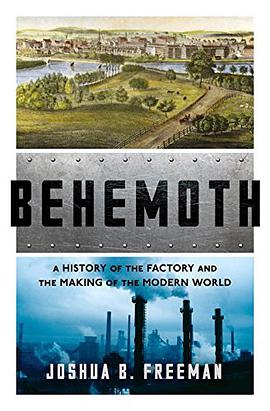
Behemoth 豆瓣
作者: Joshua B. Freeman 出版社: W. W. Norton & Company 2018 - 2
A sweeping, global history of the rise of the factory and its effects on society.
We live in a factory-made world: modern life is built on three centuries of advances in factory production, efficiency, and technology. But giant factories have also fueled our fears about the future since their beginnings, when William Blake called them "dark Satanic mills." Many factories that operated over the last two centuries―such as Homestead, River Rouge, and Foxconn―were known for the labor exploitation and class warfare they engendered, not to mention the environmental devastation caused by factory production from the beginning of the Industrial Revolution up to today.
In a major work of scholarship that is also wonderfully accessible, celebrated historian Joshua B. Freeman tells the story of the factory and examines how it has reflected both our dreams and our nightmares of industrialization and social change. He whisks readers from the textile mills in England that powered the Industrial Revolution and the factory towns of New England to the colossal steel and car plants of twentieth-century America, Eastern Europe, and the Soviet Union and on to today’s behemoths making sneakers, toys, and cellphones in China and Vietnam.
The giant factory, Freeman shows, led a revolution that transformed human life and the environment. He traces arguments about factories and social progress through such critics and champions as Marx and Engels, Charles Dickens, Alexander Hamilton, Henry Ford, and Joseph Stalin. He chronicles protests against standard industry practices from unions and workers’ rights groups that led to shortened workdays, child labor laws, protection for organized labor, and much more.
In Behemoth, Freeman also explores how factories became objects of great wonder that both inspired and horrified artists and writers in their time. He examines representations of factories in the work of Charles Sheeler, Margaret Bourke-White, Charlie Chaplin, Diego Rivera, and Edward Burtynsky.
Behemoth tells the grand story of global industry from the Industrial Revolution to the present. It is a magisterial work on factories and the people whose labor made them run. And it offers a piercing perspective on how factories have shaped our societies and the challenges we face now.
30 illustrations
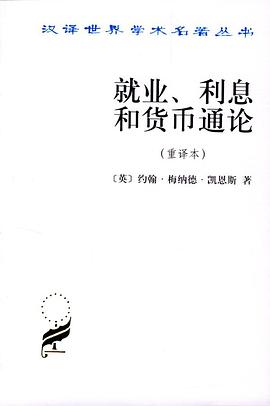
就业、利息和货币通论(重译本) 豆瓣
The General Theory of Employment, Interest, and Money
作者: [英] 约翰·梅纳德·凯恩斯 译者: 高鸿业 出版社: 商务印书馆 1999 - 4
《就业、利息和货币通论》认为失业除了传统经济学认为的摩擦失业和自愿失业外,还有一种非自愿失业,其原因是有效需求不足,有效需求是批商品总供给价格与总需求价格达到均衡时的总需求,由于总供给在短期内不会有大的变动,所以失业是因为总需求或有效需求不足。有效需求包括投资需求和消费需求,有效需求不足是消费需求和投资需求不足的结果。后者又是因为消费倾向、对资本未来收益的预期和对货币的流动偏好三个心理因素的作用。消费需求不足是因消费倾向递减,使消费的增长赶不上收入的增长。投资需求不足是因为资本效率递减和流动偏好,前者是指投资利润率的下降,后者是指人们保留现金偏好。
因此,凯恩斯主张政府要想办法促进有效需求,办法是:增加工资以增加消费,采用累进税增加穷人收入,实行赤字预算与适度的通货膨胀政策。他认为,刺激投资比刺激消费更重要。它有乘数效应。在研究方法上,它将传统经济学的供给本身创造需求理论基础上的充分就业均衡看作是特例,而将小于充分就业的均衡看作常态,由此构造能包容原有经济学在内的更具有一般性的理论。
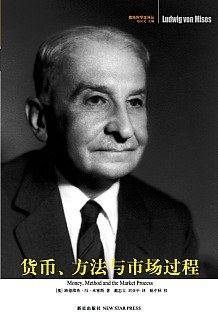
货币、方法与市场过程 豆瓣
Money, Method, and the Market Process
8.8 (5 个评分) 作者: [奥地利] 路德维希·冯·米塞斯 译者: 戴忠玉 / 刘亚平 出版社: 新星出版社 2007 - 8
《货币、方法与市场过程》是米塞斯逝世后由他的夫人编辑的一本书,收录了米塞斯的多篇重要论文,其权威性和学术价值得到了国际经济学界的公认。
本书概括地反应了米塞斯最重要的思想观念,是了解米塞斯思想的最好门径,系首次译为中文。
本书被www.intellectualconservative.com网站列为最重要的25本保守主义哲学与观念著作之一。
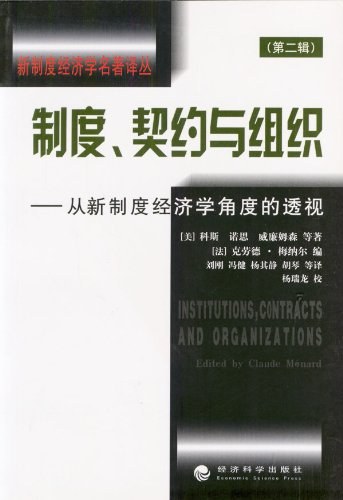
制度、契约与组织 豆瓣
Institutions, Contracts and Organizations: Perspectives from New Institutional Economics
作者: 科斯 诺思 2003 - 1
制度、契约与组织:从新制度经济学角度的透视,ISBN:9787505832992,作者:(美)罗纳德·H.科斯(Ronald H.Coase)等著;(法)克劳德·梅纳尔(Claude Menard)编;刘刚[等]译;刘刚译
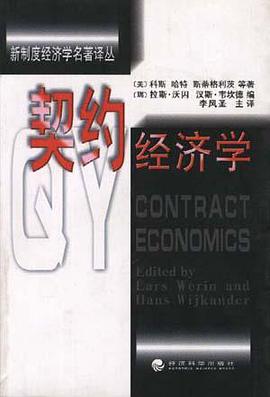
契约经济学 豆瓣
Contract Economics
作者: (美)科斯 哈特 / 斯蒂格利茨 译者: 李风圣 出版社: 经济科学出版社 1999 - 3
契约经济学,ISBN:9787505818033,作者:(美)科斯[等]著;(瑞典)拉斯·沃因(Lars Werin),(瑞典)汉斯·韦坎德(Hans Wijkander)编;李风圣主译;李风圣译